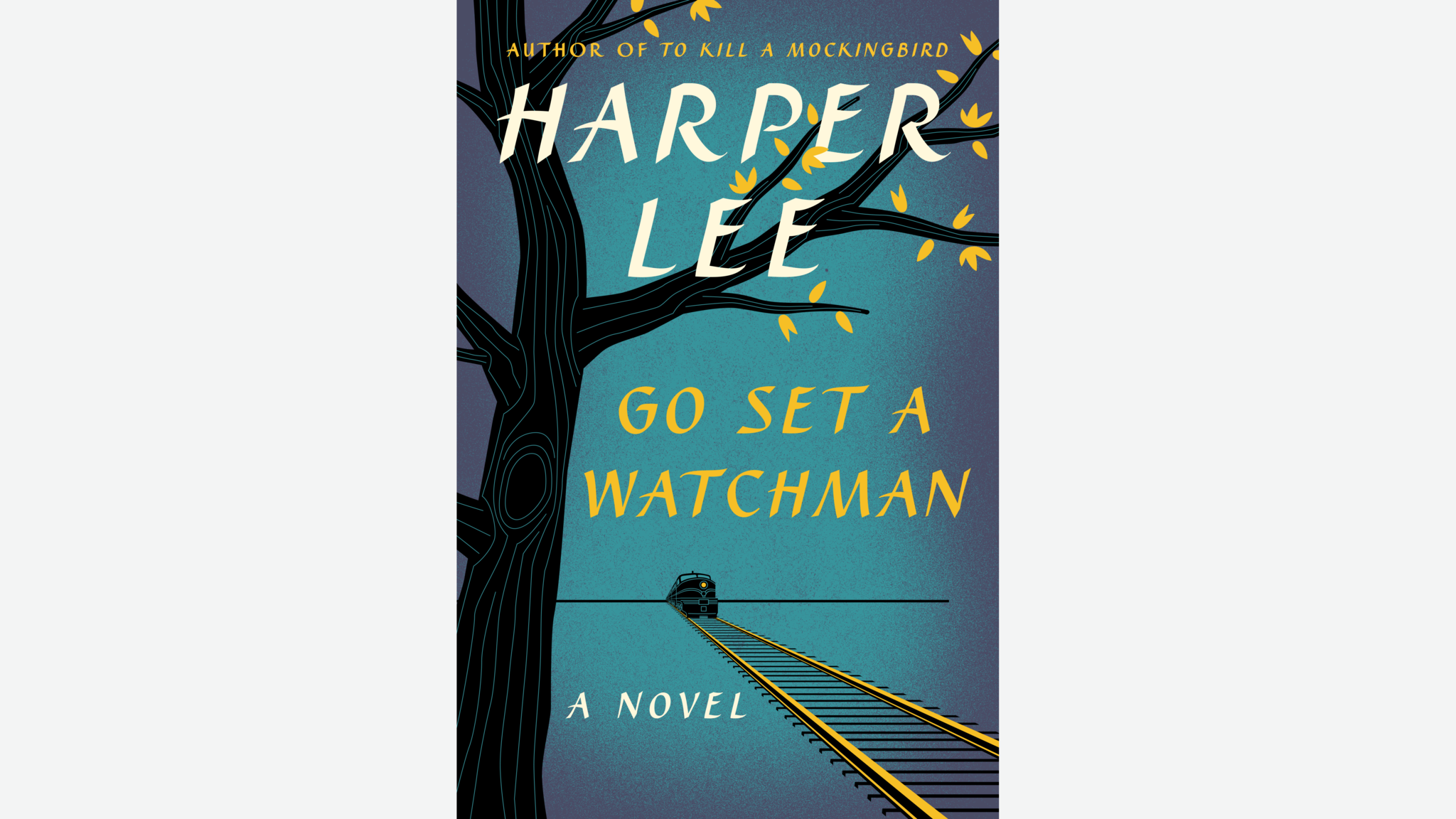
The Red Pen of Doom takes on GO SET A WATCHMAN by Harper Lee

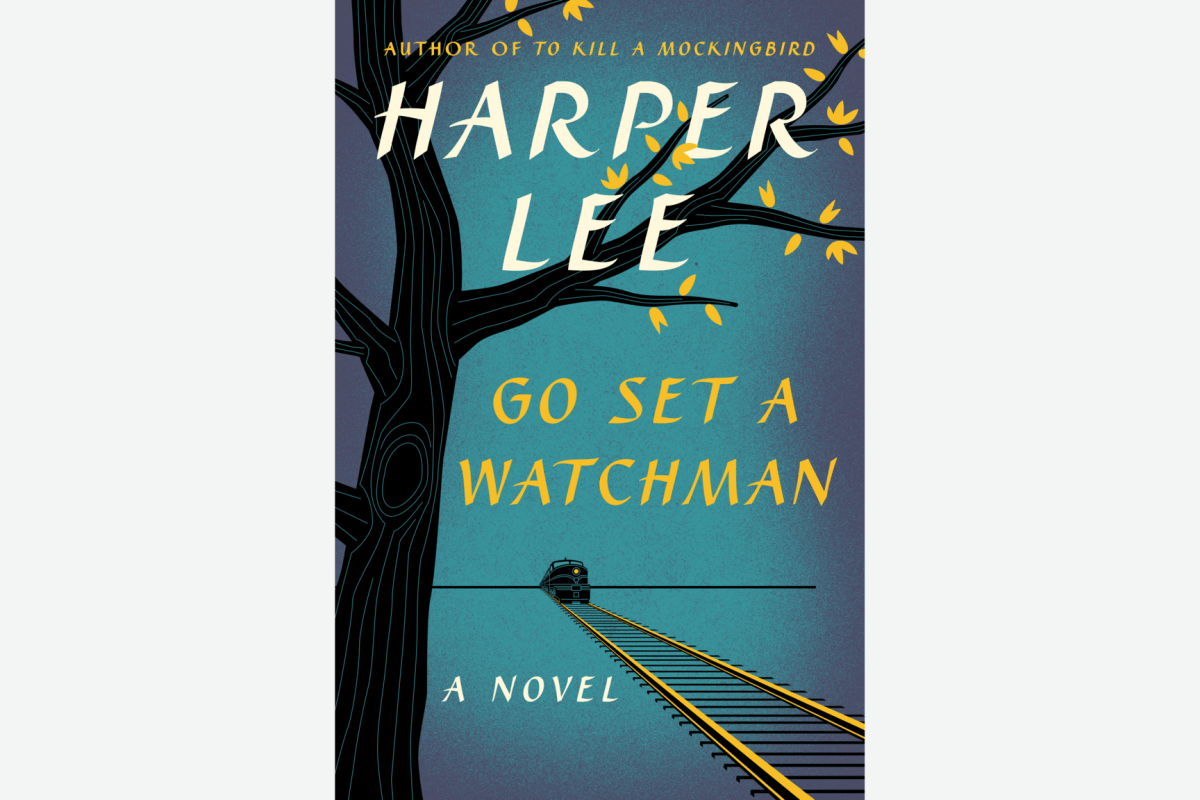
go set a watchman

To Kill A Mockingbird is a classic novel that turned into an amazing film.

So when news broke that Harper Lee, who never published another novel, was coming out with a book-like object, and this book-like object would be a sequel to her big hit—well, that was huge.

It was also controversial, with sources saying Harper Lee never intended this to get published, that it was a draft, with the same characters later showing up in To Kill a Mocking Bird.

So here’s the first page, as printed on dead trees, and I allowed the last paragraph to actually finish instead of ending mid-sentence with “folding herself up” and such.

For previous posts bleeding red all over the first page of a novel, click away with your mousity mouse while enjoying some chocolate mousse:

The Red Pen of Doom impales FIFTY SHADES OF GREY

The Red Pen of Doom guts THE NOTEBOOK

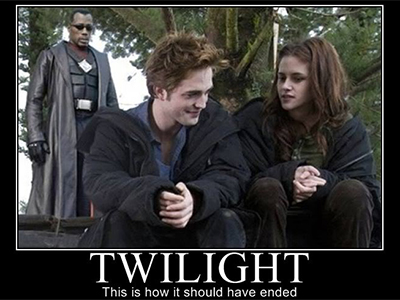
The Red Pen of Doom puts a stake through TWILIGHT

The Red Pen of Doom murders THE FOUNTAINHEAD by Ayn Rand

The Red Pen of Doom harpoons MOBY DICK by Herman Melville

The Red Pen of Doom destroys FREEDOM by Jonathan Franzen

GO SET A WATCHMAN

Since Atlanta, she had looked out the dining-car window with a delight almost physical. Over her breakfast coffee, she watched (We already know she’s looking and watching, so these words get slain.) The last of Georgia’s hills receded and the red earth appeared, and with it tin-roofed houses set in the middle of swept yards, and in the yards the inevitable verbena grew, surrounded by whitewashed tires. She grinned when she saw (Looked, watched and saw all in the first paragraph, three shining beacons of bad writing, so let’s kill the last two.) her at the first TV antenna atop an unpainted Negro house; as they multiplied, her joy rose.

Jean Louise Finch always made this journey by air, but she decided to go by train from New York to Maycomb Junction on her fifth annual trip home. (Now we go back in time for backstory, which is Boring and must die.) For one thing, she had the life scared out of her the last time she was on a plane: the pilot elected to fly through a tornado. (This would have been good in the present tense, as an exciting start to the novel: “So I’m flying through this tornado, wishing I’d taken the train.” Nope.) For another thing, flying home meant her father rising at three in the morning, driving a hundred miles to meet her in Mobile, and doing a full day’s work afterwards: he was seventy-two now and this was no longer fair. (More exposition and backstory without the barest hint of conflict.)

She was glad she had decided to go by train. Trains had changed since her childhood, and the novelty of the experience amused her: a fat genie of a porter materialized when she pressed a button on a wall; at her bidding a stainless steel washbasin popped out of another wall, and there was a john one could prop one’s feet on. (Nice imagery in the last line.) She resolved not to be intimidated by several messages stenciled around her compartment – a roomette, they called it – but when she went to bed the night before, she succeeded in folding herself up into the wall because she had ignored an injunction to PULL THIS LEVER DOWN OVER BRACKETS, a situation remedied by the porter to her embarrassment, as her habit was to sleep only in pajama tops.

End of Page 1

Notes from The Red Pen of Doom:

You don’t need Michael Bay explosions on every page, especially when we’re talking about lit-rah-sure.

But you do need problems. Get your hero up a tree, throw rocks at them and let them find a way down. 

Jean Louise Finch (Scout) doesn’t get up a tree on this page one. There are no rocks aimed at her head, no suspense or trouble at all, unless you count the porter possibly walking in on Scout wearing only her pajama tops, though that sort of situation belongs more in a book with Fabio on the cover. 

This page one is all description, exposition and backstory.

Later in the book, we learn our heroine is traveling by train to meet the man she’s being pushed into marrying. That’s a real conflict. Why not foreshadow that?

Put her back on a plane instead of the comfortable train, and give us that tornado again, with a first line about Scout gripping the arms of her chair as the pilot headed insanely through the edge of a tornado and she headed insanely back home to a marriage she didn’t want.

Give us something. Anything. 

Because I’m feeling kind, I didn’t get into the brutal reviews of this novel, ones by people who pay the mortgage by reading and reviewing book-like objects of all sorts, or the whole controversial shebang about changing Atticus Finch from an iconic hero into a villain who’s sympathetic to the KKK.

I’m simply going after the first page, and the only job of a page one page is to make readers turn to page two, then page three and finally page 288 or even, if it’s a Stephen King doorstopper, page 1,104.

This first page fails at that job. I have no interest in hearing more about the interior décor of this train, no desire to see more of the scenery flashing by and no hope that this story will get any more interesting as it chugs along.

Verdict: Put it to rest, gently, far from the spot of honor on the library shelf for To Kill a Mockingbird.
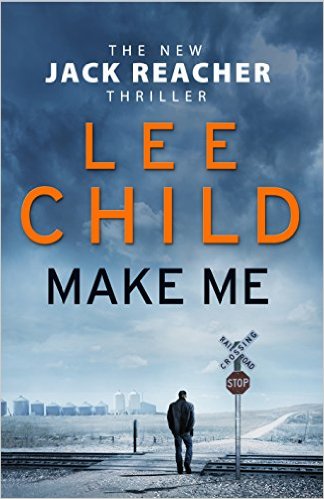
Why MAKE ME by Lee Child gets graded on a curve

MAKE ME by Lee Child

I can’t count how many hardcover Reacher novels line the top shelf of my library. Lee Child is that good.

MAKE ME is his latest novel about Reacher, and it’s also good.

Not bad. Not great.

Acceptable.

Once again, our hero is (a) wandering the small towns of America only to (b) bump into a beautiful girl with a gun who (c) is investigating Some Crazy Problem Involving This Small Town.

This is also the plot of about 17 other Reacher novels.

The towns change. The nature of the evil plot changes. The women change.

Reacher never does

Lee Child is one of my favorite authors, the greatest living thriller writer, and Reacher is a great character. The brain of Sherlock Holmes shoved into the body of the Hulk, funny, smart and tough. A great hero.

HOWEVER: Child isn’t stretching a single writing muscle here. Don’t think he even had to warm up.

It’s as if the devil snuck into his bedroom late one night and said, “If I promise you riches and fame, the price being you have to write the same book every year—year after year, until you die—do we have a deal?”

If we’re grading Child against other thriller authors, he gets an A.

But we’re not. There’s a huge body of work, that top shelf full of Reacher novels already written. MAKE ME sits among them.

Not bad. Not great.

Acceptable.

There is proof that Lee Child can blow expectations out of the water, when he does feel like stretching those writing muscles.

One of the few first-person POV novels he did, THE ENEMY, slayed me with clever clues, revelations and twists. I’ve read it again and again. A great mystery, and the only novel featuring Reacher in the Army.

That’s not a coincidence.

No such thing.

I hope the next novel picks up the mold in Reacher’s big, strong hands and smashes it against the asphalt. That it doesn’t feature a beautiful girl with a gun and a badge who teams up with Reacher, sleeps with him, takes down the bad guys and disappears, like all the others.

I hope the villain is memorable and, for once, a match for the hero. I hope Reacher has to truly suffer, sacrifice and change to actually win.

I hope.

Verdict: MAKE ME gets four out of five folding toothbrushes.

Related posts:

8 reasons why blockbusters are meta-stories instead of Villain of the Week

Name something popular, anything at all, and chances are it’s a series instead of a One Hit Wonder.

This is about why that is, despite a serious quality handicap, and how your favorite series either does it wrong, does it halfway or flat-out nails it.

There are two basic types of series: evergreen and meta-stories.

Evergreen

This includes sitcoms, mysteries, and other shows where things don’t really change … except for the villain or problem, which constantly changes, until the movie series runs out of steam, the novelist gets sick of it or studio execs at NBC look at the dying ratings and pull the plug.

The advantage of an evergreen story is the audience can fire up Netflix and watch any random episode without being lost. You can , buy any of Lee Child’s series at Barnes & Noble and enjoy Reacher beating people up for 325 pages without needing to know anything about the other books.

Star Trek, in all its forms (original, TNG, Voyager) was an evergreen series.

HOWEVER: the best string of movies was a meta-story about Spock, with Spock sacrificing his life to save the Enterprise and crew (Star Trek 2: The Wrath of Corinthian Leather), then Kirk and crew sacrificing to bring Spock’s newborn body back from Planet Crazytown (Star Trek 3: We Stole This Sweet Klingon Warbird) and finally Spock is back with us and directing the movie, which was smart {Star Trek 4: Save the Whales), except it lead to a future movie where Shatner directed, which turned out to be an Achy Breaky Big Mistakey.


The disadvantage of an evergreen series is huge: it inevitably grows stale. Also, the lead actor will always be tempted to cash out and bail for the movies. And often, the ratings or sales simply tank, making studio exec or publishers pull the plug, ending the series with a whimper. Continue reading “8 reasons why blockbusters are meta-stories instead of Villain of the Week”

Hard and Complex versus Impossible and Bizarre

This is about why Flappy Bird was such a surprise hit, Taylor Swift’s newest mega-video is meh and why your favorite movies, novels and video games work when others fail.

Here’s why: audiences want something interesting, and entertaining, which means different and surprising. Yet there’s a fuzzy line between Hard and Impossible and a deadly chasm between Complex and Bizarre.

It’s like thinking, “chocolate chip cookies are yummy, so why not chocolate chip cookies with almonds, M & M’s, pecans, Oreo sprinkles, peanut butter and a Snicker’s Bar on top?”

Watch the big Taylor Swift video, BAD BLOOD, then we’ll chat.

Now, this has high production values and great costumes, and I’m sure Michael Bay watched it on an endless loop all weekend. Yet it’s not elegantly complex and entertaining. It’s a hot mess, the music video equivalent of THE EXPENDABLES, with so many random stars thrown in for cameos that I have no idea who’s who. Does it look cool? Sure. Do we care one bit? No. Not even half a bit, or a quarter bit.

Compare that to the simplicity and beauty of Iggy Azalea’s BLACK WIDOW, which is a masterpiece, paying homage to KILL BILL and flat nailing it.

Continue reading “Hard and Complex versus Impossible and Bizarre”

Top 10 titles for a novel

So there is a burning ball of fire in the sky, and I am outside thinking, “What should I write next before this mysterious star god decides to fry our little space rock or whatever?”

Here are my top 10 titles and ideas, in no particular order, making them up on my phone using a virtual keyboard designed for Ewoks:

10. SNOWPOCALYPSE — Because nuclear wasteland Mad Max stuff is old hat and Kevin Costner with gills ruined Floodpocalypse stories forever.

9. REVERSE OUTLANDER — A rugged Man in a Kilt time travels to meet a married British nurse, fall in love, and get shot by her husband.

8. AND YOU SHALL KNOW US BY OUR INERTIA — A literary novel about an average man, one year before he’s hit by a truck, traveling around Madison, Wisconsin on a Little Rascal he stole from Wal-Mart. At a trailer park kiddie pool, he meets a beautiful woman and they have a moment before her boyfriend shows up.

7. SUNLIGHT — A 900-year-old witch who never ages enrolls in an Arizona high school where she stalks and seduces a 16-year-old boy until his mom notices and the police arrest her.

6. ELVES WITH LIGHTSABERS RIDING DRAGONS AND THE SHAPESHIFTING MERMAIDS WHO LOVE THEM — Come on, you’d read this.

5. MY HAIR IS WET AND TANGLED — While Mr. Grey is in London for business, our heroine struggles with her traitorous, unruly and damp hair. Also, her mother calls.

4. DUMPSTER DIVER PREPPING — Want to get ready for whichever form of doomsday you fancy (zombies, financial meltdown, global warming, nuclear war) but don’t have $250,000 for an underground bunker? This book will show you how to scavenge your way to a bug-out bag, 10 x 10 log fortress and finally a rusty container car full of rice in old milk jugs.

3. OPERATION: VENGEANCE — A skilled spy who’s seen too much and wants out of the game actually retired to Florida while his nemesis, losing hair while gaining momentum, manages to blow up Westminster while the hero golfs.

2. THE BARON AND THE BAKER — A beautiful baker is repeatedly propositioned by a notorious Baron Warner von Lichtenstein, whose fortune is rivalled only by his conquests. After he showers her with attention, flowers and jewelry, she finally tells him he’s a creepy, diseased waste of time.

1. ONE WAY MISSION — The only way to save the human race is to colonize Mars, but somebody has to go first. And they can’t come back. Lindsay Lohan, all of the Kardashians, Donald Trump, Sarah Palin and two dozen other colonists bravely make the trip before advancing our knowledge of how much radiation shielding we really need for a human to survive the trip to humanity’s new home.

Put your writing to the Screen Time Test

writing meme spiderman dear diary

While we are all busy BLOGGING, instead of writing what we’re supposed to, I want to steal a concept from Hollywood (thanks, sis!) that all writers can use: Screen Time.

This works for any bit of writing, whether it’s an oped in a paper of news, a 30-minute keynote speech about saving the three-toed sloths of Costa Rica or an epic doorstop of a novel clocking in at 984 pages entitled ELVES WITH LIGHTSABERS RIDING DRAGONS AND THE VAMPIRE WITCHES WHO LOVE THEM. (Note: Don’t speak of this, because it tempts me, and I may write the first chapter of that book, then email it around until we actually hold in our evil little hands 984 pages that eviscerates Game of Thrones, Twilight, the Star Wars prequels and Lord of the Rings.)

So, back to the point: Screen Time is an essential test for any piece of writing.

I could put a gun to your head and ask, “What’s this novel / screenplay / letter to the editor really about?” and you might answer, “a time-traveling World War II nurse and the men in kilts who love her / waiting for some dude who never shows up / why the federal government is building secret tunnels underneath Wal-Marts in Texas to stage an invasion in cahoots with ISIS cells hiding in Mexico.”

And you might INTEND that to be the point of what you wrote.

The Screen Time Test will say if you’re a lying liar or not.

Movies are the easiest, so let’s go with AVENGERS: JAMES SPADER IS A SHINY ROBOT WHO HATES HUMANS. You take the heroes, sidekicks, villains, minions and nameless civilians in the film and add up the the number of minutes (or seconds) they actually show up on film. If you’re feeling insanely generous, add up minutes where other characters talk about them, too, though we may call you Cheaty McCheatypants. Continue reading “Put your writing to the Screen Time Test”

The Red Pen of Doom puts a stake through TWILIGHT

worst-twilight-memes-funny-pictures-8

CHAPTER ONE – FIRST SIGHT

My mother drove me to the airport with the windows rolled down. It was seventy-five degrees in Phoenix, the sky a perfect, cloudless blue. (Fiction Law #1: Don’t open with the weather or your mom.) I was wearing my favorite shirt – sleeveless, white eyelet lace; (Fiction Law #2: Don’t open with what you’re wearing, because nobody cares.) I was wearing it as a farewell gesture. (Here we go, our first bit of conflict or story: a farewell.) My carry-on item was a parka. (This relates to how much it rains in Forks, and I guess you could argue it’s a bit of foreshadowing, but my God, no story on earth turns on whether a teenage girl is taking a parka as carry-on luggage versus stuffing the damned thing into her Samsonite.)

In the Olympic Peninsula of northwest Washington State, a small town named Forks exists under a near-constant cover of clouds. (This reads like was cut-and-pasted from Wikipedia, with a surplus of Things in Caps, and it is all Rather Boring.) It rains on this inconsequential town more than any other place in the United States of America. It was from this town and its gloomy, omnipresent shade that my mother escaped with me when I was only a few months old. (Conflict! A tiny bit of it, finally.) It was in this town that I’d been compelled to spend a month every summer until I was fourteen. That

(END OF PAGE 1)

Continue reading “The Red Pen of Doom puts a stake through TWILIGHT”

How Obama’s 2015 State of the Union tries to break the mold

President Barack Obama delivers the State of the Union address in the House Chamber at the U.S. Capitol in Washington, D.C., Jan. 20, 2015. (Official White House Photo By Chuck Kennedy)

State of the Union speeches are tough. Here’s why:

(1) By tradition, you have to lay out a laundry list of policy ideas.

(2) Laundry lists are inherently boring.

(3) By law, each president is required give this speech and to have guests in the audience, sitting next to the First Lady or First Man (yes, we will have a lady president one day, so this title needs to be discussed), and those people in the audience get talked about at some point in the speech. I believe Ronald the Reagan started this.

(4) Okay, giving a State of the Union speech every year is not actually a law. It’s really in the U.S. Constitution, as explained here.

(5) The audience is made up of members of Congress, which means half of them will applaud if the president successfully pronounces “America” while members of the other party will sit on their hands and sneer even if you go full Oprah on them and announce that free puppies and tax breaks for each of their districts are sitting UNDER EVERY SEAT. Continue reading “How Obama’s 2015 State of the Union tries to break the mold”

Six smart steps after #NaNoWriMo

typewriter-465387_1920

Don’t bother with sending your novel around for beta readers to chew on, editors to edit and proofers to proof. You’ve got 50,000 golden words, right? THEY MUST BE SEEN AND PUBLISHED, TOMORROW, and you’ve already told the dealership to order a black BMW because the advance will be huge.

Forget sending queries to literary agents. Call them on the telephones, right now, or get their cell number and try dinner time, because they’ll be home.

If your novel is truly great, bypass those gatekeepers and fly to the Isle of Manhattan to hail a cab for the offices of Random House with the only copy of your manuscript in your locked briefcase. Make sure there are copyright notices all over the thing and a confidentiality agreement drafted by your attorney before anybody gets a peek, lest they steal it.

Do you have your plane ticket yet? Go get one, right now.

Okay, those folks should be busy on Travelocity while literary agents and editors are hiring a team of former Special Forces soldiers to greet them in the bowels of JFK’s parking garage.

Everybody else, let’s talk turkey, post-Turkey Day.

You may have 50,000 words and a spiffy badge, 34,000 words and a feeling of failure, 13,000 words and a newfound hatred of literature or 3,923 words and a pile of index cards that say things like, “The scene where Emily discovers that she hates her husband and wants to become a nun. Then he makes her ham and eggs. The eggs are soggy but the ham is delicious.”

Related: Six easy ways to improve NaNoWriMo and Do not look upon your #NaNoWriMo word count and despair, for there is hope

So what’s next? Six smart steps, that’s what:

1) Put your novel in a drawer.

Yeah, I know it’s probably a Word doc. Stick that thing in a virtual drawer. Don’t touch it, not even to fix that scene where Emily is at work and the serial killer is in the copier room, expertly printing his manifesto on both sides and making the machine staple that sucker in the upper left corner before he kills the CFO with an industrial three-hole punch.

Now go read five great books in your genre. Paperbacks. Popular stuff, nothing a professor would assign for a term paper. Not sure what genre your novel is? Find out. Want a shortcut? Read this: Everything they taught us about stories was WRONG

Writing a romance or a thriller? Read these: Why every man MUST read a romance – and every woman a thriller and Out of fairness, I destroy my favorite genre: thrillers

2) Take the first page of those five great books in your genre and study them. Just the first page.

Now take your manuscript (mss if you’re a hipster) and print the first page. Only the first page.

Compare them all. Different authors have different styles, sure, but you shouldn’t be writing in second person, or first person plural, if all five of the bestsellers in your chosen genre of memoirs are say, first person. Just a guess. For giggles: Top 9 reasons to write in first-person plural

If you want a quick look at taking a red pen to the first pages of famous novels to rip them up, in a good way, check out these:

3) Step back from the writing of scenes and chapters and boil your story down.

Can you explain it to a random stranger at Starbucks in four sentences? How about one sentence?

Get it down to four words. Yeah, I’m serious. Writers, we are doing it BACKWARDS and Writers: can you do it in FOUR WORDS? and Writing secret: Light as air, strong as whiskey, cheap as dirt

4) Get your novel edited, and not by your mom, husband or best friend.

Because I truly believe this: The evil secret to ALL WRITING – editing is everything

Tempted to join a traditional critique group instead? Don’t. Not the kind where you meet once a month, or once a week, and everybody reads a chapter. I’m serious: Why critique groups MUST DIE

5) Read up. A lot.

Read about the business of books, whether it’s traditional publishing, indie or zipping your manuscript to servers at Amazon to start selling it tomorrow.

Read great fiction in all sorts of genres while your manuscript simmers in the oven of that drawer. Learn about writing a query and synopsis, a little marketing and public relations and social media.

A few quick starters before you hit Barnes and Noble for hefty, book-like substances:

6) After a month, go back and crack open that NaNaWriMo manuscript again.

Listen to your editors. Use what you’ve learned about storytelling and from reading great books in your genre. Fix the ending. Fix the beginning. Kill off every character you can and combine their roles. 

Keep on working on it while you dream up the next novel, which should not be a sequel. Different characters, different setting.

Does the new idea feel like work, or would you happily burn a day off to crank out chapters? Toss ideas that feel like drudgery and hold fast to concepts that make you excited. Because this should not feel like punching a clock in a Ford factory or going to meetings in a cubicle farm about your TPS reports.

Writing it should make your heart beat faster while you smile. You may even cackle the evil cackle of glee. All those are Good Things, and should be encouraged.

Also: The thing about writers and editors is this: they’re friendly, and as long as you’re not a jerk, they’ll chat with you on Twitter and help you out a little. Great people. I LOVES THEM.

Also-also: If you want to know anything, check out The Writer’s Knowledge Base for a massive collection of articles and posts on every topic a writer could want. It’s like a mega-powered and secret google for writers and editors. Plus it’s free. This thing is a public service. Use it, and tell the folks who run it thanks. Send them tips when you spot great posts or stories and some good karma.

Because there’s a lot of good karma among the folks who love books. This isn’t a zero-sum game where somebody has to lose for somebody else to win. People who love books and writing also love fellow writers and editors. We’re brothers and sisters in arms, battling word counts and deadlines and plot bunnies. It shouldn’t be stressful. Because this is fun stuff, the making up of stories to entertain each other.

Top 9 reasons to write in first-person plural

old typewriter, typewriter, antique keyboard, the way people used to access Word and the Series of Tubes before they existed

Why nine? Because Top 10 lists are popular, and therefore Boring.

But listen closely, for the case is strong for writing in the first-person plural, which we thought at first was second-person plural, and if we thought about it, which we should, first is better than second.

Also, research via the google proved that languages other than English include other amazing options. Just think of a novel written in fifth person past participle without a single letter E in the text. Think of it. Then think of a book cover with black text on a black background with black accents.

That artist from the ’60s who merely painted a canvas black will get sick with jealousy, and does he even know what presumptive mood is? Unlikely. But he’d talk our ear off about acrylic versus watercolor.

And now the list: Top 9 reasons to write in first-person plural

No. 9 — We create an immediate bond with our audience. We hear our voice, and we like it.

The only way to bond more quickly is if we put instant coffee in the microwave, going back in time.

No. 8 — First person is for narcissistic nancypants, polluting each page of text with “I,” “I,” “I,” and, for variety, strings of “me” and “my.”

It’s not about you, first-person singular. It’s about us, plural. Don’t we know that now?

No. 7 — The first-person plural has roots in the Greek chorus, a sturdy trunk from Ayn Rand’s Anthem and green, modern leaves with Joshua Ferris and his Then We Came to the End, which has to be doubly good because it also has “We” in the title.

No. 6 — It’s not “the royal he,” “the royal she” or “the royal I,” is it? No, no, no.

Take it from House Windsor: it’s the royal we. Accept no substitutes.

No. 5 — Third-person is common, bourgeois, and blasé. How many novels are written in third person, and do we ever read all of them?

There are too many, and the quality varies so much. That’s a sign and an omen, our astrology tells us.

No. 4 — First-person plural creates an emotional distance from the readers, which is sometimes necessary.

It’s like having wealthy relatives we don’t enjoy. We don’t have this problem, but if we did, we wouldn’t wish to spend time with them, but we wouldn’t want to get disinherited, either.

Plus, that exquisite distance creates a sense of foreboding and mystery.

If they can never know us, and believe we have no feelings, then we are, indeed, unknowable and omnipresent, literary gods. Or half-Vulcans with Underwoods and a hankering for Jeffrey Eugenides. We’re not sure yet.

No. 3 — A singular narrator can be mistaken, unreliable, reliably unreliabe, obtuse, acute but not cute, scalene or perpendicular.

But we are many, irrefutable, infalliable, translucent, effervescent, a closed plane of certainty and confidence.

We are legion, and it is Good.

No. 2 — Great literature is truly poetry, and great poetry uses first-person plural, such as Emily Dickison and her wonderful, “We send the wave to find the wave,/ An errand so divine.”

Do we want to be great or pedestrian? We choose great.

No. 1 — While second-person point of view was employed by Albert Camus, giving it the sheen of respect, and Jay McInerney found success with Bright Lights, Big City, we cannot ignore the massive volume of pulp fiction detective novels cheapening this choice.

Every such novel began in this sort of crude fashion: “You walk into your office and she’s already sitting behind your desk, drinking your Jim Beam and playing with your .38 special. But she’s got ruby red lips, trouble with the mob, and legs that just won’t quit, so you don’t do the smart thing and turn around to leave. No. You hang up your trenchcoat, take out your notebook, and listen to her sweet, sweet lies.”