Parasite fungus creates zombie insects, who become ‘flying salt shakers of death’

If you like zombie movies, or are busy preparing for a zombie apocalypse despite the real apocalypse happening RIGHT NOW with a global pandemic, then you have to ask yourself: Are zombies even possible?

You know, before you write a $400,000 check for that bunker in your backyard, maybe think about whether zombies are a thing.

Just a thought.

While the chance of humans rising from the dead to walk again is 0.00001 percent, with the apparent exception of Herman Cain (what the hell, Twitter?), there are a couple of kinda-sorta plausible scientific paths to living zombies. We’re still talking microscopic, and I stand by my earlier posts about practical tips for the apocalypse.

Read the first post here. DO IT NOW.

But yeah, there’s real science on this. Different species of fungus attack insects, taking over their brains to make them do silly, suicidal things that benefit the fungus. We knew about the fungus that takes over ants.

This is so horribly great it was the premise of a great novel–THE GIRL WITH ALL THE GIFTS–which they turned into a movie.

Now comes word of a fungus that commandeers the brains of cicadas, and yes, the scientist actually says in this story that the fungus turns the insects into “flying salt shakers of death.”

You can’t beat that line.

There are other parasites out there which are total nightmare fuel, like the five billion species of evil monsters that sneak into the gills of fish, eat their tongue, then stick around as the fish’s replacement tongue. Oh hi, don’t mind me.

This thing belongs in STARSHIP TROOPERS 2: THE BUGS INVADE OUR OCEAN.

But yeah, the fungus zombie thing is crazy. And if you dig deeper, there are more examples of this. A microbe that makes rats lose their fear of cats, because that helps the mouse get eaten and spread more of the microbe. (Humans can get infected by this, too.) Wasps that sting spiders with mind-control drugs, then lay eggs inside the spider so the little baby wasps can eat the spider while it builds a web to protect the little wasps before it dies.

Jeff Goldblum told us life always finds a way.

Nobody said it would always be pretty.

Writing secret: What two-sentence stories can teach us all

Maybe you’re writing a 140,000-word epic about a time-traveling Wookie who kills Hitler and invents the polio vaccine. Or you’re cranking out 500-word stories for a Paper of News.

Doesn’t matter.

Less is always, always more.

Nobody complains about a speech being too short, or a movie ending too soon. Always leave the audience wanting more, and always cut whatever you can. A word, a sentence, an entire scene that’s repetitive because we already saw the Wookie find that double-bladed lightsaber which she used to impress the British major-general and let her board the first landing craft at Normandy.

It works in the opposite direction, too. Headlines and hooks can’t be 100 words–you’re talking a sentence or two. Pitches, blurbs, dialogue, just about everything you can think of benefits from stripping away the fat to reveal sleek, practical, essential muscle.

Once you strip it all away, it becomes clear how great writing works and bad writing falls off the Cliff of Despair and tumbles into the Pit of Absolute Rubbish.

The easiest places to see this? Two sentence stories.

Check out these five, then we’ll chat.

Number 1, The Classic

I begin tucking him into bed and he tells me, “Daddy check for monsters under my bed.”

I look underneath for his amusement and see him, another him, under the bed, staring back at me quivering and whispering, “Daddy there’s somebody on my bed.”

Author unknown, and yes, this version is a little wordy. Let’s cut it down.


“Daddy, check for monsters under my bed.”

I peeked under the cover and my son stared back as he whispered, “Daddy, there’s somebody on my bed.”


Every father’s nightmare. You’ll do anything to protect your sons and daughters. How would you handle this impossible choice?

Number 2

“Now be careful, that line of rock salt is the only thing keeping them out,” the man said, welcoming my group into his refuge.

“Sea salt,” I clarified, “sea salt keeps us out.”
https://www.reddit.com/user/bookseer/

This is good, right? A great setup for a horror movie. Bring it.

Number 3

Bullets flew through the mall, ripping clothes to shreds.

In the chaos, no one noticed the mannequins bleeding.
https://www.reddit.com/user/proffessorbiscuit/

Did not see this coming. At all. Well played, Professor Biscuit.

Number 4

The sound of my son calling for my help grew fainter and fainter.

As the batteries in my hearing aides died, I realized it would soon be impossible for me to find him in time.
https://www.reddit.com/user/minithemermaid/


The first three are fantasy and unrealistic.

This one is quite real, and I believe it’s scarier because of it.

Number 5

“I forgot to grab something, I’ll be right back,” said Mom.

As she rounded the corner, out of sight, the cashier began ringing up our groceries.
https://www.reddit.com/user/undflight/

Here we go: comedy instead of horror. We’ve all felt that stab of panic as our wife, husband, son or mother leaves you in line at Safeway or Costco “to grab something real quick,” then you stand there, waiting forever as the person in front of you finishes checking out and you empty your cart onto the belt slower and slower as there is absolutely no sign of them, and the checker starts giving you the side eye because there are four people waiting behind your slow butt, so what is your problem, so where are there, did they get lost or kidnapped, and should you leave the line to save them from a serial killer only to get embarrassed when they show up with that bottle of white wine they were looking for? WHERE ARE THEY, AND SHOULD WE CALL THE POLICE?

So yeah, this one is funny, and a little horrific, because we have all been there. And will be there again.

What two-sentence stories can teach us all

Every genre of writing tends to get wrapped up in its own pet jargon, theories, practices, and templates.

A news story has to use the inverted pyramid. Every press release needs a first-graf lede, then a quote in the second graf. Detective heroes are alcoholic loner rebels paired up with a square sidekick who has a family.

Two-sentence stories toss all of that and return us to the basics.

The first sentence is a setup, making us curious about what happens next.

In the second sentence, we get the payoff.

That’s it.

Comedians are doing the same thing, which is why most jokes are two-sentences. All you need is a setup and a payoff.

Sure, it helps to add more flourishes, and a longer story–or joke–can have a greater payoff.

Look again at those four examples. There isn’t a single name to any character, no description of their age, hair, face, body, backstory. Zero.

Because you don’t need those things to generate interest.

Homework

Do some two-sentence stories. A joke, a horror story, a shocking idea. Whatever.

Then take whatever you’re writing and boil it down to two sentences. Setup and payoff.

Note: making each sentence 400 words is not okay, Cheaty McCheatypants.

The subversive genius of COMRADE DETECTIVE

comrade detective

We live in a golden age of entertainment, with more choices than ever.

A big reason is the number of outlets now, and the ability to watch Bollywood movies, black-and-white French existentialist movies or South Korean action flicks where EVERYBODY DIES.

The old studio system has been usurped by streaming services willing to gamble on movies and series that would never run on network television.

COMRADE DETECTIVE wouldn’t come within a mile of running on NBC, CBS, or ABC.

Here’s the trailer:

I’ve watched the first season, and without spoiling anything, here’s why I think this thing works so well.

Authenticity

They shot this in Romania, with local actors speaking Romanian, then dubbed everything in English.

It really does look like a series from Budapest in 1983.

This show wouldn’t have worked with Channing Tatum playing the lead role. You wouldn’t believe he was a Romanian detective in 1983.

On message

Instead of aiming all the satire at life in a communist bloc country, a good chunk of the comedic firepower hits America, capitalism, and the West.

I laughed the hardest at the jokes that hit home and had a big dose of truthiness inside them.

The best comedies aren’t afraid to skewer everything in sight, and this show does it. Police departments, criminals, communism, stereotypical detective shows, capitalism, whatever.

Commitment

Instead of going for the easiest, cheapest gags, this show commits to overarching ones that take longer to set up, but give the audience bigger payoffs.

I really like that it tells one long story instead of separate episodes where they catch different bad guys. This lets the writers and showrunners take bigger risks, and it works.

VERDICT

Fire up Amazon Prime and watch this thing.


Why KNIGHTS OF CYDONIA by Muse is total madness that still works

If you pitched this, it wouldn’t fly. “Yo, let’s spend six times our budget on a music video mini-movie that’s like a Clint Eastwood spaghetti western, except we’ll throw in a lot of Mad Max stuff and cyberpunk along with a dash of SECRET CRAY-CRAY SAUCE.”

Watch, then let’s chat.

Sure, this is weird, and ambitious, but I think they pull it off. There’s a hero, and a rough story that keeps your interest, and when it the story doesn’t quite work, you’re watching for the next moment of cray-cray. Motorcycles? Check. Laser guns? Yep. Robots? ABSOLUTELY.

It reminds me of KUNG FURY, which takes a kung fu cop, Miami Vice-vibes, time travel, Vikings with dinosaurs, and Hitler, throws all that in a blender and turns it into a short film that’s absolutely classic. Instead of upsetting you by jumping the shark, and ruining your suspension of disbelief, videos like this and movies like KUNG FURY start out by jumping the shark while that shark jumps a bigger shark before being swallowed by a space worm that gets chopped in half by a robot samurai.

VERDICT

How did I not know about this song and video before? I LOVE IT.

Adopted girl dedicates herself to finding forever homes for senior dogs

If this story doesn’t make you feel something, go immediately to the ER for tests, because somehow, you’re still alive despite not missing a heart.

For years, Meena Kumar has run a pet sitting service, Pet Fairy.

image6

That’s cool. Not crazy uncommon or anything, but cool.

Here’s the twist: Meena was adopted, herself, so getting senior dogs adopted is a passion of hers, except she couldn’t volunteer at the shelter until she was 17, and she started doing this when she was 12.

What were you and I doing when we were 12? Yeah. Not this kinda thing.

And now she’s raised $14,000 to get that done. Is not a typo. We’re not talking four hundred, or fourteen hundred. Fourteen grand is enough to buy one Chevrolet Spark or ten classic Yugos plus a couple extra transmissions, because you’re gonna need those. Yugos tend not to go.

For her hard work, Meena is getting national press: Today.com, CNN, and now this blog, and it’s a miracle I’m writing about her, because there are Florida Man stories out the wazoo this week, like the people trapped in an elevator. Mechanical problems? No. Methed up idiot threatening people? No. An alligator was waiting to ambush them. Maybe the alligator figured out that this was a magic metal machine. Sit here, wait for the ding, and boom, like a fridge, fresh meat appears.

Get on with your bad self, Brainy Alligator.

So on this random Thursday, when we typically celebrate weird news, it’s nice to spotlight hard work and kindness.

Thank you, Meena–because this is the kind of story we need during the insanity that is 2020.

Writing secret–emotions are everything

I believe our natural instincts–to write not to fail, and follow all the rules–tends to strip our ability to evoke emotion in readers. And no matter type of writing you do–poems, screenplays, speeches, novels, newspaper articles–the trick is getting something to resonate with the reader.

That doesn’t happen with facts or logic, though both of those elements have their place.

It happens emotionally.

Viscerally.

The best writing makes you laugh and cry, smell and taste, hope and fear. It awakens something inside of you.

So: I believe, deep in my evil little soul, that every writer is trying for this, consciously or not.

Except 99 percent of pieces I read miss the target. Wide left or wide right. Not because of grammar or syntax, or breaking any of the rules you were taught from kindergarten through college. There are technically sound pieces published ten times a second that follow the rules, except none of that matters because the text utterly fails to resonate in the reader’s emotional core.

Which is a waste, both of talent and good material.

In journalism school, they drill us to be objective and factual. Spock-like, unless you’re doing a flowery feature story, in which case you’re allowed to show the subjects expressing some emotion, though you have to be invisible, My Young Reporter, invisible and unseen and unmoved by any of the joys or horrors that you’re witnessing. Fiery car crash? Give us the who, what, when, where, and why. Cute little girl with a pet turtle that plays soccer with her in the backyard? Spend the last line of the piece inverted pyramid style by telling us the color of the little girl’s house.

I’ve discovered, the hard way, that (a) emotions matter most and (b) few writers are trained in how to evoke them. Believe me, I felt plenty of emotion covering those fiery car wrecks, little kids with turtles or hedgehogs, and murder scenes. You always feel something. It wouldn’t be worth covering if you didn’t.

If evoking emotion is important to all writing, how do you do it?

My old friend Robin Boyes had the first step. He said, “You have to feel the emotion you want the audience to feel.” He was a speechwriter and coach, so that advice was aimed first at speakers. Except it applies to speechwriters, and all writers. If you’re not feeling something when you write it, the fact that you intend for the audience to feel something during that part of the text is completely irrelevant. They don’t know your secret plan. There are no album liners, no footnotes telling people “hey, be sad here” or “this is where I hope you get truly pissed off.”

True emotion starts with you, as a writer or speaker. Because you can’t fake it, or cheat your way to this. I believe this is why a lot of writers, rock stars, and other artists tended to turn to alcohol and other things.

I tell people to overdo it at first. Go wild. Let go of your inhibitions, your extensive notes, the mound of quotes and facts you planned on including in the text. Put all of that away, as George Pica taught me, and tell me the story like you’re sharing it with a good friend. “You would not believe what the city council just did. What the hell?” Write it like that.

Include the passion, the short-hand, the slang, the things you felt and why.

That’s your first draft.

Then go back and clean it up. Insert the facts, quotes, details. Take out the slang and short-hand. Fix the structure to give it a beginning and end, because we’re taking the Inverted Pyramid out behind the barn and sending it home to heaven and the angels.

This is your second draft, which you’re going to have edited by somebody else. A pro. Not your husband, cousin, neighbor, or best friend from college. A professional.

Third draft should be the final, where you want to double-check all the usual things, as a habit, while looking at the emotional arc. It can’t be one-note, entirely happy or sad. That’s repetitive and ineffective. If it’s a story about a mom and her daughter getting hit by a drunk driver, you don’t start with that and end with details about the license plate of the suspected drunk. When you’re ending is down, the beginning should be up, and vice versa. You don’t pile horror on top of horror, or stack joy on more joy until you have a mountain of happiness. Doesn’t work that way. It’s why the Marvel movies use humor so consistently–they’re cleansing your palate. More thrilling action scenes would actually detract from the movie.

Whatever you’re writing, the goal should be the biggest possible difference, emotionally, from the beginning to the end. A hero sheriff becomes a villain, stealing money from the evidence locker while arrogantly believing whatever he did was right, because he was the one doing it, and the money was being taken from criminals, so who cares? Two estranged brothers, who refused to talk to each for fifty years, forgive each other during a five-shots-of-tequila night at the local biker’s bar.

Because there’s always a beginning and an end, though you wouldn’t know it from how most pieces are written, and the audience doesn’t want to be told how to feel, or beaten over the head with an explicit message. Give them subtext and details, then let the audience decide for themselves.

So I hope this helps even one writer struggling to figure out why a piece isn’t working. I hope it helps generate a few more stories which make people laugh and cry and see things differently.

And I hope you feel more than a little something the next time you brew a fresh pot of coffee and start banging on the keyboard. Let yourself feel a lot. It’s the only way your audience will feel anything at all.

Further reading:

The secret truth about writing

Top 10 Myths of Journalism School

Everything they taught us about stories was WRONG

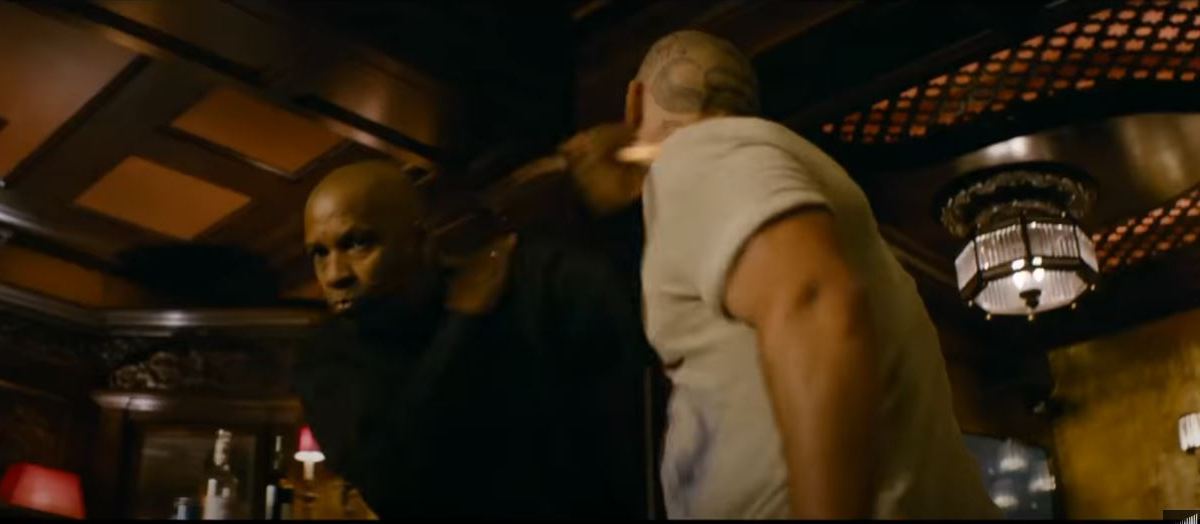
Should you watch Denzel Washington create havoc in THE EQUALIZER?

the equalizer denzel washington movie

If you were alive during the 1980s, Edward Woodward rocked white hair, cool suits, and a gun as he helped the helpless in the name of justice.

It was kinda like THE A TEAM, except just one guy, no van, no Mr. T, no trucks full of bad guys driving over a ramp and flipping. Also, Edward Woodward actually hit things when he fired his gun.

Sure, this was a cheesy show. Tell me something that wasn’t absolutely cheeseballs in the ’80s. But it was a pretty good form of cheese.

Here’s a trailer, and bonus points for all the big-name stars you can spot guest-starring in this thing.

So: if you fire up the interwebs, there’s not one but TWO movies starring Denzel Washington as a more modern and gritty equalizer.

Here’s the trailer for the first one, then we’ll talk smack.

Is Denzel Washington believable as a bald, middle-aged tough guy with a past, somebody who tries to start over as a regular man working at a home improvement warehouse?

Yeah. You believe it.

Hell, I’d watch Denzel Washington working his Joe Job for two hours as he explains the different grades of plywood and sends people to the right aisle for floor tile. The man is an acting legend.

But this is an action movie, meaning we need to get down to the fight scenes. And this movie features some truly inventive battles.

Here’s what they really do right: variety.

Most action heroes rely on certain gear or moves. Indiana Jones has his whip, 007 has his Walther PPK, Zorro and Robin Hook and Jedis have swords–there are good character reasons for all that. But it can get repetitive.

Every fight scene in THE EQUALIZER is different and interesting. Denzel doesn’t have a signature weapon; he improvises and uses found objects, or takes weapons from his opponents. It’s kinda like Jackie Chan, except instead of spinning ladders and making jokes, Denzel is KILLING ALL SORTS OF BAD GUYS.

In terms of bad guys, the Achilles’ heel of action movies, this movie actually stars a charming, chilling, scary villain who makes the final showdown fair and full of suspense.

VERDICT

I like it, I love it, I want some more of it.

Will watch the sequel, then send a bribe to the producer to make sure Denzel fulfills the trilogy, as foretold by the prophecy.

CARDIGAN by Taylor Swift and the evolution–or stagnation–of music

cardigan taylor swift

Some artists never change. They find their groove, or a niche that PAYS THE BILLS, and ride that pony until it falls over and dies of exhaustion ten miles west of the nearest gas station.

This can be a Good Thing, with certain bands and singers having a signature sound and the ability to produce album after album of consistent music. And it can be a Horrible Thing, with countless one-hit wonders still touring county fairs when they should be collecting a pension.

The opposite strategy is high risk, high reward. If you’re cranking out No. 1 hits, and making 8.4 bazillion dollars on tour, why change a thing?

There are bands and singers who’ve used constant change as a strategy, like Madonna hiring a hot new producer and taking on their style. Not a true evolution, that.

An opposite approach seems to work better. Mega-producer Rick Rubin is famous for long walks on the beach and philosophical talks, and he doesn’t have a signature sound that he stamps on artists. The man has produced everybody from the Beastie Boys to AC/DC to the Dixie Chicks (the list is ginormous). Rubin is more of a coach and mentor, somebody who lets musicians question themselves, stretch out, and grow into something different.

Which is why we’re talking about Taylor Swift and her new album, FOLKLORE.

Is she adopting a style, like Madonna putting on a British accent, or embracing something truly new?

Check out this single, CARDIGAN, and we’ll talk smack.

Whether you’re a giant fan (what are they called, Swifties? I HAVE NO IDEA) or a sneering hater, you have to admit this is good.

Different, refreshing, unexpected.

Taylor’s original evolution, from country to pop, was not a surprise. Every artist alive tries to move from a specialized niche to the biggest possible stage.

Personally, I am not a country fan, but I loved her early stuff. The lyrics told stories and the music was infectious. LOVE STORY and YOU BELONG WITH ME are perfect and timeless.

Didn’t like her pop albums as much, though when she slowed down, there were some good burners. OUT OF STYLE is great.

What she’s doing here is stripped down indie music. Instead of a wall of sound, we get stretches of silence.

I’m impressed. There wasn’t any hype train before she dropped FOLKLORE, and it really feels like she spent a few months in quarantine plinking on her piano and writing lyrics for this.

VERDICT

A happy surprise. Well done, Taylor the Swift — give us more like this. Or go visit Rick Rubin at his beach house and go wild with a metal album next.

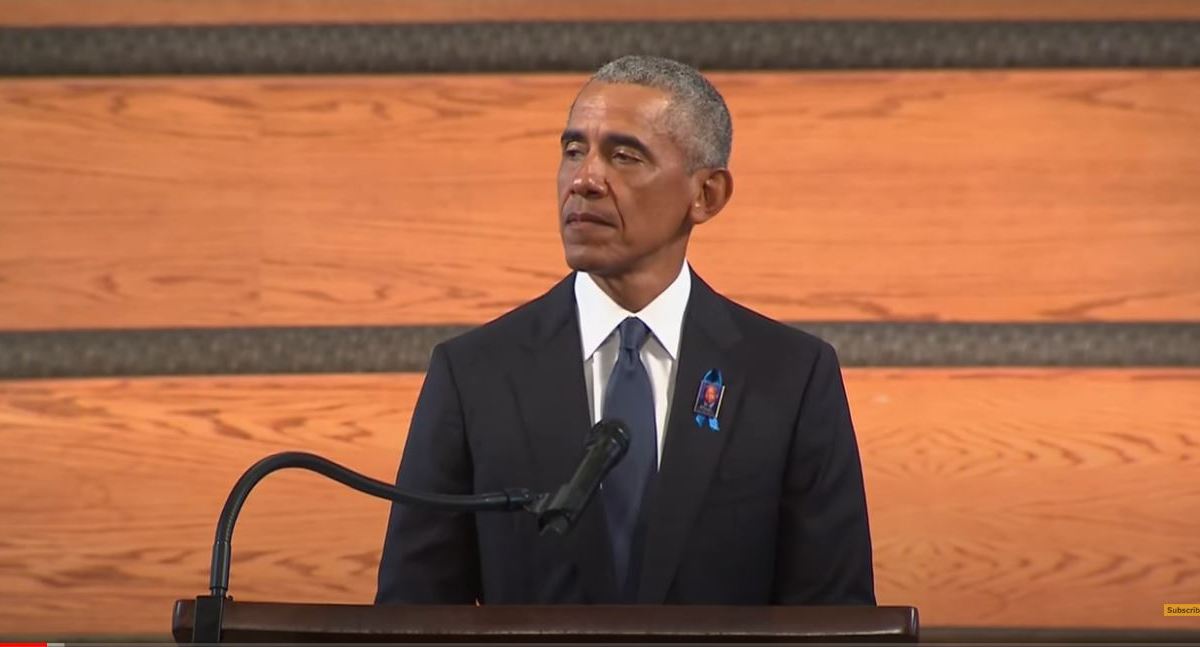
Obama’s eulogy of Rep. John Lewis is what we need today

obama eulogy john lewis

John Lewis was a friend to justice, a friend to democracy, and a friend to America.

Up until the moment of his death, he was trying to inspire us, appealing to our better natures.

President Barack Obama’s eulogy of this man deserves to be watched and shared. Not just this week, or this month.

This year, and the next, and the next.

Hat tip to The Atlantic for being the fastest at getting the text of this speech, as delivered. Here it is:

James wrote to the believers, “Consider it pure joy, my brothers and sisters, whenever you face trials of many kinds because you know that the testing of your faith produces perseverance. Let perseverance finish its work so that you may be mature and complete, lacking nothing.” It is a great honor to be back in Ebenezer Baptist Church in the pulpit of its greatest pastor, Dr. Martin Luther King Jr., to pay my respects to perhaps his finest disciple. An American whose faith was tested again and again, to produce a man of pure joy and unbreakable perseverance: John Robert Lewis.

To those who have spoken, to Presidents Bush and Clinton, Madame Speaker, Reverend Warnock, Reverend King, John’s family, friends, his beloved staff, Mayor Bottoms, I’ve come here today because I, like so many Americans, owe a great debt to John Lewis and his forceful vision of freedom.

You know, this country is a constant work in progress. We’re born with instructions: to form a more perfect union. Explicit in those words is the idea that we’re imperfect. That what gives each new generation purpose is to take up the unfinished work of the last and carry it further than any might have thought possible. John Lewis, first of the Freedom Riders; head of the Student Nonviolent Coordinating Committee; youngest speaker at the March on Washington; leader of the march from Selma to Montgomery; member of Congress, representing the people of this state and this district for 33 years; mentor to young people—including me at the time—until his final day on this Earth, he not only embraced that responsibility, but he made it his life’s work. Which isn’t bad for a boy from Troy.

John was born into modest means—that means he was poor. In the heart of the Jim Crow South to parents who picked somebody else’s cotton. Apparently he didn’t take to farm work. On days when he was supposed to help his brothers and sisters with their labor, he’d hide under the porch and make a break for the school bus when it showed up. His mother, Willie May Lewis, nurtured that curiosity in this shy, serious child. “Once you learn something,” she told her son, “once you get something inside your head, no one can take it away from you.” As a boy, John listened through the door after bedtime as his father’s friends complained about the Klan. One Sunday as a teenager, he heard Dr. King preach on the radio. As a college student in Tennessee, he signed up for Jim Lawson’s workshops on the tactic of nonviolent civil disobedience. John Lewis was getting something inside his head. An idea he couldn’t shake. It took hold of him. That nonviolent resistance and civil disobedience were the means to change laws but also change hearts and change minds and change nations and change the world.

So he helped organize the Nashville campaign in 1960. He and other young men and women sat at a segregated lunch counter, well dressed, straight back, refusing to let a milkshake poured on their heads or a cigarette extinguished on their backs or a foot aimed at their ribs—refuse to let that dent their dignity and their sense of purpose. And after a few months, the Nashville campaign achieved the first successful desegregation of public facilities of any major city in the South. John got a taste of jail for the first, second, third—well, several times. But he also got a taste of victory, and it consumed him with righteous purpose and he took the battle deeper into the South.

That same year, just weeks after the Supreme Court ruled that segregation of interstate bus facilities was unconstitutional, John and Bernard Lafayette bought two tickets, climbed aboard a Greyhound, sat up front, and refused to move. This was months before the first official Freedom Rides. He was doing a test. Trip was unsanctioned. Few knew what they were up to. And at every stop through the night, apparently, the angry driver stormed out of the bus and into the bus station. And John and Bernard had no idea what he might come back with. Or who he might come back with. Nobody was there to protect them. There were no camera crews to record events. We—you know, sometimes, Rev—we read about this and we kind of take it for granted. Or at least we, we act as if it was inevitable.

John Lewis did not hesitate, and he kept on, getting onboard buses and sitting at lunch counters, got his mug shot taken again and again. Marched again and again on a mission to change America. Spoke to a quarter of a million people at the March on Washington when he was just 23. Helped organize the Freedom Summer in Mississippi when he was just 24. At the ripe old age of 25, John was asked to lead the march from Selma to Montgomery. He was warned that Governor Wallace had ordered troopers to use violence. But he and Hosea Williams and others led them across that bridge anyway. And we’ve all seen the film and the footage and the photographs. President Clinton mentioned the trench coat, the knapsack, the book to read, the apple to eat, the toothbrush. Apparently, jails weren’t big on such creature comforts. And you look at those pictures, and John looked so young and he’s small in stature. Looking every bit that shy, serious child that his mother had raised, and yet, he’s full of purpose. God put perseverance in him.

And we know what happened to the marchers that day. Their bones were cracked by billy clubs. Their eyes and lungs choked with tear gas. They knelt to pray, which made their heads easier targets. And John was struck in the skull. And he thought he was going to die, surrounded by the sight of young Americans gagging and bleeding and trampled. Victims in their own country of state-sponsored violence.

And the thing is, I imagine initially that day the troopers thought they’d won the battle. You can imagine the conversations they had afterwards. You can imagine them saying, “Yeah, we showed them.” They figured they’d turn the protesters back over the bridge. That they’d kept, they’d preserved a system that denied the basic humanity of their fellow citizens. Except this time there were some cameras there. This time the world saw what happened, bore witness to Black Americans, who were asking for nothing more than to be treated like other Americans, who were not asking for special treatment, just equal treatment, promised to them a century before, and almost another century before that. And when John woke up and checked himself out of the hospital, he would make sure the world saw a movement that was, in the words of scripture, “hard pressed on every side but not crushed. Perplexed, but not in despair. Persecuted but not Abandoned. Struck down but not destroyed.” They returned to Brown Chapel, a battered prophet, bandages around his head, and he said, “More marchers will come now.” And the people came. And the troopers parted. And the marchers reached Montgomery. And their words reached the White House. And Lyndon Johnson, son of the South, said, “We shall overcome.” And the Voting Rights Act was signed into law.

The life of John Lewis was, in so many ways, exceptional. It vindicated the faith in our founding. Redeemed that faith. That most American of ideas, the idea that any of us, ordinary people without rank or wealth or title or fame, can somehow point out the imperfections of this nation and come together and challenge the status quo. And decide that it is in our power to remake this country, that we love, until it more closely aligns with our highest ideals. What a radical idea. What a revolutionary notion. This idea that any of us ordinary people, a young kid from Troy, can stand up to the powers and principalities and say, “No, this isn’t right; this isn’t true; this isn’t just. We can do better.” On the battlefield of justice, Americans like John, Americans like Lowery and C. T. Vivian, two other patriots we lost this year, liberated all of us. That many Americans came to take for granted. America was built by people like them. America was built by John Lewises. He, as much as anyone in our history, brought this country a little bit closer to our highest ideals. And someday when we do finish that long journey towards freedom, when we do form a more perfect union, whether it’s years from now or decades, or even if it takes another two centuries, John Lewis will be a founding father of that fuller, fairer, better America.

And yet, as exceptional as John was, here’s the thing: John never believed that what he did was more than any citizen of this country can do. I mentioned in the statement the day John passed, the thing about John was how gentle and humble he was. And despite this storied, remarkable career, he treated everyone with kindness and respect because it was innate to him, this idea that any of us can do what he did—if we’re willing to persevere. He believed that in all of us there exists the capacity for great courage. That in all of us, there’s a longing to do what’s right. That in all of us there’s a willingness to love all people, and extend to them their God-given rights. So many of us lose that sense. It’s taught out of us. We start feeling as if, in fact, we can’t afford to extend kindness or decency to other people. That we’re better off if we’re above other people and looking down on them, and so often that’s encouraged in our culture. But John always said he always saw the best in us, and he never gave up and never stopped speaking out because he saw the best in us. He believed in us even when we didn’t believe in ourselves.

And as a congressman, he didn’t rest. He kept getting himself arrested. As an old man, he didn’t sit out any fight, sat in all night long on the floor of the United States Capitol. I know his staff was stressed. But the testing of his faith produced perseverance. He knew that the march is not over. That the race is not yet won. That we have not yet reached that blessed destination, where we are judged by the content of our character. He knew from his own life that progress is fragile, that we have to be vigilant against the darker currents of this country’s history. Of our own history. Where there are whirlpools of violence and hatred and despair that can always rise again. Bull Connor may be gone, but today we witness with our own eyes, police officers kneeling on the necks of Black Americans. George Wallace may be gone, but we can witness our federal government sending agents to use tear gas and batons against peaceful demonstrators.

We may no longer have to guess the number of jelly beans in a jar in order to cast a ballot, but even as we sit here, there are those in power who are doing their darnedest to discourage people from voting by closing polling locations and targeting minorities and students with restrictive ID laws and attacking our voting rights with surgical precision, even undermining the Postal Service in the run-up to an election that’s going to be dependent on mail-in ballots so people don’t get sick.

I know this is a celebration of John’s life. There are some who might say we shouldn’t dwell on such things. But that’s why I’m talking about it. John Lewis devoted his time on this Earth fighting the very attacks on democracy and what’s best in America that we’re seeing circulate right now. He knew that every single one of us has a God-given power and that the faith of this democracy depends on how we use it. That democracy isn’t automatic. It has to be nurtured. It has to be tended to. We have to work at it. It’s hard. And so he knew that it depends on whether we summoned a measure, just a measure of John’s moral courage, to question what’s right and what’s wrong. And call things as they are. He said that as long as he had a breath in his body, he would do everything he could to preserve this democracy, and as long as we have breath in our bodies, we had to continue his cause.

If we want our children to grow up in a democracy, not just with elections, but a true democracy, a representative democracy, and a big-hearted tolerant, vibrant, inclusive America of perpetual self-creation, then we’re going to have to be more like John. We don’t have to do all the things he had to do, because he did them for us. But we got to do something. As the Lord instructed Paul, “Do not be afraid. Go on speaketh. Do not be silent. For I am with you and no one will attack you to harm you for I have many in this city who are my people.” It’s just, everybody’s got to come out and vote. We got all those people in the city, but they can’t do nothing. Like John, we’ve got to keep getting into that good trouble. He knew that nonviolent protest is patriotic, a way to raise public awareness and put a spotlight on injustice and make the powers that be uncomfortable. Like John, we don’t have to choose between protests and politics. It’s not an either/or situation. It’s a both/and situation. We have to engage in protests where that’s effective, but we also have to translate our passion and our causes into laws. Institutional practices. That’s why John ran for Congress 34 years ago. Like John, we’ve got to fight even harder for the most powerful tool that we have, which is the right to vote.

The Voting Rights Act is one of the crowning achievements of our democracy. It’s why John crossed that bridge, why he spilled that blood. And by the way, it was the result of Democrat and Republican efforts. President Bush, who spoke here earlier, and his father, signed its renewal when they were in office. President Clinton didn’t have to because it was the law when he arrived. So instead, he made a law to make it easier for people to register to vote. But once the Supreme Court weakened the Voting Rights Act, some state legislators unleashed a flood of laws designed specifically to make voting harder, especially, by the way, state legislators where there’s a lot of minority turnout and population growth. That’s not necessarily a mystery or an accident. It was an attack on what John fought for. It was an attack on our democratic freedoms, and we should treat it as such. If politicians want to honor John, and I’m so grateful for the legacy and work of all the congressional leaders who are here, but there’s a better way than a statement calling him a hero. You want to honor John? Let’s honor him by revitalizing the law that he was willing to die for. And by the way, naming the John Lewis Voting Rights Act, that is a fine tribute. But John wouldn’t want us to stop there. Just trying to get back to where we already were.

Once we pass the John Lewis Voting Rights Act, we should keep marching to make it even better by making sure every American is automatically registered to vote, including former inmates who’ve earned their second chance. By adding polling places and expanding early voting and making Election Day a national holiday, so if you are somebody who’s working in a factory or you’re a single mom, who’s got to go to her job and doesn’t get time off, you can still cast your ballot. By guaranteeing that every American citizen has equal representation in our government, including the American citizens who live in Washington, D.C., and in Puerto Rico. They’re Americans. By ending some of the partisan gerrymandering, so that all voters have the power to choose their politicians, not the other way around. And if all this takes eliminating the filibuster, another Jim Crow relic, in order to secure the God-given rights of every American, then that’s what we should do.

Now, even if we do all this, even if every bogus voter-suppression law is struck off the books today, we’ve got to be honest with ourselves that too many of us choose not to exercise the franchise. Too many of our citizens believe their vote won’t make a difference, or they buy into the cynicism that, by the way, is the central strategy of voter suppression, to make you discouraged, to stop believing in your own power. So, we’re also going to have to remember what John said. If you don’t do everything you can do to change things, then they will remain the same. You only pass this way once. You have to give it all you have. As long as young people are protesting in the streets hoping real change takes hold, I’m hopeful, but we can’t casually abandon them at the ballot box. Not when few elections have been as urgent on so many levels as this one. We can’t treat voting as an errand to run if we have some time. We have to treat it as the most important action we can take on behalf of democracy, and like John, we have to give it all we have.

I was proud that John Lewis was a friend of mine. I met him when I was in law school. He came to speak. And I went up and I said, “Mr. Lewis, you are one of my heroes. What inspired me more than anything as a young man was to see what you and Reverend Lawson and Bob Moses and Diane Nash and others did.” And he got that kind of “Aw shucks, thank you very much.” Next time I saw him, I’d been elected to the United States Senate. And I told him, “John, I’m here because of you.” And on Inauguration Day in 2008-2009, he was one of the first people I greeted and hugged on that stand. And I told him, “This is your day too.”

He was a good and kind and gentle man. And he believed in us. Even when we don’t believe in ourselves. And it’s fitting that the last time John and I shared a public forum was on Zoom. And I’m pretty sure neither he nor I set up the Zoom call because we didn’t know how to work it. It was a virtual town hall with a gathering of young activists, who had been helping to lead this summer’s demonstrations in the wake of George Floyd’s death. And afterward, I spoke to John privately. And he could not have been prouder to see this new generation of activists standing up for freedom and equality. A new generation that was intent on voting and protecting the right to vote. In some cases, a new generation running for political office. And I told him all those young people, John, of every race and every religion, from every background and gender and sexual orientation—John, those are your children. They learned from your example, even if they didn’t always know it. They had understood through him what American citizenship requires, even if they’d only heard about his courage through the history books.

By the thousands, faceless, anonymous young people, Black and white, have taken our nation “back to those great wells of democracy which were dug deep by the Founding Fathers in the formulation of the Constitution and the Declaration of Independence.” Dr. King said that in the 1960s. And it came true again this summer. We see it outside our windows in big cities and rural towns. In men and women; young and old; straight Americans and LGBTQ Americans; Blacks, who long for equal treatment, and whites, who can no longer accept freedom for themselves while witnessing the subjugation of their fellow Americans. We see it in everybody doing the hard work of overcoming complacency, of overcoming our own fears and our own prejudices, our own hatreds. You see it in people trying to be better, truer versions of ourselves.

And that’s what John Lewis teaches us. That’s where real courage comes from, not from turning on each other, but by turning towards one another. Not by sowing hatred and division, but by spreading love and truth. Not by avoiding our responsibilities to create a better America and a better world, but by embracing those responsibilities with joy and perseverance and discovering that, in our beloved community, we do not walk alone.

What a gift John Lewis was. We are all so lucky to have had him walk with us for a while and show us the way. God bless you all. God bless America. God bless this gentle soul who pulled it closer to its promise. Thank you very much.

Washington Man tries to outdo Florida Man, almost succeeds

As a former journalist, I still love the news. If you cut me, I bleed newsprint.

Weird news is always interesting to read, with human beings and animals constantly finding new and unique ways of getting global attention. Usually for plumbing the depths of stupidity.

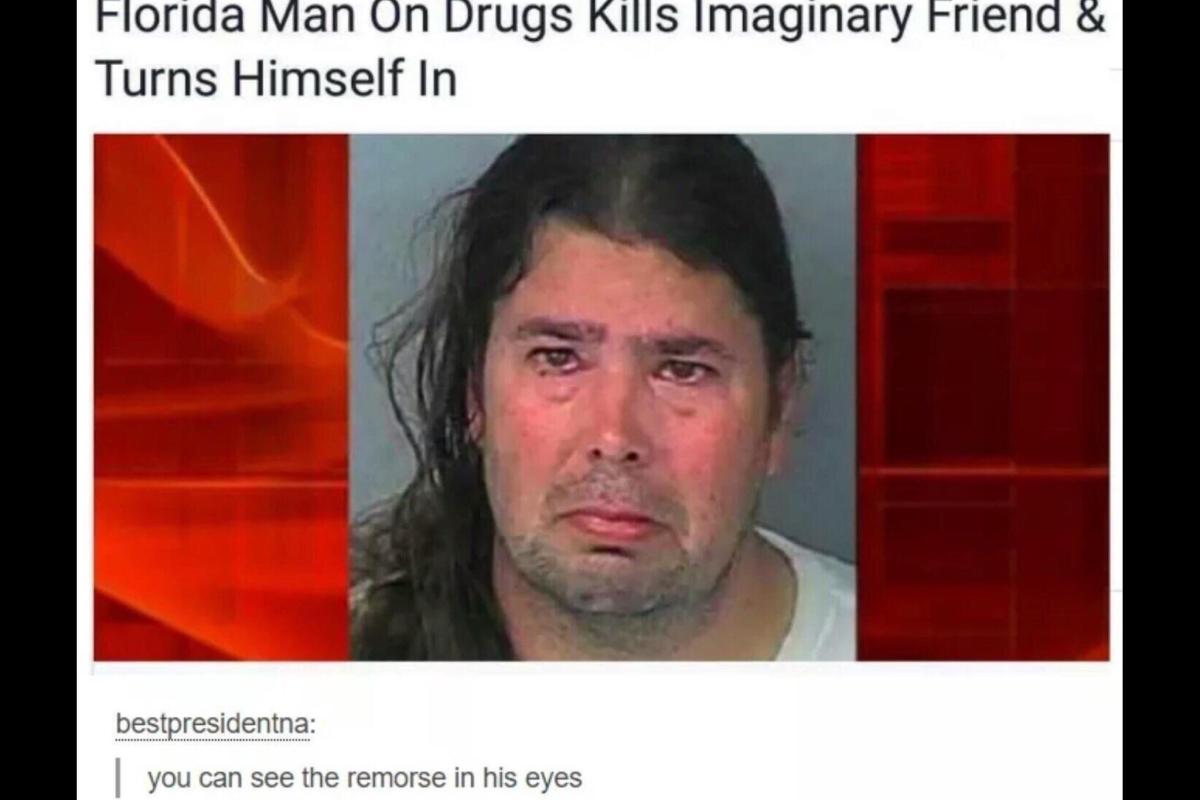
Nothing illustrates the why and how of weird news like Florida Man stories, named after newspaper headlines that start with “Florida man” and end with stuff like “snorts meth and robs 7-Eleven wearing nothing but My Little Pony T-shirt,” then in the story you find out after he ran off from the gas station, he hid from the cops in a nearby pond and was eaten by a one-eyed alligator who lost the eye in a famous battle with a drunken stripper back in 1985.

You think I’m exaggerating and mixing in plot elements from Elmore Leonard and Carl Hiaasen novels. But I’m not. Go ahead, google “Florida Man” and read a few.

So it’s always fun when my medium-sized, square state tries to compete with Florida Man.

Doesn’t happen often. Florida Man is powerful, and my state is a great place to live.

But it happened recently.

Burglary suspect leaves thank-you note, tries to swim away from cops

That’s one take on the story, a good, straight headline.

Here’s why I like it, and also why it doesn’t quite meet Florida Man standards.

You only need a single element for a story to be news. In this case, a man burglarized a home.

That’s it. There’s conflict there, some kind of backstory–is he stealing things for drug money or is that home a specific target? There’s also suspense about the outcome–will the cops catch him?

The second element is the thank you note, which lets this story go viral. Who leaves a thank-you note? Was it done out of kindness, or did the burglar know the victim? Are we talking a 40-year-old professional criminal starting to feel remorse or a 9-year-old budding psychopath who’s watched too many episodes of HANNIBAL?

Our story’s third element adds value. He doesn’t run from the cops, or drive off to start a car chase. He tries to out-swim the cops. Funny to picture and if there’s video footage, that’ll go viral, too.

But it’s missing a fourth element, the special sauce of Florida Man stories: gonzo nuttery.

How would this story end if it happened in Florida?

That’s the fun part. He would have jumped into that canal and been eaten by an alligator, sucked into a bottomless sinkhole, or swim all the way to the Cayman Islands.

That fourth element can’t do all the work. It needs a character in conflict, a mystery about motives, and a head-scratching gesture. You need those three foundations for your final Florida Man Cherry on the Top of this Ice Cream Sundae of Madness.