The Red Pen of Doom reluctantly nukes THE GREAT GATSBY

I take great pleasure in dissecting the first page of Popular Novels Which Actually Stink, or finding first pages that absolutely sing and figuring out why they’re so glorious.

The first page matters. A few examples:

The Red Pen of Doom puts a stake through TWILIGHT

The Red Pen of Doom impales FIFTY SHADES OF GREY

The Red Pen of Doom guts THE NOTEBOOK

The Red Pen of Doom murders THE FOUNTAINHEAD by Ayn Rand

By request, today we’re taking on page one of a classic of lit-RAH-sure: THE GREAT GATSBY by F. Scott Fitzgerald.

Sidenote: There are 5,832 various editions and such, so you’re page one may end on a different sentence and such. I tried to stop at the end of a paragraph, though as this is an older book, back when paragraphs lasted longer than most CBS sitcoms, this is kinda hard.

THE GREAT GATSBY

In my younger and more vulnerable years, (missing a comma here) my father gave me some advice that I’ve been turning over in my mind ever since.

“Whenever you feel like criticizing any one,” he told me, “just remember that all the people in this world haven’t had the advantages that you’ve had.”

He didn’t say any more, (this feels like odd, unplanned repetition of the “any one” in the previous graf, so strike “any”) but we’ve always been unusually communicative in a reserved way, and I understood that he meant a great deal more than that. In consequence, I’m inclined to reserve all judgments, a habit that has opened up many curious natures to me and also made me the victim of not a few veteran bores. (Listen, we’re on the third graf already, and I’m not inclined to reserve all judgment, seeing how you’re coming off like a veteran bore.) The abnormal mind is quick to detect and attach itself to this quality when it appears in a normal person, and so it came about that in college I was unjustly accused of being a politician, because I was became privy to the secret griefs of wild, unknown men. Most of the confidences were unsought — frequently I have feigned sleep, preoccupation, or a hostile levity when I realized by some unmistakable sign that an intimate revelation was quivering on the horizon.; for the intimate revelations (“intimate relations” twice in this sentence, so close together, doesn’t work at all) of young men, or at least The terms in which they express them, (comma deleted) are usually plagiaristic and marred by obvious suppressions. Reserving judgments is a matter of infinite hope. I am still a little afraid of missing something if I forget that, as my father snobbishly suggested, and I snobbishly repeat, (here we get repetition with a purpose for once and it does work) a sense of the fundamental decencies is parcelled out unequally at birth. (This is an awkward mouthful)

THOUGHTS: This is 100 percent interior monologue, which isn’t required by law to be boring. Though it sure leans that way.

Maybe it sets the mood.

However: If you’re basing a tragic hero’s entire motivation for making a ton of money to become a rich snob to impress a girl he loved and lost, and you’re hell-bent on starting page one with interior monologue about backstory, MAKE IT ABOUT THE GIRL.

Not the narrator. Not the narrator’s dad.

Not boring people who tell the narrator secrets while he pretends to sleep.

Make it all about the girl and Gatsby.

A huge part of the novel is throwing fancy parties to impress each other, right? I’m going off my memory from doing my own term papers on this thing. Never saw the movies. And when I do a first page, I try NOT to cheat by reading plot summaries and such, even if I’ve read the book.

Put a gun to my head and I’d delete this first page and start with the real inciting incident, which should be Gatsby and the narrator meeting the girl at a party way back when, so you can echo that later.

Or make it about about a small betrayal, from college or back during the war, to foreshadow the bigger betrayals and tragedies to come.

VERDICT: Doesn’t make me want to read more, which I wouldn’t unless the English 101 prof gave me no choice.

Sorry, F. Scott F.–can’t lie and say I liked this. Nuke the first page and go with a better hook.

Why writing is EXACTLY like running, except for the part about words

Most of the folks who follow this silly blog are creative types–novelists, editors, journalists, photographers and other brilliant, beautiful people.

So let’s talk about creativity.

Are the arts a habit? Or does the muse randomly descend upon your noggin, so long as you make the right sacrifices and entreaties?

Though my love for the muse is strong, I’m making the case for habit.

All the way.

Because writing–and other creative work–is a hell of a lot like running. Here’s why.

1) The more you do it, the easier it gets

You can take classes about writing (or running), read books, watch videos and listen to experts.

In the end, though, there’s no substitute to getting off your duff and doing it.

And the more you write, or run, the easier it gets.

The first time you run a mile, or write something Serious, it’s painful.

Sometimes so painful that you question why anyone would do this ever again.

But then the next time, you run two miles, or write something twice as long, and it only hurts half as much.

Creativity is a muscle. The more you use it, the stronger it gets.

2) You can’t save up and go wild

It’s far, far easier to write 500 words a day, or run 5 miles five days a week, then tell yourself, “Hey, I’m busy this week, but on the weekend, I’ll crank out 2,500 words of that novel or run 25 miles.”

Hear me now and believe me later in the week: trying to cram it all into a weekend, or a single day, is setting yourself up to fail.

A mile a day is easy. You can walk it.

Same thing with 100 words, which you can do with a stubby pencil and the back of an envelope while hanging upside down on a roller coaster.

Two miles a day is still easy, just as 200 words a day is a breeze.

The difficulty goes up exponentially.

Famous novelists in history like Hemingway used to count their words religiously, by hand. They didn’t have a button on Word that did the work for them. And they’d quit for the day after hitting a target like 500 words.

Doesn’t sound like much. Yet that 500 a day is huge.

If you write 500 words a day, every day, that’s 182,500 words a year.

Three novels, unless you’re doing sagas about elves and dragons and such, in which case congrats on finishing that prologue. (I say that out of love.)

Sure, on good days you’ll crank out 1,000 words, and on great days you’ll hit 2,000 and if you’re absolutely on fire, congrats and 4,000.

It’s just that you can’t count on 2,000 words a day, every day, week after week.

Same thing with running. I can do 5 miles maybe three days a week, and work up to four or five days a week after a month or two.

Might do ten miles once a week, if I’m feeling it.

Ten miles a day, every day, isn’t realistic.

Resting all week and running 25 miles on Sunday? Nopity nope nope. Ain’t happening.

3) Loud music and solitude

There are writers I know who can’t write unless the door is closed, to get rid of that feeling that somebody is behind them.

Unless you have a twin, or a great friend who’s in exactly the same shape as you, it’s tough finding a running partner who goes at the same pace and is available to run whenever you can cram it in.

Writing and running are both made for headphones and solitude.

This is one area where running and writing diverge, since I don’t write anything Serious without a fresh cup of joe, while running five or ten miles while carrying a coffee mug hasn’t worked out yet.

4) Coaching, advice and gear isn’t everything, but it sure helps

It’s possible to write only using a pen and legal pads.

Somebody could run barefoot, every day, and be faster than a sedentary person running once a week wearing $225 shoes.

HOWEVER: good coaching, tips and equipment help.

I type faster on an ergonomic keyboard and run faster with good shoes.

Scrivener is better than Word, which is better than a legal pad.

And in both things, there’s always something to learn. One of the wisest men I know says, “Whenever I meet somebody, I learn something.”

Never think asking for advice is a flashing neon sign telling the world you’re an amateur.

Coaching, advice and gear gets more important the better you get at writing or running.

Professional runners and writers don’t tell people, “Yeah, I do this for a living, which makes me an expert, so why would I ask people for help or advice?”

The opposite is true, with the best professionals in the world seeking out the MOST coaching and help, since even a 1 percent boost to their performance matters.

5) Mixing it up is essential

You don’t run the same route, distance and pace every time. You do a hill day, a sprint day, a distance day.

Same thing with writing. There’s great benefit to mixing up what you do and layering it all together.

Journalists should try fiction.

Novelists should give poetry a go.

Screenwriters can gain from checking out rhetoric and speechwriting.

And there’s an order to how you write or train.

Runners and other athletes do workouts in certain progressions: start slow and build up volume. Rest, stretch, massage, ice, heat. It’s not the same thing every day.

Writers have their own progressions. You can’t write and edit at the same time, just like you can’t run and stretch in the same minute. These things happen in series, not parallel.

6) Deadlines focus the mind

Without deadlines, it’s easy to meander along. There’s always tomorrow, next week, next month, next year.

Deadlines make things happen.

I’m running more and more often, and for longer distances, due to a looming deadline: a half marathon in September.

Same thing is true with writing, where deadlines rules.

For the month of August, I did a little experiment. Could I write one post on this silly blog every day, put down at least 500 words a day on the new novel–plus train for the half marathon?

Running got easier, every time. Two miles turned into three miles, then five, six, seven, nine, ten–it flowed.

Without that half-marathon coming up, I would’ve been happy doing five miles forever, and never tested myself to see if nine or 10 would kill me.

Though I missed one Friday with the blog, I doubled up on a different day for 31 posts in 31 days. NOT TOO SHABBY. Pretty sure that’s the most I’ve posted in any month since the dawn of time.

And on the novel, I cranked out 15 chapters, which works out to half a chapter a day, every day.

For structure geeks, that’s 15 chapters out of 36 total in a four-act structure, with nine chapters per act.

Three chapters shy of half a novel is a beautiful, beautiful month.

You don’t complain about that, unless you want the Writing Gods to strike you down with lightning after opening a sinkhole beneath your feet.

I raise my glass to August, for it was Good.

Not good because the muse decided to bless me.

Good because habit, discipline and dedication beats inspiration. Every single time.

The Red Pen of Doom destroys A SHORE THING by Snooki

Listen: the first page of a book shares something in common with the first moments of a song, the first five minutes of a movie, the first date, the first dance, the first steps of your first-born child.

It should be magic.

Raw and beautiful. Powerful and pure.

So on this silly blog, I pay particular attention to the first page of novels. Because you can bet Grandpa’s farm and every cow in sight that a brilliant page one foreshadows a good book, while a terrible collection of clichés and drivel on the first page will not suddenly improve by page 302 to make us laugh, cry and change our life forever.

The first page matters. Behold:

Today, we take on A SHORE THING, allegedly written by Snooki, though we all know she didn’t actually write it.

A professional ghostwriter did the boring “typing of words” part. Snooki did the hard work of cashing the check.

You will be shocked to learn her fellow castmates also got publishing deals, with Jwoww and The Situation also getting checks from publishers to put their infamous names on book-like substances.

Many trees gave their lives to give their words life.

I will pour one out for those trees tonight.

Here’s the text of page one, with edits and comments in red:

A SHORE THING

Life was hard. But a pouf? That should be easy. (Whoa, starting out a novel with a three-word cliché is a bold, bold move. Risky. And it doesn’t pay off here. Because anybody who says “life is hard” and follows that with an extended riff on the difficulties of Big Hair doesn’t actually have a hard life at all.)

Giovanna “Gia” Spumanti was a hair-raising pro. She’d been banging out poufs since age eleven, or as soon as her fingers were long enough to hold a bottle of Deluxe Aqua Net. (Maybe this is intentional, but the innuendo in the first two sentences of this graf is more juvenile than clever.) After ten years of trial and error to find the right combination of spray, twisting, and shine serum, Gia could add four inches to her overall height—which as five feet flat, she could use. Gia’s pouf defied the laws of gravity. It was her crowning glory. (“Crowning glory”–oh, how punny. Please riff on that more in the next sentence.) Although she’d love to wear an actual crown (here we go, as the prophecy foretold) of rhinestone tiara whenever she left the house, it just wasn’t practical. It could fly off on the dance floor and take out an eye. The pouf, however, wasn’t going anywhere (but up). (Wait: seriously? This is like one of those bad SNL skits with one joke they repeat for 10 minutes.)

Tonight, humidity was a bitch. Her thick black mane refused to cooperate. Gia brushed it out to start over—again—feeling discouraged. Her first night out in Seaside Heights, New Jersey, she wanted to present the best version of herself. Hundreds of guys would get a look at her, and she’d be searching among them for her near future fling(s). (I read a ton of fiction, and non-fiction, and this is the weirdest use of parantheticals I’ve seen in forever. Doesn’t work. Also, protags should be likable, and this graf of backstory just makes the reader see the protag as completely self-absorbed.) After the year she had back home in Brooklyn—landing and losing a couple of jobs and boyfriends—she deserved the sexiest summer ever.

Gia hoisted the front section of her hair, holding it high over her head with one hand.

COMMENTS

I binge-watched the first season of JERSEY SHORE while visiting my sister in H’wood, so I know enough to be dangerous about Snooki, The Situation and the entire sordid thing.

And no, this novel meant to be lit-RAH-sure.

However: Entertaining trash should still be entertaining, and well-done. This first page is neither.

In this sort of story, sure, you’re going to get a lot of interior monologue, including self-centered nonsense like this.

A full page about hair, though, is a bit much even if you put it in the middle of this kind of novel.

Dedicating the entire page to hair and backstory? Far worse.

Here’s the structural lesson I take from this hot mess: life is hard, and what’s even harder is turning a reality show villain into a fictional hero.

Because that’s what the stars of JERSEY SHORE are: comic villains absolutely swimming in a sea of nasty hubris.

Every comedy targets an institution. Sitcoms typically poke fun at families, marriage and kids. M*A*S*H* went after war. FRIENDS put the bull’s eye on young singles.

The producers of JERSEY SHORE knew Snooki, The Situation and the rest of the gang were comic villains. They’re only fun to watch to see what kind of trouble happens, and every piece of trouble is far from random. Nobody gets hit by a bus while they’re using a crosswalk.

Every episode is all about chaos and craziness that comes straight from the hubris of cast members.

Who will get drunk and start a bar fight?

Who’s so desperate tonight that they’ll hook up with anything and everything?

Which member of the cast is such a self-absorbed dipstick that they’ll get on the phone and try to order a pizza or a cab and give his last name as “Situation” and first name as “The”?

I haven’t read the rest of A SHORE THING and never will. The feeling I get, though, is this is meant to be a comic romp, with the Snooki character, Gia, set up as the protag. That we’re supposed to laugh with her instead of laughing at her.

Sorry. Comedy doesn’t work like that.

VERDICT: Kill it with fire. Nuke it from orbit.
Welcome to the age of the meta-story

There’s a disturbing trend in Hollywood where studio execs would rather greenlight movies based on board games and toys from the ’80s than original ideas.

Yet I’m not overly worried about getting swamped with a sea of sequels to BATTLESHIP or RAMPAGE.

The deeper, more enduring trend in books, movies and video games? Meta-stories.

STAR WARS, HARRY POTTER, LORD OF THE RINGS, the Marvel Cinematic Universe, the Batman Arkham games, WESTWORLD, GAME OF THRONES–they best series are true meta stories.

Notice I didn’t list some big franchises, like the STAR TREK reboot, the DC non-universe and the MISSION IMPOSSIBLE: TOM CRUISE DOES ALL HIS OWN STUNTS movies. They don’t fall in the same category.

So what’s a meta-story?

A book or movie can have sequels with the same hero (or group of heroes and sidekicks) without being a meta-story. Think of 99 percent of most shows on HBO, Netflix or this thing I called “network television.” They’re episodic. Sure, it’s the same universe and same characters. The stories being told, though, are separate and distinct.

This is why you can binge-watch LAW AND ORDER: PICK A SERIES, ANY SERIES, WE HAVE LOTS and it doesn’t matter if they skip around seasons and whatnot.

This is also why you can take all 20-some of the Reacher novels by Lee Child (my fav) and read them in any order. Because yes, Reacher is in every one of them, but otherwise, they aren’t really that connected. Separate stories each time. Different villains, different themes, different locations.

Meta-story is the difference between Marvel owning a license to print money while DC, with better characters (they have Batman, for God’s sake) struggles and reshoots and just can’t get it going.

Building the beast

It’s simple, really. Forget about the hero.

Yes, the hero is what people focus on, typically. That’s the star of the show, right?

Meta-stories often don’t have a singular hero. Think about Marvel–there are dozens of heroes.

The acid test, the way to see whether a series of books and movies is episodic or a meta-story, is to look at the villain(s).

Is it Villain-of-the-Week or does the series feature One Big Baddie?

HARRY POTTER is all about Voldemort, who’s winning the whole time until Harry literally dies and comes back to beat him.

https://www.youtube.com/watch?v=ITqYqMNF4R8

THE LORD OF THE RINGS has a fellowship of heroes–not a singular hero–facing off against One Big Baddie who happens to be a big glowing eye.

Marvel was brilliant in planting Infinity Stones in every movie and having Thanos lurking in the background the whole time as the One Big Baddie, a villain so good they’ve managed to do what, 20-some movies as part of this arc? Amazing.


https://www.youtube.com/watch?v=GG1Onjlj0CM

You get the idea.

If you’re writing a series, just remember this: Villains rule, heroes drool.

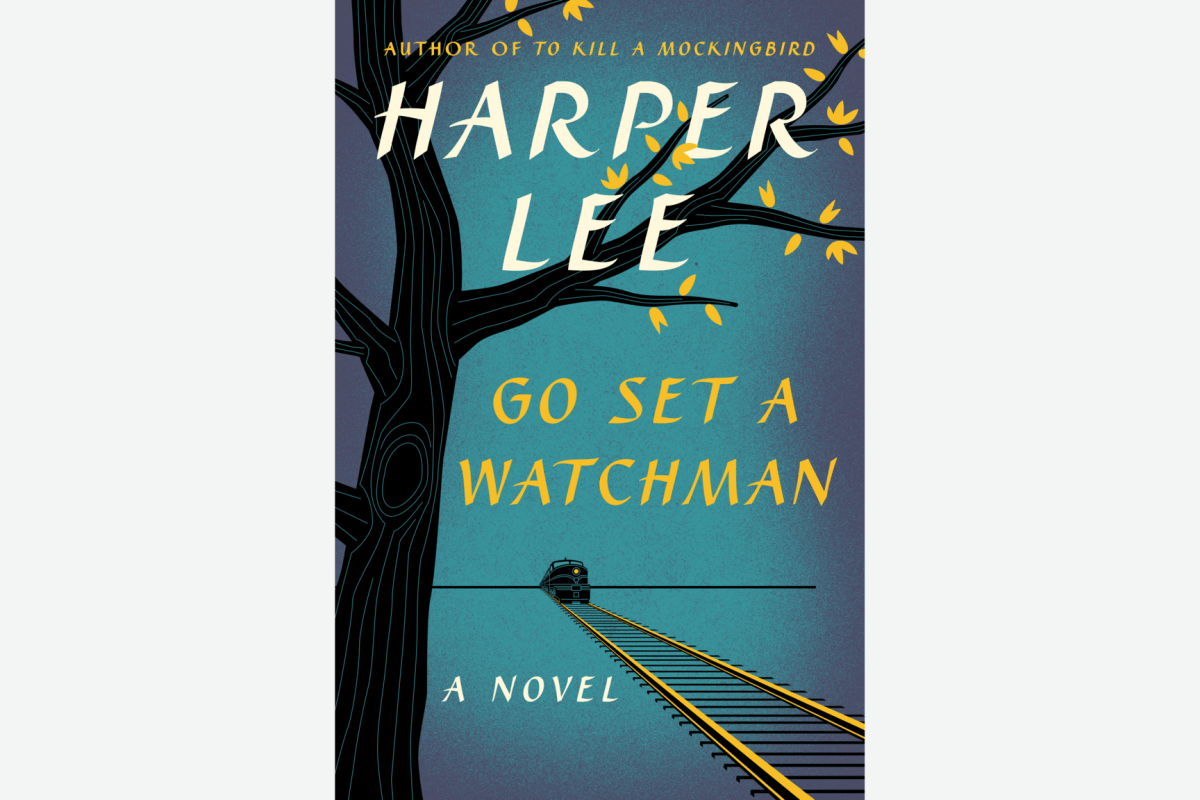
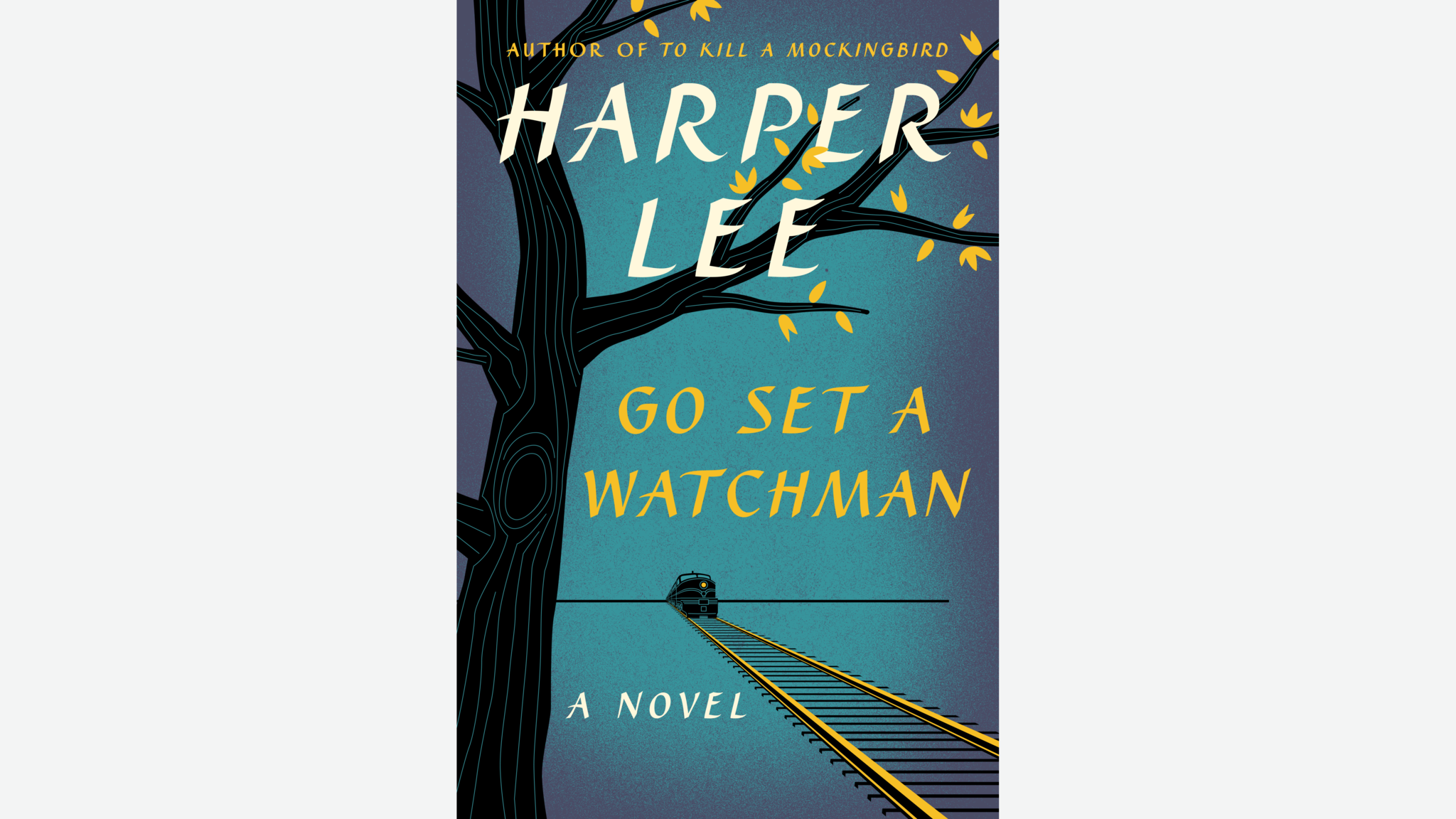
The Red Pen of Doom takes on GO SET A WATCHMAN by Harper Lee

go set a watchman

To Kill A Mockingbird is a classic novel that turned into an amazing film.

So when news broke that Harper Lee, who never published another novel, was coming out with a book-like object, and this book-like object would be a sequel to her big hit—well, that was huge.

It was also controversial, with sources saying Harper Lee never intended this to get published, that it was a draft, with the same characters later showing up in To Kill a Mocking Bird.

So here’s the first page, as printed on dead trees, and I allowed the last paragraph to actually finish instead of ending mid-sentence with “folding herself up” and such.

For previous posts bleeding red all over the first page of a novel, click away with your mousity mouse while enjoying some chocolate mousse:

The Red Pen of Doom impales FIFTY SHADES OF GREY

The Red Pen of Doom guts THE NOTEBOOK

The Red Pen of Doom puts a stake through TWILIGHT

The Red Pen of Doom murders THE FOUNTAINHEAD by Ayn Rand

The Red Pen of Doom harpoons MOBY DICK by Herman Melville

The Red Pen of Doom destroys FREEDOM by Jonathan Franzen

GO SET A WATCHMAN

Since Atlanta, she had looked out the dining-car window with a delight almost physical. Over her breakfast coffee, she watched (We already know she’s looking and watching, so these words get slain.) The last of Georgia’s hills receded and the red earth appeared, and with it tin-roofed houses set in the middle of swept yards, and in the yards the inevitable verbena grew, surrounded by whitewashed tires. She grinned when she saw (Looked, watched and saw all in the first paragraph, three shining beacons of bad writing, so let’s kill the last two.) her at the first TV antenna atop an unpainted Negro house; as they multiplied, her joy rose.

Jean Louise Finch always made this journey by air, but she decided to go by train from New York to Maycomb Junction on her fifth annual trip home. (Now we go back in time for backstory, which is Boring and must die.) For one thing, she had the life scared out of her the last time she was on a plane: the pilot elected to fly through a tornado. (This would have been good in the present tense, as an exciting start to the novel: “So I’m flying through this tornado, wishing I’d taken the train.” Nope.) For another thing, flying home meant her father rising at three in the morning, driving a hundred miles to meet her in Mobile, and doing a full day’s work afterwards: he was seventy-two now and this was no longer fair. (More exposition and backstory without the barest hint of conflict.)

She was glad she had decided to go by train. Trains had changed since her childhood, and the novelty of the experience amused her: a fat genie of a porter materialized when she pressed a button on a wall; at her bidding a stainless steel washbasin popped out of another wall, and there was a john one could prop one’s feet on. (Nice imagery in the last line.) She resolved not to be intimidated by several messages stenciled around her compartment – a roomette, they called it – but when she went to bed the night before, she succeeded in folding herself up into the wall because she had ignored an injunction to PULL THIS LEVER DOWN OVER BRACKETS, a situation remedied by the porter to her embarrassment, as her habit was to sleep only in pajama tops.

End of Page 1

Notes from The Red Pen of Doom:

You don’t need Michael Bay explosions on every page, especially when we’re talking about lit-rah-sure.

But you do need problems. Get your hero up a tree, throw rocks at them and let them find a way down. 

Jean Louise Finch (Scout) doesn’t get up a tree on this page one. There are no rocks aimed at her head, no suspense or trouble at all, unless you count the porter possibly walking in on Scout wearing only her pajama tops, though that sort of situation belongs more in a book with Fabio on the cover. 

This page one is all description, exposition and backstory.

Later in the book, we learn our heroine is traveling by train to meet the man she’s being pushed into marrying. That’s a real conflict. Why not foreshadow that?

Put her back on a plane instead of the comfortable train, and give us that tornado again, with a first line about Scout gripping the arms of her chair as the pilot headed insanely through the edge of a tornado and she headed insanely back home to a marriage she didn’t want.

Give us something. Anything. 

Because I’m feeling kind, I didn’t get into the brutal reviews of this novel, ones by people who pay the mortgage by reading and reviewing book-like objects of all sorts, or the whole controversial shebang about changing Atticus Finch from an iconic hero into a villain who’s sympathetic to the KKK.

I’m simply going after the first page, and the only job of a page one page is to make readers turn to page two, then page three and finally page 288 or even, if it’s a Stephen King doorstopper, page 1,104.

This first page fails at that job. I have no interest in hearing more about the interior décor of this train, no desire to see more of the scenery flashing by and no hope that this story will get any more interesting as it chugs along.

Verdict: Put it to rest, gently, far from the spot of honor on the library shelf for To Kill a Mockingbird.

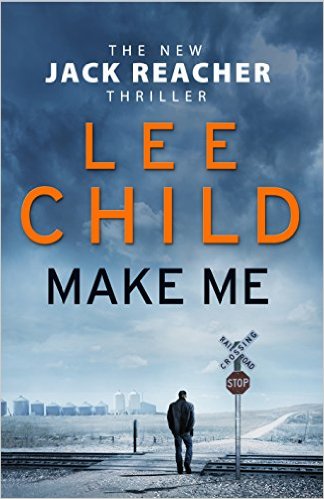
Why MAKE ME by Lee Child gets graded on a curve

MAKE ME by Lee Child

I can’t count how many hardcover Reacher novels line the top shelf of my library. Lee Child is that good.

MAKE ME is his latest novel about Reacher, and it’s also good.

Not bad. Not great.

Acceptable.

Once again, our hero is (a) wandering the small towns of America only to (b) bump into a beautiful girl with a gun who (c) is investigating Some Crazy Problem Involving This Small Town.

This is also the plot of about 17 other Reacher novels.

The towns change. The nature of the evil plot changes. The women change.

Reacher never does

Lee Child is one of my favorite authors, the greatest living thriller writer, and Reacher is a great character. The brain of Sherlock Holmes shoved into the body of the Hulk, funny, smart and tough. A great hero.

HOWEVER: Child isn’t stretching a single writing muscle here. Don’t think he even had to warm up.

It’s as if the devil snuck into his bedroom late one night and said, “If I promise you riches and fame, the price being you have to write the same book every year—year after year, until you die—do we have a deal?”

If we’re grading Child against other thriller authors, he gets an A.

But we’re not. There’s a huge body of work, that top shelf full of Reacher novels already written. MAKE ME sits among them.

Not bad. Not great.

Acceptable.

There is proof that Lee Child can blow expectations out of the water, when he does feel like stretching those writing muscles.

One of the few first-person POV novels he did, THE ENEMY, slayed me with clever clues, revelations and twists. I’ve read it again and again. A great mystery, and the only novel featuring Reacher in the Army.

That’s not a coincidence.

No such thing.

I hope the next novel picks up the mold in Reacher’s big, strong hands and smashes it against the asphalt. That it doesn’t feature a beautiful girl with a gun and a badge who teams up with Reacher, sleeps with him, takes down the bad guys and disappears, like all the others.

I hope the villain is memorable and, for once, a match for the hero. I hope Reacher has to truly suffer, sacrifice and change to actually win.

I hope.

Verdict: MAKE ME gets four out of five folding toothbrushes.

Related posts:

Put your writing to the Screen Time Test

writing meme spiderman dear diary

While we are all busy BLOGGING, instead of writing what we’re supposed to, I want to steal a concept from Hollywood (thanks, sis!) that all writers can use: Screen Time.

This works for any bit of writing, whether it’s an oped in a paper of news, a 30-minute keynote speech about saving the three-toed sloths of Costa Rica or an epic doorstop of a novel clocking in at 984 pages entitled ELVES WITH LIGHTSABERS RIDING DRAGONS AND THE VAMPIRE WITCHES WHO LOVE THEM. (Note: Don’t speak of this, because it tempts me, and I may write the first chapter of that book, then email it around until we actually hold in our evil little hands 984 pages that eviscerates Game of Thrones, Twilight, the Star Wars prequels and Lord of the Rings.)

So, back to the point: Screen Time is an essential test for any piece of writing.

I could put a gun to your head and ask, “What’s this novel / screenplay / letter to the editor really about?” and you might answer, “a time-traveling World War II nurse and the men in kilts who love her / waiting for some dude who never shows up / why the federal government is building secret tunnels underneath Wal-Marts in Texas to stage an invasion in cahoots with ISIS cells hiding in Mexico.”

And you might INTEND that to be the point of what you wrote.

The Screen Time Test will say if you’re a lying liar or not.

Movies are the easiest, so let’s go with AVENGERS: JAMES SPADER IS A SHINY ROBOT WHO HATES HUMANS. You take the heroes, sidekicks, villains, minions and nameless civilians in the film and add up the the number of minutes (or seconds) they actually show up on film. If you’re feeling insanely generous, add up minutes where other characters talk about them, too, though we may call you Cheaty McCheatypants. Continue reading “Put your writing to the Screen Time Test”

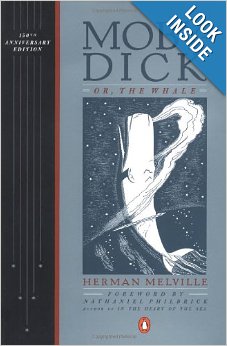
The Red Pen of Doom harpoons MOBY DICK by Herman Melville

MOBY DICK by Herman Melville

Now, this classic book is so ingrained in our culture that movies can get all deep and interesting simply by alluding to a metaphor–which is like a simile, only different–that refers to this doorstop of a book.

Like this: “Maybe I’m Ahab and he’s my white whale” uttered by Bruce Willis in DIE HARD 17: THE HAIR DYES HARDEST could change that movie from just another 120-minute shootout in a nursing home into a penetrating examination of the purpose or life, or lack thereof.

Does that make editing the first page of this thing any harder?

Not really. Bring it, Melville.

MOBY DICK

by Herman Melville

Call me Ishmael. (People have been riffing off it for so many years that those three words are invincible. Can’t touch this.) Some years ago — never mind how long precisely — having little or no money in my purse, and nothing particular to interest me on shore, I thought I would sail about a little and see the watery part of the world. (This second line is also good. It makes the narrator a smidge unreliable, which is always interesting, and gives him a motive that everybody can relate to: being poor and wanting to see the world.) It is a way I have of driving off the spleen and regulating the circulation. (On your third swing of the bat, Herman the Meville, you whiff. Nobody cares about other peoples’ spleens and such. Kiss those words goodbye.) Whenever I find myself growing grim about the mouth; whenever it is a damp, drizzly November in my soul;, whenever I find myself involuntarily pausing before coffin warehouses, and bringing up the rear of every funeral I meet; and especially whenever my hypos get such an upper hand of me, that it requires a strong moral principle to prevent me from deliberately stepping into the street, and methodically knocking people’s hats off- then, I account it high time to get to sea as soon as I can. (Whenever I read a ginormous sentence with five zillion semi-colons and commas, I reach for the red pen and turn it into a nice, short sentence with one comma.) This is my substitute for pistol and ball. With a philosophical flourish Cato throws himself upon his sword; I quietly take to the ship. (Another semi-colon, but this is the last one that gets to live.) There is nothing surprising in this. If they but knew it, almost all men in their degree, some time or other, cherish very nearly the same feelings towards the ocean with me.

There now is your insular city of the Manhattoes, belted round by wharves as Indian isles by coral reefs–commerce surrounds it with her surf. (Hate this sentence. It’s like our friend was talking to us about an interesting story, then started reciting beat poetry. Rewrite follows.) The city of Manhattoes is belted with docks and ships, like an Indian isle is encircled by coral reefs. Right and left, the streets take you waterward.

Verdict:

The fact this book is a classic doesn’t mean page one is perfect.

Herman the Melville is wordy on this page and he only gets wordier later on in this book, where he stops the action entirely to devote entire chapters to lectures about whale tails and such.

There’s a lot of fluff to kill, and I was pretty gentle with the word slaying. You could kill more.

Compared to most first pages, though, he does a good job of setting things up. Ishmael wants to see the world and that means sailing, because he’s not rich. So we’re in for an adventure.

How could we improve this? More foreshadowing. Maybe he mentions a friend who’s a sailor, the one who told him stories that got him interested in a life at sea, and this friend just served on a whaling ship that limped into port after getting attacked by a big whale. A ghostly white one. But his friend was drinking a lot of rum and tends to make up stories…

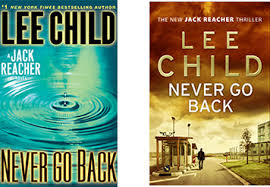
Six ways to fix NEVER GO BACK by Lee Child

writing meme spiderman dear diary

Let’s say it: Lee Child has a Superman problem.

His hero, Reacher, is beloved by fans for having the brains of Sherlock Holmes and the body of Conan the Barbarian. The man never gets outsmarted and is invincible in a fight. Here’s the last post about these books: Secret recipe for any Lee Child novel

The latest Reacher book, NEVER GO BACK, slams smack-dab into the Superman problem. Because an invincible hero puts the B in Boring.

Did I enjoy the book? Yeah, it’s always fun to read about Reacher. With every new novel, though, Reacher struggles less and less to overcome the bad guys.

If the hero doesn’t sweat, the reader doesn’t worry. Or care.

Because I do care about Reacher and Lee Child, here are six ways to fix NEVER GO BACK.

Lee Child's NEVER GO BACK is something you should read. Do it now.
Lee Child’s NEVER GO BACK. Buy two copies, one of each cover, because I say so.

1) Don’t simply remake THE ENEMY

The only other novel with Reacher in the Army was Child’s best book: THE ENEMY, a true mystery with all kinds of crazy twists and turns and a real sense of menace. Just like that book, the latest novel has big-shots in the Pentagon and such as the criminal masterminds, using other officers as their puppets.

That book was first-person and visceral. It put you in the head of Reacher and made you feel what he felt, see what he saw. I’ve happily read that book seven bazillion times.

NEVER GO BACK starts out feeling like that book, with the full force of the Pentagon and Homeland Security poised to squash Reacher … until he escapes them, easily and repeatedly.

THE ENEMY was amazing, and the ending isn’t a clear win. Reacher is demoted and leaves the service. This latest novel doesn’t hold a candle to that classic.  Which proves that yeah, you should never go back.

2) Give Reacher a real daughter, not a fake one

What are the odds that the bad guys randomly picked a fake daughter for Reacher who looks like him, thinks like him and even talks like him?

I’ll tell you the odds: zero.

The fake daughter is an achy breaky big mistakey. It feels like Child planned on making the daughter real up to the end of the book, then decided nope, Reacher can’t have a teenage daughter, because that would tie him down in future books. So he turned her into a ruse.

If you’re gonna do it, do it.

3) One-sided beatings aren’t really fights

Fight scenes are a Reacher staple. A novel without Reacher getting blood on his elbows would be like a Jean Claude Van Damme movie without him doing the side splits and kicking a single guy in the face.

However: there’s a big difference between a fight and a beating. Every fight in NEVER GO BACK is a cake walk for Reacher, who doesn’t even break a sweat when he takes out two angry rednecks with both hands behind his back.

Give us a real fight. Let’s be realistic and let the bad guys land a punch for once.

This leads to Number 4.

4) Tough guy villains better be tough

In this book, there’s one thug we keep getting told is a giant muscle-freak with weird ears. A monster who looks like a match for Reacher.

So for hundreds of pages, you keep expecting the final battle between these two men to be epic. I was getting the popcorn out.

The fight between Reacher and this incredible hulk was over in about two seconds. Boring, and a huge let-down. Come on. That’s like showing us Darth Vader on screen for 90 minutes and Luke training with Yoda for 20 minutes only to have the two meet for the Greatest Lightsaber Battle of All Time … and have Luke cut Darth Daddy in half within two seconds. No.

The badder the bad guy, the longer the fight should last. Redneck idiots can get dispatched in a paragraph. Medium baddies should take a chapter. The boss villain should take a couple of chapters.

When every villain, big or small, goes down without Reacher chipping a nail, or doing anything at all (see Number 6),  it’s not exciting.

5) The Girl with a Gun has to be some kind of Challenge

It’s totally fine for Reacher to swim in a sea of attractive women, just like 007.

What’s not fine is for the Girl with the Gun to fall in love with Reacher in about two micro-seconds and be like a loyal puppy dog for 300 pages. THE ENEMY had a good love interest, with a conflict: he was an officer, and her commanding officer, and she was a sergeant. There was risk, and you got a real feel for the sergeant with them doing the investigation a long time before falling in the sack. It was credible and interesting.

A perfect woman who falls in love with Reacher instantly and never really does anything, well, she’s cardboard and snooze city.

6) Finish with a bang

So the bad guys are two high-powered dudes with insane connections, the ability to track Reacher in real-time, a lust for power and a network of thugs. It’s suicide for Reacher to go after them, right? They have the full reach of the Pentagon and Homeland Security to smack him like a fly.

Yet the final confrontation … never happens. Because the bad guys shoot themselves in the head.

What?

Maybe I’m nuts, but I believe, deep in my Swedish soul, that the end of a novel or movie should be more exciting than the beginning. The beginning was exciting. This ending wasn’t even as suspenseful as six random rednecks surrounding Reacher in the motel.

If you set up Reacher as some kind of invincible Superman, the bad guys can’t be cream puffs who fold at the end. To make it interesting, you have to make the villains even tougher than Reacher.

That hasn’t happened yet. Not even close.

I hope someday it will. Because that would be an amazing book.

I threw it on the ground — why people stop reading books

writing meme spiderman dear diary

Like you, dear reader, I devour books. I eat them for breakfast, munch on them for lunch and blast through an endless buffet of books in bed, waiting for the Sandman — because books, they are THE BEST.

However: there are books, even famous best-sellers and literary masterpieces that eager graduate students dissect for their dissertations, that are simply unreadable. You start them, you want to be blown away by them and instead, you toss them through the air to test their aerodynamics.

Goodreads asked their peoples about books they started, and wanted to love, but simply couldn’t finish.

Some books at the top of their Couldn’t Finish List include:

  • FIFTY SHADES OF GREY, which is complete trash, and not in a good way. Here’s my take on the first page of that stinker: The Red Pen of Doom impales FIFTY SHADES OF GREY
  • THE GIRL WITH THE DRAGON TATTOO, written by a fellow Swede, and I wanted to love this book, I really did, but couldn’t get past page 30-whatever. 
  • ATLAS SHRUGGED by Ayn Rand, who couldn’t write her way out of a wet paper bag if you handed her a sharpened pencil. I took a red pen to the first page of her most famous book here: The Red Pen of Doom murders THE FOUNTAINHEAD by Ayn Rand
  • CATCH-22, which I’ve read a zillion times and love. Maybe I’m crazy.
  • THE LORD OF THE RINGS, an immense and dense tome that I started to read and despite being (a) on a beach in Maui and (b) chock full of mai tai’s, I couldn’t (c) get past the 60-page introduction to the prologue or whatever because it was massive amounts of academic text lecturing me about the sociology of hobbits and elves, with no story whatsoever, and it put the B in Boring.

So I agree with Goodreads about throwing most of these books on the ground.

Here’s the story with all kinds of comments.