This video isn’t computer animated. They made the entire thing, screen by screen, with stitches on black cloth.
We’re talking about possibly the first music video created through embroidery, which I can’t even spell. And it’s by a heavy metal band.
Though I’m not a fan of all the various forms of metal (heavy metal, speed metal or even Swedish death metal), this is a unique and creative video that deserves to be seen and taken apart. Interesting. Well done, monsters of metal, whoever you are.
Not because the director the same amazing man behind THE BOURNE IDENTITY. And not because Emily Blunt and the other supporting actors nailed it.
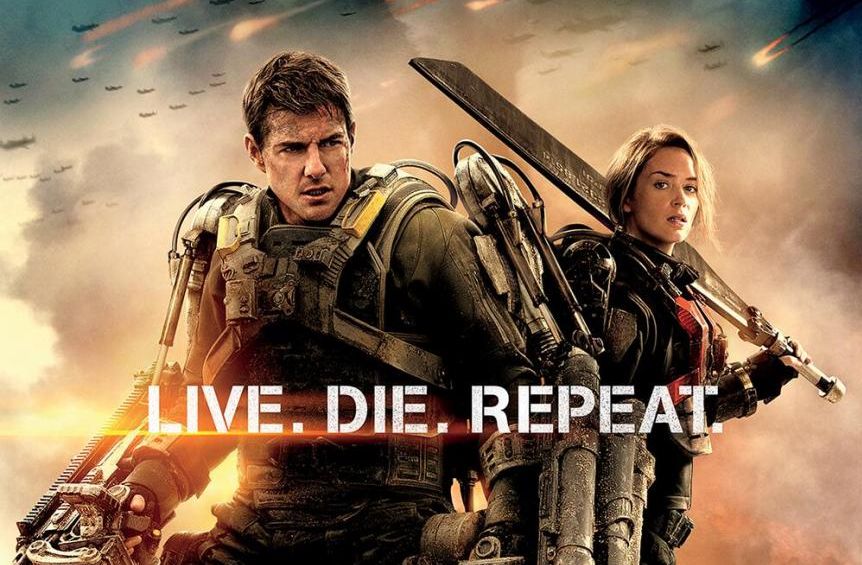
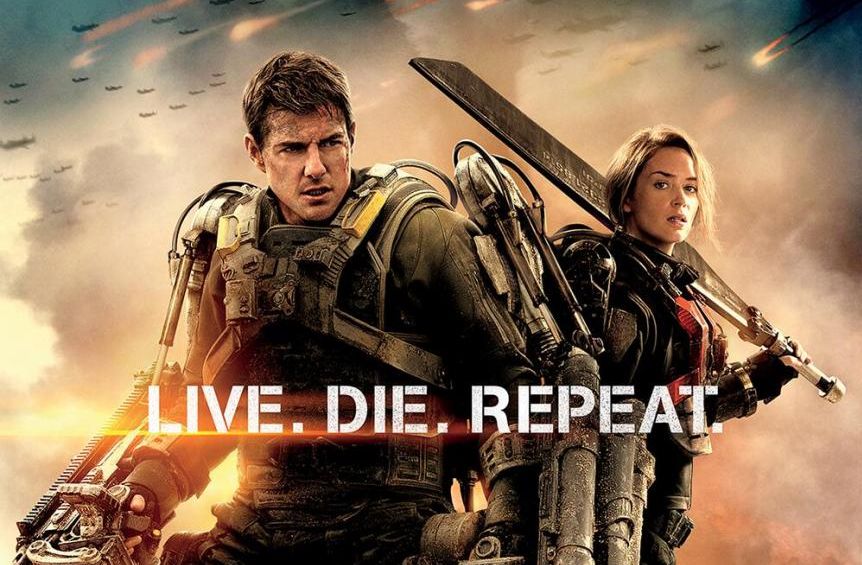
I almost didn’t see this film because of my antipathy for Tom Cruise, and yeah, I’d lost respect for him the last few years. But this bit of cinema goes a long way toward rehabbing Cruise as a blockbuster star, though not for the reasons you’d expect.
Warning: spoilers. Also, I refer to action heroes as “he” for simplicity, and yes, Ronda Rousey and other female action stars are amazing.
5) Reversal of tough-guy expectations
Most action stars have an actual background in Being a Tough Guy.
Arnold Schwarzenegger was the king of bodybuilding. The rest of the cast of THE EXPENDABLES 12: ANARCHY AT THE AARP MEETING is full of martial arts maniacs, pro wrestling hulks and mixed-martial arts studs.
The fact that Tom Cruise is short in real life isn’t an impediment here. Jackie Chan, Jean Claude Van Damme and Jet Li could all fit in the back seat of a Yugo.
Doesn’t matter. They look big and tough on screen.
The difference? While he did all his own stunts in this movie, just like the toughest Tinseltown tough guys, Tom the Cruise can actually act. Shockingly, acting ability tends to matter on the big screen.
4) Humor that’s deeper than one-liners and puns
Another staple of action movies is a bit of comic relief to balance out all the explosions.
Bond is notorious for bad puns, like “She always did like a good squeeze” after Remington Steele dispatched Onatopp, who later fell in love with Wolverine.
Schwarzenegger is famous for his one-liners, too. I’ll say the phrase and you’ll know the movie:
“I’ll be back.”
“Consider that a divorce.”
“Stick around.”
For action stars, that’s about all the humor than can typically muster, unless their name is Jackie Chan or Jason Statham and they know how to make a fight itself funny.
The humor in action movies is almost always about other characters. The hero is a straight man.
EDGE OF TOMORROW has humor throughout, and it’s far more sophisticated and varied than puns, one-liners and physical gags.
That takes actual acting chops, which Tom has. He uses them, often to get laughs at the expense of his own character. It’s different and refreshing.
3) Acting range
ROADHOUSE is a cult classic that turned Patrick Swayze into a believable action hero, if only for one movie, despite the insane chasm between dirty dancing with Jennifer Gray and bar fights alongside Sam Elliot.
But the range of most of these stars goes like this: brooding while looking off into the distance, brooding while ignoring the love interest, brooding while training, brooding while handling weapons and gear and, finally, grimacing in pain while being tortured by the bad guy before he escapes, throws the villain down a bottomless pit and broods while walking off into the distance.
Not a lot of range there. It’s like the famous internet chart, the Many Moods of Batman.
Tom has plenty of range, which he uses to connects with his co-stars — and connect with the audience in a variety of ways. Other action heroes typically focus on a variety of ways of dispatching bad guys.
2) Improving on the graphic novel
The movie differs from the original graphic novel, and this time, that’s a good thing.
In the novel, the alien Mimics reset the day with three separate ingredients: a Server alien, an Antennae and a Backup Antennae.
Bit complicated. And the novel has the Emily Blunt character turn on the hero at the end, because she figures out she’s the Backup Antennae and the day will keep resetting unless the hero kills her.
This is all too Connor McCloud vs. Duncan McCloud.
The movie simplifies things: there’s an Alpha alien that looks different than the others and has the power — along with the big, immobile Omega brain — to reset the day. If you kill the Alpha and get its blood splattered all over you, that power to reset the day gets transferred. The catch: you have to die, every day.
In the movie, Emily Blunt’s character doesn’t fight Tom Cruise and make him kill her. The climax does something great: it strips Cruise and Blunt of all their powers and gadgets.
Before, she and Cruise both had mech suits and Cruise had the power to reset the day. The climax takes those things away. Cruise only has one shot, one life, and they have to do it without the suits and guns. The stakes are much, much higher.
1) Go ahead and hate him in Act 1
A huge weakness of most action movies is there’s no character arc, no growth.
The hero is a smooth, handsome killer in Act 1. He breaks necks (and hearts) in Act 2 as a warmup, then mows down an army of bad guys in Act 3.
The hero doesn’t really change: he’s awesome the first time you see him, the most skilled and deadly killer around, and it takes an army of bad guys to even match up with him.
In this film, Cruise’s character starts out as a jerk and a coward. Not a little jerk. A big one. And not simply a coward, but a soldier who tries everything to avoid going to the front lines.
So if you started out disliking Cruise, as I did, his character isn’t trying to change your mind. At all. He isn’t saving the cat (Blake Snyder!) in the first scene. The script embraces your ambivalence or dislike of Cruise, and the movie works better if you don’t have a TOP GUN poster in your bedroom and all of his movies on BluRay.
Because the more you dislike or hate Cruise in Act 1, the bigger the journey will be by Act 3 — and real momentum comes not via intensity, but from the emotional distance traveled. If you love a character in Act 1 and love him in Act 3, there’s no journey.
The script doesn’t flip a magical switch, either, and say, “Okay, now you’re supposed to love the guy from here on out.”
Cruise’s character evolves, slowly, and not always in a linear way. There’s a great scene where he gives up. Instead of fighting the same battle on that beach for the 159th time, he steals a motorcycle, goes to London and has a giant pint of beer. This isn’t a throwaway scene. The director, and screenwriter, are surprising us by letting the character make different choices. The hero isn’t your typical action hero robot, plowing ahead to save the day no matter what. He’s human and flawed.
In the end, Cruise’s hero sacrifices himself to protect others. There was a lot of resistance, internally, to him making those choices. His character didn’t always do the heroic thing.
So there’s more to saying this movie is like GROUNDHOG DAY crossed with INDEPENDENCE DAY, and yes, I bet somebody on YouTube already posted a mashup called GROUNDHOG INDEPENDENCE DAY.
Bill Murray’s character in GROUNDHOG DAY also starts out as a selfish jerk. There’s no single moment that turns him into a nice guy. He does bad things and makes all kinds of bad choices. Only in the end does he figure out that becoming a better person takes more than charm and wit. It takes sacrifice and selflessness to get him there.
EDGE OF TOMORROW might have worked with another, unblemished actor. Matt Damon is talented and worked with this director before, and he put on a similar mech suit in Elysium, so I bet he could strap it on just fine. But the movie wouldn’t be as good.
Let’s give props to Tom Cruise: just as Robert Downey, Jr.’s past troubles helped make him the perfect choice for Tony Stark, Cruise’s long rise and fall from grace helped make him the perfect person for this movie. He nailed it in a way that a lesser known – and better liked — actor simply couldn’t.
Want to become a better writer? Learn from bad writing: how to spot it, how to fix it and how to prevent the disease from happening in the first place.
Note: All writers, including myself, tend to go overboard at times. As a reformed journalist who now writes speeches, blog posts and novels, I will happily say that I’ve committed every possible writing sin at one time or another–and no, this is not meant to make anyone recycle their Underwood and switch to pottery.
So as a public service, here are the Six Horsemen of the Writepocalypse:
1) The Ivory Tower of Pretentious Poppycock
This comes from never learning that out in the real world, nobody wants to read blog posts, novels or screenplays written in the same dense style of term papers about dialectical materialism.
How to spot it: There is never a short, simple sentence, not when long, insanely complicated ones will do. Pretentious Poppycock will have sentences flavored with giant German words that are too intellectually sophisticated to be translated into English, though schadenfreude has appeared in low-brow venues such as Newsweek often enough to lose all its previous cachet.
Writers of Pretentious Poppycock are actually offended if the masses (a) buy, (b) read or (c) dare to enjoy their work, because that means (d) it is not dense and sophisticated enough and (e) they have therefore failed via mainstream success and must (f) become an elusive recluse working on a new, six-volume masterpiece that will take 26 years to complete.
2) The Gonzo Kool-Aid Acid Trip
There are subspecies of gonzo, entirely dependent upon which substance the writer employs to destroy his liver: gallons of whiskey, blunts the size of telephone poles or some kind of toxic toad sweat they picked up in Brazil.
The whiskey types tend to go hyper-macho. Their sentences are shorter than Hemingway, because Hemingway was a wussbag nancypants who only watched bullfights. Get in there. Kill a bull, with your bare hands.
This trap is a particular danger for newspaper reporters who decide to write novels.
Another form of gonzo writing happily bounces around through time, since chronological order is for squares — or goes ironic hipster with a 500-page book, written all in haiku, about a retired accountant who makes sculptures out of lint from the dryer.
While the style of writing is completely different than the Ivory Tower of Pretentious Poppycock, gonzos are also typically unhappy if too many of the masses buy, understand or like their work, because that means they sold out and not enough fans took up their suggestion to “steal this book,” though the money does allow them to pay steady rent and purchase a higher class of bourbon and psychedelics.
However, a taste of success will also remove the last remains of internal censors from a gonzo of any stripe.
3) The Purple Prose of Cairo
This is gonzo writing without the drugs, Loony Tunes Lit-rah-Ture, performance art with ink. It’s passages chock full of modifiers or throwing words around the canvas of Word like Jackson Pollack chucking paint on the floor.
Tell me if you’d pay money to read more of this:
Ethel. Ethel. Ethel. Next to barber. Next to barber bury. Next to barber bury china. Next to barber bury china glass. Next to barber china and glass. Next to barber and china.
Whether you’re a reader, English Lit professor or a mom wondering if your teenager is alright upstairs, this sort of text is makes you buy something else at Barnes and Noble, scribble a big fat F with a red marker or google “therapist” on your iPhone.
It’s bad, right? Incoherent, and I didn’t make this up or pick a bad section of something that gets better. The whole poem is like this. But no, this is Gertrude Stein, so it is magical and amazing and you’re just too low-brow and uneducated to understand how brilliant that bit of word wizardry truly is.
4) Dear Diary
Everything is in the first person: blog posts, poetry, newspaper stories, memoirs, novels, screenplays.
It all goes through the filter of me-me-me.
The Series of Tubes has enabled this to reach epic, world-wide proportions. In the bad old days, being a writer meant slaving away at a newspaper, writing novels that didn’t sell until you died and became famous or writing in an actual diary that you locked up and hide in the sock drawer so your brother Steven, the snoopy creep, couldn’t read it and tell his idiot friends at school.
Now every writer is required by law to have a blog, be on Twitter and live on Facebook, so it’s quote possible to spend 20 percent of your day writing a masterpiece and 80 percent of your time at the keyboard documenting every tragedy, insult and triumph.
Dear Diary can be mundane, giving you daily updates about the type of sandwich they’re eating (PB & J today, then some laundry!). It can be full of humblebrag name-dropping nonsense. Or it can be one giant Pity Party.
If Dear Diary writes a screenplay or novel, the hero is a barely disguised doppleganger, except younger, taller, better looking and richer.
You also find this in bad mysteries about often written in the first person. Here’s a great first line from a 2013 entry to the Bulwer-Lytton contest for truly wretched first lines: “This was a very easy mystery for me to solve, so I never considered putting it in a story until I was telling some friends about it, and I realized the average person, such as yourself, has trouble figuring it out, although it is really laughably simple.” — Thor F. Carden, Madison, TN
The most epic Dear Diary moment in fiction I can remember is an entire chapter of a Clive Cussler novel where his hero, Dirk Pitt, has a classic car race with a car collector and Dirk-Pitt clone named … Clive Cussler.
5) The Never-Ending Lecture
This style of writing has an agenda and woe unto those who ignore it. It beats you over the head with a literary sledgehammer, damning you for not understanding how right the writer is, and how wrong the world is for not seeing it the first 593 times they explained it.
Lectures don’t even attempt to be subtle. Every bit of prose and dialogue is on the nose and characters are made of the thinnest cardboard.
Combined with the Ivory Tower, the Never-Ending Lecture may spend 235,000 words on the history of natural gas industry in Paraguay and the lessons to be learned about America’s telecom monopolies.
Matched up the Purple Prose of Cairo, a Lecture may give birth to THE FOUNTAINHEAD and another novel, ATLAS SHRUGGED, that contains a speech that goes on for sixty pages. Yes, not six pages, sixty. (Note: Was that too easy? Yes, yes it was.)
6) The Grammar Nazi
This is the polar opposite, and mortal enemy, of both Gonzo and Loony Tunes Lit-rah-ture.
Each sentence is absolutely fine in terms of usage. There are no dangling modifiers or split infinitives — and nothing ever, ever ends in a preposition.
Text written in the Grammar Nazi style devotes all of its energies into being technically correct, but at the price of having no soul, no life, no heart. And you are bored out of your gourd, even if YOU HAVE NO GOURD AT ALL.
How to fix and prevent this nonsense
Despite the incredible variety in this list — and you could probably come up with six more types — there’s a common thread to all bad writing.
That thread is this: the writer treats the audience with indifference, if not arrogance and contempt. It’s all about doing things their specific way. Readers who want to enjoy or understand their work, and complain about it being difficult, dense, narcissistic or weird — well, clearly all those readers are the problem, not the writer.
You can avoid all six of these bad kinds of writing by remembering the First Rule of Rhetoric, which is three simple words: “Know your audience.”
The audience isn’t you. Never is and never will be.
The audience isn’t even your mom, who might be the only person willing to read the thing, and even then, mom tends to lie and say yes, she loved it, where’s the rest?
If you want to write for you and you alone, do it in a diary and lock it up in that sock drawer.
Writing should be read, understood and enjoyed other people. Period.
That doesn’t mean good writing is shallow, low-brow and always happy.
Paul Krugman, Malcolm Gladwell and every issue of The Economist prove you can write intelligently about deep subjects without resorting to any of these types of bad writing.
People want actual substance, some real meat on those writing bones. They want to laugh and cry, to learn new things.
They want to think and ponder, and sometimes have so much fun that they read it again and again.
Let them.
It’s that simple.
Bad writing puts barriers between readers and all of those things.
When your ego puts up any of those walls–and it happens to every writer–go back and tear them down.
This is three minutes of film, via the Series of Tubes, that doesn’t have a single special effect or Michael Bay explosion. Yet it’s blowing up the Series of Tubes like nobody’s business, and not simply because it has cats.
Watch it, then we’ll dissect this to see how — and why — it works so well.
Beautiful, right?
Here are the top 3 reasons why this snippet of film by BuzzFeed works so well:
1) This is actually a long ad for Friskies … with barely a glimpse of the cat food they’re trying to sell you.
So right there, it’s refreshing, since 99.999 percent of TV ads are in your face, hoping to grab your attention for three seconds before you (a) change the channel, (b) pull out your iPhone or (c) amble on over to pillage the pantry.
Even the insanely hyped Super Bowl ads, the ones that are so famous that we get backstory about the advertising folks who created them, despite the fact they look more like your neighbor Bill the Accountant than Don Draper — well, those supposedly amazing ads are typically disappointing. They try too hard. Too fast, too loud, too much. You can see all the money on the screen and yeah, a lot of it is wasted.
Instead of 30 seconds of cars zooming and Danica Patrick in a bikini selling web domains (don’t get that one, either), we get 3 minutes of slow, leisurely voiceover from a cat while B-roll runs wild.
And it is hilarious.
DEAR KITTEN is also different from some of the better Super Bowl ads, like the Darth Vader kid who starts the car using the force. Those are more like one-joke skits, except not so much that the repetition drives you nuts like a bad SNL bit that’s gone on too long. This kitten business isn’t Johnny One Note at all.
2) A different kind of funny
Most ads aim for broad humor, things that the lowest common demographic will get in a heartbeat. You know, people falling down, exasperated moms, Santa actually coming down the chimney and frowning because LIttle Billy ate all the cookies and drank all the milk.
DEAR KITTEN is a higher form of humor, with great writing. Here’s a section of the script I love, even after hearing it three times:
You should be aware that there are two kinds of food. The first is sort of a brown, dehydrated nibblet. I think they give us these because they are training us to be astronauts. Just a guess. The second kind is wet food. It is so special they keep it in little armored metal casings that no claw can penetrate. With no claws to speak of, the humans can somehow open them. It’s like some dark magic.
Now, that’s great writing, full of sweet little setups and payoffs.
3) Building up to a climax
The writing is good in the beginning, gets better in the middle and rocks at the end.
This is the opposite pattern from most movies, novels, TV shows and circulars in The Willapa Valley Shopper, and not simply because many writers got started at these things called “papers of news” where you’re brainwashed to write using the Inverted Pyramid, which is inherently boring and should be taken behind the barn and shot.
The best stuff goes first because when you pitch a movie, book or TV ad, that’s what you lead with. Otherwise, the thing won’t get off the ground. And that’s what they want to see in the script or the dailies: the awesome stuff you talked about, whether it was dinosaurs roaming the earth again or aliens invading Nebraska, you know, because their spaceships run on corn or whatever. But if you put the very best material up front, by definition the middle will get your junior varsity stuff and the ending will be complete rubbish, the bottom of the tank, the leftovers, the scrubs.
Check out the last part of DEAR KITTEN.
Dear Kitten: I should warn you of the monster known as “Vac-Koom”. It can eat and yell at the same time. And I’ve seen it eat everything. Seriously, like a paper clip and two cat toys. Didn’t even flinch. To hide from Vac-Koom, you may use the curtains of invisibility. Oh yeah, you’re good. Good hiding. Hoh, boy.
Dear Kitten: One final note. Once in a while, you might see a little red dot. I’m going to tell you this right now. It is real, and it can be caught. I did it once. I held it for a full minute. But when I lifted my paws, it was gone.
So Kitten, welcome to the household. You’ll do just fine.
Brilliant. I’m glad they saved the best for last. Vac-Koom and the Curtains of Invisibility will become part of internet lore now.
Every day, there are real stories in the morning newspaper that make you snort coffee out your nose or choke on a blueberry muffin. Note: This is why journalists call such pieces “muffin chokers.”
Yet the daily weirdness is more than funny. If you dissect these stories, you can learn deep storytelling lessons from the shallow end of the journalism pool.
Here’s a real story that just happened in my state: Man steals RV from Wal-Mart parking lot, leads police on wild chase. Swerves into sleepy little town where he knocks cars into front yards and such, then blasts through a house and crashes. Runs out, strips down to his underwear and invades a home to steal girl clothes. Cops catch him and haul him off.
This is pretty typical of a weird news story, and not simply because it started in the parking lot of a Wal-Mart — and yeah, go ahead, google “Wal-Mart parking lot” and “weird news.”
While you’re at it, google “7-Eleven robbery” and “trailer park ninjas.” It’s a thing, especially in Florida, though in Colorado somebody robbed a 7-Eleven with some kind of Klingon sword, and yeah, the clerk who got robbed knew exactly what to call that sword when the cops took the police report.
Great storytelling comes from the gap between expectation and result. Audiences, like kittehs, love surprises.
Your normal day is not a great story because there’s no gap. It is what you expect, and what your neighbor expects. There’s nothing shocking.
So let’s dissect the RV thief story and the rash of 7-Eleven robberies involving trailer park ninjas, to see why those short little stories pack so much punch. The gaps between expectation and result are all over these stories.
First, it’s a surprise for a criminal to prowl the parking lot of a Wal-Mart, or steal an RV, because as a smart person, you think, “If I were unemployed and desperate, and forced into a life of crime, maybe I’d steal a new Mercedes convertible, something I could sell for real money and drive crazy fast if the police chased me.”
You would not think to yourself, “Let’s go to a Wal-Mart parking lot, full of witnesses, and steal a ginormous RV that (a) could be seen from space, much less a police helicopter, (b) would be crazy hard to sell or hide and (c) is slower and less maneuverable than anything short of a logging truck.”
So there are tremendous gaps there on multiple fronts. You’re surprised again and again.
The same thing is true for trailer park ninjas robbing 7-Elevens in Florida, because smart, normal people think the only time they could imagine dressing up like a ninja is if they were an actual trained ninja, you know, in Japan, knocking off something worthy of their skill and trouble. Say, stealing $30 million in diamonds from a jewelry store in downtown Tokyo, then retiring from a life of crime.
Nobody with working brain cells thinks sure, let’s dress all in black, grab a cheap sword-like object and risk insane amounts of prison time for $186 in the till and a carton of Marlboro Lights.
There are similar gaps in stories like “Two men wounded in gunfight over Wal-Mart parking spot.” True story.
It’s a question of risk vs. reward. Would you risk your life over a parking spot at a bargain store? No, because you’re smart. Who cares? Get a different parking spot. This is like challenging a man to a duel in the alley because he cut in front of you in the line for Taco Bell.
The Darwin Awards are staples of the weird news business for the same giant gap between expectation and result.
A classic example: man tries to get rid of a mouse at his house (yes, it rhymes!) and throws it onto a burning pile of leaves. Mouse, on fire, jumps off the pile and runs under his house … burning it down.
Now, this story may not be true. Doesn’t matter. It lives on, as a fable, because of the huge gap between expectation (mouse dies in fire) and result (even in death, mouse gets revenge on homeowner).
The bigger the gap, the better the story. This is true not only in weird news, but any sort of storytelling: a novel, a play, a movie, whatever.
Another lesson from weird news: The Darwin Awards almost always involve the same elements, just about every time, yet those ingredients get mixed up endless ways and still continue to surprise us. The ingredients for a Darwin Award story are: (a) men, usually in groups, (b) generous amounts of alcohol, (c) firearms, explosives or dangerous wild animals, (d) vehicles and (e) famous last words, quite often, “Watch this.”
It is exceedingly rare to see Darwin Award stories involved women. Maybe because they’re smarter, or because the IQ of a group of men goes down by half every time you add another bro bringing a six-pack of Molson to the “let’s make a flamethrower to roast this nest of yellowjackets nest” party.
So the next time you see a weird story in the news, don’t skip it, even if it’s only three sentences. There is gold to be mined, and lessons learned. It’s no accident that Elmore Leonard, Dave Barry and Carl Hiaasen made a living basically writing about weird news and dumb criminals in Florida.
Weeks ago, I saw this video by Australian import (and model) Iggy and was blown away.
And now this song has hit No. 1 on the Billboard charts, and I believe No. 2 is … a song she’s featured on.
Note: don’t get overly worried about the warning at the front of this video. I believe there’s one brief f-bomb, which you’ll probably miss unless you listen hard, and there’s no violence or nudity or whatever. It’s the tamest video I can remember getting tagged like this. Maybe the folks who rate music videos need a middle ground, a PG-13 instead of making everything G or R.
What’s really interesting is why this video works so well. Watch and we’ll talk.
Here’s the thing: the entire music video mocks the movie CLUELESS, start to finish, yet it does it so skillfully that you don’t need to have watched Alicia Silverstone’s magnum opus to get the joke. I bet 80 percent of Iggy’s fans were maybe in first grade back then and wouldn’t know Alicia Silverstone if she ran them over in a silver Mercedes.
But Iggy does it anyway, and her attention to details is glorious. Check out this recap.
Even if you never saw CLUELESS, the video rocks. You can tell she’s making fun of the character she portrays, and everything about high school, but not in a snobby hipster way. She’s having fun the whole time, and that energy comes through. Great job, Iggy – give us more.
Here it is, the latest mind-blowing invention from Apple via a leaked video from sources in Silicon Valley that I can’t reveal.
Sorry. Not gonna do it. Wouldn’t be prudent.
Now, that’s funny, mostly because there’s a ton of truth packed in with the sarcasm.
And the trend in the other direction, toward massive phones that don’t fit in your pocket, monstrous phone-tablets offspring called phablets by People Who Are Terrible At Naming Things — well, that’s just as bad as the iWatch.
Gadgets should be simple. Do one thing and do it well, or do lots of things well but make it convenient.
I own a few watches and stopped wearing them years ago, not because they broke, or the batteries ran out, but because there’s a phone on my Samsung Galaxy, a clock on my PC at work, another clock in my car, clocks on the wall. How many clocks do I need?
And I don’t need a tiny screen on my wrist when there’s a big screen on my desk, a good-sized screen on my phone, a Nook in my messenger bag (call it a murse, I don’t care, I can take it) and an iPad sitting around home somewhere that nobody uses. After a certain point, you can only use so many screens, sync so many devices and update the stupid things so many times. Honestly, why does iTunes need to download another update every two weeks? The last time it updated, iTunes conveniently forget all my song ratings and such. Call it an undocumented feature.
What part of modern technology (a) makes you all happy, like GPS meaning we don’t get lost anymore, or (b) annoys you to no end? Tell me. Just don’t leave me a voice mail about it. Hate ’em. Won’t listen.
These aren’t circus bears who’ve been trained for years and have a net to catch them.
These are giant, furry beasts out in the wild, climbing some insane cliff. And yeah, if they slip and fall, it’s a pretty good bet the trophy shop has a Darwin Award waiting for them. So this was tense to watch, and impressive. Go, bears, go. Climb away.
Related: there’s a Canadian man who’s devoted decades to creating an anti-bear suit, something that would stand up to a grizzly attack. Troy Hurtibise then has friends hit him with cricket bats and pickup trucks, or he goes full Ewok and lets friends send logs flying through the air to crush him.
Impressive, and also begging for a Darwin Award — but well done, sir.







 The Red Pen of Doom