This is about why Flappy Bird was such a surprise hit, Taylor Swift’s newest mega-video is meh and why your favorite movies, novels and video games work when others fail.
Here’s why: audiences want something interesting, and entertaining, which means different and surprising. Yet there’s a fuzzy line between Hard and Impossible and a deadly chasm between Complex and Bizarre.
It’s like thinking, “chocolate chip cookies are yummy, so why not chocolate chip cookies with almonds, M & M’s, pecans, Oreo sprinkles, peanut butter and a Snicker’s Bar on top?”
Watch the big Taylor Swift video, BAD BLOOD, then we’ll chat.
Now, this has high production values and great costumes, and I’m sure Michael Bay watched it on an endless loop all weekend. Yet it’s not elegantly complex and entertaining. It’s a hot mess, the music video equivalent of THE EXPENDABLES, with so many random stars thrown in for cameos that I have no idea who’s who. Does it look cool? Sure. Do we care one bit? No. Not even half a bit, or a quarter bit.
Compare that to the simplicity and beauty of Iggy Azalea’s BLACK WIDOW, which is a masterpiece, paying homage to KILL BILL and flat nailing it.
Now, I enjoyed AVENGERS 2: GIVE DISNEY ANOTHER BILLION DOLLARS and it’s perfectly fine as another piece of the Marvel movie assault on the galaxy.
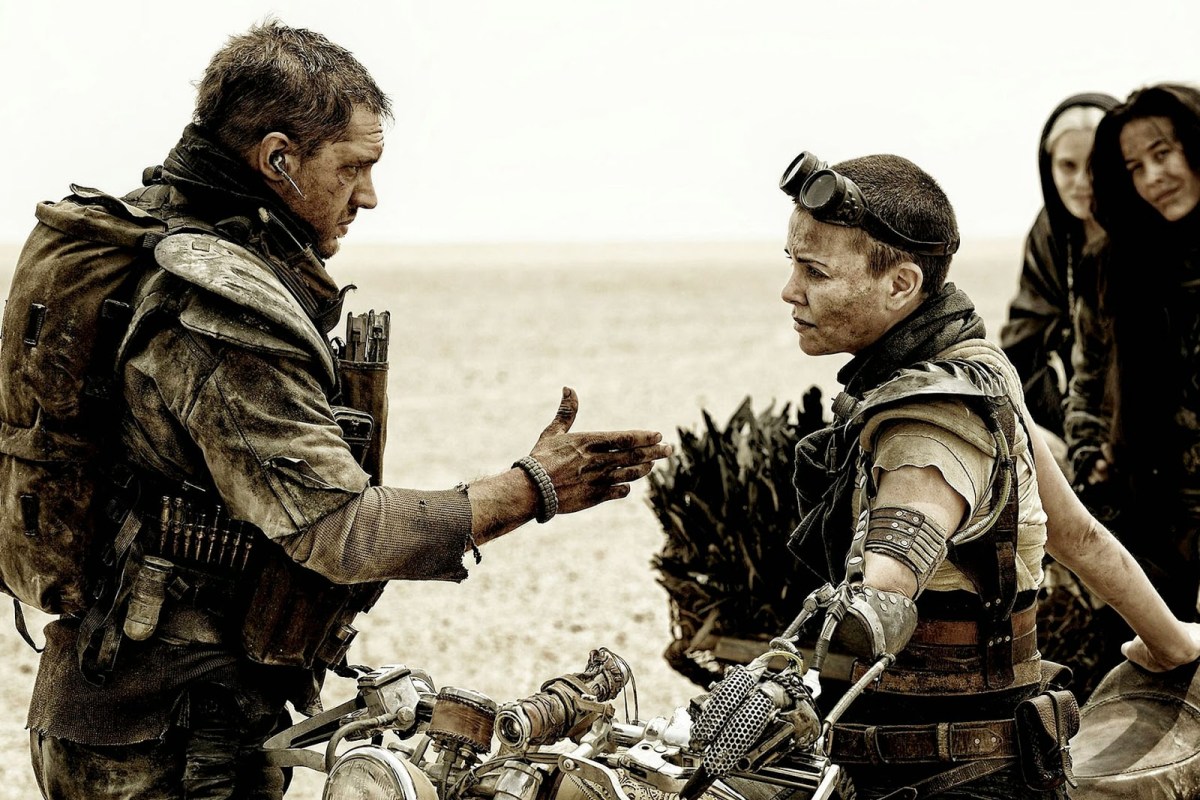
It’s just that I wouldn’t happily head to the theater tonight to watch it again, while I will go back to see MAD MAX: FURY ROAD with friends who’ve yet to see it.
And I’m not alone: critics are going nuts for MAD MAX, with 98 percent of them loving it on Rotten Tomatoes vs. 74 percent giving the thumbs up for AVENGERS 2.
The New York Flipping Times wrote a glowing review of MAD MAX. That’s nuts.
My mother drove me to the airport with the windows rolled down. It was seventy-five degrees in Phoenix, the sky a perfect, cloudless blue. (Fiction Law #1: Don’t open with the weather or your mom.) I was wearing my favorite shirt – sleeveless, white eyelet lace; (Fiction Law #2: Don’t open with what you’re wearing, because nobody cares.) I was wearing it as a farewell gesture. (Here we go, our first bit of conflict or story: a farewell.) My carry-on item was a parka. (This relates to how much it rains in Forks, and I guess you could argue it’s a bit of foreshadowing, but my God, no story on earth turns on whether a teenage girl is taking a parka as carry-on luggage versus stuffing the damned thing into her Samsonite.)
In the Olympic Peninsula of northwest Washington State, a small town named Forks exists under a near-constant cover of clouds. (This reads like was cut-and-pasted from Wikipedia, with a surplus of Things in Caps, and it is all Rather Boring.) It rains on this inconsequential town more than any other place in the United States of America. It was from this town and its gloomy, omnipresent shade that my mother escaped with me when I was only a few months old. (Conflict! A tiny bit of it, finally.) It was in this town that I’d been compelled to spend a month every summer until I was fourteen. That
The First Law of Bad Literary Novels is simple: there are no happy endings.
It’s the same story with Big, Beautiful Movies with Sad, Stupid Endings.
Now, that’s not to say every book and movie needs a prototypical Hollywood happy ending. Tragedies should have sad endings, and there are plenty of classic movies where the ending is ambiguous.
Rocky actually loses his first fight. The victory comes from not getting knocked out – and from the journey from loser to contender. Rocky suffers, sacrifices and grows. That’s why the movie is good: there’s a big contrast between where Rocky is in Act 1 and where he ends up in Act 3.
The trouble with these movies is the audience doesn’t want to see them again, if they ever saw them in the first place, because the ending sours everybody, despite the beautiful imagery and amazing acting.
I’m not saying you can’t make a great movie without being low-brow and throwing in more explosions than Michael Bay ever dreamed possible.
I’m a huge fan of Scarlett Johanssson and Luc Besson, director of THE TRANSPORTER, THE FIFTH ELEMENT and THE TRANSPORTER PUTS THE FIFTH ELEMENT IN THE TRUNK AND DRIVES IT AROUND EUROPE.
So I saw LUCY last night in this giant building where the floors are sticky and popped corn drenched with fake butter costs $10 a bag.
The previews looked great and word was this movie is interesting, if not weird. Hey, it’s directed by Luc Besson, who I really want to call Jean Luc Besson, so it’s going to be exciting and fast and weird.
Here’s the trailer:
And here’s a great parody trailer:
Is this movie good? Sure. Exciting and different. Worth renting, and maybe watching in the theater.
What keeps it from greatness? The Invincible Hero Problem strikes again.
Hollywood keeps forgetting a simple rule: the villain has to be scarier and tougher than your hero.
Otherwise, there’s no jeopardy, no mystery, and the audience doesn’t care, because we know Reacher will mop the floor with every bad guy, Superman will blast Lex Luther and Keanu Reeves became unstoppable once he stopped saying “Whoa” and realized he was The One.
Invincible heroes are boring.
Lucy becomes impossibly powerful about one-third into this movie. The bad guys have zero chance after that. Zippo. She’s like a blonde Neo who escaped the Matrix, flinging people and cars around, communicated with trees and tapping into cell phone calls simply by looking at the electromagnetic spectrum. She’s a stronger god than Thor at this point, though that would make Chris Hemsworth cry when they film AVENGERS 5: IRON MAN VERSUS BATMAN VERSUS SUPERMAN.
For two-thirds of LUCY, the audience sits back and watches her do whatever she wants. There’s a bit of drama at the end, with the crime lord sneaking up behind her with a gun, though nobody using even 5 percent of their brain believed the villain had a chance of actually shooting her.
A great thriller requires a great villain. The hero has to be an underdog. The weaker you make the hero, and the stronger you make the villain, the better the ending.
Look at THE LEGO MOVIE, where the hero — the little boy — has zero shot of winning against his father, who doesn’t want him playing with his perfectly constructed Lego town. Dad holds all the power and authority. The little boy can’t win by beating his father in a fist-fight. This movie is different, and special, because the hero actually gets the villain to change course by using words instead of bullets, and it makes you cry.
So, peoples of Hollywood, please remember the most basic storytelling rule before you do a page 1 polish of a script that already cost you $5 million and has the names of seven different writers hanging from it already. That rule is simple: the villain must be stronger than the hero. Period. End of story.
If you really want to get crazy, and have some kind of unstoppable hero that you don’t want to change, flip the script and make Captain Invincible Pants your villain. How will the puny humans stop him? Oh, now you’ve got something.
THE TRANSPORTER is the break-out movie for Jason Statham, and though I am perhaps the world’s biggest fan of Jason the Statham Kicking Things in the Face, there are clunky bits rattling around in the engine compartment of this film, keeping it from true greatness.
It’s like a classic car with a gorgeous front end, giant engine and gimpy transmission.
So I’m dragging it into the shop and turbo-charging this thing.
Having recently rewatched THE TRANSPORTER using time-travel technology called Blu-Ray, three things stuck out: the beginning, the middle and the end.
The beginning is amazing. The middle sags.
The ending is underwhelming.
Let’s grab plot wrenches, get our hands greasy and figure out why.
Act 1: A Man and His Car
The first scene of the film is amazing. Frank puts on his driving gloves, fires up his exquisite piece of German engineering and picks up his first package to transport, no questions asked. Turns out to be four bungling bank robbers and this opening car chase is thrilling.
The next major scene brings us to the best part of the movie, after his second job goes bad and Frank’s beloved black sedan goes boom while he’s eating a sandwich. Frank returns to that client’s mansion and rings the doorbell. Result? Awesomesauce.
Act 2: Making Things All Confusing
So that woman you saw in the clip, the one tied a chair with duct tape covering her mouth, well, she was one of the packages in Frank’s trunk, and he broke one of his rules by opening that package and finding her.
Why was she in that trunk? The movie never really gives us a good reason, or any real reason at all. This is why the power of the engine in Act 1 doesn’t get transmitted to the back wheels of Act 3.
The story tries to connect things by saying she’s the daughter of a wealthy bad guy who’s working with the Main Bad Guy from that mansion – you know, the crime lord who blew up Frank’s car – and they’re both make piles of money smuggling people from Asia to Europe in container ships.
The woman says she wants to save those people from slavery and possible death. She lies about her family being in the container, including her father. Who’s actually not inside the container because he’s a villain.
So yeah, it’s a hot mess of tangled plot wires that only makes the audience think too hard, trying to sort things out, which you can’t really do because nothing makes sense.
Also: we never hear why anybody would put this woman into the trunk in the first place. Bit of a problem there.
Act 3: Hey, We Saw a 007 Movie Once or Twice
There are a few more good fight scenes, including the famous Grease Battle in a garage.
Yet the final act devolves into a chase scene that could be taken from any random film involving 007, Jason Bourne or Tom Cruise in Long-Haired Mode While He’s Shooting MISSION IMPOSSIBLE 6: GHOSTS IN MS PAC MAN.
Frank commandeers a crop duster, parachutes onto the convoy of Bad Guys and fights them while trying to steer the semi carrying the container full of people.
In the climax, the father of the love interest gets the drop on Frank, who meekly puts his hands up and gets marched to a cliff and certain doom, though he does grab a rock and seems to be thinking about chucking it at the villains head. You know, eventually. When the mood is right.
He never gets around to it, despite the gun pointed at his nose, and the love interest winds up saving Frank by shooting her dad.
Does that sound anti-climactic? Yes. Yes it does. And it is.
Grabbing a wrench and fixing things
Frank has three simple rules.
Rule Number 1: Never change the deal.
Rule Number 2: No names.
Rule Number 3: Never open the package.
We can fix this movie with three simple plot rules.
Rule Number 1: The hero is the one who changes.
Whatever problem is presented in Act 1, it has to be the hero who fixes it, and he or she must go on a journey to do so. The tougher the journey, the better the story. The more the hero suffers, sacrifices and grows, the better the story.
And in the climax, the hero must face a choice, a single moment where everything hangs in the balance.
The audience is denied these things by (a) not allowing Jason to change and grow and (b) giving the climax to the love interest instead of the hero. She’s the one who shoots the bad guy. Jason is passive in the end. That doesn’t work and is a big reason the ending feels flat.
How can we make Frank change, suffer and grow? Let him lose a few fights. Seriously. It’s a romp, beginning to end, and he’s never really challenged. Let him lose the first few fights. Show him practicing, sweating, training and getting better. Make the uber villain TOUGHER than him and let that villain kick Frank’s butt in their first encounter. Because as things are, it’s a romp. Frank kicks everybody’s butt and you never doubt him for a second. Let the audience doubt that the hero will prevail and make the hero suffer and sacrifice to become good enough to have a chance in the final fight.
Rule Number 2: No surplus names.
When it doubt, cut it out. Kill every character you can and give their role to somebody else.
Which characters waste valuable screen time?
The most obvious one is the father of the love interest. He tangles up the story and detracts from the main villain, the one who blew up Frank’s beloved black car.
The final battle should be between our hero and the uber villain, who dies before the climax. So we’re left with the old man, who’s clearly no physical threat compared to Frank, and that makes for a boring ending.
Solution: eliminate the father as a character and give more screen time to the real bad guy.
Rule Number 3: Never open the fanciest package first.
If you’ve got an amazing action movie, your first step has to be looking at the set pieces. Which one is the most exciting? Which ones are middling? And where are the minor ones?
You need all three types of scenes. It doesn’t work to crank everything up to 11, Michael Bay style, because that simply numbs the audience.
Put the best scenes first and the least-exciting fights last, and your audience will have their expectations bashed against the rocks. They expect things to get more and more exciting as a movie gets closer to the end and you’ll confuse them by reversing the order.
Build up to a climax and put your most exciting scene in Act 3.
So yes, let’s put that amazing mansion fight in Act 3 now, and finish off the movie with Frank fighting the young villain, the one with the bad facial hair, instead of standing around at gunpoint waiting for the love interest to shoot her evil poppa.
This rule also works, by the way, for a series, whether it’s movies or books.
If your first movie is brilliant, your second is good and the closing of the series is average, people will be forever disappointed. They may even hate you for ruining what should be a classic. Am I talking about THE MATRIX trilogy? Maaaybe.
Yet if your first book kinda stinks, your second is good and the last in the trilogy is amazing, people will think you’re a genius, a Lion of Lit-rah-sure.
The same is true for Act 1, 2 and 3 of a single film, even if it’s Jason Statham Kicking Things in the Face.
Pretend it’s Christmas morning. Open the small packages first, the medium ones second and save the biggest, fanciest package for last.
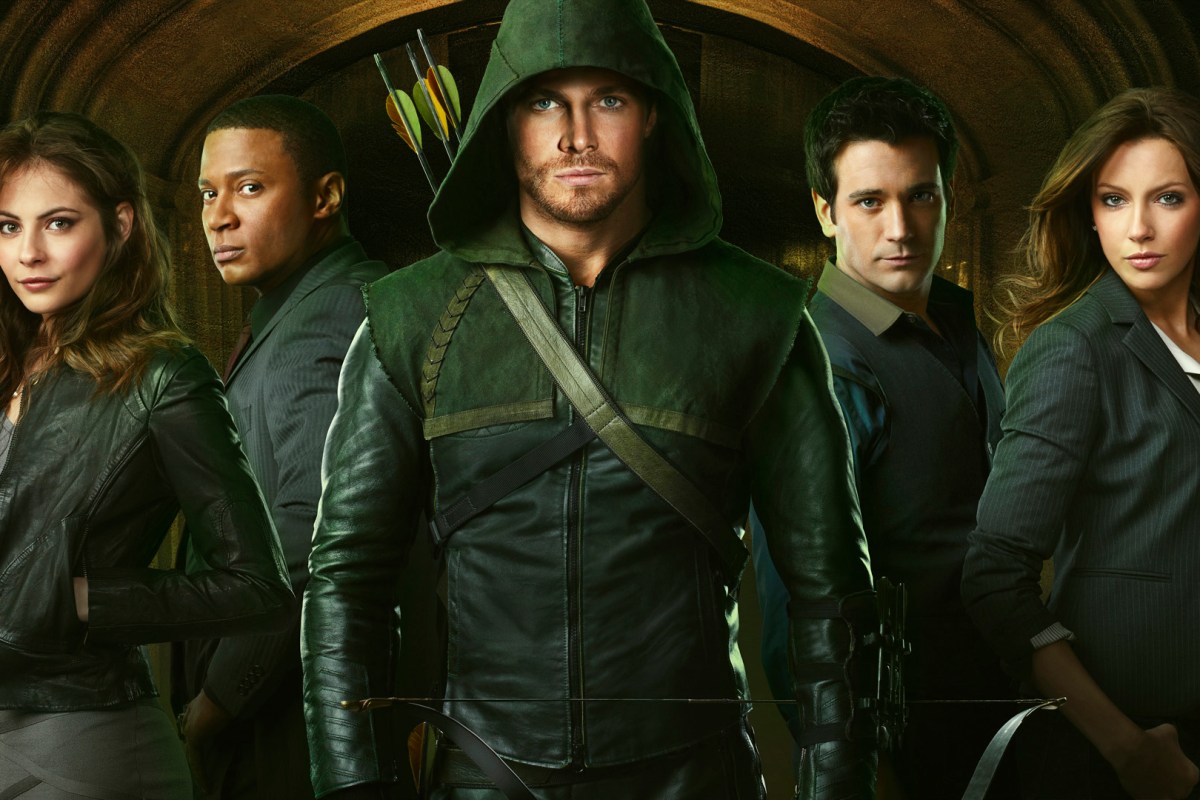
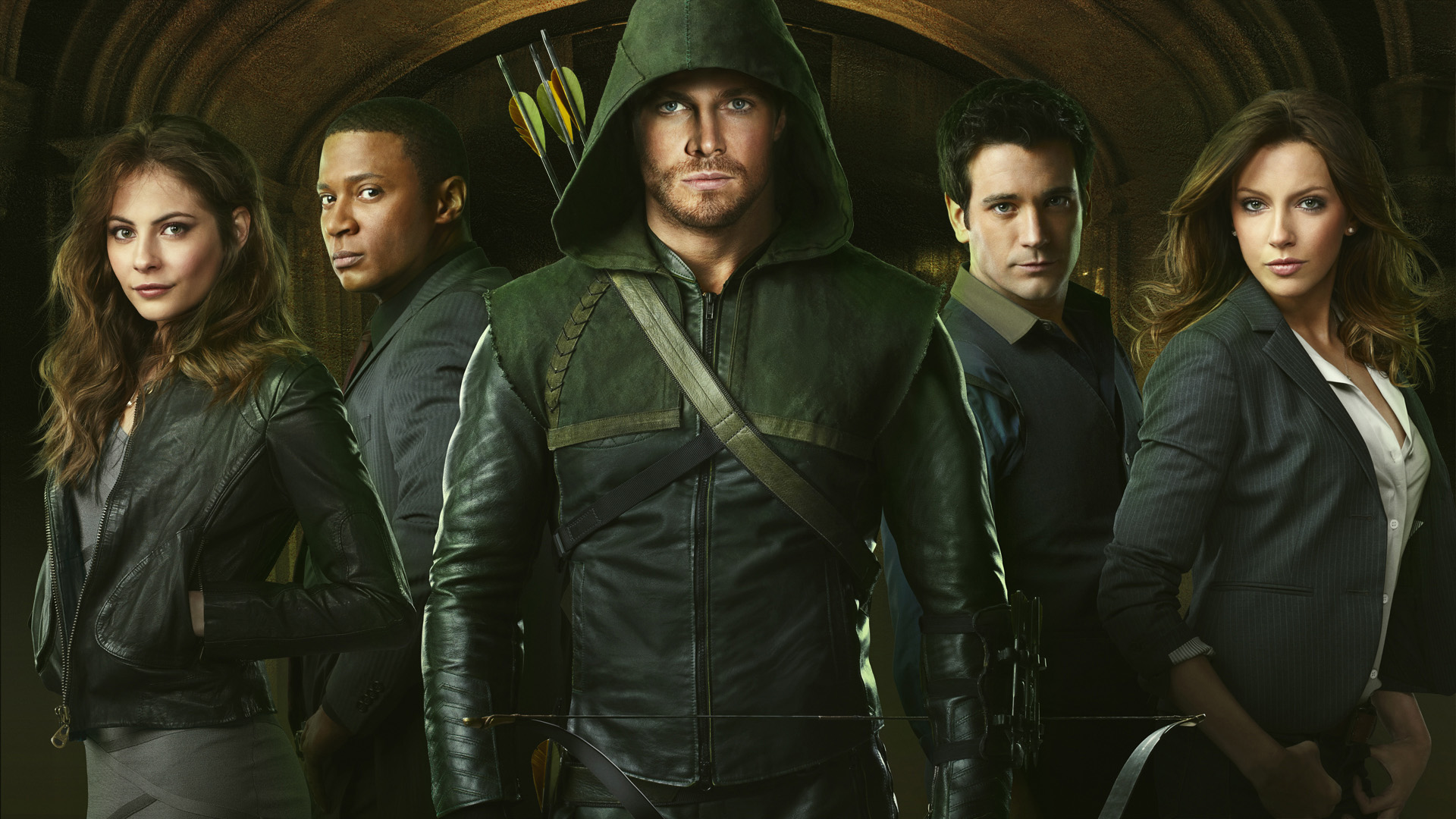
ARCHER — the TV show about a dude with arrows, not the cartoon spoofing James Bond — isn’t horrifically good or amazingly bad, which are the two types of things that are worth discussing and dissecting.
Yet this middling show about a middling superhero is worth taking apart to see the good, the bad and the ugly.
It’s also a good test case, a chance to learn a few lessons from where ARROW works and when it doesn’t. Useful less for anyone who ever wants to write stories, novels, TV shows and movies — or become a masked avenger who lives with his mom.
On the mark: Constant action
There’s no lack of fights, chases and conflict. The opening scenes are often quite good, sometimes starting in the middle of a battle without any boring exposition at all, making you wonder, “Who are those guys Archer is ventilating with green arrows?”
Off the mark: Constant special talks
The fights aren’t bad. The dialogue, though, can kill you.
Every conversation is a special talk that ends in zingers. It’s like the showrunners hired some guy who helped choreograph fights on Jason Statham’s last movie to handle all the fights, then kidnapped the entire writing room of THE YOUNG AND THE RESTLESS to provide the dialogue.
On the mark: A big bad guy
At least in Season 1, the show avoids the Villain of the Week problem, even when it usually has a different villain of the week, by overlaying the entire thing with a conspiracy headed by a Big Bad Guy who tends to sneak into the bedroom of Arrow’s mom to talk smack about their evil plans.
The big villain also happens to be the billionaire father of Arrow’s best friend, who happens to be sleeping with Arrow’s ex-girlfriend. Also, Arrow’s underaged sister has a thing for the best friend. It’s all rather complicated and weird.
Off the mark: A sea of sidekicks
Read that last paragraph again, because it’s the tip of the iceberg. Arrow does live with his mom in a version of Wayne Manor, and his mom (a) ordered Arrow kidnapped earlier to find out what he knew about (b) having Arrow’s dad killed in the same boat sinking that (c) killed the sister of Arrow’s ex-girlfriend and (d) stranded Arrow on an island for years.
It’s weird enough for any adult character to live with their mom. The show gets even weirder with Arrow’s new step-dad also living there and running his dad’s old company, plus the detective who keeps trying to catch Arrow is his ex-girlfriend’s dad.
So yeah, it’s a hot mess of a soap opera, and when Arrow isn’t fighting, he’s having special talks with EVERY SINGLE ONE OF THESE CHARACTERS.
On the mark: Island flashbacks
I hate flashbacks. They’re usually lazy, useless bags of exposition. Info dumps.
The scenes on this show about the island are fun, because there’s all kinds of conflict, suffering and growth as a spoiled rich kid tries to survive and eventually learns the skills to become a superhero.
Off the mark: All dialogue is on the nose
This was the second reason I thought the showrunners kidnapped the entire writing room of THE YOUNG AND THE RESTLESS.
There’s no subtlety to the dialogue, which beats you over the head like a sledgehammer. Everybody says exactly what they mean and they do it in the meanest possible way.
It’s a cornucopia of melodramatic zingers and overwrought angsty nonsense.
The melodramatic dialogue makes the plot veer off all over the place. Characters will throw epic hissy fits, then reverse course in the next episode — or next scene. Archer goes all Bruce Wayne by pretending to be a drunken playboy and telling his ex-girlfriend to stay far, far away from him. Then he shows up at her apartment with a pint of ice cream for them to share while curled up on the couch.
If you fire up Netflix and binge-watch three episodes, Arrow will have a major falling out with his mom, ex-girlfriend, best friend, sidekick, sister and five other people, then make up with all of those people only to piss them off again by the third episode.
Final verdict
Though this is not high art, and middling superhero trash, I like my trash to be as watchable as possible. It’s fun, but could be far better, not by increasing the budget for costumes and sets, but by simply ditching the melodrama and killing off most of the sidekicks.
Special note to showrunners: “More villains! Fewer special talks! Also, don’t have Arrow live with his mom, because that’s creepy for somebody who’s gotta be closer to 30 than 15! Kthxbai.”
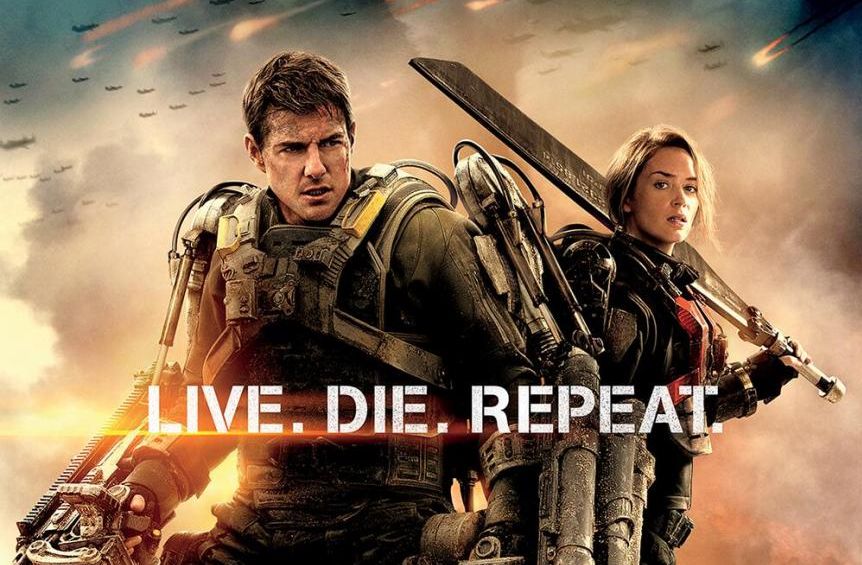
Not because the director the same amazing man behind THE BOURNE IDENTITY. And not because Emily Blunt and the other supporting actors nailed it.
I almost didn’t see this film because of my antipathy for Tom Cruise, and yeah, I’d lost respect for him the last few years. But this bit of cinema goes a long way toward rehabbing Cruise as a blockbuster star, though not for the reasons you’d expect.
Warning: spoilers. Also, I refer to action heroes as “he” for simplicity, and yes, Ronda Rousey and other female action stars are amazing.
5) Reversal of tough-guy expectations
Most action stars have an actual background in Being a Tough Guy.
Arnold Schwarzenegger was the king of bodybuilding. The rest of the cast of THE EXPENDABLES 12: ANARCHY AT THE AARP MEETING is full of martial arts maniacs, pro wrestling hulks and mixed-martial arts studs.
The fact that Tom Cruise is short in real life isn’t an impediment here. Jackie Chan, Jean Claude Van Damme and Jet Li could all fit in the back seat of a Yugo.
Doesn’t matter. They look big and tough on screen.
The difference? While he did all his own stunts in this movie, just like the toughest Tinseltown tough guys, Tom the Cruise can actually act. Shockingly, acting ability tends to matter on the big screen.
4) Humor that’s deeper than one-liners and puns
Another staple of action movies is a bit of comic relief to balance out all the explosions.
Bond is notorious for bad puns, like “She always did like a good squeeze” after Remington Steele dispatched Onatopp, who later fell in love with Wolverine.
Schwarzenegger is famous for his one-liners, too. I’ll say the phrase and you’ll know the movie:
“I’ll be back.”
“Consider that a divorce.”
“Stick around.”
For action stars, that’s about all the humor than can typically muster, unless their name is Jackie Chan or Jason Statham and they know how to make a fight itself funny.
The humor in action movies is almost always about other characters. The hero is a straight man.
EDGE OF TOMORROW has humor throughout, and it’s far more sophisticated and varied than puns, one-liners and physical gags.
That takes actual acting chops, which Tom has. He uses them, often to get laughs at the expense of his own character. It’s different and refreshing.
3) Acting range
ROADHOUSE is a cult classic that turned Patrick Swayze into a believable action hero, if only for one movie, despite the insane chasm between dirty dancing with Jennifer Gray and bar fights alongside Sam Elliot.
But the range of most of these stars goes like this: brooding while looking off into the distance, brooding while ignoring the love interest, brooding while training, brooding while handling weapons and gear and, finally, grimacing in pain while being tortured by the bad guy before he escapes, throws the villain down a bottomless pit and broods while walking off into the distance.
Not a lot of range there. It’s like the famous internet chart, the Many Moods of Batman.
Tom has plenty of range, which he uses to connects with his co-stars — and connect with the audience in a variety of ways. Other action heroes typically focus on a variety of ways of dispatching bad guys.
2) Improving on the graphic novel
The movie differs from the original graphic novel, and this time, that’s a good thing.
In the novel, the alien Mimics reset the day with three separate ingredients: a Server alien, an Antennae and a Backup Antennae.
Bit complicated. And the novel has the Emily Blunt character turn on the hero at the end, because she figures out she’s the Backup Antennae and the day will keep resetting unless the hero kills her.
This is all too Connor McCloud vs. Duncan McCloud.
The movie simplifies things: there’s an Alpha alien that looks different than the others and has the power — along with the big, immobile Omega brain — to reset the day. If you kill the Alpha and get its blood splattered all over you, that power to reset the day gets transferred. The catch: you have to die, every day.
In the movie, Emily Blunt’s character doesn’t fight Tom Cruise and make him kill her. The climax does something great: it strips Cruise and Blunt of all their powers and gadgets.
Before, she and Cruise both had mech suits and Cruise had the power to reset the day. The climax takes those things away. Cruise only has one shot, one life, and they have to do it without the suits and guns. The stakes are much, much higher.
1) Go ahead and hate him in Act 1
A huge weakness of most action movies is there’s no character arc, no growth.
The hero is a smooth, handsome killer in Act 1. He breaks necks (and hearts) in Act 2 as a warmup, then mows down an army of bad guys in Act 3.
The hero doesn’t really change: he’s awesome the first time you see him, the most skilled and deadly killer around, and it takes an army of bad guys to even match up with him.
In this film, Cruise’s character starts out as a jerk and a coward. Not a little jerk. A big one. And not simply a coward, but a soldier who tries everything to avoid going to the front lines.
So if you started out disliking Cruise, as I did, his character isn’t trying to change your mind. At all. He isn’t saving the cat (Blake Snyder!) in the first scene. The script embraces your ambivalence or dislike of Cruise, and the movie works better if you don’t have a TOP GUN poster in your bedroom and all of his movies on BluRay.
Because the more you dislike or hate Cruise in Act 1, the bigger the journey will be by Act 3 — and real momentum comes not via intensity, but from the emotional distance traveled. If you love a character in Act 1 and love him in Act 3, there’s no journey.
The script doesn’t flip a magical switch, either, and say, “Okay, now you’re supposed to love the guy from here on out.”
Cruise’s character evolves, slowly, and not always in a linear way. There’s a great scene where he gives up. Instead of fighting the same battle on that beach for the 159th time, he steals a motorcycle, goes to London and has a giant pint of beer. This isn’t a throwaway scene. The director, and screenwriter, are surprising us by letting the character make different choices. The hero isn’t your typical action hero robot, plowing ahead to save the day no matter what. He’s human and flawed.
In the end, Cruise’s hero sacrifices himself to protect others. There was a lot of resistance, internally, to him making those choices. His character didn’t always do the heroic thing.
So there’s more to saying this movie is like GROUNDHOG DAY crossed with INDEPENDENCE DAY, and yes, I bet somebody on YouTube already posted a mashup called GROUNDHOG INDEPENDENCE DAY.
Bill Murray’s character in GROUNDHOG DAY also starts out as a selfish jerk. There’s no single moment that turns him into a nice guy. He does bad things and makes all kinds of bad choices. Only in the end does he figure out that becoming a better person takes more than charm and wit. It takes sacrifice and selflessness to get him there.
EDGE OF TOMORROW might have worked with another, unblemished actor. Matt Damon is talented and worked with this director before, and he put on a similar mech suit in Elysium, so I bet he could strap it on just fine. But the movie wouldn’t be as good.
Let’s give props to Tom Cruise: just as Robert Downey, Jr.’s past troubles helped make him the perfect choice for Tony Stark, Cruise’s long rise and fall from grace helped make him the perfect person for this movie. He nailed it in a way that a lesser known – and better liked — actor simply couldn’t.
This is three minutes of film, via the Series of Tubes, that doesn’t have a single special effect or Michael Bay explosion. Yet it’s blowing up the Series of Tubes like nobody’s business, and not simply because it has cats.
Watch it, then we’ll dissect this to see how — and why — it works so well.
Beautiful, right?
Here are the top 3 reasons why this snippet of film by BuzzFeed works so well:
1) This is actually a long ad for Friskies … with barely a glimpse of the cat food they’re trying to sell you.
So right there, it’s refreshing, since 99.999 percent of TV ads are in your face, hoping to grab your attention for three seconds before you (a) change the channel, (b) pull out your iPhone or (c) amble on over to pillage the pantry.
Even the insanely hyped Super Bowl ads, the ones that are so famous that we get backstory about the advertising folks who created them, despite the fact they look more like your neighbor Bill the Accountant than Don Draper — well, those supposedly amazing ads are typically disappointing. They try too hard. Too fast, too loud, too much. You can see all the money on the screen and yeah, a lot of it is wasted.
Instead of 30 seconds of cars zooming and Danica Patrick in a bikini selling web domains (don’t get that one, either), we get 3 minutes of slow, leisurely voiceover from a cat while B-roll runs wild.
And it is hilarious.
DEAR KITTEN is also different from some of the better Super Bowl ads, like the Darth Vader kid who starts the car using the force. Those are more like one-joke skits, except not so much that the repetition drives you nuts like a bad SNL bit that’s gone on too long. This kitten business isn’t Johnny One Note at all.
2) A different kind of funny
Most ads aim for broad humor, things that the lowest common demographic will get in a heartbeat. You know, people falling down, exasperated moms, Santa actually coming down the chimney and frowning because LIttle Billy ate all the cookies and drank all the milk.
DEAR KITTEN is a higher form of humor, with great writing. Here’s a section of the script I love, even after hearing it three times:
You should be aware that there are two kinds of food. The first is sort of a brown, dehydrated nibblet. I think they give us these because they are training us to be astronauts. Just a guess. The second kind is wet food. It is so special they keep it in little armored metal casings that no claw can penetrate. With no claws to speak of, the humans can somehow open them. It’s like some dark magic.
Now, that’s great writing, full of sweet little setups and payoffs.
3) Building up to a climax
The writing is good in the beginning, gets better in the middle and rocks at the end.
This is the opposite pattern from most movies, novels, TV shows and circulars in The Willapa Valley Shopper, and not simply because many writers got started at these things called “papers of news” where you’re brainwashed to write using the Inverted Pyramid, which is inherently boring and should be taken behind the barn and shot.
The best stuff goes first because when you pitch a movie, book or TV ad, that’s what you lead with. Otherwise, the thing won’t get off the ground. And that’s what they want to see in the script or the dailies: the awesome stuff you talked about, whether it was dinosaurs roaming the earth again or aliens invading Nebraska, you know, because their spaceships run on corn or whatever. But if you put the very best material up front, by definition the middle will get your junior varsity stuff and the ending will be complete rubbish, the bottom of the tank, the leftovers, the scrubs.
Check out the last part of DEAR KITTEN.
Dear Kitten: I should warn you of the monster known as “Vac-Koom”. It can eat and yell at the same time. And I’ve seen it eat everything. Seriously, like a paper clip and two cat toys. Didn’t even flinch. To hide from Vac-Koom, you may use the curtains of invisibility. Oh yeah, you’re good. Good hiding. Hoh, boy.
Dear Kitten: One final note. Once in a while, you might see a little red dot. I’m going to tell you this right now. It is real, and it can be caught. I did it once. I held it for a full minute. But when I lifted my paws, it was gone.
So Kitten, welcome to the household. You’ll do just fine.
Brilliant. I’m glad they saved the best for last. Vac-Koom and the Curtains of Invisibility will become part of internet lore now.
Here’s an itty bitty film that’s crazy funny and extremely well done. Watch it, then let’s talk it over.
So, here’s the thing. Drama is very simple, when you get down to it.
Step 1: Create conflict, say two young brothers wanting to inherit the same rich farmland.
Step 2: Dream up ways of making it far, far worse, like one brother stealing the other brothers favorite cow and serving up Bessie barbeque at the next family gathering.
Step 3: Raise the stakes even higher in the big finale and put our fighting farmers in a North Dakota version of the Thunderdome — two men enter, one man leaves, because the other guy has a pitchfork in his head.
Humor is far, far tougher.
You have to dance on the knife’s edge of normalcy, push boundaries, tell uncomfortable truths. Be edgy without being offensive, insanely creative without coming off as insane.
Humor doesn’t have easy formulas, and the risks are far greater. Jokes fall flat. Things that seem hilarious in the writing room go nowhere, while little throwaway bits turn into comedy gold. You can’t predict it.
So let’s talk about three little things before the Big Thing that I noticed in this short film.
First, they dispense with names, with one exception: the delivery service logo.
A typical story would be awash with names. If David Lynch was doing this, DUNE style, the floating head of a princess would be on screen for five minutes, telling us the name of the planet, its ruler, the strength of its army, the name of the alien who’s supposed to get this package delivered and so forth. Then we’d get all kinds of voice-over about the delivery ship and how it travels through space-time using dark matter or whatever.
Second, there’s no backstory. No flashbacks, no explanations, nothing. The makers of this short film know backstory is irrelevant when they’re showing everything now, as it happens. If you’re explaining, you’re losing the storytelling war.
Third, no dialogue. Maybe you could argue about the aliens saying things we don’t understand, but no, that doesn’t count. It’s like the opening half hour of WALL-E, which was brilliant without a single word of dialogue.
So: no backstory, no names and no dialogue. What’s the Big Thing they did?
These filmmakers maximized the gap, creating chasms between expectation and result from BOTH directions. They were constantly, creatively, always raising the stakes from the POV of the space delivery man and the aliens.
That gap usually exists only for the hero. The villain knows exactly what’s happening and why. He’s not surprised at all.
It’s the hero who’s fumbling around, wondering what the hell is happening, and only at the very end does the villain have any gap between expectation and result, because the villain expected to shoot the hero after his monologue, not get thrown down a bottomless pit.
Most films and novels stick to that unwritten rule: No Surprises for the Villain, because surprises are precious and reserved for the hero. We don’t usually see the villain failing or being confused. If we see things from his POV at all, the villain is doing deliciously dastardly things and doing them well, because that makes it harder on our hero.
In this film, the gap grows wider and wider from both points of view until it can’t get any bigger, and they’re doing something interesting with the gaps: not only is each gap funny, they also raise the stakes every time until the climax.
Could you make it even worse for the alien planet than being Death Star’d at the end by the delivery ship’s main engines? No.
The opposite of this happens in bad Saturday Night Live skits, which are bad for a very specific reason: they latch onto a single funny idea like a lamprey eel, then do it seventeen bazillion times until it’s time for a commercial break so we can get educated about the new formulation of Head and Shoulders.
Those bad kits aren’t funny because of a structural problem. The gap doesn’t grow bigger. The stakes don’t get raised. It’s repetition without a purpose.




 The Red Pen of Doom