First, it looks amazing, and could easily pass for bits of a real noir movie, a dark mystery.
Yet what really hits me is how brilliantly this video uses minimalism.
There’s no needless exposition. In fact, the only real dialogue comes in a short interrogation scene, and it doesn’t get into much detail.
This is a huge strength. Trying to give all of these characters names and motivations that you’ll remember in a little music video is like ice skating uphill.
We don’t need to know the names of the man and the woman with the briefcases, the cops trying to bust them or the bad guys looking to steal the briefcase. There’s no real need to know exactly what’s in the second briefcase, how our heroes obtained it or what’s inside.
Making the briefcase a true MacGuffin adds to the mystery and actually helps the story. Not knowing any names or backstories also makes you more curious about them.
VERDICT: There’s a fine line between (a) keeping enough secrets from your audience to make them curious and (b) confusing your audience with events and characters that make no sense. FROM DUSK TILL DAWN nails it. The story works, and moves fast, without any stray exposition.
Unless you live in an ice cave, you’ve seen THE KARATE KID—and by that I mean the classic from the ‘80s, not the remake with Will Smith’s kid and Jackie Chan which had the same title, and sort of the same plot, except it was set in China, was about kung fu instead of karate … and was just an achy breaky big mistakey of a movie.
COBRA KAI isn’t just another cheesy remake or TV spin-off.
It’s actually better than the original movie.
Let’s say that again: COBRA KAI is better.
Here’s why:
1) A dark, gritty treat for adults
Go back and rewatch the original movie, even for five minutes. Daniel LaRusso is the good guy and Johnny Lawrence and his buddies are the bad guys. There are no shades of gray.
What makes the film work is this isn’t a traditional action movie where the hero is tough and sexy from the first minute of the movie and doesn’t really change or grow by the time the movie ends. The only thing that changes is the pile of dead bodies created by the traditional action hero in the process of saving the world.
ROCKY and THE KARATE KID are the rare exceptions where the hero is a loser in the beginning, a total underdog. The joy in both films comes from their struggle and sacrifice to climb up from that gutter.
COBRA KAI isn’t simple. It’s dark, gritty and complicated, and that’s what makes it great.
2) It’s much, much funnier
Sure, there are cute moments in the film, and some jokes that’ll make you laugh.
COBRA KAI, though, will make you snort milk through your nose.
3) Even minor characters shine
THE KARATE KID doesn’t give minor characters much to chew on. They’re part of the scenery. Pop quiz: can you name any of Johnny’s gang? I can’t. Interchangeable thugs.
COBRA KAI fleshes out as many characters as possible, and it does this with efficiency and grace.
4) Crossing character arcs, as rare and beautiful as a triple rainbow
In most movies or novels, the hero suffers, sacrifices and grows. The mentor, the love interest, the villain—everybody else typically stays the same. They serve as catalysts and examples (good or bad) but they don’t change.
Back in THE KARATE KID, Daniel definitely suffers, sacrifices and grows through the catalyst of Mr. Miyagi’s teaching, but Mr. Miyagi doesn’t go from nasty curmedgeon to sweetie pie. Same thing with the evil sensei who runs the Cobra Kai dojo in the movie: he’s bad in the beginning and bad in the end.
COBRA KAI tries something bold and amazing with multiple crossing character arcs. They’re juggling chainsaws here, and they pull it off.
Season One shows us the redemption of Johnny Lawrence as he moves from bad to good. You root for the man.
His protégé Miguel actually moves from good to bad, and it hurts you to see a good kid turned into a jerk. In the final episode, Miguel winning the tournament should be a moment of triumph. It’s what Johnny wanted and worked for—yet it’s ashes in his mouth. And the writers know they don’t need dialogue to do this. It’s all there in Johnny’s face and it slays you. Miguel gets what he wanted, too, and finds out he cares less about the championship and more about the girl that got away.
There’s a similar contrasting journey with Daniel LaRusso, a fallen hero turned villain, using his power and money to torment his old high school karate rival.
It’s only through teaching Robbie, Johnny’s son, that Daniel finds his balance again and returns to acting like a hero.
Robbie has the opposite journey, suffering and sacrificing to move from bad to good through his new relationship with Daniel and the LaRusso’s.
The writers and showrunners went further by giving minor characters real, meaningful arcs. The best example is Hawk finding his confidence, then taking it too far and becoming a villain, while bad girl Moon finds redemption by ditching the mean cool kids to hang out with Hawk and the dorks.
Finally, it’s a nice tough that the big bully at the start of season one, Kylar, falls from Big Man on Campus to loser after being beat down in the cafeteria by Miguel, his previous victim.
The only other show I can remember with this many deep, crossing arcs for major and minor characters alike is BREAKING BAD, a tragedy where Walter White is the hero and the villain, going from good to bad while meth cook Jesse climbs up from the gutter to redemption.
VERDICT: Put a gun to my head and I would have never expected the folks behind HOT TUB TIME MACHINE to pull off an amazing series like this. The structure of episode one is strong, supple and fascinating. Just a thing of beauty. If you haven’t seen it, give it a shot. Here is episode one, which you can watch for free.
BLACK MIRROR is a beautifully strange British sci-fi series playing on this thing called Netflix, except they call it “streaming” now and you can do it on your phone, PC, iPad, Nook or 65-inch plasma wallscreen.
Each episode is different, and the showrunners take massive, massive risks. They’re not afraid to fail.
This season, everybody seems to love USS CALLISTER, which is a genuinely great episode starring Meth Damon from BREAKING BAD.
Here’s the trailer:
And here’s that same actor rocking the role of Todd in BREAKING BAD:
The other episode I truly, madly and deeply wanted to see this season is METALHEAD, an entirely black-and-white story about an apocalyptic world. Check out the trailer:
So: why does USS CALLISTER work so well while METALHEAD fizzles out at the end?
There’s nothing here about the acting, the sets, the special effects or the directing. All are top notch.
What’s different is the writing.
The trick is, every episode in this series is a horror story. You can say it’s sci-fi, but that’s the setting, not the story.
Horror stories are about punishment. The monster is really the hero, and everybody dies in the end except for the monster, who comes back for endless sequels.
Good horror movies show the people who die first, committing sins they’ll get punished for later. In slasher films, it’s teenagers typically drinking and carousing and breaking the rules. In other horror movies, scientists (and society) get punished for being arrogant enough to think they could invent some insane new technology that, of course, turns on them in the end.
Bad horror movies reverse this and make the regular actors into heroes and the monster into a villain that dies in the end. Doesn’t feel right. That’s a different kind of story with different beats and twists.
The type of story where good guys kill the monster is what Blake Snyder nicknamed Monster in the House, where there’s a monster in an enclosed place, and either you’re going to kill it or it’s going to kill you. That’s a primal story, something that touches us deep in our caveman souls, and you can see the same essential beats in movies that seem dramatically different: JAWS, ALIENS and FATAL ATTRACTION aren’t really a horror, a sci-fi and a domestic drama–they’re the same story in different settings.
USS CALLISTER is actually Monster in the House instead of horror. There’s a monster in an enclosed place–the starship–and the crew is either gonna kill him or get tortured and killed, forever, by an all-powerful bully who created this world. It takes a lot of creativity and guts for the crew to beat him in the end, and it feels right. They deserve their freedom and he’s a monster who deserves his fate.
METALHEAD is a horror story where everybody dies in the end, except the monsters. Where it goes wrong people don’t get what they deserve. The monster is punishing everyone for a sin you never witness, which makes all the deaths caused by the killer robots feel senseless.
This is why horror movies always start by showing the sinners running around, committing the sins they’ll be punished for later. It doesn’t matter how good-looking and wholesome the teenage actors in a slasher film are, they’re going to die for their sins. Same thing with horror movies with scientists trying to play God: they might be great actors, and the entire team may not be evil, but the whole lot of them get punished for the sin of thinking they could (a) make an army of robots to do all the work, (b) genetically engineer a way to life forever or (c) create super-smart sharks with lasers.
If we had seen the original sin in METALHEAD, and the characters who all die were somehow associated with that sin, then it would feel right for them all to get punished. Instead, the killer robots seem off. It feels like the most likely explanation is whoever created and programmed security robots for warehouses did waaaaay too good of a job. Now if that man and his team got killed by his own creations, the audience would swallow it.
So my genius sister, Pamela Kay, made a series of YouTube videos on how to write screenplays. She won a Nicholl Fellowship from the Academy and knows her stuff. Heed her words, even if you don’t write screenplays, because this field is crazy useful for any sort of writer.
Why? The secret to all writing is structure–and nobody is better at structure than screenwriters.
Not because they’re magical and amazing, though many are. It’s because you can hide bad structure with pretty words in a novel or feature story.
With screenplays, you can’t hide the bad bones of a story, because that’s all people see: the bones.
Writing today has far too many silos, mostly focused on little details, with few notions on structure at all:
Writing to inform: Journalists are stuck inside the inverted pyramid, a structure that’s inherently boring for anything of length, which is why journalists typically stink at novels
Writing to persuade: Speechwriters know the structure of rhetoric, but it’s not really meant for writing anything to inform or entertain
Writing to entertain: Novelists, playwrights, poets and screenwriters all have their own jargon and tricks, like they live on different planets
This reminds me of boxing, wrestling and martial arts before the days of MMA, with everybody doing their own little thing and swearing they’d whip the lesser disciplines. Except boxers got destroyed by the wrestlers, who got owned by the jujitsu people, who later on got wrecked by the boxers who learned how to sprawl. To be truly good fighters, fighters had to set aside their pride and train in every discipline.
I believe the same is true for writers today. There’s never been more content out there, with scads created every second all around the world, so there’s never been more competition to get read.
From having a toe in journalism, speechwriting and novels, I know you could slave away in one of these fields for years and still miss out on core fundamentals. Not learning from other disciplines is like building a house when all you know is drywall and plumbing–the thing is going to fall down.
Screenwriting is key because structure is why 99 percent of bad drafts are bad. Go look at a bad draft. Line by line, the words are plenty pretty. Structure is what vexes us all.
So: I hope this video gives you a taste of screenwriting and her series sparks something in you. Not so you can write LETHAL WEAPON 7: DANNY GLOVER AND MEL GIBSON BUST OUT OF THE SANTA MONICA NURSING HOME, but so you can learn how to pour the foundation of any sort of story, making it stands strong so you can move on to the wiring (dialogue), plumbing (setups and payoffs) and drywall (description).
Any sort of writing with strong bones will beat the stuffing out of the prettiest words with a weak foundation.
If you want more, here are two of the basic texts, the guide stars: STORY by Robert McKee is a deep dive on structure, while SAVE THE CAT by Blake Snyder is a breezy little look at genres, beat sheets and story, using movies we all know.
P.S. Pam did a ton of these videos, so I’ll try to post one every Tuesday as long as she keeps making them.
I come here to praise Taylor Swift, not to bury her CGI zombie corpse.
Though I’m neither superfan nor hater, I have to say she did some great music videos early in her career. YOU BELONG TO ME is excellent. BACK TO DECEMBER is pretty good.
This music video is a step backward, an expensive mess that shows T-Swift has fully evolved from a Scrappy Young Talent Who Just Hit It Big all the way to a Establishment Megastar With More Mansions Than She Can Remember.
Yes, the production values are great. Fans will watch the heck out of this just for the spectacle.
HOWEVER: It doesn’t make you feel anything.
At all.
And that’s the acid test for a music video.
Do you laugh?
Do you feel joy, or anger?
Do you cry?
That’s because whether you intend to or not, every song tells a story. A music video is supposed to help tell that story.
Songs don’t give you a lot of words to do the job. It takes discipline and talent to do it right.
The Dixie Chicks can spend 200 words to tell a full story that makes you full of sorrow (TRAVELING SOLDIER) or righteously angry (GOODBYE, EARL).
Taylor can do this, too. She has the talent to tell a story and make you feel. One of her first big hits did this perfectly. It’s even in the title.
Here’s where this new video goes wrong, despite all the money spent–reportedly, $12 million in diamonds was used for that bath scene.
What story is she telling, and how does it make us feel?
In her best songs and videos, Taylor’s telling a story about somebody else, somebody we can all relate to, and that makes us feel for the protag. YOU BELONG TO ME is about a high school girl, something of a loser, with a crush on a neighbor boy. People get that. Whether you’re male or female, we’ve all been through awkward years in junior high or high school. It’s easy to feel for the girl she’s singing about, and to root for that underdog. You want her to get the boy and it’s a great moment when they both show up to the dance together.
In this video, Taylor’s clearly talking about herself, and the point of the song is to strike back at perceived rivals.
It’s hard for non-billionaires to feel sympathy for celebrities with hurt feelings. No matter how good the song is (and it’s not that good compared to her best) and how much they spent making this video, you can’t force people to feel sorry for a young, pretty woman who makes more money in a week than most people will make in their lifetime.
What are the stakes?
Just like books and movies, songs can have low stakes or high stakes, personal stakes and public stakes.
They can be about whether love rules the day or love forever lost. War or peace, injustice or redemption.
The stakes here are extremely low. Oh, Taylor is so upset (at Katy Perry or whoever, I honestly don’t care and neither should you) that she crashed a car that costs more than your house while a a cheetah served as her copilot. With her car trashed, will she be unable to get to work in the morning and lose her job? Does it matter in the slightest? No. She may have to tell her staff to gas up the Ferrari, or the Bentley, or one of however many dozen cars she owns. People will clean up the mess while she goes off and trashes one of her jets and rounds up an army of cloned robots or whatever to assault the compound of P-Diddy or whoever she’s mad at this week.
Basically, I can’t make myself care, and yes, I tried. Really hard.
What’s the impact of the song and video?
The best songs and music videos stick with you. AMERICAN PIE was about an entire era, and half the fun was trying to decipher the lyrics. Even if you didn’t get every line, you got the message about how America was changing. It sticks with you.
EVERY BREATH YOU TAKE is about love turning into obsession, and the video is stark black-and-white. I wouldn’t change a thing.
When I first heard LOOK WHAT YOU MADE ME DO on the radio, I swore it was Britney Spears.
Not kidding. Feels like mid-stage Britney, after she’d made it big, and started doing over-the-top stuff like this:
Verdict: Sure, the production values and budget is sky high, but the entertainment value is meh and the feels generated are zero. 10/10 would not watch again.
If the old Taylor Swift is dead, and the new T-Swift is busy being obsessed with her hurt feelings and celebrity beefs, let’s resurrect the old Taylor Swift–the one focused on songs that aren’t about her. I’d happily listen and watch that singer.
Back in the day, they made a movie about an intergalactic gang of misfits that included a cyborg raccoon, a green alien woman and a living tree that only said, “I am Groot.” And they turned that trash into treasure.
IRON FIST is one of the first mistakes Marvel has made, which is crazy considering the number of movies and TV shows they’ve produced.
Now that THE DEFENDERS has all four of these characters teaming up, and Season 2 of IRON FIST has a new showrunner, there is hope that the show will improve.
Having watched every episode of the other three Netflix originals—DAREDEVIL, JESSICA JONES and LUKE CAGE—it’s pretty easy to see where those shows went very right and Danny Rand, the homeless billionaire, went very wrong.
Fix Number 1: A new intro
The intros for the other three shows are interesting and set the mood, while this intro simply annoys you with bad CGI and makes skipping ahead the default choice.
DAREDEVIL has an intro that reminds me an awfully lot of WESTWORLD, so much so that I wondered if the same people did it.
LUKE CAGE starts off every episode with images of Harlem and history broadcast on his unbreakable skin, and I don’t skip it despite having seen it a zillion times.
JESSICA JONES puts you in a noir mood with her intro, and though it’s not quite as good as the blind ninja’s or Luke’s, it doesn’t completely annoy you.
IRON FIST just has a bad intro. Here, watch this for ten seconds and you’ll get annoyed. Is the main character some kind of shapeshifting oil beast?
Give us an intro that’s interesting and different. WESTWORLD has such a beautiful and genius intro that I’ve rewatched again and again.
Fix Number 2: Make us want to be the Iron Fist
Regardless of your age or gender, part of the joy of reading a novel or watching a movie is living vicariously through the eyes of the great protagonist. You admire them, and wonder what it would be like to be them.
With the other three Netflix shows, it’s clear that Daredevil, Jessica Jones and Luke Cage are interesting and special people. It’d would be fun to walk in their shoes for a day, and it’s a pleasure to be there, watching, even when they go through the worst possible troubles.
All three of those characters are good in very different ways.
Daredevil is intelligent and driven.
Jessica Jones is sarcastic and tough.
Luke Cage is calm, strong and determined.
I don’t think anyone wants to be Danny Rand / Iron Fist, and that’s really a function of the writing, not the acting.
Fix Number 3: Stop making Danny Rand act like a fool
In episode after episode, Danny makes stupid decisions that hurt other people. And yes, that’s despite the best of intentions.
The first season is more of a tragedy than anything else, with Danny’s hubris leading to terrible things. In just about every critical situation, the great Iron Fist makes choices that any other superhero would avoid.
Telling everyone—from homeless men on the street to villains—his secret identity. He may as well wear a sign. Every other superhero with a brain works incredibly hard to protect this vital secret, because failing to do so always, always leads to trouble and death. Danny has no clue.
Being a taker instead of a helper. There’s a good reason why most superheroes default to tackling problems by themselves. They don’t want to get civilians involved and hurt, and it’s safer when friends and loved ones don’t know their secret identity. Danny constantly, constantly asks for help, often from strangers or villains. He’s not self-reliant at all, which is one of the primary traits of heroes.
Creepy stalker behavior. Early in the series, he breaks into Joy’s house and refuses to go away when Colleen Wing clearly and repeatedly tells him to scoot. And this is a pattern. While other heroes break into places to collect clues and skedaddle, Danny does it like he’s dropping by to visit and is shocked when people treat him like a burglar.
No discipline. There’s an episode where Danny says he’s spent a lifetime learning to control his emotions, which made me guffaw, because every episode, he shows zero control over his emotions.
Can’t plan for the future. Danny simply bumbles through problems. He never has a plan aside from, “Let’s break into a place and either ask for help or beat people up.” Then he’s confused and angry when that non-plan goes south.
Falling into every trap. Danny Rand believes every word that anyone says to him, whether it’s from the mouths of a random stranger or a villain who just tried to kill him ten minutes ago. Even when a villain invites him to an obvious trap, he goes straight into it.
All of this makes Danny seem more like a goofy, tragic side character than a hero. You could see him as a troubled sidekick for a smart hero who figures out ways to control and harness the human wrecking ball.
This problem is made exponentially worse when actual side characters like Colleen, Claire, Harold, Joy and even Ward—Ward!—make clever decisions that seem more heroic and interesting.
At one point, Danny says, “I’m sorry” and Ward replies, “Danny, you’re a cancer.” And I cheered, because it was the truth.
In every tough situation, audiences instinctively think, “What would an average person like me do?” They compare the choice the hero makes to what other heroes or villains would do. The best stories surprise us with choices we haven’t even considered.
Every time Danny faces a tough situation, I groan and compare his choice (always bad) to what Batman, Daredevil, James Bond and a hundred other heroes would do. We all have that repository of stories and characters. Even the villains we know and love, like Hannibal Lecter and Darth Vader, would make different and more interesting choices than Danny Rand.
Because what Danny chooses is never a surprise. As a character, he’s an overgrown child, which people keep telling him. Which is a shame. The actors are fine, the cinematography works and the tie-ins to the other shoes are nice.
For the audience, there’s no surprise. We know what Danny will do, and we know the outcome will be bad. The only question is, “What side character or villain will save Danny from the mess he creates this time?”
Here’s to hoping Season 2 fixes these three flaws and gives the world an IRON FIST who doesn’t keep bumbling his way through New York City and, instead, starts acting like a hero instead of a cross between Homer Simpson and The Greatest American Hero.
Right now, you can fire up your phone, computer, 4k television or seven other things with screens to binge upon amazing movies and television shows that make the classics of the ’70s and ’80s look like high school art projects.
The list of viewing choices is incredible: WESTWORLD, a Marvel superhero movie every time you sneeze, THE WALKING DEAD, a new STAR WARS movie once a year, GAME OF THRONES, BREAKING BAD, BROADCHURCH and the SHERLOCK series starring Khan/Dr. Strange and his hobbit friend.
It’s an embarrassment of quality. And meta-story is the key reason why.
Because it’s not just the quality of special effects, sets and acting at work here. It’s how well that meta-story is told that affects whether you (a) stay up until 3 a.m. binging the entire series or (b) keep flipping through shows and movies before you give up and watch YouTube clips of animals being bros.
I can’t remember any TV shows or movies back in the day that told a fully story, start to finish, with a concrete end to the series, except for the original three STAR WARS movies. (Note: the prequels are dead to me.)
Back in the ‘80s, the shows I watched and loved had the same hero and sidekicks and a Villain of the Week, unless it was a sitcom.
A-TEAM, REMINGTON STEELE, AIRWOLF – all these shows you could watch in any order, unlike the meta-stories of today, where if you miss 15 minutes, you might get lost.
It seemed pretty clear that showrunners back then were content to keep making new seasons until the ratings went south.
They kept going until the network ended the money train, which was reflected in the sudden demise of most TV shows where loose ends tended to stay loose.
So where are the new giants of meta-storytelling doing it right, and where are they tripping up?
Week 1—GAME OF THRONES vs THE WALKING DEAD vs WESTWORLD
All three of these are sprawling adventures with ensemble casts and no clear hero or villain.
But they are true meta stories. There’s nothing episodic about either show. Things constantly change and both are building up to a climax versus the old model of “petering out when they cancel us.”
A big strength for all three? Constant surprises. Anybody might die in any episode, except for Rick Grimes, who never dies for some reason, while Westworld reserves the resurrect any character as a robot and Game of Thrones can’t part with Captain Good Hair Who Lives Among the Snow.
All three series are full of deadly betrayal and high stakes. There are no cartoonish white hats and black hats. Each character tends to be a little good and a lot of bad.
You also don’t have to find a new job if your big star, the hero, decides to leave the series to try movies, or gets drunk and slams his Rolls Royce into the side of a cliff.
HOWEVER: The lack of bedrock heroes and villains can make the audience confused and scared off from getting attached to characters they like, seeing how at any minute they could get stabbed in the back, nom-nom-nommed by a zombie or shot by the Man in Black.
This sort of story also has problems with villains, because they tend to die off and need to get replaced.
GAME OF THRONES and THE WALKING DEAD have the advantage of known their destination, since the original authors mapped out the story in printed form using these things I like to call “words” placed inside these archaic, beautiful things they call “books.”
WESTWORLD will have to find its own way to the climax, since it’s based on a single movie from the ’70s. However: Season 1 was a brilliant start.
Verdict: GAME OF THRONES is the odds-on champion here, with a huge audience and a definite climax in the cards. THE WALKING DEAD feels a bit too uneven and small scale at times. How can they top Negan?
WESTWORLD is the hipster choice of these three, the one that feels most like a movie. Each episode shot and scored beautifully. It’s just harder to see where it goes after Season 1. But if they can pull it off, WESTWORLD will live forever as a classic.
Next week: D.C. versus Marvel, also known as ‘D.C. just can’t win’
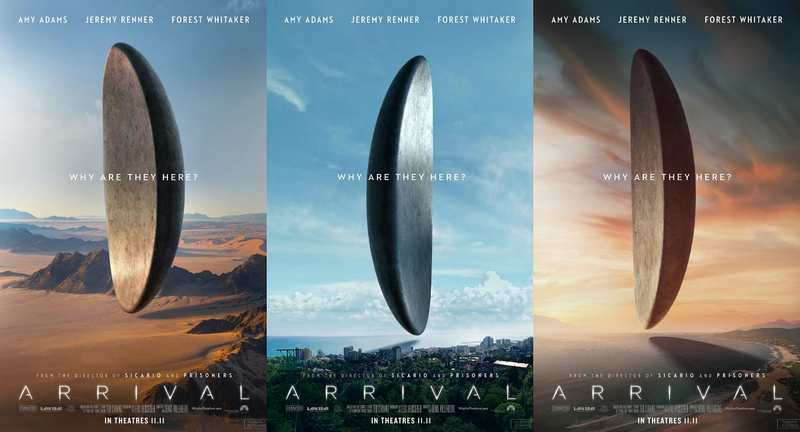
So we rushed to this giant building where popped corn with a fake butter costs $9 a bag, trying to see DOCTOR STRANGE, except we were crazy late. Instead, we watched ARRIVAL.
Marvel and DC have taken comic books for kids and turned them into an unstoppable machine, designed to entertain the masses while making massive profits.
When all the pieces fit together, it’s memorable and magical.
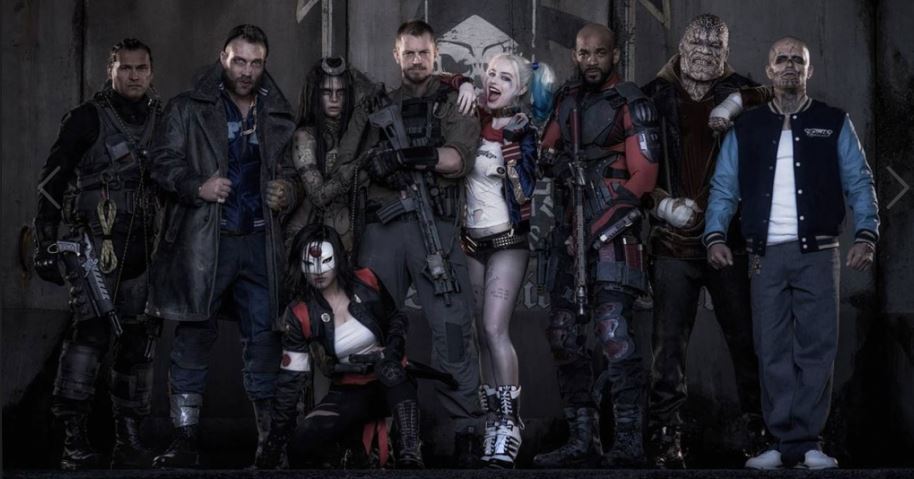
When they don’t, as in SUICIDE SQUAD, everybody notices. (Warning: this is packed full of spoilers.)
It’s like making chocolate chip cookies: Marvel and DC have well-known, well-liked ingredients that people have loved consuming for decades.
Mix it up, put them in the oven and serve them warm and hot. People are going to eat them. It’s not rocket science.
HOWEVER: your average person has eaten a lot of chocolate chip cookies, and seen a ton of these comic-book movies. They’ll know, right away, if Marvel burns the whole batch or DC forgets to add any chocolate chips at all.
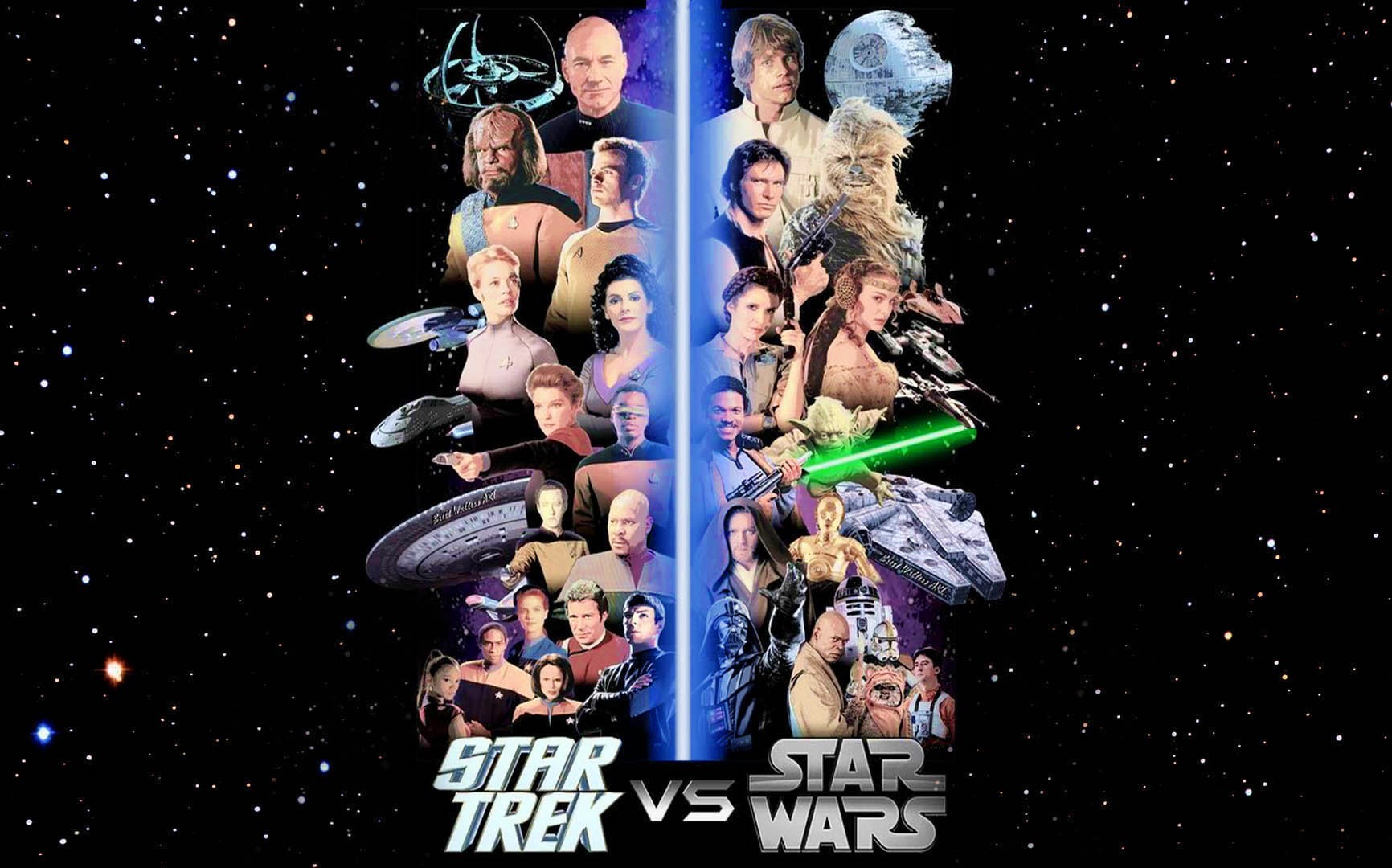
I say this out of love, and not just because both series are (a) sci-fi space operas (b) starring ensemble casts of heroes with (c) both series taken over and vastly improved by J.J. Abrams.
I say this because it’s true.
Spoiler alert: Most people know the Enterprise gets destroyed in the new STAR TREK BEYOND, and that it got half-destroyed in the first two reboot movies directed by Abrams.
If you look back, the Enterprise is getting half-destroyed or fully destroyed all the time now, and STAR TREK has turned into a reverse story of STAR WARS.
You can sum them up like this:
STAR TREK is about a team in a super-ship exploring and restoring order to the galaxy while enemies try to blow them up.
STAR WARS is about a team of rebels trying to blow up a super-ship the other team uses to restore order to the galaxy … by destroying planets.
It didn’t use to be like this.
When the Enterprise first went down for real in STAR TREK III, with no “Let’s Go Back in Time To Fix It” loophole that Picard later used 593 times, it was a big deal.
People wept. You just didn’t destroy the Enterprise. No.
Here’s the clip from STAR TREK III: THE SEARCH FOR SPOCK JUST GOT A LOT HARDER, SEEING HOW WE DON’T HAVE A FLIPPING SHIP ANYMORE
In the old days of original Shatner and Nimoy on television, they beamed down to adventures on planets full of styrofoam rocks and green alien women, or, for variety, green alien reptiles bent on killing Kirk.
The Enterprise was always their safe harbor, their home.
Sure, it got torpedoed by the Klingons once and a while, or threatened by some giant space monster, with Scottie always having to repair things in the engine room. But it never got fully destroyed forever and ever.
Why not? Partly because they had tiny models of the ship instead of CGI, and making it look damaged and dirty would be a big, expensive pain that wouldn’t look great anyway. It would probably look like somebody poked holes in a plastic model and painted some burn marks on it.
The bigger reason was you just did not destroy the beloved Enterprise.
After STAR TREK III, the Enterprise was no longer sacred, and they started blowing it up, or pretending to blow it up, all the freaking time.
What about STAR WARS?
Let’s go through all the STAR WARS movies, past, present and future, and yes, Disney will be making STAR WARS movies in the year 2058.
STAR WARS REBELS (winter 2016): A suicide mission to steal the blueprints to the Death Star so we can blow that sucker up.
STAR WARS: This friendly trash-can on wheels has those secret blueprints to make the Death Star go boom.
THE EMPIRE STIKES BACK: Oh, we are so hunting down those rebels who turned our beautiful Death Star into a space firecracker.
RETURN OF THE JEDI: Guess what, fools? We have a new, improved and fully operational Death Star, while you have some Ewoks.
THE FORCE AWAKENS: Plain lightsabers and Death Stars are boring. Check out this new red lightsaber with a crackling crossguard and our fancy Death Planet that’s so powerful, it eats a sun before turning planets to rubble.
Attack of the Fanboys
Serious fans may say this theory has to be bunk due to the existence of three prequel films which should never have existed.
In those three prequels, George Lucas somehow refrains from blowing up any Death Stars whatsoever.
I have a two-word rebuttal: Jar-Jar Binks.
Even gritting your teeth to look at the prequels shows you how STAR WARS without Death Stars is like Kirk and Spock without the Enterprise.
EPISODE 1, POD RACING, MIDI-CHLORIDIANS AND JAR-JAR: The bad guys have a donut-shaped space-ship that controls their droid army, and no, this isn’t a Death Star at all, except the heroes win in the end by using tiny fighters to make it go boom exactly like a Death Star. I think they even recycled some of the CGI from the special editions.
EPISODE 2, ATTACK OF THE CLONES: Palpatine starts a fake war to become emperor and command all kinds of Star Destroyers and Stormtroopers, and he’s especially interested in stealing the old Sith blueprints for Tie Fighters and some moon-sized space station that happens to destroy planets.
EPISODE 3, DARTH VADER FINALLY ARRIVES BUT SOMEHOW DOES NOT KILL JAR-JAR: What in the big finish, when Anakin Skywalker becomes Vader and joining the Emperor on a Star Destroyer? They’re watching something out in space, I forget what. Let’s pull up the clip.
The Expanded Universe or whatever
There’s also a ton of STAR WARS video games, cartoons and novels with other variations on the Death Star idea, each one more powerful than the last.
I’ve heard (haven’t read all this stuff) in some of these novels and such, the emperor comes back as a clone, Luke Skywalker turns Sith … and there’s eventually a super-ship that destroy entire solar systems, plus other Death Star-like objects that do other amazingly destructive things that make the first few Death Stars look wussy.
This explosion fest is perfectly understandable and perfectly boring
Here’s the thing: I get why STAR TREK and STAR WARS keep returning to this idea. It’s a quick MacGuffin, an easy way to raise the stakes.
This is the same reason why thrillers and James Bond movies keep returning to the cliché of stolen nuclear warheads. Pretty hard to top that.
The first time they made the Death Star go boom, the entire theater went nuts. I still remember it.
And the first time they actually killed the Enterprise while Kirk and his crew watched from the planet, people did cry. Didn’t make that up.
In this latest STAR TREK movie, nobody cried when the Enterprise went down. We’d seen it so many times before: they’re going to trash the Enterprise so bad it needs a year of repairs or completely wreck it. No shock.
You simply can’t go to this well every movie, especially in an age where audiences are so used to CGI destruction that it only generates yawns.
Remember the latest X-MEN movie? Nobody cared as the bad guys started to wipe out civilization, because we all knew it was pixels. We only paid $25 for Imax tickets and popcorn for the characters and actors we love.
Hollywood is doing us wrong
At the end of this new movie, STAR TREK BEYOND, there’s a time-lapse scene of the new Enterprise getting built in a shipyard, then launching into space. Now, this was a fun movie, good, not great. That ending scene, however, was a huge story mistake.
Destroying and rebuilding the Enterprise should be your final card to play, the biggest possible thing that could happen.
The writers and director could have generated a lot of suspense by not showing that scene at all. They could have made us wonder about what happens next.
All through Act 1 of the next movie, show the crew scattered, Kirk at a desk job in Federation buried in paperwork, Spock back on New Vulcan, Bones bored out of his mind working in a hospital, Scottie fixing the engines of a transport ship and Uhura translating Klingon for some boring bureaucrats.
You could show how they missed each other, and how breaking apart the team is costing them personally, and how it’s hurting the Federation as a whole as the B team out in space gets pummeled by the Borg and every planet is about to get assimilated.
It would’ve been a big emotional payoff to bring them back together on a new Enterprise they actually had to fight to get built in Act 2 before they beat the bad guys in Act 3.
Give us real emotion about real characters
In the end, these movies and stories shouldn’t be, and aren’t, about a super-ship–Enterprise or Death Star–that keeps getting blown up and rebuilt, bigger and better.
Audiences today are used to special effects and explosions. We’re numb to it.
These movies work best when they focus on the characters we care about, people who aren’t CGI and can’t get rebuilt with a few clicks of a mouse.
This isn’t hard, since STAR WARS and STAR TREK have some of the most beloved characters onscreen today.
Also: it would save you a lot of money, Hollywood execs. Getting actors you’re already paying to act is a lot cheaper, and faster, than spending 2 months rendering that giant space battle where the Enterprise launches photon torpedoes into the exhaust port of Death Star Version 6. (Actually, film footage suggests the opposite. Sorry, Kirk.)




 The Red Pen of Doom