Listen: I love cheesy action films and B movies of all types, as long as they don’t take themselves too seriously. Feed me summer popcorn flicks, meant to entertain, instead of pretentious nonsense.
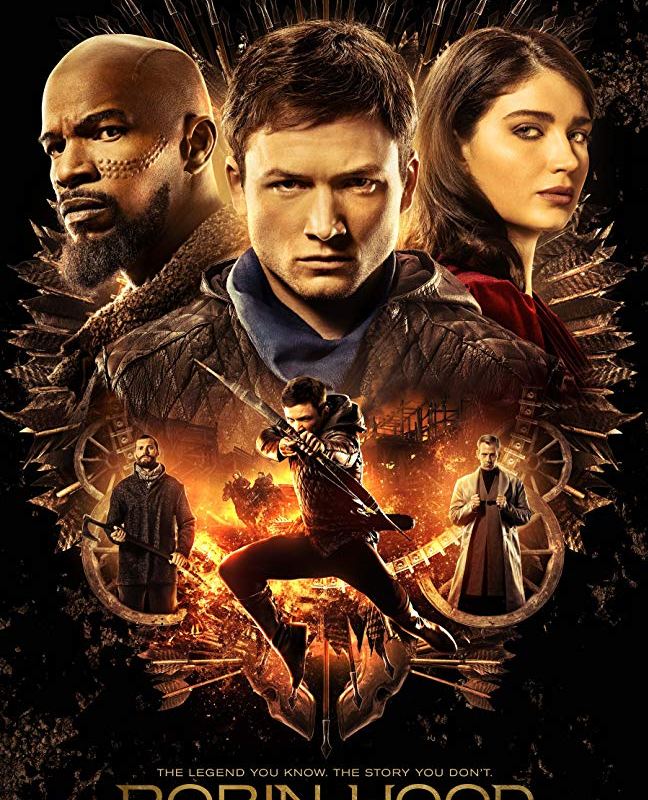
ROBIN HOOD is meant to entertain.
It’s got a good lead actor (Taron Egerton, famous for THE KINGSMEN films), a solid sidekick (Jamie Foxx) and a great villain (Ben Mendelsohn from THE DARK KNIGHT RISES and ROGUE ONE)–plus a big budget ($100 million).
Add to that a built-in audience who loves the story and character of Robin Hood.
This is like chocolate chip cookies, right? Hard to go wrong with those ingredients. Everybody will like it.
Except this movie bombed at the box office. A dumpster fire.
Why did this film go so wrong, so fast?
Act 1 is a good start
There’s a lot to like in the first act. see Robin’s ordinary life and get a good introduction to Marian when she tries to steal Robin’s horse…and he lets her.
His life gets upended when he goes to war during the Crusades and comes back to find his estate confiscated by the Sheriff of Nottingham, who’s taxing everybody to death.
It’s an effective start, and the training sequences with John and Robin are great.
So how does the movie go sideways? I mean, this film makes Kevin Costner’s terrible British accent look like a minor problem in an epic masterpiece.
Why the middle turns meh
Act 2 gets confused. The scenes with the Sheriff of Nottingham are decent, letting him chew up some scenery.
Yet the middle gives us a Robin Hood movie that seems to switch time periods, as if the director wants to mash up medieval Crusades action with huddled masses working in Victorian factories and mines along with 21st century antifa protests.
There’s a big dinner where all the wealthy people show up, with women dressed in furs and high heels (I kid you not), and a giant CGI action sequence set up with horses and carriages that feels more Ben Hur than Robin Hood.
You CAN mix things up like this–A KNIGHT’S TALE with Heath Ledger threw in modern rock songs and other craziness, and it worked. The degree of difficulty is simply really, really high.
Basically, Act 2 is a hot mess.
How the climax isn’t climactic
And then we get to Act 3, where things truly go south.
The first rule of storytelling: save your best scenes for last.
There were great scenes in Act 1–the battles from the Crusades, the training montages with John–that simply eclipse anything offered in Act 3.
The Sheriff of Nottingham meets his end, and not at the hands of Robin, but John.
Taking his place as Sheriff is the romantic rival, the lover Marian took while Robin was believed to be dead. And hovering over everything as the Biggest Bad Guy of Them All is the cardinal, or the pope–I forget. Plus there’s a bad guy soldier, the same man who clashed with Robin during the Crusades, brought in as a mercenary to catch the Hood.
Confused? Yeah. Let’s count the bad guys: (1) O.G. Sheriff, (2) Hired Mercenary, (3) Corrupt Cardinal/Pope and (4) New Sheriff.
Here’s the deal. That’s four separate villains, and I can’t remember their actual names.
Fixing this movie
Hey, you don’t need Michael Bay explosions to have a tense, exciting movie. The ending of Michael Clayton is one of the best Act 3 climaxes in history, and there isn’t a gun, knife or explosion in sight. Just two people talking. No amount of CGI could improve this scene.
HOWEVER: If you’re making an action movie, you need action in the climax, and what we get in Act 3 is a let-down from what showed up on the screen in Act 1.
A bow and arrow is a great tool for Robin Hood, and fun when he uses it for heists and hijinks. Yet it’s a terrible weapon, as a storytelling device, for confronting the villain. Which should be singular. Give us one main villain.
Which leads me to the two simplest fixes for this movie: (1) combine the four villains into one capable, scary, tough Sheriff of Nottingham and (2) end with Robin fighting the Sheriff of Nottingham, one-on-one.
There’s a reason why the best movie fights tend to be bare-handed brawls or swordfights.
Swordfights are just great cinema, and that’s what I expected for the climax of ROBIN HOOD.
Think about THE PRINCESS BRIDE and every STAR WARS movie ever made: the duels with swords or lightsabers are beautiful and essential to the stories. Edit those out and they’d really hurt.
So I’ll leave you with the kind of thing ROBIN HOOD should have put into Act 3: a long, evenly matched duel.
Most music videos are meh, and I say that as a huge fan of music and music videos who grew up watching this thing we called MTV, back when it played music videos instead of insipid reality shows.
It’s hard to find videos that truly stand out, ones that I remember and want to watch again. Even if I love the song itself.
It’s doubly tough for a country music video to hit me, for I do not speak twang.
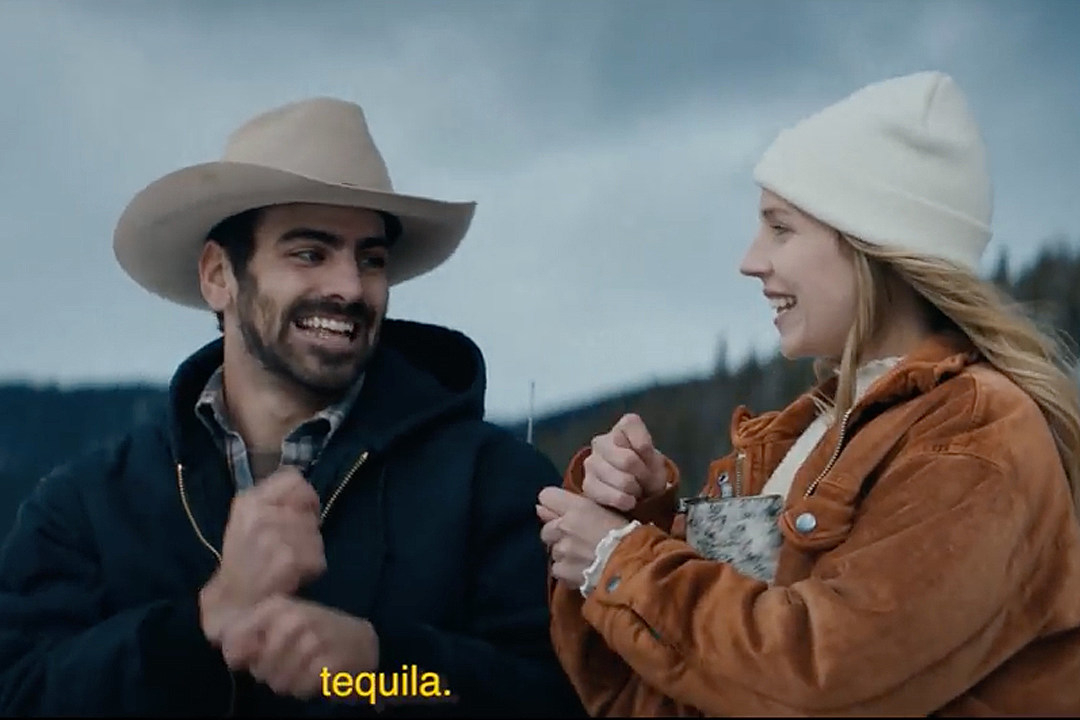
So when I heard this song on the radio, it was a nice surprise. Then I saw the video, which is really a short film. Oh my.
Take a peek.
Haunting, isn’t it?
What stands out are the shots. Just beautiful cinematography, scenes I want to linger over. The acting is spot-on and the musicians make the smart choice of staying in the background.
What makes it truly work is telling an actual story with a beginning, middle and end.
There are all kinds of music videos that look impressive, paired with good songs. 30 Seconds to Mars is the king of these videos, with Jared Leto having the massive advantage of being a star actor who knows how to stage and shoot film. But you don’t see complete stories very often. You see themes and ideas, but not stories where people are in conflict and make decisions.
This music videos is full of conflict and choices. It’s a sweet love story, and it fills in missing pieces you don’t see in the lyrics (below).
Great job, Dan + Shay–I’m happy to have stumbled onto this.
WHEN I TASTE TEQUILA
I can still shut down a party
I can hang with anybody
I can drink whiskey and red wine
Champagne all night
Little Scotch on the rocks and I’m fine, I’m fine
But when I taste tequila, baby I still see ya
Cutting up the floor in a sorority t-shirt
The same one you wore when we were
Sky high in Colorado, your lips pressed against the bottle
Swearing on a bible, baby, I’d never leave ya
I remember how bad I need ya, when I taste Tequila
When I taste Tequila
I can kiss somebody brand new
And not even think about you
I can show up to the same bar
Hear the same songs in my car
Baby, your memory, it only hits me this hard
When I taste Tequila, baby I still see ya
Cutting up the floor in a sorority t-shirt
The same one you wore when we were
Sky high in Colorado, your lips pressed against the bottle
Swearing on a bible, baby, I’d never leave ya
I remember how bad I need ya, when I taste Tequila
When I taste Tequila
I ain’t even drunk, I ain’t even drunk
And I’m thinking
How I need your love, how I need your love
Yeah, it sinks in
When I taste Tequila, baby I still see ya
Sorority t-shirt, the same one you wore when we were
Sky high in Colorado, your lips pressed against the bottle
Swearing on a bible, baby, I’d never leave ya
I remember how bad I need ya, when I taste Tequila
When I taste Tequila
When I taste Tequila
When I taste Tequila
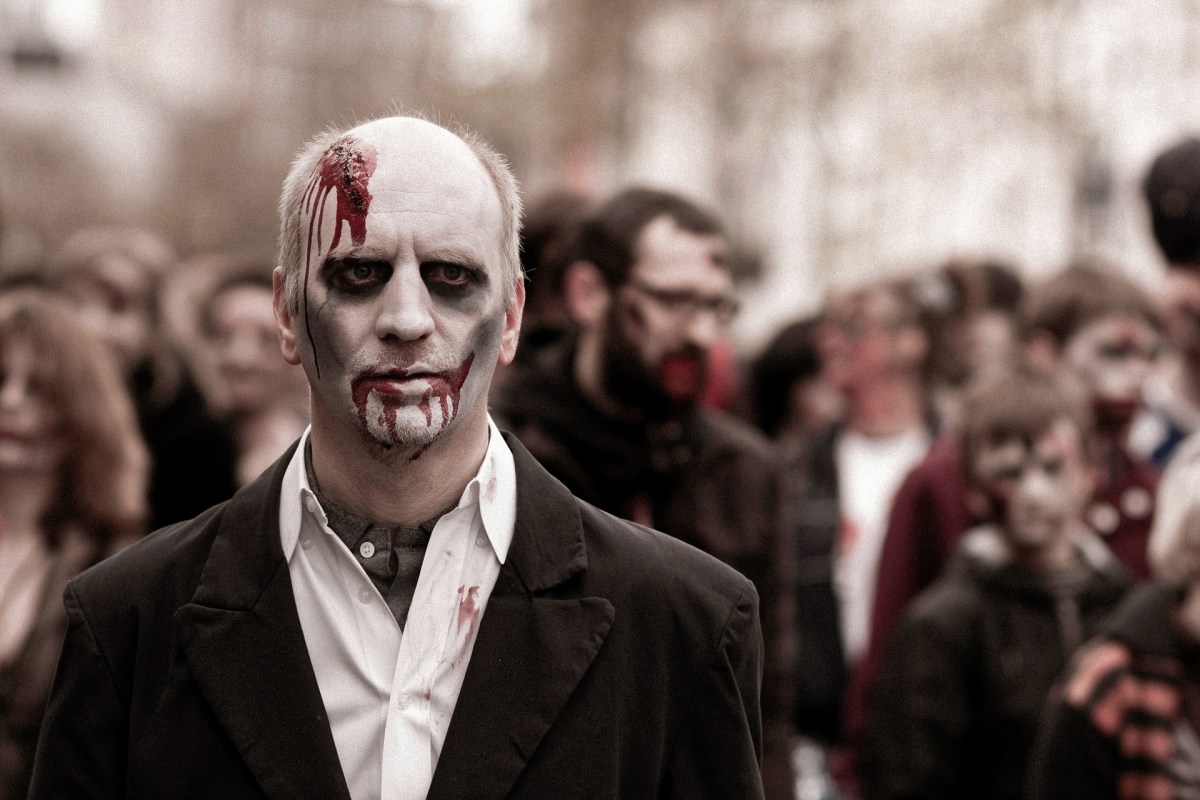
There are great zombie movies, and horrifically beautiful apocalyptic films.
NIGHT OF THE LIVING DEAD, MAD MAX: FURY ROAD, DAWN OF THE DEAD, WATERWORLD (hey, I’m kidding)–you get the idea.
So why do zombie apocalypse movies smash into the brick wall of failure?
Zombie comedy? Sure. SEAN OF THE DEAD. Zombie romance? Yeah, they’ve tried that. Zombie drama? Yep.
You’d think this would be like peanut butter and chocolate, two great things that taste even greater when mashed together. But I can’t think of a single zombie apocalypse movie that truly works.
The biggest such film–WORLD WAR Z–went splat, despite the star power of Brad Pitt and a big budget. Why?
I’ve pondered this, downed a pot of coffee and consulted the oracle.
Here’s the deal.
In a horror movie, everybody dies
Not because the screenwriter and director are sadistic. The whole point of a horror movie is society getting punished for its sins by the monster, who’s actually the hero.
That’s why Freddy, Jason and all the other horror monsters never truly get killed off.
Slasher movies show teenagers breaking the rules–shoplifting, getting drunk, having premarital sex, lying to their parents about it all–and getting punished by the boogeyman for their sins.
Another big branch of horror movies is about man playing God–inventing super-smart sharks with lasers, creating hybrid genetic experiments that go wrong, or sewing together body parts from the grave and using lightning to reanimate the thing. Then those creations rise up to punish the scientists for their arrogance.
This is why horror movies can fail. If the teenagers or scientists actually win in the end, the movie confuses the message. You might start out rooting for the teeny boppers or mad scientists, but in the end, you’re supposed to see the monsters as agents of rough justice.
Same thing with a zombie movie.
NIGHT OF THE LIVING DEAD is actually about racism.
DAWN OF THE DEAD is about consumerism, which is why it’s set in a mall.
Monster in the House is a great story and a dangerous one for zombies
There’s a primal story that screenwriter Blake Snyder identifies as Monster in the House, where there’s a monster in an enclosed space and either it’s gonna kill you or you’re gonna kill it.
JAWS, ALIEN and FATAL ATTRACTION are all Monster in the House stories.
There’s a big difference between these stories and a true horror movie. The ending is completely opposite.
The shark dies in the end of JAWS, as does the alien and the obsessed, discarded mistress played by Glenn Close.
NIGHT OF THE LIVING DEAD and DAWN OF THE DEAD feature the same enclosed space problem, because it’s good storytelling to put characters in a cage with your monster. But they stay true to the message and let the monsters win, punishing society for our sins.
In an apocalyptic movie, tons of people die–but the story ends with hope
The storytelling bones of a good apocalyptic movie are completely different than a horror story.
Civilization goes buh-bye, and the fun of an apocalyptic movie is seeing how that happens and what replaces the status quo.
Also, you get to loot the hardware store and the mall. Who doesn’t like to see that on film? Always a good time.
The message of an apocalypse film, though, is that lots of people die because they make bad, selfish choices, while the few heroes who survive make good, unselfish choices.
It just doesn’t work to mix a true zombie movie, where everybody dies as punishment for society’s sins, with an apocalyptic film, with its message of survival if you make the right choices.
So: back to the movie, WORLD WAR Z, which is a confused beast.
If you read the novel–which you should–it’s not a horror story, where everybody gets nom-nommed by the living dead. It’s a true zombie apocalypse story that can work, with the end showing the undead almost destroying the world. They’re only beaten when society makes painful, fundamental changes to work together and win the war.
Hope and survival. That’s the right way to thread the needle and tell a zombie apocalypse story that works. Give us that, Hollywood–Brad Pitt is optional.
Technically, I live in a temperate rainforest, which is a fancy way of saying we get 100+ inches a year, which feeds our giant trees and keeps everything green.
Costa Rica is home to some of the best tropical rainforests in the world. And since tourism is the country’s No. 1 business, they work hard to protect their forests, beaches and wildlife.
The wildlife is what really impressed me. We were lucky enough to have two naturalists show us around, and both of them could spot a rare bird, insect or monkey long before we did. Some of these shots (especially the ones of birds) are actually using my phone through a spotting scope, which is tricky.
This slideshow requires JavaScript.
As a kid, I loved monkeys and would spend hours at the monkey section of zoos in Germany, Holland, New York–wherever we lived. So for me, Costa Rica was amazing, because you couldn’t step outside without seeing monkeys: capuchins, squirrel monkeys and howlers.
The howlers make scary noises and are bigger than the others, and they don’t come close to people, but they’re not aggressive. Vegetarians with a bark far worse than their bite.
The capuchins are pretty common and aren’t afraid of people. You’re not supposed to feed them, though some people still do, but even if you follow the rules, the capuchins hang around waiting for people to (a) drop food or (b) leave fruit or other goodies unattended. Because they will jump in there and steal your fruit.
Squirrel monkeys were a special treat. They travel in packs of up to 90 members and the males try to impress the females by jumping insanely large distances between the trees. Like the capuchins, they aren’t afraid of people and would come down on lower branches to check us out. Not to beg or steal food, just to be curious. Beautiful little guys.
The crocodiles were intense–and you don’t swim in the rivers anywhere near where they are.
For folks thinking about traveling here, two things stand out: the food was amazing, regardless of what restaurant we visited. World rankings right now: Costa Rica, Greece then Japan, I kid you not.
The second thing is the level of service. Prices aren’t as insanely cheap as you’ll find elsewhere, but I’ve never seen such good service, top to bottom, from the naturalists on tours to the hotel staff to the bus drivers. Maybe it’s because tourism is their No. 1 industry and they make it a focus instead of an after-thought. Everything ran smoothly.
It’s a clean, safe country. 11/10 would recommend.
This is brilliant. Don’t remember who showed me this, or where it came from–the googles have not helped me solve that mystery–so if somebody finds the source, please shout. Twitter? Reddit? Don’t know. What I do know is this: I could not love these haikus more.
As part of my ongoing mission to explore all music, and go where MTV no longer goes anymore, here’s another video: I WANT YOU TO WANT ME by Cheap Trick.
Why show this old thing from 1879 or whatever, when they had to plug their guitars into steam engines?
Three reasons why:
IT.
IS.
AWESOME.
This is a case where simple and repetitive works, because there’s a nice little pattern here with the words: “I want you to want me. I need you to need me.” And so forth. Nothing fancy. Nothing complicated. But it is inspired, and it’s the kind of song a moderately talented punk band could learn to play, you know, the kind of band that knows four chords and forgets two of them in the middle of the show after they finish off two bottles of cheap vodka.
So in that way, this thing is genius. You don’t need a degree in music to play it. You don’t need a great voice to sing it. It’s the perfect cover song, which is why so many other bands have covered it.
Also, it’s one of the few songs that sounds good live versus all auto-tuned and cleaned up in the studio. A gritty garage band can play it and fudge notes without ruining the thing.
You — yes, you — could probably do a decent job singing this thing at a karaoke bar, even if you are TOO DRUNK TO SPELL KARAOKE.
Bottom line: a simple, study, lovable song. A punk-rock deal with interesting twists in the lyrics.
I like it, I love it, I want some more of it.
;
Special bonus: my favorite cover of I WANT YOU TO WANT ME by Letters to Cleo. (This cover doesn’t have a music video. Somebody made one with scenes from the show CHUCK, and they did alright. Here you go.)
The lyrics are way, way below, just for fun. Straight-forward stuff – no need to dissect or improve these. They’re perfect.
I want you to want me.
I need you to need me.
I’d love you to love me.
I’m beggin’ you to beg me.
I want you to want me.
I need you to need me.
I’d love you to love me.
I’ll shine up my old brown shoes.
I’ll put on a brand new shirt
I’ll get home early from work
if you say that you love me.
Didn’t I, didn’t I, didn’t I,
see you cryin’ (cryin, cryin’).
Oh, Didn’t I, didn’t I, didn’t I,
see you cryin’ (cryin, cryin’)
Feelin’ all alone without a friend
you know you feel like dyin’ (dyin’, dyin’).
Oh, didn’t I, didn’t I, didn’t I,
see you cryin’ (cryin’, cryin’).
I want you to want me.
I need you to need me.
I’d love you to love me.
I’m beggin’ you to beg me.
I’ll shine up my old brown shoes.
I’ll put on a brand new shirt
I’ll get home early from work
if you say that you love me.
Didn’t I, didn’t I, didn’t I,
see you cryin’ (cryin, cryin’).
Oh, Didn’t I, didn’t I, didn’t I,
see you cryin’ (cryin, cryin’)
Feelin’ all alone without a friend
you know you feel like dyin’ (dyin’, dyin’).
Oh, didn’t I, didn’t I, didn’t I,
see you cryin’ (cryin’, cryin’).
Feelin’ all alone without a friend
you know you feel like dyin’ (dyin’, dyin’).
Oh, didn’t I, didn’t I, didn’t I,
see you cryin’ (cryin’, cryin’).
Feelin’ all alone without a friend
you know you feel like dyin’ (dyin’, dyin’).
Oh, didn’t I, didn’t I, didn’t I,
see you cryin’ (cryin’, cryin’).
I want you to want me.
I need you to need me.
I’d love you to love me.
I’m beggin’ you to beg me.
Hey, I get it: you want to write a book, a novel, and November is the month when everybody loses their mind and tries to crank one out in 30 days. Plus, #NaNoWriMo is a noble endeavor:
The world needs books and stories more than ever.
Any serious reader has a book in them, and nobody should die regretting the fact that they never tried to write it.
A novel is the most fun you can legally have as a writer.
So you’ve hopped on the train. It’s headed downhill, gathering speed, and nothing’s can stop it. You’re gonna do this thing, right? Oh, yeah. There are calendars marked out with expected word counts, 3×5 notecards with possible scenes, maybe even a corkboard with the major chapters mapped out. Characters have names, damn it. Settings are picked out, the climax is set in your head and Mrs. Peacock is DEFINITELY doing in Colonel Mustard in the billiard room with a lead pipe.
Because you’re jumping on that runaway train of writing glory, even if it’s destined to fly off a cliff, please take a few minutes to read this post.
Or bookmark this and come back on Nov. 15, when you’re screaming into pillows because your word count is only 15,000 and there’s no way you’ll crank out another 55,000 words in the last 15 days, not even if you quit your job, divorce your husband and employ baristas in shifts to make sure there’s never too much blood in your caffeine stream.
It’s still true you can avoid all that by not trying to climb this mountain under an insane deadline. Yet part of the fun is that the deadline is cray-cray. I get that.
So let’s chat, you and I. Because there are tons of myths about writing, and even more dangerous myths about writing anything of length, regardless of form and genre:
ONE BRIDGE, ONE LIFE–a 200,000-word fantasy epic about a lonely troll who lives under a bridge and just wants to make friends, but nobody speaks his language, so whenever he opens his mouth, knights and wizards and such try to kill him. And after 400 years of this, he’s had enough and leaves the bridge to finally confront his tormentors.
KNITTING HATS FOR CATS VOLUME 6: CROCHET PATTERNS FOR SCAREDY CATS THIS HALLOWEEN–Hold on, because I would buy this book. Somebody please write it.
Dystopian non-fiction guides for kindergarteners written by Hollywood actors, such as WATERWORLD AND YOU by Kevin Costner, about learning how to sail, fish and develop gills while searching for for dry land; MAD MAX: BEYOND NUCLEAR WAR by Mel Gibson with a focus on vehicle maintenance and turning pig manure into guzzlelean; and TERMINATORS CAN BE YOUR FRIEND by Arnold Schwarzenegger, so kids learn to get along with their robot overlords being developed right now at Boston Dynamics.
MYTH NUMBER 1: You should write the Great American Novel chapter by chapter
Don’t think like that. It’ll only get you in trouble, and by trouble I mean 25,000 words into a blind corner with no way out.
Writing anything of length is like building a house, and the reason it takes so long isn’t because we writers type so slow, don’t spend enough time banging on the keyboard or can’t string together pretty sentences.
The trouble is storytelling, and storytelling is about structure. The blueprints, skeleton and muscle of your story: setups and payoffs, revelations and reversals, character and pacing.
All that also happens to be the good stuff.
Everything else–description, setting, dialogue–comes second. As in you can happily save going wild on most of those bits for the second draft if you like. (Sidenote: you should, except maybe for dialogue, which is the bomb.)
Writing anything paragraph by paragraph, even something as short as an oped (800 words instead of 80,000), goes smoothly when you have a solid structure.
When the blueprints are shaky or non-existent, you’re looking at a hot mess, if not a dumpster fire.
Wing it paragraph by paragraph, chapter by chapter, is like pouring the foundation for the foyer, framing it, putting in plumbing and electrical, hanging the drywall, painting and putting up trim. Then stopping to figure out where the kitchen might go, digging and pouring THAT foundation, framing it and so forth until inevitably–listen, it’s a rock-solid guarantee–you notice the dining room can’t connect to the kitchen and the stairs to the master bedroom open up into a closet.
Believe me, it’s actually a lot easier to bring in the writing wrecking ball to demolish a hot mess and start over than trying to fix it.
So you’re not gonna write Chapter 1 on the first of November, Chapter 2 when the calendar has a big 2 on it and so forth until you type THE END at the bottom of Chapter 30 on November 30, with every chapter hitting exactly 2,333 words.
Because first off, every chapter shouldn’t be exactly the same number of words. Some should be short. Others should be long, and there should even be medium ones, too. I KID YOU NOT.
Second, you won’t write the same number of words every day. Life will interfere. Certain days will be full of writing glory and others will stink no matter how long you stare at the screen.
And lastly, winging a first draft chapter by chapter, without blueprints, is just a bad idea for your first shot at scaling this mountain.
Finally, the Great American novel is an idea that needs replacing. We’re reading amazing stuff getting produced and translated from around the globe, and whenever I hear somebody proudly say they’re writing the Great American Novel without any sense of self-deprecation, that sets off flashing warning signs that what they’re cranking out will be incredibly long, overly serious and full of purple prose. Let’s just write great novels.
MYTH NUMBER 2: Acts and beat sheets are for silly screenplays, not Serious Novels
If you write chapter by chapter, and end when you hit your word-count goal, you’re gonna run into trouble.
Looking at a mountain of words with chapters as your only signposts makes pacing tough, if not impossible. Better to figure out how many acts your story has, and by acts I mean turning points, not “let’s end Part 1 here because that’s where we hit 20,000 words.”
There are all sorts of ways to tackle this task. Some folks swear by a three-act structure, with the beginning about 25 percent of your total pages, the middle taking up about 50 percent and the ending, your climax, finishing off the last 25 percent.
There are good reasons a three-act structure works for books and movies while plays and TV shows are pretty strict, going with one-act, two-act or three-act blueprints depending on the running time.
Pacing is key, and length determines structure.
Another option for a novel or screenplay is breaking up that long middle bit so they have four acts of roughly equal length, 25 percent apiece. The math is simple, even for we writer types, and it helps avoid the Sagging Middle.
You’ll also run into people with all sorts of variations and twists on how to structure a novel or screenplay. The same techniques apply to either form when it comes to plotting.
I don’t care how you do it as long as it gets done, because winging it can lead to Act 1’s that only run for 15 percent of the page count, chubby middles that eat up 80 percent of your words and climaxes that feel like afterthoughts by only taking up a measly 5 percent of your pages. The pacing will feel completely off.
This is why a lot of experienced writers do the end first. Because when you know the final payoffs in the climax, it’s easy to interweave all kinds of setups, red herrings and subplots in the middle bit that all pay off in the end. All that literary goodness has the added benefit of making the middle part fun and exciting instead of a sagging slog.
Having blueprints–an actual act structure and yes, maybe even a beat sheet–is just a massive, massive head start. So much that if all you do on the first three days of November is map out the basic blueprints you’re using–and yes, add your special twist–you’ll save yourself all kinds of headache and heartache the rest of #NaNoWriMo.
Put a gun to my head and say, “Listen, mister, you’re gonna write a novel starting Nov. 1 and finish before October rolls around,” and here’s what I would do:
Start with the ending, the most important scene. What ginormous payoffs happen here? Which secrets get revealed and positions get reversed? How does the hero suffer, grow and change in an unexpected way, and how does the villain get karmic payback for their sins?
Swing back to the beginning and start to set up all those payoffs.
Work on the five biggest scenes, the major set pieces: the inciting incident, the end of Act 1, the end of Act 2, the All is Lost moment and the climax.
Raise the stakes. If the villain wins, who cares? How could matter more to the hero, to the public and to the villain?
The rest of the chapters and scenes, in every act, should be in service to your five big monster scenes.
MYTH NUMBER 3: If you hit 50,000 words, hurray, bust out the bourbon, for a novel is born!
Sure, the common goal of NaNoWriMo is 50k. Just don’t think that’s it, you’re done, polish that sucker up and get it printed.
100K isn’t “way too much” for most genres. It’s right on the mark for many, and too few for a couple others.
Here’s the rundown:
Sweeping, epic fantasy: 150K at a minimum. You can’t do it right in less. Sweeping, epic, historical fiction: 120 at a minimum. More is better. Science fiction novels: 75-125K Romance novels: 65-100K Women’s fiction: 100K and up Crime novels: 80-100K Thrillers: 80-100K Noir novels: 65K and up but only double digits here, not triple. YA: 65-100K MG: 50K Picture books: fewer than 2000 words
While NaNoMo sets a goal of 50K, that’s for your FIRST DRAFT. Get that draft on paper and then go back and see where you need to develop the story, develop the character. If you can’t see where you need to expand, give it to a beta reader and ask where they have questions, or felt like they hadn’t gotten enough story. The bottom line is word count isn’t something you want to worry about till revisions. Use enough words, and no more, to tell the story fully and completely. You have to be WAY WAY outside the paramenters on word count before it’s an auto rejection. And even then, if your pages are well written and taut, I’m going to give you the benefit of the doubt. Worry less about how many words you’ve got than do you have the RIGHT words.
Janet the Reid isn’t an outlier. You’ll see numbers in this range from different literary folks–believe them.
Sure, shoot for a rough draft of at least 50k, even if the final draft will probably be 70k or 100k. Just don’t freak out if you only hit 30k.
And don’t bust out the champagne if you somehow write 3,000 words a day, every day, and hit 90k. The final number isn’t really the thing. You could crank out 110k of a hot mess and listen, nobody smart would say hurray, you won #NaNoWriMo–or you could put together just 15,000 words of a brilliant, Hollywood-style treatment that includes all the right storytelling ingredients and believe me, nobody smart would say you lost.
MYTH NUMBER 4: If you already write for a living, hey, this will be fun and easy
Every year, a new crop of journalism-school graduates heads off to work at newspapers, magazines, blogs and television stations.
They love their job. And they love words–so why not write a novel?
Hey, I’ve been there. Journalism graduate. Former reporter. Writing to pay the bills since I was 17, and just like millions of other writers, I had zero doubts. We all took creative writing classes and wrote feature stories, right? We have DEGREES in this and are professional writers, damn it. Don’t tell us we can’t write something. Watch this.
Here’s the thing: fiction–short stories, plays, novels, screenplays–are a completely different animal than journalism. Writing a novel is also way, way different than what speechwriters, copywriters and other professionals do all day.
It’s like pro athletes. The fact you play quarterback for the Bears doesn’t mean you can pitch for the Cubs–or wake up tomorrow and be an NBA power forward, MMA fighter or ultra-marathoner.
Sure, the switch is easier for a world-class athlete than for an average schmoe off the street. That doesn’t mean the switch isn’t extremely tough, especially compared to folks who’ve dedicated their life to a sport you’re dabbling in.
Some switches are easier than others. Others are clearly harder.
Journalism to novels is tough–Reporters are drilled to write short pieces using the inverted pyramid, with the most important information first and additional details going down in importance until the end. This works to inform people quickly and helps editors cut stories to fit available space and time. It’s also the worst possible blueprint for anything of length. Fiction has the opposite structure: the most important information comes dead last, with a complex roller coaster structure instead of the dead-simple pyramid. So it’s like a power-lifter trying to switch to MMA fighting and facing a crash course in grappling, kickboxing, Muay Thai and jujitsu. The fact you can bench press a VW Jetta will not help your cause when some dude turns you into a pretzel and chokes you out.
Screenwriting to novels is easier–This is a lot closer because they use the same storytelling structures. The format is completely different, though. A screenplay might run 120 pages with a lot of blank space. We’re talking 15,000 words vs. a novel of 70k to 100k. The tough part here is making the switch to fill that space without (a) meandering or (b) cramming in three movies or novels worth of plot. It’s like a world-class sprinter switching to marathons. Both involve running. That style difference, though, is massive.
This isn’t to say, “Don’t try.” Not at all. Even though words pay your bills–and you have a diploma or three on your wall, along with all kinds of awards–be humble and search out good advice and coaching. Writing a book or novel is the most fun you can legally have as a writer, and you should maximize your chances of having a good time, especially as you embark on 30 days of insanity.
MYTH NUMBER 5: The best advice comes from the best authors
On the surface, this is common sense, right? Look to the best in the world for the best advice.
Nope.
I’m not slamming the world’s best writers, people I adore and admire.
This a function of craft.
There’s a reason writing tips from folks like Stephen King seem like simple truisms. When you’re a world-class writer, rock star or NFL quarterback, you’ve internalized a lifetime of practice, coaching and performing. Nobody needs to teach you how to play chords on the guitar or throw an out route against two-deep coverage.
At the highest level, the tweaks that pros are mostly about what they need to focus on, and how they tune their mind and bodies to peak performance. Those tweaks tend to sound simple because they already spent years of painfully learning all the hard, technical bits and don’t need to relearn them.
I still remember a bestselling author (forget the name, and no, the googles didn’t help) asked by a new writer whether she outlined her books. Her response was telling: Oh, she didn’t do that anymore. But the person asking that question definitely should.
She wasn’t being cheeky or sarcastic. The author meant it: Don’t wing plot and structure until you’re experienced enough to draw the blueprints in your head. And yeah, that may take five or 10 or 20 years.
The old apprentice-journeyman-master system is the best model here. Skilled trades do a great job with this. When you’re just starting out, you learn the basics from journeymen. The masters don’t give you the time of day, not out of spite, but because you’re not ready for what they teach yet. It’s a waste of your time and theirs. Only after years of being an apprentice do you become a journeyman, teaching newcomers the craft and learning from masters.
Doctors have a similar system. They don’t hand you the diploma and say hey, you’re done, Doctor, go save lives and deliver babies and do some open heart surgery. There’s tons and tons and tons of work after medical school before you’re set loose.
My orthopedic surgeon told me this story: He’s in his mid-thirties and working poverty wages as a surgical resident, coming off a 24-hour shift in the hospital, and he walks out of the ER for a break and oh, that’s not a sunrise, that’s a car on fire in the parking lot. Not just any car, but his piece of crap car. That man didn’t get a late start. He went straight through: K-12, four years of college, med school, then years of surgical residencies and orthopedic surgery residencies.
A lot of professions are set up this way, with doctors, dentists, lawyers, architects, engineers, all learning from each other and going to seminars and CLEs and conferences their entire career.
Writers don’t have formal systems like that. Maybe you get a BA in journalism or an MFA in creative writing, then off you go. But that degree isn’t required. There’s no test we have to pass, no bar association determining who can and can’t be a writer, no apprenticeships and required continuing education.
There might be a writing group nearby, or a conference you fly off to attend. It’s all optional.
I’m not saying writers need to form guilds with staff meetings and TPS reports. My allergy to meetings is severe.
What I’m saying is this: If you’re doing #NaNoWriMo, or attempting your first novel in a month that doesn’t start with the letter N, look past stuff written by masters like Stephen King and search out books, seminars and lessons from journeymen. If you’ve never heard of them, that’s probably a good thing. Journeymen are who can teach you the foundations of the craft, the building blocks every writer needs to hone and practice for years.
Pick the right journeymen.
My library contains Every Book on Writing Known to Man, from journalism to speechwriting to fiction, and listen, 99 percent of those books are only useful for kindling during the zombie apocalypse. Not because the people who wrote them stink. Their focus is just typically on (a) a special system that works for them, (b) micro issues like grammar, dialogue or description or (c) one long, thinly disguised advertisement for you to hire them to learn the REAL secrets.
Most of the books on writing feel like guides to drywall when what you really want to do is build a house. Yeah, drywall is important. If you screwed it up, the house would look funky. But if you’re an expert on hanging drywall and clueless about pouring the foundation of a home, framing it and getting the plumbing and electrical right, I don’t care how pretty the drywall looks. That house is gonna fall down, flood or catch fire.
This is why I tell folks to check out the following four books on those foundational, big-picture skills:
SAVE THE CAT by Blake Snyder (or SAVE THE CAT WRITES A NOVEL by Jessica Brody)
There are other good books out there. I can vouch for those four. Get ’em all four for what, $70-something? Or snag them for free at this magical place they call the library. DO IT NOW.
Read those and take notes. Make some cheat sheets. And if you are a pro writer from another field, hear me now and believe me later in the week: the structures and lessons in those four books will start showing up in your day job. You’ll be surprised, if not shocked, at how much better a writer you’ll become.
MYTH NUMBER 6: If I block out a ton more hours of writing time, I’ll write a ton more
Oh, it’s easy to see how this seems like common sense. Having zero time per day to write definitely means zero words. Let’s burn some vacation time, then, during #NaNoWriMo, and block out a few weekends, and get up at 4 a.m. instead of 5 a.m. to crank an extra hour.
Stockpiling hours means piling up the words, right?
Part of this myth, that more time equals more words, or better words, is just flat-out wrong. There’s only so much juice in the tank. It’s just like any other job: longer and longer hours produce fewer and fewer results.
Inspiration works best when you’re fresh and happy, not tired and upset about not meeting an arbitrary quota of words for that day.
And my God, if we’re shooting for the bare minimum of a 70,000-word novel we gotta hit a quota of 2,333 words a day, which is nuts.
Even the rough draft goal of 50,000 words means cranking out 1,666 words per day for 30 days.
Nobody writes that much with dead-certain consistency, day after day, month after month. I’ve talked to full-time writers of all sorts: reporters, screenwriters, novelists, speechwriters, you name it. And here’s the deal: 500 words is a good daily minimum, 1,000 words is better and anything more than 2,000 words is a beautiful day.
You can’t pencil into your calendar that Monday will be 700, Tuesday is 2300 and Friday we’re doing 3,000. Creativity doesn’t work like that. The muse doesn’t respond to mandates from on high. She watches you plot out wordcounts and cackles the evil cackle of glee.
Literary giants like Hemingway recognized this fact. Hemingway counted actual, physical words coming out of these things they called typewriters and stopped when he hit 500 in a day. Done. He went off to spend the rest of the day watching bullfights and drinking whiskey. That’s because 500 a day, steadily, is actually a ton. That’s 182,500 words a year.
Two or three books. Plenty.
You can crank out 500 words in a half hour, easy. Ten minutes if you’re inspired and the coffee is any good.
The longer you go, though, the harder it gets to create new things on the page. That’s because this isn’t a factory where you punch in at 8 a.m., make widgets all day and punch out at 5 p.m.
Editing is different. I can line edit all day. That’s not creative work; it’s quality control, and yeah, you can kinda treat that like a widget factory.
Developmental editing is a lot tougher. Maybe four hours a day before you start to bleed a little too much red on the page and need to stop before you punch your way through a concrete wall.
The bottom line is this: Yes, write every day. Always. Even if it’s scribbling on a legal pad while flying from LA to NYC or bringing a little notebook to your kid’s soccer game.
Just don’t think that you’ll write the same number of words, day after day, or that blocking off a full eight hours on Sunday will means you can crank out 8,000 words to make up for lost time.
Now, I’ve heard folks say. “Well, famous authors have no other job, and my favorite novelist goes to their special mountain cabin with no internet, friends or family to bother them as they spend two months in solitude, chopping wood for the fireplace, eating dried venison and only reappearing with a long beard and a ream of paper upon which they’ve written the next Great American Novel.”
There are writers like that out there. Lee Child has done something like that, and I adore his books. Yet tons of other authors, including successful bestsellers of today and yesteryear, keep their day jobs. Scott Turow, Barry Eisler and Bob Dugoni are attorneys. Aurthur Conan Doyle was a surgeon who wrote in between seeing patients. Kurt Vonnegut worked all kinds of jobs, including advertising, teaching English and selling cars. I think half the reason for this is people need steady paychecks and health insurance–and the other half is because you don’t actually write that much more when you have all day to play with instead of 4 a.m. to 6 a.m. before the rest of the house wakes up and asks where the coffee is hiding.
Two hours is kinda all you need, if you’re steady with it. Give me a full two hours, with no interruptions, and I’ll empty my creative tank.
And I can tell you that when there’s no one else in the house, the Hound of the Baskervilles and I get restless after only three hours. We have to walk around town, drink of the coffee, talk to humans and bark at cute dogs. To recharge before coming back.
Chaining yourself to the desk for extremely long stretches just doesn’t work. Don’t schedule it, and don’t count on it saving your literary bacon.
MYTH NUMBER 7: The first draft is the longest, hardest part of writing a novel
Oh, it can take a long time. Fire up the googles and you can find all sorts of authors who spent five years, ten years or more writing a book.
Here’s the cold, honest truth: It can take three times as long to fix a bad first draft as it would to rewrite that thing from scratch. I kid you not.
And most first drafts are bad.
Doesn’t matter if we’re talking about a novel, a speech or a screenplay. First drafts typically stink and that’s typically fine. Because what you’re really shooting for is an interesting situation with interesting characters. All the rest can get fixed up or switched around.
Let’s peel back the curtain for a second. I just wrote the final chapter of a new novel this Sunday.
Good times, right? IS VERY EXCITING.
The first time I tried writing a novel, I was fresh out of journalism school and working at a newspaper while my wife went to law school. We had one beater car and ate a lot of Top Ramen, and on special nights, we’d splurge by spending $3 on the cheapest available frozen shrimp to turn that Top Ramen into a feast.
So writing a novel while she studied torts, hey, that’s cheap entertainment.
My first draft of that first novel was, as you can imagine, a hot mess. It was a victory just to complete the marathon and learn a few lessons from it.
Later novels had a lot more promise, but it still a lot of hard work to finish that first draft and even harder work to edit it–because pretty words were never the problem. Storytelling and structure were the tough bits, and whenever I’ve seen a flawed first draft–a long newspaper story, a speech, one of my own novels or an author who had me do developmental editing–it has almost always, always been easier to start back with a blank sheet of paper and redraw the blueprints than try to get in there with a bulldozer and redo the foundation and framing while still keeping the thing from falling down on your head.
This first draft I just finished is right around 60,000 words and it’s not even Nov. 1, so I can declare victory. Hey, what could be better than winning #NaNoWriMo before it even started?
No.
It has a four act structure, with 9 chapters in each act, and for pacing the final total should be around 80k. Let’s say 20k per act, roughly, for pacing. Here we are as of Sunday, Oct. 21:
Act 1 already sits pretty around 20k.
Act 2 weighs in at 12k.
Act 3 is light at 9k.
Act 4 hops on the scale at a nifty 20k.
I didn’t blow past the middle acts–all 36 chapters are written. The middle two acts simply need to get filled out, with a lot of chapters at about 1k instead of 2k or 3k. But it’s all there. Those chapters will easily beef up to full weight with more description and dialogue.
How long did it take? The first act took a bit, with most of the real work being figuring out the blueprints. The last three acts were quick–about two months and change.
Hear me now and believe me later in #NaNoWriMo: I write crazy fast, even when I’ve only got an hour of free time a day, and will be thrilled to death November only brings me another 20k, adding to the 60k already in the can. Thrilled. Because this is the first draft I can remember where we’re not doing any major renovations, no foundation work, no heavy equipment rentals at all. Don’t need to switch the POV from first to third, combine three characters into one or eliminate the C plot in favor of a sturdier B plot.
That miracle will not happen very often. I won’t count on it happening again.
Roughly, oh, 99 percent of the time, the first draft will need big structural fixes you didn’t see coming. Heavy lifting. Even if you get lucky, editing is still the longest, toughest and most important part or writing anything of length, especially a novel.
Which leads to the last myth.
MYTH NUMBER 8: My friends, coworkers and family are the best editors available
Available because they’re nearby and the most likely to say yes without asking to get paid for their efforts.
The best because they like you, if not love you, and have the purest possible motivation to do a good job on something you clearly treasure and sweated hard to create.
This myth is deadly to you as a writer and to your relationships.
Deadly because some of them will say no, which will be hurtful, and some will say yes, which only delays the hurt. Let’s go through the possibilities if they say yes:
Most people will quit before they slog through the entire first draft, because let’s be honest, readers don’t finish every book they got from bookstores after they paid good money for a novel written, edited and published by professionals, and those finished, polished books are not first drafts.
Some who quit long before the last page will lie to make you happy.
When asked for actual edits, the ones who quit just say it’s great, because they like or love you.
A few will take their duties as an editor seriously and bust out an entire packet of red pens to bleed on all 350 pages of your talking cat cozy or dystopian YA romantic suspense thriller. They may tell you, in great detail, how unlikeable your hero is and how many dangling modifiers you have on every page. Or they’ll want to meet every morning to discuss their ideas for reworking the plot to include vampires.
There’s just no real chance this turns out well.
Even if you already write for a living, don’t bug a friend or colleague who also writes for a living to do this. Unless they edit fiction for a living, it’s not their specialty, and this is a special kind of editing.
And it’s asking too much. Maybe–maybe–you ask your friend who’s a mechanic to look at your Toyota while he’s over at your house for steak and whiskey, and you hand him a bottle of Riesling for telling you the back tire is going flat because there’s a nail in there. But you don’t him to rebore your engine as a favor during his free time. You wouldn’t ask a plumber buddy to replace your septic tank or tell your cousin, a CPA, that it’d be great if she did your taxes for free.
Editing a novel is a gigantic job that takes a ton of time. Even doing a beta read is a stonking big commitment of time and energy.
If money is tough, trade with folks who aren’t your coworkers, family or friends.
Swap beta reads with somebody who did #NaNoWriMo just like you.
Look for a journeyman author who might trade copy editing their draft if they do some developmental notes–just a few thoughts on plot and character, not the detailed, brutal job of developmental editing.
Trade writing favors with other writers.
And if you’re at all serious about this, instead of doing it as a lark, spend a little money. Fire up the googles to find professional fiction editors who’ll take their pen to the first chapter, or first 50 pages. There are editors who do this for an affordable, introductory fee.
You will be shocked by how much you learn about the art of writing fiction, and writing in general, after even a little work somebody who edits fiction for a living. They are Mystical Glowing Beings.
A joy instead of a grind
If you’re doing #NaNoWriMo for the first time or the seventh, I hope it’s fun and exciting, that you wake up every morning to put on a pot of coffee and hop right into it.
Don’t let it be a grind. Don’t become a slave to deadlines and word counts.
Writing should be a joy.
Throw all kinds of crazy ideas at the wall. Make your situations and characters do things normal people would never imagine.
Write the first draft of a book you’d want to read, something that you haven’t quite found on the shelves of a bookstore, not even Powell’s City of Books in Portland, where I always get lost.
If you do it with joy and a sense of wonder, the exact number of words you’ve collected on Nov. 30 won’t mean squat.
Because you’ll have won the only thing that matters.
Here is an interesting song, and I mean “interesting” in a tragic, train-wreck sort of way.
Because it’s a decent melody by a good band with some of the WORST LYRICS EVER.
And the music video itself isn’t horrible at all. It’s fine. The words, though, they hurt me.
And I say this as a fan of Train, a man who has some of their songs and believes MEET VIRGINIA has creative lyrics for a pop song.
First up: the video, which I hope the evil known as VEVO lets you watch.
See? The song isn’t bad. The video is fine.
It’s the stupid lyrics.
Let the red ink flow.
DRIVE BY by Train
On the other side of a street I knew
Stood a girl that looked like you
I guess thats deja vu
But I thought this can’t be true
Cause you moved to west L.A or New York or Santa Fe
Or where or ever to get away from me
(OK, so far, this is alright. Nothing great, nothing horrible. The horribleness is hiding and saving its strength for an ambush.)
Oh but that one night Was more than just right I didn’t leave you cause I was all through Oh I was overwhelmed and frankly scared as hell Because I really fell for you
Oh I swear to you I’ll be there for you This is not a drive by
(I believe the singer — or whoever wrote these lyrics — is trying to say, “This isn’t infatuation, or a one-night stand, but something longer lasting and meaningful, possibly leading up to a white dress, a white picket fence and three yearsof whitePampers.” Thisphrase means, “A gang murders that utilizes one driver and one or more shooters, who send a wall of lethal lead at the homicide victim while making a rolling getaway from the crime.” So the message is kinda-sorta mixed. People hear this and don’t think of happy love. They think of Glocks and funerals.)
Just a shy guy looking for a two ply Hefty bag to hold my love
(Because the only thing more romantic than a drive-by shooting is the leading national brand of garbage bags.)
When you move me everything is groovy
They don’t like it sue me
mmm the way you do me
(The bad pop trifecta: a word from the ’60s that needs to be retired, a reference to litigation and a crude reference to sex.)
Oh I swear to you
I’ll be there for you
This is not a drive by On the upside of a downward spiral
(If he were definitely referring to NINE INCH NAILS, he’d get bonus points, but he’s not, so he doesn’t.)
My love for you went viral
(A tiny bonus point for not completing the cliche by name-dropping Facebook or Twitter.)
And I loved you every mile you drove away But now here you are again So let’s skip the “how you been”And get down to the “more than friends” at last
(“You didn’t really like me before, and you drove far, far, away, but now that you’re back, please pay attention to me as a boyfriend instead of some man you don’t really care about.” I believe that sums it up.)
Oh but that one night Is still the highlight I didn’t need you until I came to and I was overwhelmed and frankly scared as hell Because I really fell for you
Oh I swear to you I’ll be there for you This is not a drive by Just a shy guy looking for a two ply Hefty bag to hold my love When you move me everything is groovy They don’t like it sue me mmm the way you do me Oh I swear to you I’ll be there for you This is not a drive by
(The songwriter got ALL the bad cliches and phrases of this song into one tidy package right there. Bam-bam-bam-bam-bam-bam! Kind of like a emptying the clip during a drive by shooting. No. Just no.)
Please believe that when I leave
There’s nothing up my sleeve but love for you
And a little time to get my head together too
(To woo somebody, it’s not overly bright to hint that you’re not quite right in the head.)
On the other side of a street I knew Stood a girl that looked like you I guess thats deja vu But I thought this can’t be true Cause
Oh I swear to you I’ll be there for you This is not a drive by Just a shy guy looking for a two ply Hefty bag to hold my love When you move me everything is groovy They don’t like it sue me mmm the way you do me Oh I swear to you I’ll be there for you This is not a drive by
(A repeat and recap of all the bad lines from before, in case we hadn’t heard them the first, second or third time.)
Bottom line
A successful band like Train probably hires songwriters for some — or a lot — of their stuff. Which is fine. You need to focus on touring, performing and shooting music videos. None of those are bad things.
The words, though, actually matter. They matter as much as the bass line, the lighting on the set and the type of leather jacket worn by the lead singer.
Spend a little more time and money on the words, because I used to hear “Train” and think of two good songs. Now, the first two things that pop into my head will be “drive-by shootings” and “Hefty bags.” Which is too bad.
If you’re a writer, you’ll need to use a MacGuffin now and then–and a MacGuffin generator is particularly important now, with upwards of a million writers cranking away every year on NaNoWriMo.
This is not a plot device. We’re talking about an item–and it doesn’t even have to really exist, or be seen–the hero and villain are fighting to obtain. Alfred Hitchcock was famous for using MacGuffins in his films. If the hero is on a quest, he needs to be questing for something. Really, it doesn’t matter what. It’s the journey that matters. Hitchcock has a nice way of getting into the topic.
You can see how movies and novels often revolve around a MacGuffin.
Indiana Jones always needs an item to find and fight over: an ark or a cup and so forth.
Spy movies need a microfilm containing the real names and identities of every undercover agent employed by the CIA, GRU or MI-6, with the good guys and bad guys both willing to do whatever it takes to find and destroy that MacGuffin, which the hero happens to pick up by accident in the luggage carousel at O’Hare.
Sci-fi novels need some kind of techno-babble MacGuffin, like a repulsive helix inverter, which can tweak your DNA or whatever and create an army of alien super soldiers.
Fantasy movies need a magical ring that turns you invisible but does nothing about your big hairy feet or the fact you’re the size of a smurf, or maybe an Enchanted Vorpal Sword of Infinite Sharpness that can lop off the head of the invincible Dragon of Instant Fiery Death that killed your father, uncle, grandfather, second cousin, first wife, baby sister and favorite horse.
Use it. Then visit her blog and show her some love. That’s how this thing works. Pay it forward.
Generator Number 2
Technically, this isn’t a generator. You don’t hit refresh on the browser to come up with another MacGuffin.
It’s more accurate to call this the Mother Lode of MacGuffins, with the entire history of the idea–plus with a massive list of the different flavors of MacGuffins with links that dive into each one. This site is a thing of beauty.
What is your favorite MacGuffin of all time? And which film, TV show or novel wins the prize for Silliest MacGuffin of All Time? (Note: It’s cheating to go with Star Trek, where every other movie or episode involves dilithium crystal nonsense and the warp core.)
If you were breathing during the ’80s, you will remember these songs and videos. If you weren’t alive, use this chance to learn about the songs coming to Classic Rock stations after they get done with their rotation of ’60s folk and ’70s disco-funk.
You may recognize some tunes from this thing they used to call the radio, which plays random songs and ads you don’t control, no matter how many buttons you push, though you could use these things called telephones to call the DJ to request a song, win prizes or try to get on live air to say something horrible, clever or horribly clever.
This era is actually important, in a musical sense, because ’80s rock and pop stars were the first to deal with music videos and MTV, so they broke a lot of ground in terms of visuals. It’s hard to go from “here’s some live footage of a concert” to “which Hollywood director should we hire for our $3 million shebang that *might* hold a candle to Thriller?”
Check it out:
The clip from Top Gun still cracks me up. How did we ever think that movie was cool?





 The Red Pen of Doom