For good reasons, THE KARATE KID is a classic movie—not just in terms of the perfect casting. To be clear, we’re talking about the ‘80s original starring Ralph Macchio, not the remake with Will Smith’s kid and Jackie Chan set in China with kung fu instead of karate… and yes, that begs the question, WHY????
Structurally, the classic movie runs circles above your typical action blockbuster where Tom Cruise, Dwayne Johnson or Charlize Theron play a hero who’s tough, sexy and amazing the first second you see them on screen…and that hero doesn’t suffer or change one flipping bit after two hours of mayhem and blood.
THE KARATE KID gave us real characters with actual character arcs. Daniel Larusso is a loser in Act 1 and keeps getting his butt kicked by the gang from the Cobra Kai dojo. He’s a skinny underdog. And if you really watch, the real villain isn’t blonde tormentor Johnny, but his evil sensei.
So it was a fun surprise to learn about a new series, COBRA KAI, catching up with Johnny 34 years after that kick to the face in the All Valley Karate Tournament.
I watched the first episode before seeing the trailer, and it’s fun to see things from Johnny’s point of view. You don’t get a glimpse of Daniel Larusso until the end, where his eternally young mug pops up on in a TV commercial for the Larusso chain of auto dealerships. Seeing this makes Johnny trash his old tube-style television.
It’s a great scene, making me smile to think, “Hey, they got Ralph Macchio to do a cool cameo on this series. It’s like like Walter White showing up to buy a Cinnabon from Saul.”
Except if you watch the second episode (also free on YouTube), or check out the trailer, it becomes clear that Ralph Macchio isn’t popping in to shoot a few seconds of cameo goodness, just for old times.
Ralph is co-starring in this thing. I KID YOU NOT.
And he is glorious.
Here’s the series trailer:
The first episode is a slow burn. Yet those early setups are worth the payoff.
What’s interesting, in terms of the writing, is how complicated and gritty they’re going with this. Even though Johnny is the villain again, he’s sympathetic. You feel for him and understand his motivations. I kept rooting for the whole time. Daniel Larusso’s life couldn’t be more different, with money, a beautiful wife and a giant house–yet he’s not presented as perfect, either.
Making these two characters complicated and deeper than you expect is a smart choice.
This entire series feels like an extension of the old Funny of Die video that made fun of Ralph’s ageless looks and scandal-free history. His family on this series feels a lot like the wife and family in this fake mockumentary. (Warning: this clip contains some bad words, if you avoid that sort of thing, and it will also make you snort milk from your nose.)
VERDICT: If you watched THE KARATE KID and have a pulse, check this thing out. DO IT NOW.
BLACK MIRROR is a beautifully strange British sci-fi series playing on this thing called Netflix, except they call it “streaming” now and you can do it on your phone, PC, iPad, Nook or 65-inch plasma wallscreen.
Each episode is different, and the showrunners take massive, massive risks. They’re not afraid to fail.
This season, everybody seems to love USS CALLISTER, which is a genuinely great episode starring Meth Damon from BREAKING BAD.
Here’s the trailer:
And here’s that same actor rocking the role of Todd in BREAKING BAD:
The other episode I truly, madly and deeply wanted to see this season is METALHEAD, an entirely black-and-white story about an apocalyptic world. Check out the trailer:
So: why does USS CALLISTER work so well while METALHEAD fizzles out at the end?
There’s nothing here about the acting, the sets, the special effects or the directing. All are top notch.
What’s different is the writing.
The trick is, every episode in this series is a horror story. You can say it’s sci-fi, but that’s the setting, not the story.
Horror stories are about punishment. The monster is really the hero, and everybody dies in the end except for the monster, who comes back for endless sequels.
Good horror movies show the people who die first, committing sins they’ll get punished for later. In slasher films, it’s teenagers typically drinking and carousing and breaking the rules. In other horror movies, scientists (and society) get punished for being arrogant enough to think they could invent some insane new technology that, of course, turns on them in the end.
Bad horror movies reverse this and make the regular actors into heroes and the monster into a villain that dies in the end. Doesn’t feel right. That’s a different kind of story with different beats and twists.
The type of story where good guys kill the monster is what Blake Snyder nicknamed Monster in the House, where there’s a monster in an enclosed place, and either you’re going to kill it or it’s going to kill you. That’s a primal story, something that touches us deep in our caveman souls, and you can see the same essential beats in movies that seem dramatically different: JAWS, ALIENS and FATAL ATTRACTION aren’t really a horror, a sci-fi and a domestic drama–they’re the same story in different settings.
USS CALLISTER is actually Monster in the House instead of horror. There’s a monster in an enclosed place–the starship–and the crew is either gonna kill him or get tortured and killed, forever, by an all-powerful bully who created this world. It takes a lot of creativity and guts for the crew to beat him in the end, and it feels right. They deserve their freedom and he’s a monster who deserves his fate.
METALHEAD is a horror story where everybody dies in the end, except the monsters. Where it goes wrong people don’t get what they deserve. The monster is punishing everyone for a sin you never witness, which makes all the deaths caused by the killer robots feel senseless.
This is why horror movies always start by showing the sinners running around, committing the sins they’ll be punished for later. It doesn’t matter how good-looking and wholesome the teenage actors in a slasher film are, they’re going to die for their sins. Same thing with horror movies with scientists trying to play God: they might be great actors, and the entire team may not be evil, but the whole lot of them get punished for the sin of thinking they could (a) make an army of robots to do all the work, (b) genetically engineer a way to life forever or (c) create super-smart sharks with lasers.
If we had seen the original sin in METALHEAD, and the characters who all die were somehow associated with that sin, then it would feel right for them all to get punished. Instead, the killer robots seem off. It feels like the most likely explanation is whoever created and programmed security robots for warehouses did waaaaay too good of a job. Now if that man and his team got killed by his own creations, the audience would swallow it.
Back in the day, they made a movie about an intergalactic gang of misfits that included a cyborg raccoon, a green alien woman and a living tree that only said, “I am Groot.” And they turned that trash into treasure.
IRON FIST is one of the first mistakes Marvel has made, which is crazy considering the number of movies and TV shows they’ve produced.
Now that THE DEFENDERS has all four of these characters teaming up, and Season 2 of IRON FIST has a new showrunner, there is hope that the show will improve.
Having watched every episode of the other three Netflix originals—DAREDEVIL, JESSICA JONES and LUKE CAGE—it’s pretty easy to see where those shows went very right and Danny Rand, the homeless billionaire, went very wrong.
Fix Number 1: A new intro
The intros for the other three shows are interesting and set the mood, while this intro simply annoys you with bad CGI and makes skipping ahead the default choice.
DAREDEVIL has an intro that reminds me an awfully lot of WESTWORLD, so much so that I wondered if the same people did it.
LUKE CAGE starts off every episode with images of Harlem and history broadcast on his unbreakable skin, and I don’t skip it despite having seen it a zillion times.
JESSICA JONES puts you in a noir mood with her intro, and though it’s not quite as good as the blind ninja’s or Luke’s, it doesn’t completely annoy you.
IRON FIST just has a bad intro. Here, watch this for ten seconds and you’ll get annoyed. Is the main character some kind of shapeshifting oil beast?
Give us an intro that’s interesting and different. WESTWORLD has such a beautiful and genius intro that I’ve rewatched again and again.
Fix Number 2: Make us want to be the Iron Fist
Regardless of your age or gender, part of the joy of reading a novel or watching a movie is living vicariously through the eyes of the great protagonist. You admire them, and wonder what it would be like to be them.
With the other three Netflix shows, it’s clear that Daredevil, Jessica Jones and Luke Cage are interesting and special people. It’d would be fun to walk in their shoes for a day, and it’s a pleasure to be there, watching, even when they go through the worst possible troubles.
All three of those characters are good in very different ways.
Daredevil is intelligent and driven.
Jessica Jones is sarcastic and tough.
Luke Cage is calm, strong and determined.
I don’t think anyone wants to be Danny Rand / Iron Fist, and that’s really a function of the writing, not the acting.
Fix Number 3: Stop making Danny Rand act like a fool
In episode after episode, Danny makes stupid decisions that hurt other people. And yes, that’s despite the best of intentions.
The first season is more of a tragedy than anything else, with Danny’s hubris leading to terrible things. In just about every critical situation, the great Iron Fist makes choices that any other superhero would avoid.
Telling everyone—from homeless men on the street to villains—his secret identity. He may as well wear a sign. Every other superhero with a brain works incredibly hard to protect this vital secret, because failing to do so always, always leads to trouble and death. Danny has no clue.
Being a taker instead of a helper. There’s a good reason why most superheroes default to tackling problems by themselves. They don’t want to get civilians involved and hurt, and it’s safer when friends and loved ones don’t know their secret identity. Danny constantly, constantly asks for help, often from strangers or villains. He’s not self-reliant at all, which is one of the primary traits of heroes.
Creepy stalker behavior. Early in the series, he breaks into Joy’s house and refuses to go away when Colleen Wing clearly and repeatedly tells him to scoot. And this is a pattern. While other heroes break into places to collect clues and skedaddle, Danny does it like he’s dropping by to visit and is shocked when people treat him like a burglar.
No discipline. There’s an episode where Danny says he’s spent a lifetime learning to control his emotions, which made me guffaw, because every episode, he shows zero control over his emotions.
Can’t plan for the future. Danny simply bumbles through problems. He never has a plan aside from, “Let’s break into a place and either ask for help or beat people up.” Then he’s confused and angry when that non-plan goes south.
Falling into every trap. Danny Rand believes every word that anyone says to him, whether it’s from the mouths of a random stranger or a villain who just tried to kill him ten minutes ago. Even when a villain invites him to an obvious trap, he goes straight into it.
All of this makes Danny seem more like a goofy, tragic side character than a hero. You could see him as a troubled sidekick for a smart hero who figures out ways to control and harness the human wrecking ball.
This problem is made exponentially worse when actual side characters like Colleen, Claire, Harold, Joy and even Ward—Ward!—make clever decisions that seem more heroic and interesting.
At one point, Danny says, “I’m sorry” and Ward replies, “Danny, you’re a cancer.” And I cheered, because it was the truth.
In every tough situation, audiences instinctively think, “What would an average person like me do?” They compare the choice the hero makes to what other heroes or villains would do. The best stories surprise us with choices we haven’t even considered.
Every time Danny faces a tough situation, I groan and compare his choice (always bad) to what Batman, Daredevil, James Bond and a hundred other heroes would do. We all have that repository of stories and characters. Even the villains we know and love, like Hannibal Lecter and Darth Vader, would make different and more interesting choices than Danny Rand.
Because what Danny chooses is never a surprise. As a character, he’s an overgrown child, which people keep telling him. Which is a shame. The actors are fine, the cinematography works and the tie-ins to the other shoes are nice.
For the audience, there’s no surprise. We know what Danny will do, and we know the outcome will be bad. The only question is, “What side character or villain will save Danny from the mess he creates this time?”
Here’s to hoping Season 2 fixes these three flaws and gives the world an IRON FIST who doesn’t keep bumbling his way through New York City and, instead, starts acting like a hero instead of a cross between Homer Simpson and The Greatest American Hero.
If you’re attempting NaNoWriMo and are on track to finish the Great American Novel, congratulations. Carry on.
If you’re doing NaNoWriMo and there’s no way you’ll give birth to a full novel by Dec. 1 without quitting your job, getting divorced and downing pots of coffee along with stimulants sold by a sketchy long-haul truck driver—then congratulations, this post is for you.
Hear me now and believe me later in the week: given the choice of holding in my hands (1) an absolutely finished hot mess of 100,000 words or (2) a single page blueprint of a brilliant story, I’d pick B.
Every time.
And you should, too.
Blueprints and structure are also the way you FIX a hot mess of a novel.
So we rushed to this giant building where popped corn with a fake butter costs $9 a bag, trying to see DOCTOR STRANGE, except we were crazy late. Instead, we watched ARRIVAL.
Hundreds of thousands of people around the world are driving themselves nuts (a) trying to write beautiful sentence after beautiful sentence that (b) build upon each other to (c) craft a novel during NaNoWriMo (National Write a Novel Month).
The word that matters in that first paragraph is “build.”
You don’t build with beauty.
Because pretty words aren’t what truly matters. Not for anything of length.
Writing is like building a house, except most writers get taught that it’s the surface stuff that matters–the drywall and the paint, the cabinetry and tile work. Then we’re surprised when our pile of 75,000 pretty words crumbles because there’s no foundation.
Sure, pretty words can hide a bad structure when you’re talking about something small, like a beautiful wooden beach hut sitting on the sand. You can hang out in there for an afternoon or a weekend. Sooner or later, though, it’ll get blown down or swept away by the waves, because the hut isn’t built to last.
Every year in November, writers around the world attempt something noble and worthwhile: to not just write a novel–the Toughest Writerly Thing A Writer Can Do–but finish the thing in an insane amount of time, as in the 30 short, rainy days of November.
This is a huge, organized thing, nicknamed NaNoWriMo, the kind of acronym only writers could come up with after a marathon viewing of BLADE RUNNER and THE MATRIX trilogy. (Spoiler alert: first one with Neo is perfect while the second and third will ruin your childhood).
HOWEVER: writing an entire novel in 30 days is would be more accurately described by the non-acronym of Crazytown.
With logic and numbers, I’ll show you: (a) why this is nuts, even if you really, really want to do it, and (b) how an alternative is easier while (c) giving you better results.
When logic and math fail, I’ll resort to dirty rhetorical tricks. You won’t even see them coming.
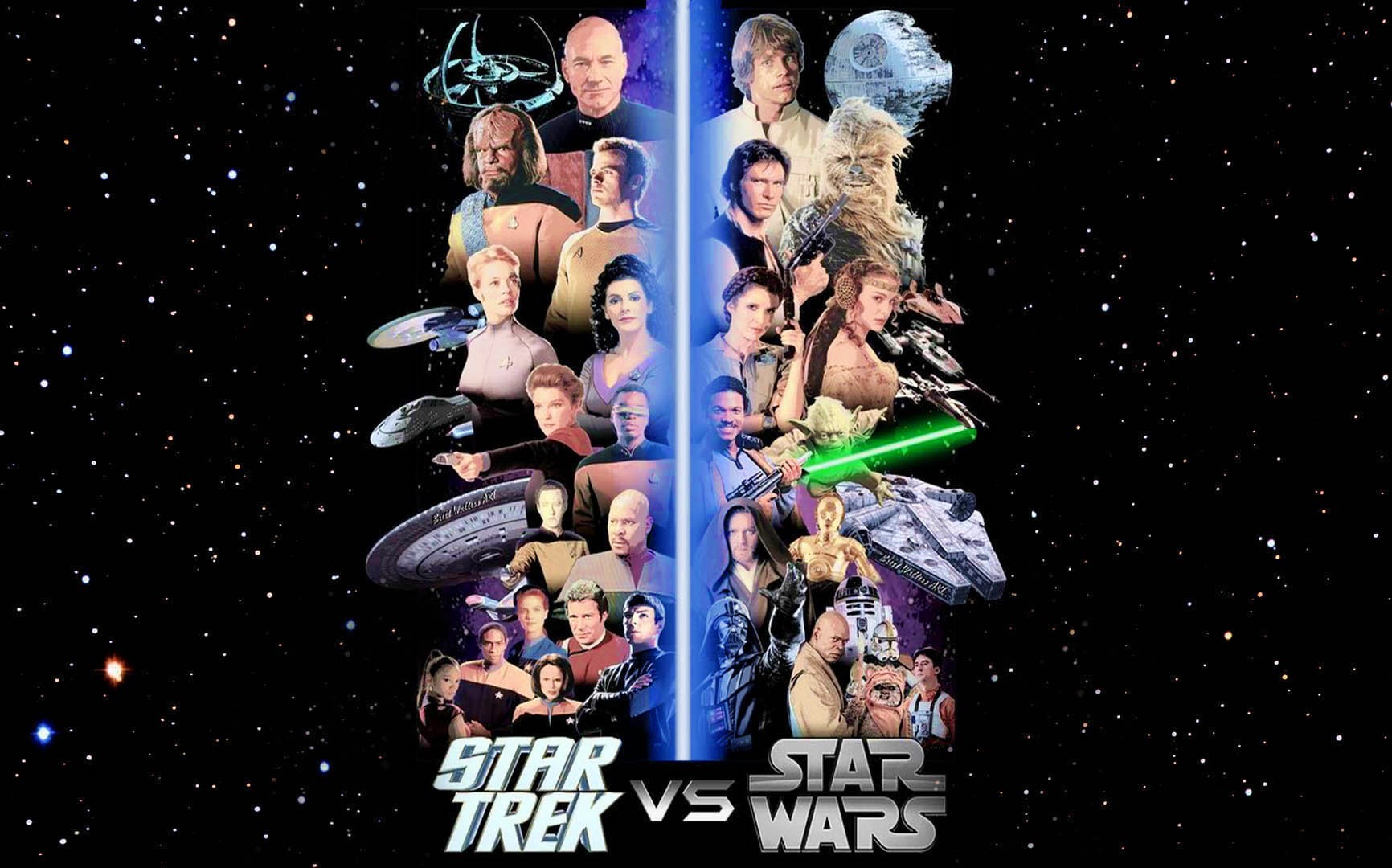
I say this out of love, and not just because both series are (a) sci-fi space operas (b) starring ensemble casts of heroes with (c) both series taken over and vastly improved by J.J. Abrams.
I say this because it’s true.
Spoiler alert: Most people know the Enterprise gets destroyed in the new STAR TREK BEYOND, and that it got half-destroyed in the first two reboot movies directed by Abrams.
If you look back, the Enterprise is getting half-destroyed or fully destroyed all the time now, and STAR TREK has turned into a reverse story of STAR WARS.
You can sum them up like this:
STAR TREK is about a team in a super-ship exploring and restoring order to the galaxy while enemies try to blow them up.
STAR WARS is about a team of rebels trying to blow up a super-ship the other team uses to restore order to the galaxy … by destroying planets.
It didn’t use to be like this.
When the Enterprise first went down for real in STAR TREK III, with no “Let’s Go Back in Time To Fix It” loophole that Picard later used 593 times, it was a big deal.
People wept. You just didn’t destroy the Enterprise. No.
Here’s the clip from STAR TREK III: THE SEARCH FOR SPOCK JUST GOT A LOT HARDER, SEEING HOW WE DON’T HAVE A FLIPPING SHIP ANYMORE
In the old days of original Shatner and Nimoy on television, they beamed down to adventures on planets full of styrofoam rocks and green alien women, or, for variety, green alien reptiles bent on killing Kirk.
The Enterprise was always their safe harbor, their home.
Sure, it got torpedoed by the Klingons once and a while, or threatened by some giant space monster, with Scottie always having to repair things in the engine room. But it never got fully destroyed forever and ever.
Why not? Partly because they had tiny models of the ship instead of CGI, and making it look damaged and dirty would be a big, expensive pain that wouldn’t look great anyway. It would probably look like somebody poked holes in a plastic model and painted some burn marks on it.
The bigger reason was you just did not destroy the beloved Enterprise.
After STAR TREK III, the Enterprise was no longer sacred, and they started blowing it up, or pretending to blow it up, all the freaking time.
What about STAR WARS?
Let’s go through all the STAR WARS movies, past, present and future, and yes, Disney will be making STAR WARS movies in the year 2058.
STAR WARS REBELS (winter 2016): A suicide mission to steal the blueprints to the Death Star so we can blow that sucker up.
STAR WARS: This friendly trash-can on wheels has those secret blueprints to make the Death Star go boom.
THE EMPIRE STIKES BACK: Oh, we are so hunting down those rebels who turned our beautiful Death Star into a space firecracker.
RETURN OF THE JEDI: Guess what, fools? We have a new, improved and fully operational Death Star, while you have some Ewoks.
THE FORCE AWAKENS: Plain lightsabers and Death Stars are boring. Check out this new red lightsaber with a crackling crossguard and our fancy Death Planet that’s so powerful, it eats a sun before turning planets to rubble.
Attack of the Fanboys
Serious fans may say this theory has to be bunk due to the existence of three prequel films which should never have existed.
In those three prequels, George Lucas somehow refrains from blowing up any Death Stars whatsoever.
I have a two-word rebuttal: Jar-Jar Binks.
Even gritting your teeth to look at the prequels shows you how STAR WARS without Death Stars is like Kirk and Spock without the Enterprise.
EPISODE 1, POD RACING, MIDI-CHLORIDIANS AND JAR-JAR: The bad guys have a donut-shaped space-ship that controls their droid army, and no, this isn’t a Death Star at all, except the heroes win in the end by using tiny fighters to make it go boom exactly like a Death Star. I think they even recycled some of the CGI from the special editions.
EPISODE 2, ATTACK OF THE CLONES: Palpatine starts a fake war to become emperor and command all kinds of Star Destroyers and Stormtroopers, and he’s especially interested in stealing the old Sith blueprints for Tie Fighters and some moon-sized space station that happens to destroy planets.
EPISODE 3, DARTH VADER FINALLY ARRIVES BUT SOMEHOW DOES NOT KILL JAR-JAR: What in the big finish, when Anakin Skywalker becomes Vader and joining the Emperor on a Star Destroyer? They’re watching something out in space, I forget what. Let’s pull up the clip.
The Expanded Universe or whatever
There’s also a ton of STAR WARS video games, cartoons and novels with other variations on the Death Star idea, each one more powerful than the last.
I’ve heard (haven’t read all this stuff) in some of these novels and such, the emperor comes back as a clone, Luke Skywalker turns Sith … and there’s eventually a super-ship that destroy entire solar systems, plus other Death Star-like objects that do other amazingly destructive things that make the first few Death Stars look wussy.
This explosion fest is perfectly understandable and perfectly boring
Here’s the thing: I get why STAR TREK and STAR WARS keep returning to this idea. It’s a quick MacGuffin, an easy way to raise the stakes.
This is the same reason why thrillers and James Bond movies keep returning to the cliché of stolen nuclear warheads. Pretty hard to top that.
The first time they made the Death Star go boom, the entire theater went nuts. I still remember it.
And the first time they actually killed the Enterprise while Kirk and his crew watched from the planet, people did cry. Didn’t make that up.
In this latest STAR TREK movie, nobody cried when the Enterprise went down. We’d seen it so many times before: they’re going to trash the Enterprise so bad it needs a year of repairs or completely wreck it. No shock.
You simply can’t go to this well every movie, especially in an age where audiences are so used to CGI destruction that it only generates yawns.
Remember the latest X-MEN movie? Nobody cared as the bad guys started to wipe out civilization, because we all knew it was pixels. We only paid $25 for Imax tickets and popcorn for the characters and actors we love.
Hollywood is doing us wrong
At the end of this new movie, STAR TREK BEYOND, there’s a time-lapse scene of the new Enterprise getting built in a shipyard, then launching into space. Now, this was a fun movie, good, not great. That ending scene, however, was a huge story mistake.
Destroying and rebuilding the Enterprise should be your final card to play, the biggest possible thing that could happen.
The writers and director could have generated a lot of suspense by not showing that scene at all. They could have made us wonder about what happens next.
All through Act 1 of the next movie, show the crew scattered, Kirk at a desk job in Federation buried in paperwork, Spock back on New Vulcan, Bones bored out of his mind working in a hospital, Scottie fixing the engines of a transport ship and Uhura translating Klingon for some boring bureaucrats.
You could show how they missed each other, and how breaking apart the team is costing them personally, and how it’s hurting the Federation as a whole as the B team out in space gets pummeled by the Borg and every planet is about to get assimilated.
It would’ve been a big emotional payoff to bring them back together on a new Enterprise they actually had to fight to get built in Act 2 before they beat the bad guys in Act 3.
Give us real emotion about real characters
In the end, these movies and stories shouldn’t be, and aren’t, about a super-ship–Enterprise or Death Star–that keeps getting blown up and rebuilt, bigger and better.
Audiences today are used to special effects and explosions. We’re numb to it.
These movies work best when they focus on the characters we care about, people who aren’t CGI and can’t get rebuilt with a few clicks of a mouse.
This isn’t hard, since STAR WARS and STAR TREK have some of the most beloved characters onscreen today.
Also: it would save you a lot of money, Hollywood execs. Getting actors you’re already paying to act is a lot cheaper, and faster, than spending 2 months rendering that giant space battle where the Enterprise launches photon torpedoes into the exhaust port of Death Star Version 6. (Actually, film footage suggests the opposite. Sorry, Kirk.)
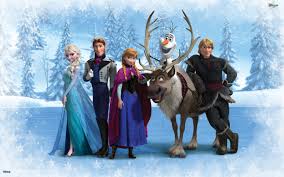
After spending a week hanging out with our two-year-old niece, I’ve memorized the words to “Let It Go” and “Do You Wanna Build a Snowman?”
Those two songs–especially “Let It Go”–are what made this movie insanely popular among pookies.
The movie itself isn’t up to snuff. Compare it to anything from Pixar, also owned by Disney now, or to any Marvel movie (owned by Disney, which owns STAR WARS, too, and possibly America–somebody needs to check), and the story in FROZEN is meh.
That’s easy to say. What’s hard? Fixing the movie.
So let’s try that, in the tradition of THE PHANTOM EDIT, which radically improved the hot mess known as STAR WARS: THE PHANTOM MENACE.
How did filmmaker Mike Nichols fix this travesty?
Nichols shortened or deleted a bunch of scenes with Jar-Jar Binks.
He killed the lamest possible explanation of the Force, which George Lucas suddenly decided, four films into this series, comes from microscopic bugs in your blood called “midi-chlorians.” Yeah, no joke. I believe this was one of the terms I had to memorize when studying plant cell biology.
He trimmed a lot of political nonsense and added deleted scenes that should never have been deleted.
Basically, he recut the entire film. And it was Good.
How can we recut FROZEN?
Here goes:
First edit: We kill off Olaf the Snowman, who is the equivalent of Jar-Jar Binks in this movie. The silly snowman is supposed to be comic relief, but he’s just goofy and not funny at all. There’s already comic relief in the form of Kristoff and his reindeer.
Second edit: Let’s give Kristoff more to do. If he’s going to be a bigger hero, he needs to try to prevent the villain from doing bad things in Act 1 and get banished to the snowy wastelands in Act 2, when Anna travels by herself out there and meets him while searching for her sister.
Third and biggest edit: Who’s the villain? In the original cut, the villain isn’t clear. Elsa is sort of a villain for leaving the castle and causing winter. Hans the prince is the villain in the end, but he’s sort of a surprise to the audience. He’s not in the beginning of the film and doesn’t drive events. He shows up late and there’s nothing really suspicious about his courtship with Anna, then bam, oh, he’s actually evil and after the throne. There’s no setup to this payoff. It’s a cheat.
The Duke of Weselton is sort of a villain, but he’s not driving the Ship of Evil, either.
Elsa and Anna’s parents (the king and queen), but that’s because of a storm, not nefarious deeds, done dirt cheap.
So: let’s make a real villain who’s there in the beginning, middle and end. Combine the roles of Hans and the Duke and get him there from the start.
Our combined villain, Duke Hans:
(a) sabotages the royal ship to cause the deaths of the king and queen, an act of sabotage that a common worker (Kristoff) notices and tries to stop, leading to his banishment to Snowy Reindeerville.
(b) Meanwhile, Duke Hans has spent years grooming and courting the much-younger Anna so he can marry into the throne.
(c) The final piece of the puzzle is planting the idea in Elsa’s head that she can only prevent harming her sister again by living the rest of her life in the icy wilderness, which would also mean giving up her right to the throne, but hey, those are pesky details.
(d) Kristoff is now critical to the climax, since he knows the big secret that Duke Hans is who murdered the king and queen, a secret Duke Hans would kill to protect.
Better, right? I’d be happy just whacking Olaf the Snowman, though giving the story a true villain who drives events and making Kristoff more than a Random Nice Guy does a ton to help the story.
How would you fix FROZEN? And how do you get a two-year-old girl to stop playing “Let It Go” seven times an hour? Hit me in the comments.
Updated: Fixed the cases of mistaken identity, like calling the reindeer and his master by the wrong names and saying Anna when I meant Elsa. Thanks to folks for seeing that. My niece would never forgive me. 🙂
We live in the Golden Age of comic book movies, with Marvel and DC pumping them out as faster than you can swipe your VISA for $14 tickets to IMAX 3D and $9 bags of popcorn.
Here’s the secret recipe for mediocre superhero movies and its two sequels, each of which will costs at least $250 bazillion to make and $150 gazillion to market, and no, those insanely high numbers are not why you have to pay so much for tickets and kernels of dried corn that have been exploded. That’s a coincidence.
Note: I strongly deny the theory that this post is suggesting movie studios spend more than 1 percent of the budget on the actual story, because diverting that amount of money would eliminate the CGI budget for the skyscraper that explodes and falls down in the middle of the seventh fight scene, the one in that city that sort of looks like Vancouver, B.C. after the villain kidnaps the love interest and has a creepy dinner with her in his lair, but not the explode-y fight scene where the villain crashes the mayor’s birthday party to announce his plans for doomsday.
Secret Ingredient #1: A hero is born, which means Mom and Dad better have life insurance
Sorry, moms and dads of the world: if your son or daughter is destined to put on a mask and cape to fight evil, there’s a price to pay. Which means you’ve got to go.
Superheroes with dead parents are incredibly common, for these good reasons.
Here are those reasons: (a) any villain with a brain in their noggin could simply kidnap mom and dad whenever they wanted something, forcing (b) every movie or comic book starring a superhero with actual parents to spend precious time explaining exactly how mom and dad are hiding and surviving, (c) dead parents are an easy way for writers to give their superhero their motivation to fight crime and evil and (d) how else would you get Superman to fight Batman except by leveraging his human step-mom?
The list of superheroes with dead parents is so long I don’t even have to start, but I will: Batman, Superman (his real parents, not Martha), Iron Man, Captain America, Black Panther—you get the picture.
Secret Ingredient #2: Our hero is a total loser
This is a necessary step to the first movie, which tells the hero’s origin story.
You have to show how lame the hero is before he gets his powers. The bigger the contrast, the better the story.
Peter Parker is a nerdy little high school kid who gets bullied.
Steve Rogers is so small and scrawny, they won’t even accept him as a volunteer to fight in World War II.
Tony Stark is a billionaire playboy who invents and sells weapons when he’s not busy trying to poison his liver and catch every STD known to man.
Finally, here’s an example that shows how going halfway doesn’t work AT ALL.
Oliver Queen (Green Arrow) is a billionaire playboy who’s totally not a copy of Batman, and though Arrow’s rich father is dead, his mom is still alive, and living with him (?) and his kid sister (??) in the same mansion, even though he’s a grown man. Yeah, that’s the setup. It is as soap-opera-ish and stinky as you could imagine.
Secret Ingredient #3: Power up
A superhero needs talents and powers, whether they come from (a) a science experiment gone wrong (Spiderman, Hulk), (b) a science experiment gone right (Captain America, Ant Man), (c) years of training and (Black Widow, Falcon, Arrow) or (d) being a playboy billionaire genius who invents his own suit and arsenal of gadgets (Batman, Iron Man and a dozen other copycats not named Arrow).
Then there are weird powers that we do not, cannot and will not accept, like gills to breathe underwater combined with the ability to get whales to act like underwater taxis whenever Batman and his buddies in the Justice League don’t feel like using in the Batsub or Wonder Woman’s invisible plane.
Secret Ingredient #4: An old mentor who eventually MUST DIE
Sorry. It’s a thing.
The same clause in Sean Bean’s contract that requires him to die in every role is included for any actor playing the mentor to our superhero.
This is also necessary, because eventually (a) the screenwriters will write themselves into a corner and need the ultimate motivation for the hero to go beserk or the aging actor playing the mentor will (b) get sick of being a glorified sidekick and do other roles or (c) demand insane amounts of money to be in the sequels.
Before he dies, the mentor needs to be wise, charming, helpful and funny.
This is almost always a male role, whether we’re talking about a hero or heroine. Sorry. That’s how the Bad Superhero Blockbuster rolls.
Our old and grizzled mentor also needs to own many hats, because he’ll be wearing them all: sidekick, martial arts trainer, tech support and father figure.
But his death serves another purpose, because it opens up the way for five different sidekicks to pick up those hats, dust them off and put them on in the sequels.
Secret Ingredient #5: A dash of young love
Didn’t expect this in a movie with capes and explosions, did you? But it always happens.
Captain America had Agent Carter and now her niece.
Iron Man has Pepper Potts when they can afford Gwyneth Paltrow.
Thor has Princess Leia’s mom.
Batman has Rachel, or he did for a while, though I’ve always said it’s a lot like Harry Potter winding up with his best friend’s sister instead of Hermione: wrong, wrong, wrong. Batman should be forever linked to Catwoman, who rocks.
The new Wonder Woman will have Captain Kirk, which is pretty cool. Great actor. Good choice.
Arrow has–actually, I don’t really care about Arrow’s paramour, and don’t even make me think about what Aquaman does on Friday nights.
Back to our recipe: Preferably, this relationship should (a) start as early as possible, maybe even childhood, and (b) it should be a love triangle, with the third person also a friend from childhood.
That third person, ideally, should be our next ingredient.
Secret Ingredient #6: A delicious nemesis
Not a villain.
No, a villain is common and boring.
A nemesis last. He or she endures.
But this takes time. Like fine wine and good whiskey, a nemesis must ferment. Because they start out good before turning sour.
The hero and nemesis were once friends, if not best friends. Maybe they both wanted the same girl, the same achievements, the same powers and status.
A true nemesis is the flip side of the hero, showing what happens if you take the path less travelled.
Or you could take the easy way out and cast an aging Hollywood has-been as the villain, somebody who used to be box office gold. Give them a terrible foreign accent, a little backstory and let them chew up the scenery until the hero punches them into oblivion and locks them inside a chamber that gets flooded with radiation from the superweapon our big baddie intended to use to nuke LA.
Also: a quick, Cheaty McCheatypants way of creating your nemesis is to give him or her the same powers or power source as the hero.
This so lazy and bad, it rarely happens except for Iron Man 1, Iron Man 2, Thor, Man of Steel, Batman Begins, Arrow and fifteen other movies and TV shows I won’t look up right now.
It’s not enough for your villain or nemesis to steal every bar of gold from Fort Knox or crown himself Lord of Canada after unleashing his army of mind-controlled badgers with steel-tipped claws and industrial lasers strapped to their heads.
To be a truly clichéd superhero movie, the villain must threaten to destroy planet Earth, or at least nuke Gotham or Metropolis, which is the same thing for DC movies.
You can blow things up however you like, though nuclear warheads were only used as a plot device in every other Bond movie, spy film and TV show since 1953.
What gives you enough pop to make the third rock from the sun go bye-bye? Here are your choices: (a) an bio-engineered super virus, (b) alien invaders, (c) an army of killer robots / sharks / zombies or (d) manipulating or mind-controlling a hero so the other heroes have to fight them, especially if the hero is somebody unstoppable like Superman.
Secret ingredient #7: Clean up the kitchen and start prepping for sequels
To be a truly Bad Superhero Movie, you must follow the recipe exactly. To the letter.
That means Movie #2 has two villains, two sidekicks and two love interests.
It also costs twice as much. Batman Returns, Spiderman 2 and The Dark Knight all follow this formula.
Movie # 3 has three villains and three sidekicks. The number of love interests is your choice. Spiderman 3 and The Dark Knight Rises are good examples. We’re not even going to talk about the Batman movies starring Val Kilmer and George Clooney. Not gonna do it. Wouldn’t be prudent.
The budget for Movie # 3 is also triple the original.
Despite all the big name stars and big budget for explosions, the story is a mess and entire thing collapses under its own weight, with the only hope of bringing it back being a reboot with a new actor and director.






 The Red Pen of Doom