Writing secret: What two-sentence stories can teach us all

Maybe you’re writing a 140,000-word epic about a time-traveling Wookie who kills Hitler and invents the polio vaccine. Or you’re cranking out 500-word stories for a Paper of News.

Doesn’t matter.

Less is always, always more.

Nobody complains about a speech being too short, or a movie ending too soon. Always leave the audience wanting more, and always cut whatever you can. A word, a sentence, an entire scene that’s repetitive because we already saw the Wookie find that double-bladed lightsaber which she used to impress the British major-general and let her board the first landing craft at Normandy.

It works in the opposite direction, too. Headlines and hooks can’t be 100 words–you’re talking a sentence or two. Pitches, blurbs, dialogue, just about everything you can think of benefits from stripping away the fat to reveal sleek, practical, essential muscle.

Once you strip it all away, it becomes clear how great writing works and bad writing falls off the Cliff of Despair and tumbles into the Pit of Absolute Rubbish.

The easiest places to see this? Two sentence stories.

Check out these five, then we’ll chat.

Number 1, The Classic

I begin tucking him into bed and he tells me, “Daddy check for monsters under my bed.”

I look underneath for his amusement and see him, another him, under the bed, staring back at me quivering and whispering, “Daddy there’s somebody on my bed.”

Author unknown, and yes, this version is a little wordy. Let’s cut it down.


“Daddy, check for monsters under my bed.”

I peeked under the cover and my son stared back as he whispered, “Daddy, there’s somebody on my bed.”


Every father’s nightmare. You’ll do anything to protect your sons and daughters. How would you handle this impossible choice?

Number 2

“Now be careful, that line of rock salt is the only thing keeping them out,” the man said, welcoming my group into his refuge.

“Sea salt,” I clarified, “sea salt keeps us out.”
https://www.reddit.com/user/bookseer/

This is good, right? A great setup for a horror movie. Bring it.

Number 3

Bullets flew through the mall, ripping clothes to shreds.

In the chaos, no one noticed the mannequins bleeding.
https://www.reddit.com/user/proffessorbiscuit/

Did not see this coming. At all. Well played, Professor Biscuit.

Number 4

The sound of my son calling for my help grew fainter and fainter.

As the batteries in my hearing aides died, I realized it would soon be impossible for me to find him in time.
https://www.reddit.com/user/minithemermaid/


The first three are fantasy and unrealistic.

This one is quite real, and I believe it’s scarier because of it.

Number 5

“I forgot to grab something, I’ll be right back,” said Mom.

As she rounded the corner, out of sight, the cashier began ringing up our groceries.
https://www.reddit.com/user/undflight/

Here we go: comedy instead of horror. We’ve all felt that stab of panic as our wife, husband, son or mother leaves you in line at Safeway or Costco “to grab something real quick,” then you stand there, waiting forever as the person in front of you finishes checking out and you empty your cart onto the belt slower and slower as there is absolutely no sign of them, and the checker starts giving you the side eye because there are four people waiting behind your slow butt, so what is your problem, so where are there, did they get lost or kidnapped, and should you leave the line to save them from a serial killer only to get embarrassed when they show up with that bottle of white wine they were looking for? WHERE ARE THEY, AND SHOULD WE CALL THE POLICE?

So yeah, this one is funny, and a little horrific, because we have all been there. And will be there again.

What two-sentence stories can teach us all

Every genre of writing tends to get wrapped up in its own pet jargon, theories, practices, and templates.

A news story has to use the inverted pyramid. Every press release needs a first-graf lede, then a quote in the second graf. Detective heroes are alcoholic loner rebels paired up with a square sidekick who has a family.

Two-sentence stories toss all of that and return us to the basics.

The first sentence is a setup, making us curious about what happens next.

In the second sentence, we get the payoff.

That’s it.

Comedians are doing the same thing, which is why most jokes are two-sentences. All you need is a setup and a payoff.

Sure, it helps to add more flourishes, and a longer story–or joke–can have a greater payoff.

Look again at those four examples. There isn’t a single name to any character, no description of their age, hair, face, body, backstory. Zero.

Because you don’t need those things to generate interest.

Homework

Do some two-sentence stories. A joke, a horror story, a shocking idea. Whatever.

Then take whatever you’re writing and boil it down to two sentences. Setup and payoff.

Note: making each sentence 400 words is not okay, Cheaty McCheatypants.

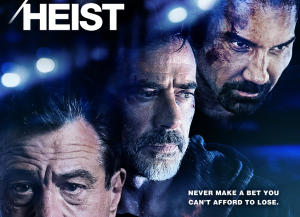
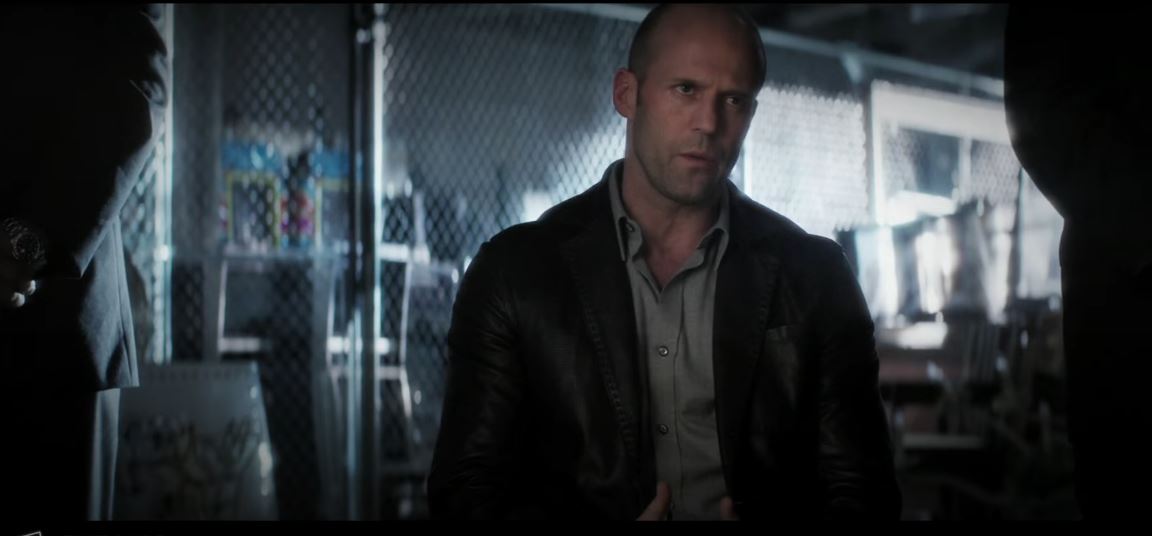
HEIST is a master class in tying character arcs to plot twists

As a public service, I’ve watched 99.9 percent of everything on Netflix, Amazon Prime, and Whatever Blu-Rays are Inside that Shoebox I Found in Yonder Cupboard.

HEIST is what I saw last night, and (1) yes, it’s worth sending radiation at dried corn kernels for you to snack on while watching this thing, and (2) there are interesting storytelling techniques we’re going to talk smack about here on this website blog WordPress thing.

Because I care about you, this is the trailer:

So yes, you’ve got Negan (whoa!), Drax the Destroyer (double-whoa!!), and Robert-Freaking-DeNiro (you lie!!!) in the same movie? Plus Gina Carano? NO WAY.

Way.

Here’s the thing that I want to talk about: each of these characters has a distinct arc, one that not only works by itself, but is a vital part of the twists and reversals that serve as the V-8 engine of this story.

  • Negan is the hero with a deadline, an Army vet and card dealer who needs to find $400,000 by 7 p.m. on Friday for his daughter’s cancer treatment.
  • Drax the Destroyer is the casino security guard with the idea of robbing the place, and the one running the job.
  • Robert DeNiro is the cut-throat businessman who owns the casino and is (a) estranged from his daughter, his only family, and (b) dying of cancer.
  • Gina Carano is the cop chasing Negan and Drax in their getaway bus.

That’s right, a getaway bus. Remember SPEED, with Neo stuck on a bus that can’t go less than 55 or the bus and all its passengers go boom? This movie isn’t a straight ripoff. Being stuck on the bus, though, with the cops surrounding you, is a great premise. They run out of diesel once, and have to work around that. The cops shoot out a tire. There are just all sorts of great problems presented by being stuck on that bus.

But I want to talk about the intersection of the character arcs and story beats.

Negan improves the plans of Drax, who’s running the job, and he’s clearly smarter than the hothead Drax.

So it makes storytelling sense that instead of letting Drax kill a hostage–the bus driver–Negan shoots Drax instead.

Then it’s the bus driver who has the idea of how to get Negan off the bus while leading the bad detective (in the pay of Robert DeNiro) to chase the bus somewhere else.

To get the money off the bus, Negan uses a fake pregnant “hostage”–his sister–and makes sure she’s the first hostage released. Clever.

And when DeNiro spares Negan, shooting his hotheaded protege before he can kill the card dealer who stole his money, you believe it, because DeNiro has been questioning his path the whole movie, and this makes sense. He’s trying to do right by the world now.

Finally, you believe Gina’s police officer character looking the other way at the end, and letting Negan save his daughter, because it’s not a sudden change of heart. They’ve set this up with scene after scene where Negan and Gina both try to do the right thing, regardless of the personal cost, while Drax tries to MURDER DEATH KILL everything in sight.

There isn’t a lot of Christopher Nolan cheating going on here, storywise. The setups are all there if you look for them, or remember. I just enjoy how the character and story beats mesh so well, and when the revelations all hit at the end, it makes you impressed with Negan’s cleverness and selflessness and happy about DeNiro’s final acts and Gina’s compassion.

All of this is nice contrast to most action movies, where evil and bloody things happen to just about any character at any time, except for the hero, because everyone but the hero is basically a bad guy who’s gonna die or a sidekick type who’s also gonna die. I mean, come on. White Bearded Mentor Who’s Kinda Like Obiwan Crossed with Mr. Miyagi? Dead by the end of Act 1. Hot girlfriend, sweet wife, or cute little daughter? Kidnapped by the end of Act 2. Sidekick who’s there mostly for tech support and comic relief? Impaled on a swordfish at the beginning of Act. 3. Femme Fatale with a thing for the hero? Fed to the sharks with lasers right before the rooftop battle with the Final Boss.

VERDICT

HEIST is clever and entertaining movie that reminds me a lot of SHIMMER LAKE (a perfect movie, go watch it, DO IT NOW) in that you’re cheering on a good man doing wrong things for the right reasons. It’s free on Netflix so fire it up.


GUNS AKIMBO tests the Five Unwritten Laws of Action Movies

Unless you are allergic to 007, Jason Statham, and Jackie Chan–and somehow managed to dodge all 5,392 Marvel films–you’ve seen plenty of action movies.

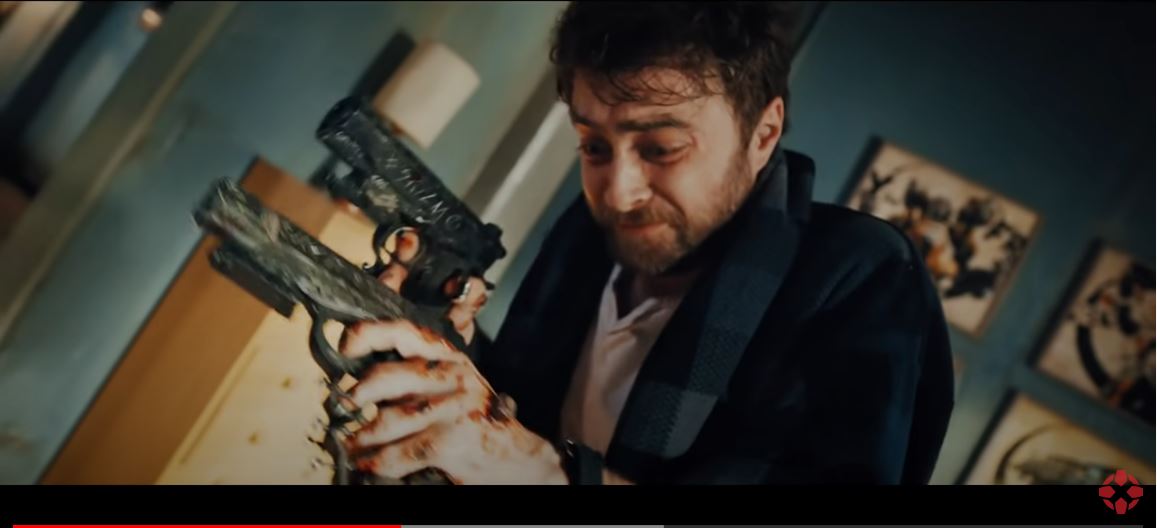
GUNS AKIMBO is on the interwebs now, and it stars Daniel Radcliffe, so that automatically makes people like me perk up. Can a grown-up Potter carry an action movie, with zero wands and magic, and no Hermione to save him from hubris and idiocy? Will there be any sarcastic jokes or easter eggs referencing a villain who looks like a methed-up cousin of Voldemort? And does the movie work as entertainment?

Here’s the trailer, then let’s talk smack not just about this movie, but about how this film illustrates–for good and bad–the Five Unwritten Laws of Action Movies.

Interesting, right? The premise is good. You have an Average Joe sucked into an action movie in a plausible way, and he doesn’t have an easy out.

Those elements are the first three Unwritten Laws.

The First Unwritten Law of Action Movies: The Hero Cannot Be Superman

I don’t literally mean the Man of Steel, though talking about Supes can illustrate the extreme limits of how action movies go bad.

The more amazing and unbeatable you make the hero in the beginning, the less thrilling any action movie becomes. Superman is invincible, so it’s kinda impossible to worry about him getting hurt or killed, which absolutely murders any tension in the movie.

James Bond and other action movies keep breaking this law. They’re super tough, ice cold, and irresistible to the opposite sex from the first minute of the film, which not only kills tension–you know they’re gonna win–but it also destroys character growth, as in THERE IS NONE.

The acid test for a movie smashing the first law into itty bitty pieces is this: Is there a scene near the climax where our Ultracool Hero beats up and mows down a faceless army of bad guys before he gets to the Final Boss? You know the scene, because you see it all the time. Like this one.

https://www.youtube.com/watch?v=2AzyWKfqybg

Daniel Ratcliffe in this movie is definitely an Average Joe, completely unskilled compared to those he’s matched up against, so that ratchets up the tension. The question isn’t “how many bad guys will he mow down?” It’s, “How many minutes will Harry Potter With Guns survive?”

The Second Unwritten Law of Action Movies: Is This Plausible?

A lot of movies get the first law right, then immediately commit a Class B Storytelling Felony by having their Average Joe, an accountant from the suburbs, involved in a crazy plot involving Russian spies, the mafia, and a suitcase containing an alien artifact.

Whether the hero is a professional or amateur, the premise needs to be exciting, yet reasonable. If a gangster with his own private army kills your kung fu mentor, are you really going to take on and kill 300 armed criminals with your bare hands, on a rooftop in the rain? No. Not plausible. A movie that did this right was IN ORDER OF DISAPPEARANCE. The hero is an average man who takes out the drug dealers who murdered his son, but he does it step-by-step in clever ways.

The Third Unwritten Law of Action Movies: Is There No Way Out?

It’s not just a cool Kevin Costner movie. IT’S A LAW.

Horror movies are notorious for this, but action movies aren’t far behind. If the hero could solve this easily, say by calling 911 or renting a car and driving the hell away, then it’s lazy storytelling.

GUNS AKIMBO does this right in a clever way by bolting guns on Harry Potter’s hands. He can’t get them off, can’t open doors, can’t put on pants. It’s terrifying and funny and works beautifully.

The Fourth Unwritten Law of Action Movies: The Villain Must Be Bigger, Badder, and Better

It’s an achy break big mistake to make the hero smarter, tougher, stronger, taller, or generally better than the villain. The villain needs to be (a) scary, and (b) the most deadly thing in the movie. Period.

You can see action movies that shatter this law all the time, with savage, scary henchmen who the hero struggles to beat. Then when he finally gets to the villain pulling the strings, that fight feels anti-climactic.

This is the opposite of the Superman problem. Go ahead and make your villain super. Darth Vader, Hannibal Lecter, the shark in Jaws, Thanos–all of those bad guys are great because they’re scary and tough one-on-one. They don’t need a bunch of minions to back them up.

The villain in this movie does sort resemble a methed-up and tattooed cousin of Voldemort, though I’m not sure that’s intentional. But he’s plenty scary, and definitely bigger, badder, and more deadly than Daniel Radcliffe’s character, so they do it right.

The Fifth Unwritten Law of Action Movies: The Best Scenes Go Last

There’s a great fight scene with Nix, the blonde killer, early in the movie. Then she sacrifices herself (yeah, spoiler alert) so Harry Potter can make it to the final boss battle.

Except her final scene is nothing compared to that earlier scene. It’s meh. Switch those around in the editing room and IT WOULD BE MAGIC.

The same is true for chases, witty dialogue, suspenseful moments–put the best last. Escalate up to the end.

VERDICT

Listen, it’s the year 2020, which the prophecy apparently foretold was the Apocalypse, except nobody warned us, so I know that you know that we’re all plumbing the depths of Netflix and Amazon Prime for decent things to watch.

GUNS AKIMBO commits a few misdemeanors, but it gets the big things right and is definitely worth watching.

GET UP by the Bingo Players is pure weirdness, but in a good way

It’s not hard to find weird music videos, mostly because (a) you can’t throw a rock on YouTube without smacking five different music vids and (b) musicians tend to play it really, really safe or truly let their freak flag fly. There’s no in-between.

This video is the good kind of weird. Watch, then let’s chat about why.

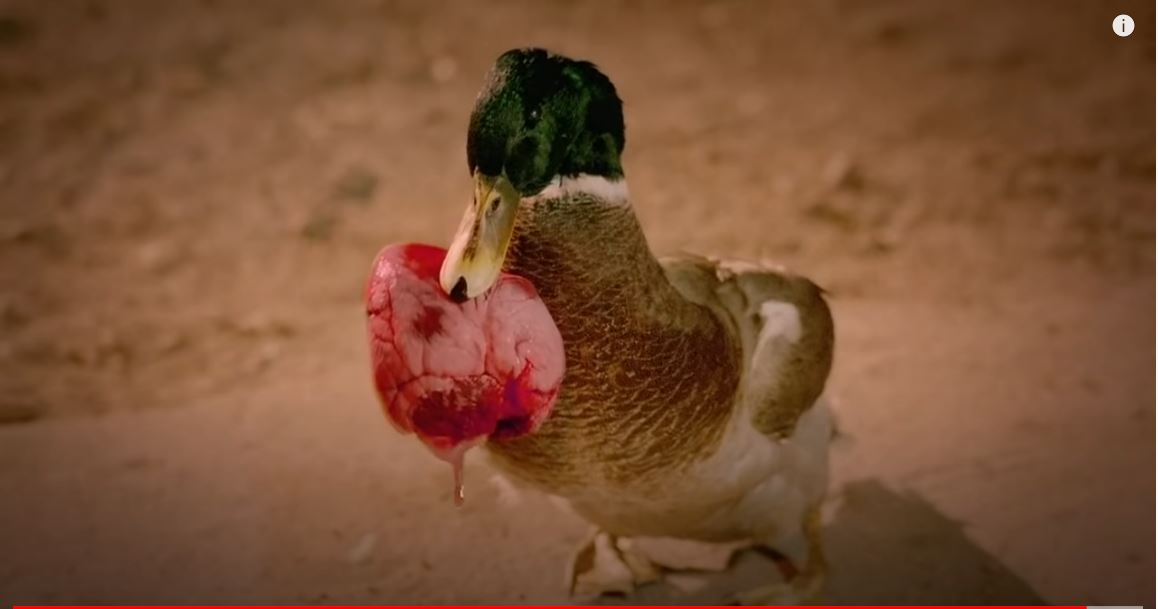
Okay, so that’s definitely something I hadn’t seen before: a music video where the heroes are a gang of ducks, getting revenge on an actual gang for their misdeeds.

And yeah, there are seventeen ways this video could’ve gone wrong. But I think it works.

They set things up properly by showing the human gang doing bad things, both to other humans and to the ducks, and the ducks starting to go into action, building up suspense. Then they paid all that off with a nice variety of surprising montage of Duck Vigilante Justice with a good sense of variety and surprise, escalating to a climax. I particularly liked the duck driver–a nice touch.

VERDICT

Yes, this video is definitely weird, but the risks paid off. Well done, Bingo Players.

The acid test for all writing

I believe, deep in my soul, that Zack Snyder-style gritty darkness isn’t bad simply because Zack Snyder directs it. Gritty Dark Dourness would be bad if the love child of Steven Spielberg and Alfred Hitchcock sat in the director’s chair.

And yes, it’s still fun to laugh at BATMAN VERSUS SUPERMAN: THE DAWN OF JUSTICE.

But there’s something smart and deeper behind the idea that the Marvel movies got things right by being (a) funny and (b) exciting, while the DC / Snyderverse went wrong by taking itself far too seriously and going Full Melodrama, with a color palette full of grays and blacks contrasted by grays and more blacks. You never go Full Melodrama, because it makes your audience feel like the movie’s being written and directed by a bipolar Michael Bay who’s crying in a corner when he’s not blowing stuff up.

And all this made me think.

Because comedy isn’t actually light and fluffy. True comedy points out how absurd and unfair the world is, and how you can’t fix it and have to laugh at the insanity of it all.

My proposition is this: adding comedy to a book or movie doesn’t make it light and lame kiddie fare. Interweaving comedy into whatever–an action movie (every Marvel movie ever), a romance (ROMANCING THE STONE and every rom-com), a mystery (SHIMMER LAKE is perfect perfect perfect, go watch it now on Netflix, kthxbai)–can make it infinitely better.

We were talking yesterday about our favorite books of high lit-rah-sure, and my favorites were CATCH-22, Kurt Vonnegut and the ALL CREATURES GREAT AND SMALL books, because I’ll happily go back and re-read any of these. What do they have in common? They’re universally beloved, recognized as classics, and funny as hell.

But making you laugh isn’t their only trick, like a SNL skit that repeats itself 459 times in four minutes. The best storytellers serve us different courses for our emotions over the length of a movie or book. They don’t dish up sad scene after sad scene, or pile up joke after joke. You get an appetizer, a main course, side dishes and dessert. Not five appetizers in a row or a plate full of six desserts.

ALL CREATURES GREAT AND SMALL does this beautiful. The original book and its sequels are really short stories strung together. Each one, though, makes you feel a variety of emotions. Joy, sadness, laughter, love. You see the struggling young vet and the hard-scrabble farmers, and when an animal dies, or a sick cow makes it because a poor farmer stayed up all night tending to that animal, yeah, you might tear up.

That’s what makes us come back to those books and movies.

Not the plot points–we know what will happen. Not the writing.

We want to feel.

So that leads me to the acid test for me, as a writer. It’s how I know whether a draft is working or not.

Here’s the test: If I’m not tearing up, it’s not working.

Tears of joy, tears of laughter, tears of sadness–I better be feeling something as I write the ending. If I don’t, bring on the rewrite.

So yes, we can make fun of the dour, dark Snyderverse, and relentlessly depressing lit-rah-sure like THE ENGLISH PATIENT, where the scenery is beautiful and everybody’s rich and having affairs and in the end, everybody sells out to the Nazis and dies, the end, roll credits, and THROW SILVERWARE AT THE SCREEN BECAUSE THIS IS STUPID.

What do you want the audience to feel?

That’s the real question. And you have to feel it first.

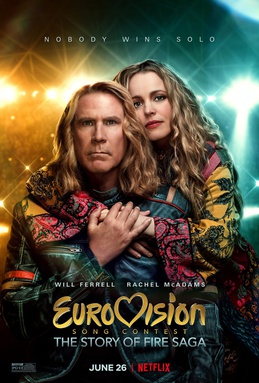
Should you fire up Netflix and watch EUROVISION SONG CONTEST?

Listen: comedy is incredibly hard. Maybe the hardest thing when it comes to storytelling and entertainment. Because you have to take risks, and most of those gambles won’t pay off.

This is why movies coming out of Saturday Night Live alums are hit-and-miss. A joke that gets stale and repetitive during a three-minute sketch is just about impossible to stretch into a 120-minute movie.

I swear the best comedies are made in the editing suite–throw 100 things at the wall, go wild, and have the editor and director pick the 10 things that really work while chucking the other 90.

EUROVISION SONG CONTEST may seem like one of those skits, something that might be hilarious for one song and painful to sit through for an entire movie. Check out the trailer.

I’m happy to say the opposite is true. This is fresh, funny, and surprisingly good.

The movie is set in Iceland, which needs to be featured more. It’s a wild place. Having visited there, it’s nice to see it in a major movie.

And while this is a comedy, the ending is excellent and surprisingly moving. TEARS MAY BE SHED. I won’t spoil it all by including the final song. Instead, here’s VOLCANO MAN, a great appetizer for the movie.

VERDICT

You’ve already burned through everything else on Netflix, Amazon Prime, and your brother’s DVD collection.

Give EUROVISION SONG CONTEST a go–it won’t disappoint.

Why “romance novels are trash” is such a bad take

A man on Twitter recently had the genius idea to mansplain to romance readers and authors all about their genre. He could separate the quality romances from the trash simply by looking at the cover. And yeah, he basically called most romances trash.

Somebody had to call 911, because that man was quickly murdered by words.

There’s no need to link to the Twitter thread, which is obscured by crime scene tape. Homicide detectives are still picking up bullet casings and bloody knives.

This man isn’t alone, though. Romance novels are the biggest sellers in the book industry, the foundation of the business, but they get a lot of grief, too.

Years ago, I was smart enough not to say such things on the interwebs, but I saw different genres of fiction as living on various planes of quality. Great Literature on top of the pyramid, then everything else.

Now, my thinking is completely turned around. Here’s why.

There’s no link between genre and quality

A lot of the classic of literature, now held up as the highest quality, were considered trash when they were first published.

Edgar Allen Poe wrote horror and died in poverty. You could call it literature, but it’s still horror.

Tons of what we hold up as of the highest quality are actually written for kids.

Dr. Seuss. Winnie the Pooh. Alice in Wonderland. Harry Potter.

There’s amazingly beautiful writing coming out of horror and sci-fi and romance–and totally unreadable nonsense on the shelves of Serious Fiction.

For every CATCH-22, there are 5.4 bazillion books like the just-released ANTKIND. Seriously, head to Slate and read the review.

What’s the purpose of a book or movie?

Stories have two basic missions: to entertain and educate.

To make you feel, and to show you worlds you didn’t know existed–or to look at the world in a different way.

There’s a misconception that Great Literature contains the highest meaning, that it’s the purest form with the strongest message. The opposite is true. I’ve read mountains of books, and I’m not alone in noticing that a lot of literature is dense and obscure. A slog. And because it’s too popular or Hollywood, the structure and endings of literary novels and movies are often backward, if not bizarre.

That muddles the message. Because even if somebody manages to slog through the entire thing, there’s a good chance they won’t understand the ambiguous and complicated point the author intends.

What’s worth living and dying for?

Think back to English Lit in college and the foundation. Literature, and all stories, are supposed to tell us what’s worth living for and what’s worth dying for.

Romances focus on what’s worth living for–who should you love.

Thrillers are centered around what’s worth dying for.

I did a giant post all about this. Click here: Why every man must read a romance – and every woman a thriller

So those two “trash” genres split the great question in two. I’d say they do a beautiful job of tackling both halves of that question, too.

Every niche and genre has a question they’re trying to answer

Other fields of fiction derided as junk also tackle huge, deep topics.

Horror is really about dealing with fear and death.

Comedies each make fun of an institution: suburban family life, corporations, showbiz, war, politics.

Dramas show that no matter how bad things get, there will always be heroes trying to stand up for what’s right.

Sci-fi and fantasy ask, “What if?”

Each of these has a distinct message and way of looking at a piece of the world. And sure, there’s no law requiring you to love spy thrillers or watch superhero movies.

What I’m saying is (a) give them each a chance and (b) don’t disparage what other people enjoy.

Every genre of storytelling tries to a fundamental question about life.  They all have value–especially to the people who love them.

THE OLD GUARD is good–and here’s what could make the sequel even better

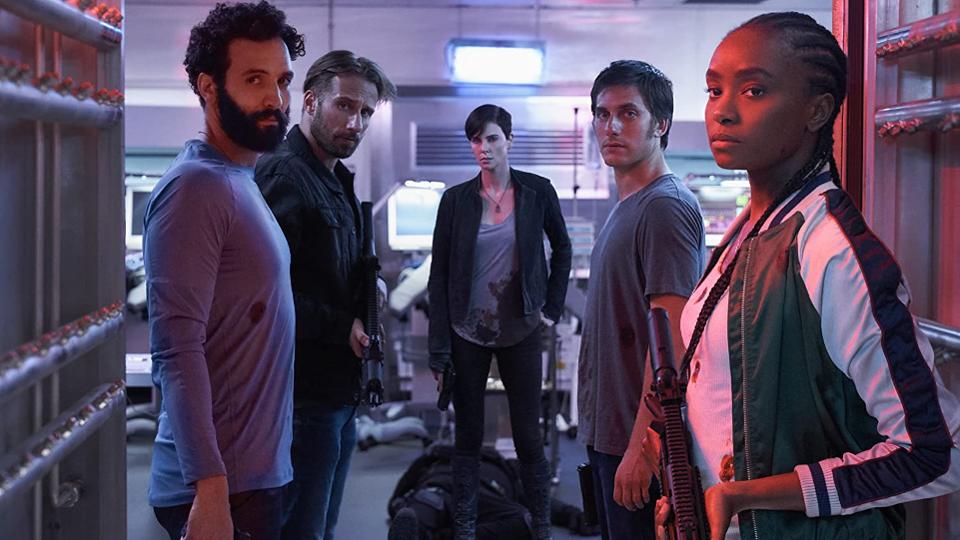
Yes, there will be a sequel to THE OLD GUARD, which is crushing the competition on Netflix right now. Click with your mousity mouse thing to watch the trailer.

Cool, right? Furiousa is back and she’s kicking butt.

If you haven’t watched the movie, spoilers ahead. If you have watched it, let’s talk about what worked, what didn’t, and how they could amp this thing up in the sequel.

The general feel of this movie worked well. It’s a fun time, and the acting is great for an action movie.

I like the premise–immortals who may randomly lose the ability to heal–though if you called this HIGHLANDER WITH GUNS, that feels pretty accurate, too.

The trouble with any type of immortal hero is you run into The Superman Trap, which is the fact the audience never worries about the hero being in danger because they basically can’t die. What’s good about HIGHLANDER and vampire movies is there are clear rules of how this all works. Vampires are vulnerable to sunlight, garlic, and such. Highlander and his fellow immortals die when they lose their heads, gaining the power of whoever they vanquish, except it’s not clear what power they really get. Are they faster or tougher after the light show? Can’t tell. Can they fly or do card tricks? Dunno. We’re just told they get more power, which is defined as the ability to do work, except we never see Highlander and his fellow immortal sword fetishists do anything other than swing blades at each other.

It is a nice twist for the hero, Furiosa (okay, her name in this movie is Andy, but does it really matter?) to lose her immortality toward the end. Because it raises the stakes and makes us worry.

What I didn’t like was the villain, who’s a dweeby pharma bro CEO, and yes, he’s despicable, but not scary. And certainly not a match for Furiosa and her fellow immortals.

The ending if an action movie should always have the main character, not a sidekick, take out the villain. That villain had better be just as skilled, powerful, and scary as the hero. Otherwise, snooze city. Check out the ending fight of HIGHLANDER, which featured a great bad guy, totally imposing and scary. Loved him.

There are two real villains in these Furiosa with Guns movies, which is plural on purpose because there will be more. First up is the bearded dude immortal frenemy who betrays his friends, then helps beat the bad guys only to get banished for 100 years as punishment for the original betrayal that you should have figured out ten minutes into the story. Who set up the first job that went wrong? Oh, that guy. Yeah, he’s it.

THE OLD GUARD neatly sets up the top villain in the next film, the woman who Furiosa hung out with for centuries but couldn’t save when they drowned her in an iron coffin at sea, thinking she was a witch. Then she spend hundreds of years drowning, dying, and coming back only to die again. Dreadful, right?

There’s a great stinger ending scene where the Bearded Frenemy, spending his 100 years in exile drinking all the alcohols in Europe, is surprised by the Big Bad Frenemy of Furiosa who somehow escaped the iron coffin at the bottom of the ocean. She’s certainly set up to be scary, with a totally understandable motivation for revenge and a license from the French government to do wacky psycho villain things, seeing how spending all that time drowning and coming back to life, endlessly, would warp any of our minds.

What bugged me is compared to the Big Bad Immortal Frenemy, all the little villains who died in the previous two hours feel insignificant. Especially the dweeby pharma bro.

So I hope and pray the sequel sticks with a villain who is as powerful, or more powerful, than Furiosa and her immortal friends. Because this should be the First Law of Storytelling: a movie or novel is only as strong as the villain.

Is the hero so skilled and amazing that it requires an entire division of bad guys to slow him down? Is the villain equal to that or even more skilled? You see far too many movies and novels where the villain is no match at all for the hero. And it makes it boring.

A series that completely tilts the playing field in favor of the villains, and does it incredibly well? THE BOYS on Amazon Prime (I swear this sounds like a planet in the Degobah System or whatever). The superheroes everybody worships are actually villains, and the small band of people trying to take them down are–with one exception–average people with zero powers. They’re total underdogs and it makes every victory they have so worth it.

VERDICT

Yes, it’s accurate to say THE OLD GUARD is sorta HIGHLANDER with guns, but it’s a fun time, and well worth watching.

On a related note: EQUILIBRIUM is pretty much THE MATRIX crossed with FAHRENHEIT 451 and 1984, and you’d think that mix wouldn’t work, but it does. They overdo the gun-kata nonsense a bit, sure, yet there’s a lot of great action scenes in this Christian Bale movie.


The writerly brilliance of SNL’s best skit EVER–Adam Driver’s oil baron

Skits are largely the same, mostly because of format. If you only have three to five minutes for a bit, it’s not going to be packed with revelations, reversals, and scads of character development.

This is why 99.96 percent of skits–on Saturday Night Live, Key and Peele, or anywhere else–are one-trick ponies.

Here’s a good example from another Adam Driver skit:

Not terrible, not great–pretty typical, right? You do something funny like “That’s what she said” from THE OFFICE, except instead of sprinkling it throughout a series, you pack it into a single skit.

So yeah, these can be hilarious, and they can be highly, highly repetitive.

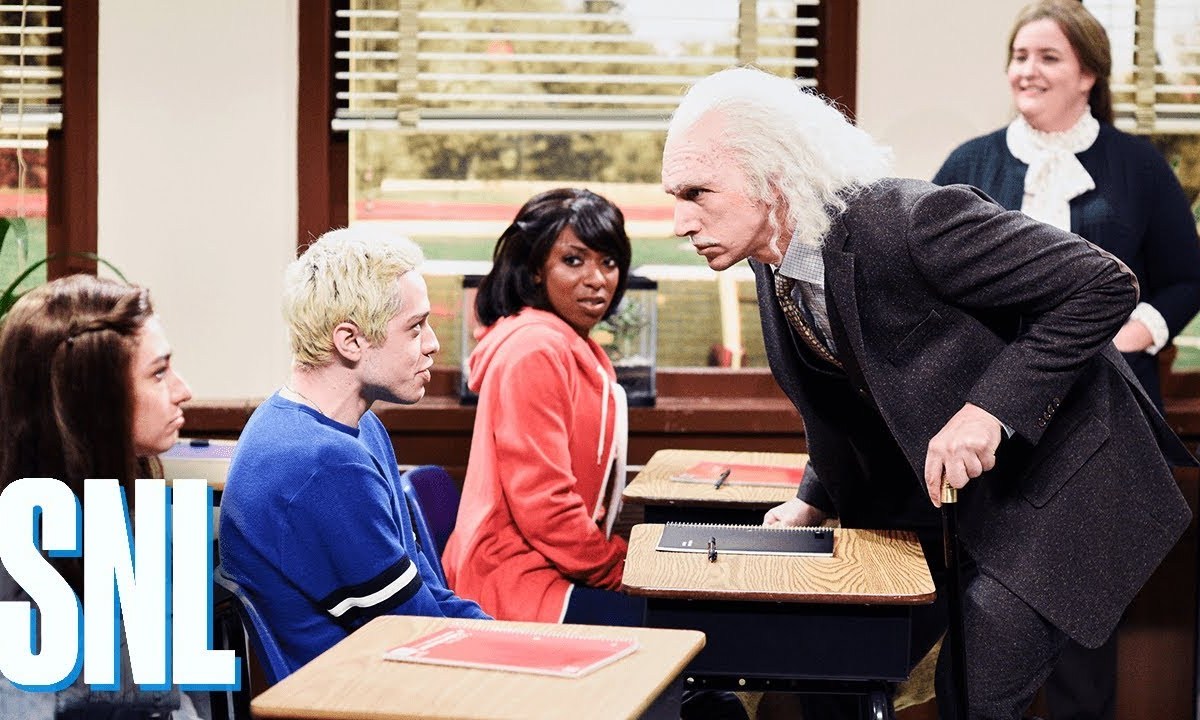
Check out this one by Adam Driver, then we’ll talk about why it’s different for two key reasons.

Sure, there’s a central joke–“crush your enemies!”–but instead of endless repetition we actually get (1) the best acting in any SNL skit ever and most importantly, (2) beautiful writing that surprises you.

There’s so much good dialogue that it’s hard to pick the best ones.

My favorite is, “I was born seven months too early. Incubation technology was still in its infancy, so they placed me in a cast iron pot inside of a pizza oven until I was ripe enough to walk. My bones never hardened but my spirit did. Be strong and crush your enemies!”

Yet the best part about this is the storytelling and writing. Unlike your average skit, there’s some real interpersonal conflict underneath it with real depth and a payoff at the end after multiple setups–the fact the entire class thinks his son is weak; the introduction of H.R. Pickens, his nemesis that he crushed; and finally the revelation that his weak son, rather than being a disappointment, is a rousing success in his eyes.

It all pays off in a few short lines: “I killed you Mr. Pickens! I crushed you into the ground and now your bones turn to oil beneath my living feet! I married your granddaughter, filled her belly with my festering seed and sired a boy! He is my final revenge, H.R.!”

VERDICT

I like it, I love it, I want some more of it.

Seriously. Give us a full two-hour movie about Adam Driver’s oil baron, shot on a budget of “Yo, the director sold his Kia, so here’s the cash we got” and people would watch the hell out of it until there was no hell left.

Why ANNA violates three laws of action movies

I come to praise ANNA, not bury it.

My love for Luc Besson movies is strong. THE TRANSPORTER is beautiful and completely rewatchable, THE FIFTH ELEMENT is creatively wild, and pretty much anything he does is worth checking out.

ANNA is another action movie with KGB spies, the CIA, John-Wick style gun fu and a lot to recommend it. You should fire up the interwebs and watch it when you’ve plumbed the depths of Netflix.

Yet there are laws for action movies, laws carved into our brains and souls by the sweat and blood of Action Movie Gods, and woe unto those writers and directors who willingly break these laws.

ANNA is good.

Unbreaking these laws could have made it great, and there’s always hope for a Special Edition Director’s Cut or whatever.

THE FIRST LAW OF ACTION MOVIES: SAVE THE BEST FOR THE CLIMAX

The exact genre doesn’t matter. Gunslinging westerns, martial arts films, spy thrillers, and Let’s Catch The Genius Serial Killer films all need to do one thing: escalate.

This rule actually applies to every movie and novel. Start strong, but end stronger.

It’s just easier to see and quantify with action movies, because you can do things like count bodies.

What do you want to avoid? The opposite, which would be starting out with your absolute best action scene, then a middling one, and finally an appetizer–or no action scene at all.

That’s basically what ANNA does. There’s a beautiful fight scene in a restaurant that happens early. You’re going to google the thing, so here it is:

Crazy good, right? It makes you expect something even bigger and better at the end.

Except you don’t get that. The climax kinda switches to pure spy thriller instead of action movie, giving the audience get triple-crosses and disguises and MISSION IMPOSSIBLE kinda stuff.

And it feels like a let-down. You’re cheering for our heroine to do the restaurant thing again on the bad guys, except everybody is basically bad and double-crossing each other.

THE SECOND LAW OF ACTION MOVIES: STICK TO ONE TIMELINE

When was the last time you saw a flashback that worked in a movie or book?

They don’t work. I hate them with the fire of a thousand burning suns.

Bad action movies give us a couple flashbacks of the Dead Mentor training the hero and imparting wisdom, right before being killed by gangsters or the villain. Good thrillers avoid flashbacks entirely.

ANNA gives us flashbacks and flashforwards out the wazoo, and it kills the story. Because really what they’re doing is going back to give the audience setups after they just watched the payoffs. It’s not surprising or fun–it’s a lazy way to patch holes in a story. “Hey, here’s three months earlier, which will explain why that just happened.”

No. Just no.

Keep it linear. One timeline, straight through.

THE THIRD LAW OF ACTION MOVIES: GIVE US A VILLAIN

Whatever you think of Tom Cruise, the last MISSION IMPOSSIBLE gave us a great, great bad guy: Superman/The Witcher.

Sure, there was an overt baddie, but he was a puppet of Superman/The Witcher, who was pulling all the strings. And since thrillers are about betrayal, especially spy thrillers, this was a great twist.

ANNA doesn’t give us a villain. There’s no final faceoff and beautiful fight. She slips away.

I’d argue that the most villainous character is Helen Mirren’s, who you can see in the trailer for a bit.

She does all sorts of Very Bad Things, and deserves to get completely Restauranted–but instead, Anna helps her take control of the entire KGB.

So yeah, not a very satisfying ending. Bad guys kinda win while the hero disappears.

VERDICT

Hey, this thing is still fun and completely watchable. Well worth firing up, and there’s nothing wrong with the actors. The lead actor does an amazing job–put her in more movies.

It simply could be much, much better with some structural tweaks. Save the best for last, Luc!