Chapter 7: Fire and Water

Fitness Tips for the Apocalypse

In any real apocalypse, fire and water will be essential, as in, “without them, you will essentially die quicker than the box office of ISHTAR.”

Without a way to make fire, you can’t keep warm at night or cook your food to make sure each bite of bunny or muskrat isn’t full of nasty germs and parasites.

Without a way to find, purify and carry water, you’ll dehydrate and become human jerky for the zombies.

Yet many of the standard ways of making fire and purifying water make absolutely no sense during an apocalypse of whatever flavor, and yes, that includes climate-change causing WATERWORLD, because salt water isn’t what scientists call “potable” and civilians call “drinkable.”

Previous posts:

Firemaking Method Number 1: Flick your Bic

Lighters are built to do this, right? This is their job.

Except lighters run on fuel. I don’t care if you buy the fanciest Zippo in the world or stockpile a case of cheap plastic Bics: you will run out of fuel.

And yes, a Bic + hairspray = a tiny flamethrower, but such a thing is only good against hornet nests and such, and completely useless against zombies, aliens and scavengers.

Verdict: Ixnay on the ighter-lays, for they are unsustainable.

Firemaking Method Number 2: Waterproof matches

These are a staple for hikers and campers. Even if you fall into the river and get them soaked, these reliable suckers will still create a spark, light a campfire and keep you warm at night.

Matches of any sort have the same fatal flaw as lighters: nobody will be making them anymore. It’s not a long-term choice.

Even if you’re tempted to put some in your One Backpack of the Apocalypse and switch to a different method later, this is a bad idea. Practice that other, sustainable method instead.

Verdict: Nopity nope.

Firemaking Method Number 3: The famous fire drill

This is the famous method of making fire when you don’t have a Zippo in your back pocket or a box of matches: You spin a stick really fast, or take off your shoelaces and make this complicated thing to spin a stick even faster while the bottom of the stick sits in a notch of wood.

TV and movies have shown this so often that unless you grew up in an ice cave, you’ve seen it 100 times. Here’s a smart man doing it from scratch, and even he takes a long time just to get the right materials.

There are other ways of making fire that are far easier.

Verdict: Maybe, if you’re desperate and easier methods didn’t work.

Firemaking Method Number 4: Nine volt magic

Bear Grylls uses this. You take a nine-volt battery and touch the working bits to some steel wool and BAM, there’s fire.

There’s a lot going for this method. Unlike other techniques, it’s pretty foolproof. I can’t think of a way to screw this up. And the material needs are small and light. I like it.

Verdict: Even though this is definitely unsustainable over the long haul, this method is so fast, surefooted and easy, it’s worth including as part of a first phase sort of plan, where you need to do things quick and easy before switching to more long-term options. This one is like picking Batman in a fight against Superman, when every ounce of logic says Supes wins, but your heart says nah, Batman is too smart and Superman is too lame.

Firemaking Method Number 5: Flint and steel

Now we’re talking. There are a hundred variations on this, and other metals involved aside from steel, like magnesium, and don’t ask me how all this works except magnesium = fire, which is Good.

Flint and steel is completely portable, reliable and sustainable. You’ll have a knife, so the steel part is taken care of, meaning all you really need to carry around is the flint or some fancy magnesium-type alternative.

Verdict: This is your go-to firemaking method. Learn it, practice it, embrace it.

Firemaking Method Number 6: End the perpetual Quest for Fire with a char box

If you burn some wood, paper, cotton or other burnable shebang, then put it in tiny metal box and screw the lid on, Sir Fire gets separated from one true love, Princess Oxygen, and his little heart is broken. Sir Fire falls into a deep, dark depression—actually, a coma—and goes dormant.

You can put that metal tin in your pack or pocket all day. Once the sun says goodnight and you need a campfire, pull out the tin, open the lid to re-introduce Princess Oxygen to Sir Fire and watch the embers spark as they embrace.

Here’s the thing: keep a healthy char box going and you never have to make fire again. You own it. You control it like the Fremen controlled the galaxy’s supply of spice, and when you control a thing, you can make really bad movies about starring Kyle MacLachlan.

Verdict: Char boxes are the best thing ever. This is your apocalyptic jam.

Protips for moving from “I got a spark” to “I’ve got a roaring fire that will cook our food, boil water and keep us warm all night”

Protip A: Tinder

  • You need tinder, which is not a dating app in the age of evil alien overlords, hungry zombies or Mad Max nuclear wastelands. Tinder is the fluffy, easily flammable stuff that helps transmogrify those first few sparks into a real fire.
  • For tinder that’s absolutely reliable and absolutely free, start collecting dryer lint. I kid you not. It’ll work great.
  • For slightly more advanced tinder that burns better, take cotton balls and dip them in Vaseline.
  • There are other sources of tinder, like dry moss, dry leaves, dry anything.

Protip B: Kindling

  • Kindling is not an app that finds you the best private kindergartens in Manhattan, where tuition costs more than Harvard.
  • Kindling is one step up from tinder. You got a spark, the spark got the tinder hot and bothered, now you need to kick it up a notch with kindling before logs and such will hop on your Fire Train.
  • A great natural answer? Fire sticks. Take a stick and your trusty knife. Carve curls of wood from the stick without separating those curls from the stick. Basically, make yourself a funky Christmas-tree looking thing with all sorts of wood curls. Surface area is your friend.
  • Newspaper and the pages of books are both highly flammable. Nobody will have a use for 10-year-old editions of The New York Times or first editions of TWILIGHT, so this will be a source of kindling for a long, long time.
  • The sap of trees makes great fuel. There are bits on a tree where sap tends to collect, like the intersection of the trunk and branches. Use those bits. GET SAPPY.

Water is life

You can survive without food for weeks. Without clean water, it’s game over, man.

The emphasis is on clean. Unless you’re in a desert, water itself will be pretty easy to get. Drinking it, though, will make you sick.

And there are different kinds of sick, many of which will kill you, some of them involving plain old germs and others involving parasites that make the chest burster from aliens seem like a friendly doggo.

So: purifying water will be a huge deal.

Water Purifying Method Number 1: Purifying tablets

This is the standard method and it’s proven to work. Pop a couple of pills in your dirty water, wait for the pills to work their magic, then drink.

This is a good method if you’re camping or able to stop by REI to pick up more tablets.

During any sort of apocalypse, water purifying tablets will run out about as fast as .22 LR rounds.

Verdict: Unsustainable.

Water Purifying Method Number 2: Filter straws

These are cheap, light and re-usable, the three Holy Grails of this series.

You can throw a dozen of these in your pack to trade with people who ran out of water tablets or didn’t think about water as they went full Rambo.

The only trouble with these filter straws is volume.

Verdict: Definitely put water filter straws in your One Backpack of the Apocalypse.

Water Purifying Method Number 3: Boil away

Boiling water kills all germs and parasites. It also has side benefits, like the option of cooking food.

If you make a campfire every night and boil water, you’d have enough for days. You need a suitable container for boiling water, which means a bush pot.

Verdict: Boiling water whenever you make fire is smart and completely sustainable.

Water Purifying Method Number 4: Natural filters

Say you’re absolutely without gear. No water tablets, no filter straws or pump and can’t make fire.

Natural filters are a good last-ditch option.

Here’s what you do: make layers of straw, grass, sand, charcoal and anything else that might filter out germs or parasitic nonsense. Pour water on the top of your contraption and let it drip through at the bottom.

Verdict: This is slow and imperfect, but a lot better than nothing. You can improve this sort of thing with bits of cloth in between layers.

Water Purifying Method Number 5: Filter pumps

This is a filter straw on steroids: bigger, faster, stronger.

It solves the problem of volume with straws and creates all kinds of safe, filtered water in a hurry.

Verdict: A great, sustainable option. Yes, yes, a thousand times, yes.

Next week: Chapter 8—Blades, Bludgeons and Bad Ideas
Chapter 3: The Hidden Fight

This is the third of five chapters from TRUTH AND LIBERTY: 33 WAYS TO FIGHT LIES, PROPAGANDA AND OPPRESSION.

Read the first chapter here and the second chapter here.

Chapter 3: The Hidden Fight

There’s a different battle happening behind the curtain. Oppressive regimes want the press and public to be distracted by manufactured fights, brazen lies and Fear of the Other while they wage a hidden war against independent institutions, personal freedoms and the rule of law.

This chapter is about that hidden fight and how to organize against it.

Step 15. An honest look at the landscape

It’s a myth that nations of today are static and unchangeable. During times of economic upheaval and war, solid democracies have slid to authoritarianism, while tyrants who seemed like invincible monoliths have fallen to the power of average people fighting to govern their own fates.

There are three basic forms of government:

  1. Rule of the Many
  2. Rule of the Few
  3. Rule of the One

For thousands of years, Rule of the One was the default. Whether you called them king, queen or warlord, the essential idea was the same: absolute power concentrated in the hands of a single person.

Lies, propaganda and oppression are the tools of tyrants. While the technology may be new, kings and dictators used these strategies and tactics for thousands of years.  Because if you control what people hear and see, you can control what they do.

Rule of the Few isn’t necessarily gentler, with modern autocracies often switching to this form long after kings and emperors fell out of fashion. Modern, mixed system can be just as oppressive as the absolute monarchies of old.

There are still countries where insulting the ruler can mean a prison sentence, where journalists who write critical stories are harassed, jailed or assassinated. And where opposition leaders who dare to treat elections as real contests face sham trials and stuffed ballot boxes.

Look at the chart and assess of where your nation stands:

Is there free speech or censorship? Do you have independent media or state-owned propaganda?

Are elections fair or rigged? Is the economy based on merit and competition or connections and corruption?

Do people have legal rights and liberties along with the rule of law or is the legal system beholden to the regime and the Rule of Man?

Step 16. Identify your audiences, then listen

The first rule of rhetoric is, “Who’s your audience?”

In democracies, it’s typical to think you only need 50.1 percent of the population to win. That’s only true when elections aren’t rigged.

With an oppressive regime, you must reach out to every possible audience, to make a clean break between the rulers at the top, their cronies and the other 99 percent of the population.

That’s because even if you’re fighting for truth, liberty and democracy, saying those words won’t truly resonate with a wide audience. Those ideas are lofty and don’t immediately connect with everyday life.

Listen to a wide swath of people—not just those who already agree with you—to find out what bothers them, what they fear and what want.

By their nature, oppressive regimes create strict rules that annoy the people they rule. Try to identify small, everyday annoyances faced by each major audience. Organize actions that target those symbolic fights that annoy each audience.

Blue-collar workers—This is the base of most autocratic regimes. They work hard just to pay the bills. Is the regime following through with their promises? Have things gotten better or worse—and what kind of dreams do they have for their children?

Business owners—Corruption doesn’t just happen at the highest levels. An oppressive government often requires average people and businesses pay extra to government officials every step of the process. Nobody enjoys being extorted like this.

Seniors—Seniors may remember personal freedoms they enjoyed, and fought for, decades ago. They might fear having their pensions and health care being slashed. Finally, they may worry about their children and grandchildren being abused and oppressed by the regime.

Kitchen table economics—Oppressive regimes are willing to hurt the overall economy to enrich themselves and their cronies. They don’t pay the price for this. You and your neighbors do. Corruption means artificially high prices and shortages of basic goods. It also means corporations with connections feel far more free to poison the environment or rip off their customers without fear of being held accountable.

Well-educated professionals—No modern society can function without engineers, professors, doctors, lawyers and other professionals. College students, professionals and skilled bureaucrats are likely to have travelled or studied abroad and tasted real freedom. Censorship, corruption and oppression will grate on them, no matter what their political views are.

Targets of the regime—Members of religious, ethnic or sexual minorities will face the worst smears and oppression.

The general public—Paranoia come with a price. Nobody likes the feeling that their email, phone calls and private conversations could be listened to by the secret police, or that they could be thrown in jail for something they said that offended rulers. And censorship is no fun. People today enjoy music, books, TV shows and movies from around the world, if not the internet itself.

Autocratic regimes will block or censor anything they see as a threat. Something as simple as leaving paperback copies of banned books in public places is a powerful symbol of rebellion and freedom.


Still another danger is represented by those who, paying lip service to democracy and the common welfare, in their insatiable greed for money and the power which money gives, do not hesitate surreptitiously to evade the laws designed to safeguard the public from monopolistic extortion.

Their final objective toward which all their deceit is directed is to capture political power so that, using the power of the state and the power of the market simultaneously, they may keep the common man in eternal subjection.

They claim to be super-patriots, but they would destroy every liberty guaranteed by the Constitution.

They are patriotic in time of war because it is to their interest to be so, but in time of peace they follow power and the dollar wherever they may lead.

―Vice President Henry A. Wallace (1941-45)


Step 17. How persuasion works

Persuasion is tough and takes repeated personal contact.

You can get a message out with images, words or film. Truly changing somebody’s opinion requires listening to their fears and dreams, their ideas and questions, and talking through things over time.

There are three types of audiences:

  1. Hostile
  2. Neutral
  3. Friendly

And there are three stages to persuasion:

  1. Change their mood
  2. Change their mind
  3. Get them to act

Use these concepts as tools for organizing and targeting your message.

Neutral audiences: This is the only situation where you  go through all three steps of trying to change their mood, change their mind and get them to act.

Hostile audiences: It’s a victory to simply change their mood, so throw away the last two parts of the standard speech or message and consider it a victory to simply change their attitude and mood.

Don’t expect to flip audiences all the way from hostile to friendly. It’s a victory to move any audience one step.

Friendly audiences: Throw out the first two thirds of your standard speech or outreach effort. They already agree with you. Focus all of your time on figuring out ways to partner up and get things done.

Every day in countries unfortunate enough to be ruled by a lone dictator, people are constantly subjected to the Supreme Leader’s presence. …He begins to permeate your psyche and soul; he dominates every news cycle and issues pronouncements — each one shocking and destabilizing — round the clock.

He delights in constantly provoking and surprising you, so that his monstrous ego can be perennially fed. … Somehow, he is never in control of himself and yet he is always in control of you.

—Andrew Sullivan

Step 18. Match your message to your audience

Friendly audiences should be identified and recruited to get the work done.

Neutral audiences are people on the sidelines, not supporters of the regime but afraid of taking steps that might get them in trouble. Or they’re simply busy trying to pay their bills and survive.

With a neutral audience, you’re trying to move them to friendly.

They may not commit fully to the fight. Any sort of support, though, is better than sitting on the sidelines.

Hostile audiences include average who support the regime, police, soldiers, judges and bureaucrats carrying out the ruler’s orders.

No regime can survive if their base of support among the working class turns against them.

And even the most repressive ruler is powerless if the opposition convinces local police, judges and soldiers—your neighbors and friends—not to obey unjust orders to attack or imprison peaceful civilians.

The most powerful messages won’t come from friendly audiences, but from formerly neutral and hostile audiences who explained what changed their mind.

When you’re targeting audiences, think of that journey and how you’d want to be approached and persuaded.

It’s not with lectures or a flood of facts, but through listening first and using powerful narratives.

Step 19. Pick a simple symbol

If you don’t pick a symbol and do some branding work, the regime will brand you.

Successful political and opposition movements tend to pick a common object as a symbol that any person would grab from their home and use to show their support. In some countries, it’s been a color.

Common objects that became symbols include:

  • Brooms (India)
  • Umbrellas (Hong Kong)
  • Hats with cat ears (women’s marches worldwide)

Keep the symbol of the opposition simple, non-threatening and easily available to anyone.

Step 20. Organize on multiple fronts

Every oppressive regime has pillars of support that they rely upon, with some stronger than others.

Identify and organize on each of those fronts:

  • Defending and supporting the free press
  • Economic campaigns such as #grabyourwallet to put economic pressure on propaganda outlets, fake news and corrupt businesses supported by the regime
  • Pressuring your local, regional and national political leaders and officials
  • Supporting an independent court system with individual liberties and constitutional rights—the Rule of Law instead of the Rule of Man
  • Pushing for free and fair elections

Step 21. Force multipliers

You don’t need to have a background in journalism or rhetoric to understand and use simple, fundamental concepts of message.

Simple beats complicated—The simplest narrative wins. If you’re explaining, you’re losing.

Whoever attacks the status quo wins—Oppressive regimes try to win this debate by generating Fear of the Other. Reframe the debate by attacking the status quo and all the ways the regime makes life hard on everyday people.

Swing for the fences—The animal rights group PETA relies entirely on earned media. They take wild risks knowing that most of their public relations efforts will fail. Because it doesn’t matter. All it takes is one grand slam success to get massive media coverage.

Keep trying different things and don’t fear failure.

Repetition can create reality—One person saying the same thing three times is just as effective as three different people saying that same thing once.

Repetition is also key to getting your message to cut through all the noise.

Keep repeating simple messages. Over and over.

Be where your audience is—Decades ago, there were only a few major TV stations and radio networks in most countries.

Today, audiences are fragmented. Some people get their news only from the internet on their phone.

Others listen to the radio, watch cable TV news, only read newspapers or get their news from social media.

Dominating your favorite platform won’t win the day, no matter how skilled you are in that area.

To reach every audience, be where they are.


Next week—Chapter 4: Winning the War on Truth

Fitness Tips for the Apocalypse: Chapter 6—Suit Up with Seriously Practical Armor

Fitness Tips for the Apocalypse

After an Angry Space Rock slams into the Atlantic, aliens enslave us or zombies rise up, it would be a big mistake to walk around in (a) sweat pants and a T-shirt, (b) a three-piece suit or (c) shorts and flip-flops.

A smart choice would be some kind of armor.

Previous posts:

But what’s practical?

Let’s go through every possible option and try to poke fatal holes in them.

Option No. 1: If it’s good enough for the Marines, it’s good enough for me

Soldiers today wear advanced helmets and armor meant to protect them in war zones. So you’d think this choice would be good for any sort of apocalypse.

Here’s the trouble with that thinking: real military armor is quite heavy, hard to find and tough to replace. And you need to replace the ceramic plates and Kevlar vests every time they get hit with bullets, because each hit damages the armor.

Replacing military-grade armor for you and your friends would be incredibly hard. Everyone will snatch this stuff up, get into firefights and ditch their ruined armor. Maybe if you were really good with a heavy-duty sewing needle, you could keep on repairing your armor with the remains you scrounge at old battlefields. It’s just not likely.

Even if bullets bounced off military armor without leaving a scratch, the heavy weight makes this a non-option. You’ll be hiking, hunting and sometimes sprinting through rough terrain. It would slow you down too much. Even slow zombies would go nom-nom-nom.

The other problem is despite the good protection against bullets, military armor isn’t meant to protect against melee weapons like spears, swords, axes and sledgehammers. A real apocalypse would last for decades and with each passing year, the danger from firearms would go down exponentially as bullets ran out and guns broke down while survivors became more and more skilled with making and using things to stab you or bash your skull in.

Verdict: Ixnay on the military armor.

Option 2: Get medieval in the ultimate way with plate mail

It’s completely true that once an apocalypse hits, factories will stop making bullets and sending them to Big 5, Wal-Mart and Cabela’s.

It’s also correct to predict that everyone with guns and bullets will use them up pretty quickly, shooting at each other, and without hospitals and doctors, boring old non-fatal shots to the arm or leg will turn into deadly infections like gangrene.

So we can safely modify the old saying, “The loser of a knife fight dies in the street; the winner dies in the hospital” and make it into, “The loser of a gunfight dies in the wasteland right away, while the winner dies about two weeks later.”

That seems to point us toward medieval armor, designed to stand up against blades, bludgeons and arrows. And the ultimate in medieval protection is a suit of plate armor.

Fire up YouTube to watch modern-day knights wearing shiny plate whack each other at Renaissance Fairs (unsharpened swords) and LARP’s like Darkon (foam swords and drama). You’d think this would be a great option, with everybody else wearing half a shoulder pad on top of their tattered leather coat while you’re strolling around like a human tank, untouchable.

Here’s the problem: not only is this stuff hard to find, it’s mostly theater-grade junk, for cosplay fun, and even the good stuff has to be tailored to your exact dimensions.

Want to know why knights clumsily clank in the movies? Because they don’t spend the money to property fit the armor to every extra. The star, sure. Everybody else, forget about it.

Properly made and fitted plate armor would, actually, be pretty cool in a fight. It’s just you and your friends won’t stumble upon it. This stuff is expensive. The only way this might work is if you all spent a ton of money, tomorrow, to commission suits of armor for every person you expect to be alive and with you if everything goes south.

It’s also crazy heavy and hot. You wouldn’t want to wear this stuff all day. So you’d be carrying it in your backpack, except no suit of armor would fit in your backpack. The fact that it would take you ten minutes to unpack and put on your armor is a fatal flaw. There isn’t a single zombie, alien or scavenger who will wait for you to strap it all on.

Verdict: No, you will not be a shiny paladin in a suit of plate mail.

Option 3: Chain mail

This is lighter than plate, and doesn’t need to be tailored and fitted so carefully.

Three flaws make this a bad choice.

First, functional chain mail is hard to find. Most of what’s out there is for show and wouldn’t stand up to a blow in a real fight. Watch the video for the difference between “butted mail” and “riveted mail” if you want to get all technical.

Second, while it’s lighter than plate mail, it’s still heavy enough to be a problem and also NOISY, which is a bigger deal. Because there’s no point in advertising your exact position to every zombie, alien or scavenger within earshot. You might as well tie a cowbell around neck, Captain Clinkypants.

Third, chain mail is still hard to repair. Those small links take skill to make even today. When your chain mail gets damaged during any sort of apocalypse, there won’t be a blacksmith around to fix those tiny links. Chain mail will inevitably get damaged by battles—or rust—until it falls apart.

Verdict: Chain this to the Not Gonna Happen pile.

Option 4: Hard leather armor

Hard leather is a great option, offering lightweight protection against cuts, scratches and melee weapons.

You can boil leather to make it harder, or get your samurai on with lacquered plates of leather, which make it easier to move than a single solid breastplate of steel, leather or whatever substance you fancy.

With some practice, you can tan leather and make repairs, or craft your own leather armor, bit by bit.

Verdict: A definite option that you can repair and replace, and you’ll either be trapping rabbits and hunting deer or starving, so you may as well learn to tan leather and stitch together rabbit fur for insulation and padding.

Option 5: Pillage the sports section

Football helmets are a solid option, and shoulder pads are great protection against bludgeons and blades. Soccer shin guards make great sense, since they’re light and effective.

Stocking up on this stuff now would be 1,000-times cheaper than trying to buy military-grade stuff or commissioning a blacksmith to make you a suit of plate armor.

Sports equipment is also common and should be easy to scrounge for, if you need to replace damaged items or equip a new friend.

These items are also all modular, so you can mix-and-match what fits and works with other types of armor, like hard leather.

Verdict: A great option that’s cheap, plentiful and plays well with others.

Option 6: Motorcycle and mountain bike armor

This is a beautiful option, cheap and rugged. You can find full upper-body motorcycle or mountain bike armor online starting at $35.

It’s perfect for what we’re looking for, with protection against abrasion and blunt impacts.

I could not love this more.

There are even full, functional sets of motorcycle armor made to look like a Batsuit, or other things. These sorts of suits aren’t costumes. They’re meant to be used on bikes and offer full-body protection. They’re just (a) a bazillion times more expensive than your average set of bike armor and (b) kinda insane, as in some people may see you and cower in fear while others will think you’re a giant dork for pretending to be Batman, a Predator or whatever else they have out there.

The one thing I’d toss as an option? Motorcycle helmets. The weight alone is bad. Worse is the effect on your vision and hearing.

Verdict: Motorcycle armor is our best bet so far. Plus, you may be riding around on motorcycles (temporarily) and mountain bikes (permanently). Go for it, just don’t spend a ton of extra money to look like the Dark Knight, and ditch the helmet.

Option 7: Steve Rogers was onto something, right?

Shields seem like a smart idea. When things go wrong, which they will, I’d want some sort of shield.

The trick is, the only shields you can easily make are from wood. Heavy and awkward.

Even in medieval times, everybody figured out wooden shields didn’t last long. They braced those wooden shields with metal. And sure, you could find enough scrap metal to bolster a wooden shield you made. It would just be seriously clunky.

A better thought would be an all-metal shield, like Captain America’s, which should be thinner and lighter than a bunch of wood with metal supplements.

Though your shield won’t fly back like a boomerang, it could easily protect you.

Verdict: I’d give this thought as an option, though this is the sort of thing you’d want to buy or build now, instead of trying to craft a shield when you don’t have access to stores and power tools. The only real caveats are (a) get enough for your friends, (b) keep the shields light but strong and (c) plan ahead how you’ll complement serious shields. Because if you invest in this option in terms of money today and weight tomorrow, take full advantage of it by, for example, matching up your shields with spears. 

Option 8: These boots are gonna walk all over you

Honestly, you want to prioritize boots that are built for hiking through rough terrain while taking a beating.

If you pick some sort of menacing, overbuilt War Boots, any benefit you get in combat would be lost by the added weight.

Hiking boots are a basic, everyday choice and easy to find or scrounge. They’re tough and light.

Work boots are built tougher and heavier. A trade-off there.

Combat boots are the best, since they’re made for long marches and built to stand up to war zones. They also usually have steel toes, which is the big selling point for work boots. You want steel toes. NO MATTER WHAT.

Verdict: Hiking boots, combat boots or work boots, especially if you can get steel toes.

Option 9: Gauntlets

During a visit to Germany, we bought a knight’s gauntlet, just for fun. It’s functional, and you wouldn’t want to get punched by somebody wearing it. But seriously, the thing weighs a ton. You would not wear one of these for five minutes, much less a pair of them all day. This is the sort of thing you stick on a shelf and let guests try on.

A better option: tactical gloves or steel-plated motorcycle gloves.

Tactical or hard-knuckle gloves are light, tough and built for what we want. They’re also like having built-in brass knuckles.

Even tougher: steel-plated motorcycle or dirt bike gloves. Love it.

Final notes

(1) You’ll probably have to add straps to make sure the different parts stay together and none of your armor and gear clatters and clangs as you walk. The best way to win fights is to be sneaky, quiet and fast, so you don’t get in fights at all.

(2) Once you’ve assembled all the various bits of armor, go all Christian Bale in BATMAN BEGINS and spraypaint your motley collection the same color (can’t go wrong with black) so people don’t see you and think “beater car painted seven different colors.” Instead, they’ll see a team of stealthy, deadly wraiths they should avoid.

(3) Modify the armor of everyone in your party with some sort of symbol that shows you’re all on the same team, and use that symbol to mark territory and claim any sort of mayhem, even if you didn’t cause it, so people learn to avoid it.

These are NOT the symbols your looking for, though I would be a little confused and afraid of a group that kept pie charts everywhere.

Next week: Chapter 7—Fire and Water

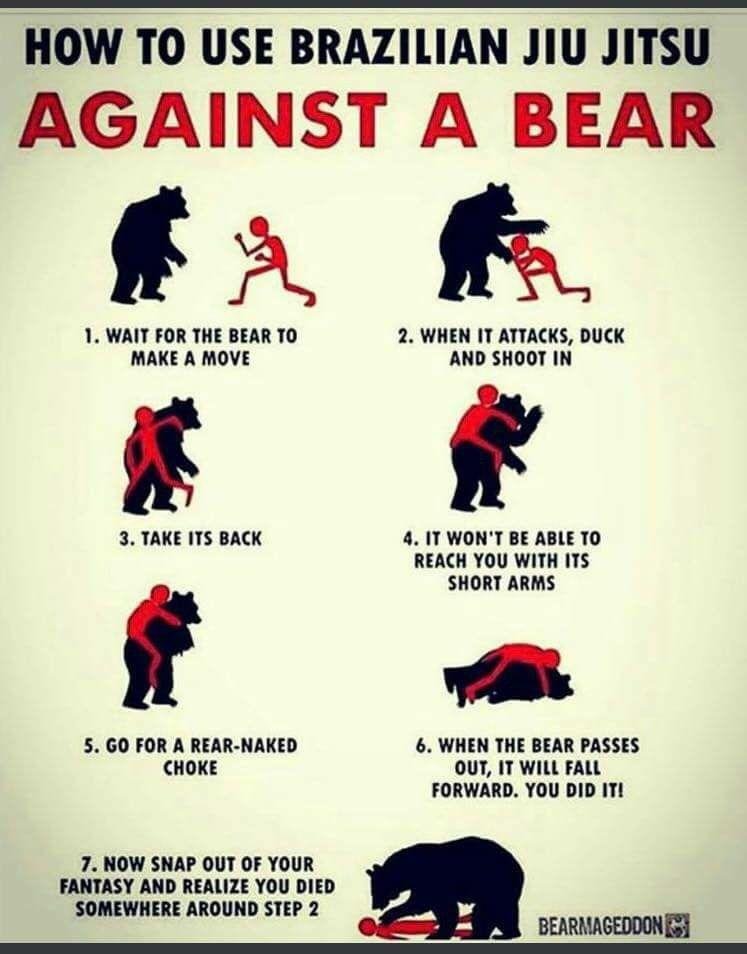
Proper use of jiu jitsu against a bear

I have bears and cougars and other Critters Which Might Eat You in my backyard. So I was curious about this infographic.

Perfect technique.

Chapter 2: Dismantling a Wall of Lies

This is the second of five chapters from TRUTH AND LIBERTY: 33 WAYS TO FIGHT LIES, PROPAGANDA AND OPPRESSION.

Read the first chapter here.

Chapter 2: Dismantling a Wall of Lies

Tyrants and would-be tyrants lure people into a debate about the past, which is politically weak.

They use a wall of lies to generate Fear of the Other, then try to capitalize on that manufactured fear by portraying themselves as the only thing strong enough to fight those threats.

The instinctive response of trying to fact-check and rebut these lies draws the press and public into a trap. Here’s why:

  • It’s impossible to rebut the sheer volume of lies.
  • Rebutting those lies requires repeating them and giving the press a conflict to write about, thus spreading the lies even more.
  • And finally, facts alone aren’t good at persuading people.

This chapter is about avoiding that trap and effectively countering a Wall of Lies.

Step 8. Focus on deeds, not words

Being caught in a brazen lie harms the reputation of a normal leader, so lies are mistakes to be avoided in modern democracies.

Authoritarian regimes don’t see lies as mistakes. They use lies as weapons of mass distraction. Instead of avoiding lies and being ashamed when they’re caught, tyrants create a Wall of Lies for use as a shield and a bludgeon.

The goal is to distract the press and opposition with lies as shiny objects while the regime is busy doing things they don’t want you to notice.

This is why authoritarians deploy a stream of headline-grabbing smears, shocking statements and personal attacks against any who dare oppose them.

You can’t keep up.  Don’t see the wall of lies as individual facts to verify or debunk. View each lie as a clue to a regime’s intentions about who they’re targeting next.

If they’re lying about a religious minority, know they’re trying to generate support to target that minority next.  Never take the bait and get stuck in a debate about the past. Instead, focus on the damage the regime is doing to real people, to individual freedom and to the country itself.

Three kinds of debates

  1. Debates about the past deal in facts and assigning blame, often in a court of law. Debates about the past aren’t powerful in the political sense, because most people have a particular frame. If they hear new facts that are contrary to their frame, they don’t reject their long-held beliefs—they reject those new facts.
  1. Debates about the present are about values, decisions you can’t make by weighing evidence or comparing numbers. Debates about values are generally used when talking about social issues. Values are important, but values alone won’t persuade.
  1. Debates about the future are about risks versus reward, hopes versus fears. These are the most powerful political debates and impossible to fact-check, because the future is always in the distance.

Step 9. Let the media and fact-checkers handle lies

The natural reaction to outright lies is for the opposition to cry foul and correct the record.

Doing so, however, is shockingly ineffective. It takes a great deal of time and energy for the press or opposition to debunk a single lie. Meanwhile, it costs an undemocratic ruler mere seconds to generate a pile of new untruths.

Even if you “win” the debate about one of these lies, you haven’t really won a thing except the chance to waste your time.

An opposition can’t get trapped trying to debunk this sea of lies. Average people and the political opposition can’t become consumed with this task.

Leave the job of correcting lies to those with the credibility and resources to do it: fact checkers and the free press, including media based outside the country where the regime has no leverage.

Instead of referring to individual lies, focus on the regime’s credibility as a whole. Point to the long history of lie after lie as proof that you have no reason to believe the regime will tell the truth about anything at all. Ever.

While the press and fact-checkers do their job, do your job: spreading the message that it doesn’t have to be this way. That instead of lies, propaganda and oppression, the people could be free.

That message should focus on the future, because a fight about the fast—about facts—is inherently weak for political purposes.

A debate about the future is the political high ground. Stay there.

Step 10. Never play defense

The targets of lies or a smear campaign shouldn’t spend their energies debating the facts and defending themselves. Taking this bait means you accept the autocrat’s preferred narrative: Are you guilty of these attacks or not?

A person or group defending itself does so from a weakened ethos—credibility—because they have a self-interest in that debate.

Anyone being attacked or smeared by the autocrat should let a third-party defend them.

An independent source has a stronger ethos, since they don’t have any self-interest in the matter.

While others defend you or your group, stick to your message. Know you’re only being attacked because your message is working.

Step 11. Mock  policies instead of personalities

The campaign of lies and propaganda meant to boost the image of the autocrat—to make him look strong—are often countered with mockery from the opposition and the media.

Autocrats tend to be bigger than life and easy to mock. Yet mockery is not a magic bullet.

Throughout history, authoritarian leaders were often seen as clowns or jokes who’d never had a chance of holding power.  Mockery didn’t stop them from gaining power, and attacks on their personality won’t drive them from power.

Economics professor Luigi Zingales points to the example of billionaire and three-time prime minister Silvio Berlusconi, who won elections when opponents focused on his bombastic personality and many scandals. Trust me, you don’t want to know what “bunga bunga” parties are.

It’s only when opponents attacked Berlusconi on the issues—policies instead of personality—that they kicked him out of office.

Mocking policies instead of personalities is also smart as a long-term strategy, because every tyrant will eventually pass on and be replaced by a successor using the exact same power base, tactics and policies.

Step 12. Turn the strength of tyrants into weakness

You have to do this literally. Relentlessly.

Without getting distracted by the stream of brazen lies, manufactured conflicts and distractions.

Authoritarians can win the message war by distracting and trap the opposition into debating about facts—a debate about the past— while they’re busy exploiting fear about the future and rigging the system to grab more power and wealth.

To win, you need to convert supporters of the regime into opponents.

When confronted by facts that don’t fit their narrative frame, they won’t reject the autocrat’s dominant frame and story—they’ll reject the facts.

The only way to win is to provide a different political narrative. A story that explains what causes problems and how you fix them.

No matter what issue is being debated, put it in the same frame: the ruler is a cheater who rigs the system because he’s too weak and cowardly to win a fair fight.

Instead of being the savior of the nation, the autocrat is the cause of problems.

The solution is to restore the rule of law and strong individual rights instead of a police state with all power resting in the hands of the few or the one.

Here are sample frames to change the narrative:

  • THE WAR ON TRUTH—The ruler rigs the system with lies, censorship and propaganda because he’s are too weak and cowardly to win a fair debate. Our country won’t be truly free until we have free speech, a free press and the right to protest without being arrested.
  • ELECTIONS— The ruler is a cheater who rigs elections because he’s too weak and cowardly to win a fair election. We won’t be a free country until we have free and fair elections.
  • LAW AND ORDER—The ruler cheats and rigs the police, intelligence agencies and courts because he’s too weak and cowardly to win according to our constitution. It’s not about making us safe—it’s about making him safe. Protecting the people will only happen with police and judges who obey the law instead of a single man who’s above the law.
  • THE ECONOMY—He’s a cheater who rigs the economy for himself and his cronies because he’d rather cheat and game the system than work hard for his money like you and I have to. He’ll plunder the country until we restore fair competition and we reward hard work and merit, not corruption and kickbacks.

Step 13. How stories can fight Fear of the Other

Autocrats use a twisted, extreme form of populism, giving angry masses a simple and powerful attack on the status quo.

That attack is a political narrative, a story that explains what causes problems and how you solve them. It’s based on fear and lies yet quite effective.

In this false narrative, the source of all problems are traced back to the Other—typically immigrants, minorities, intellectuals and foreigners—and since the nation is under attack, the solution is a strong leader to protect the people.

An autocrat will continually refresh and expand the list of Others to keep the population sufficiently afraid and compliant.

The secondary targets of undemocratic rulers are any individual or institution who they see as a threat to absolute power.  These targets include journalists, judges, lawmakers, opposition leaders and protestors.

If there is no real foreign threat, autocrats will often invent threats through lies and propaganda—or by ginning up conflicts with other countries, especially smaller, weaker nations they can bully.

Fear of the Other works because it’s visceral, primal and a debate about the future. You can’t fight this fear with facts, numbers or arguments.

The best way is through sharing stories about real people and building bridges, because Fear of the Other is really a fear of the unknown. In the end, the regime is trying to dehumanize classes of people while turning them into scapegoats.

Fight back with stories about real people.

Find and spread stories about real people from targeted groups who proudly serve as soldiers, police officers, teachers, doctors or nurses. Share photos or video of these people with their extended families—from infants to great-grandmothers—to dispel the lie that they’re somehow inhuman or a  threat to the nation.

The most powerful stories show people from completely different backgrounds, religions and ethnicities meeting and becoming friends.

The most effective responses to attacks on Muslim mosques and Jewish synagogues in North America have been leaders of other faiths rallying to help.

Step 14. Build bridges

There are good lessons from the debate on marriage equality in the United States and other nations.

One of the most effective tools that changed minds wasn’t a slick slogan or an advertising campaign.

What helped turn the tide were gay and lesbian people brave enough to come out to their friends, co-workers and family.

Because once most people had an aunt, son or neighbor who was gay or lesbian, Fear of the Other faded and attitudes quickly changed.

It’s impossible to dehumanize entire groups of people when everybody knows members of that targeted group.

Another key message is the story of transformation, with somebody who used to fear a persecuted group and believe the regime’s lies sharing how they changed their mind. It’s a story about building bridges, one person at a time.

The good news is this is something that every person can do.

Whatever group is being smeared and persecuted, the best way to resist is to reach out and build bridges.

Not with people who already agree with you, but with people who support the regime and may have never met people they’re being asked to hate.

Those new friendships happen at the local level.

And there’s nothing a regime can do to stop people from sharing coffee, chatting during their kids’ soccer game or sharing a meal in their own home.


Next week—Chapter 3: The Hidden Fight

Download the full PDF by clicking here or on the photo below. The guide also has a permanent home at 33ways.org

Fitness Tips for the Apocalypse: Chapter 5—Yes, Any Sort of Apocalypse Means Looting the Mall

Fitness Tips for the Apocalypse

Looting the local mall is a staple of zombie and disaster movies, and yes, the idea is not only great entertainment on the big screen, it also (2) makes good sense if a real apocalypse happened.

HOWEVER: You’d have to do this right. Because there are real troubles standing between you and driving a stolen U-Haul down the aisles of Home Depot.

Challenge No. 1: You will not be alone

No matter what flavor apocalypse you favor—a giant space rock plowing into the Atlantic, aliens landing to make us mine unobtanimum all day, a supervolcano goes boom or zombies (fast or slow) rise up—everybody is going to have the same idea: loot the local mall.

Things will kick off long before police and civilization breaks down. Store will be jammed with people buying up essentials: canned food, batteries, blankets, generators, ammo, everything.

And yes, this will make the worst excesses of Black Friday look like a holiday.

It will get more interesting after the apocalypse of your choice, with survivors roaming those same stores, except they’ll be pack shotguns instead of VISA cards, and they’ll be a lot more motivated to fill their shopping cart.

Long after whatever Extremely Bad Thing turns things upside down, scavengers will set up camp close to shopping malls and stores. Truly organized and ambitious bands of survivors might turn the local mall into their actual base. Because why commute?

Challenge No. 2: How do you plan on carrying all that, tough guy?

Say your local Home Depot didn’t get emptied by shoppers before the Extremely Bad Thing and is somehow clear of zombies and scavengers after everything went Mad Max.

Let’s pretend there are perfect conditions and nothing to worry about. The store is yours, so go wild.

Here’s the trouble: how will you haul away all that loot?

Not on foot, especially if you’re already carrying all your wordly possessions in a backpack.

Not on bicycle or horseback, though those two options make a lot of sense.

You’re gonna need something bigger.

Challenge No. 3: Where to stash it

If you manage to cart off all sorts of valuable stuff without suffering any casualties, great. The next problem is keeping it safe from the elements and other survivors.

Wherever you hide the loot has to be a long-term solution, since staying in a permanent bunker or fortress isn’t a smart option. Even the best-stocked bunker will eventually run out of MREs and water.

You’ll need to travel with the seasons and follow migrating food sources.

So: how can you loot a mall, then stash all that stuff somewhere safe enough that if you head south for the winter, all those valuable treasures will still be there when you return come spring?

Challenge No. 4: Which stores should you prioritize, and what should you take?

Even if you hotwired a fleet of U-Hauls and RV’s, there’s no way you and your friends could possibly loot an entire mall. There’s too much stuff.

You have to pick the most essential items.

When everything is free for the taking, that’s a hard decision to make. The temptation will be to throw anything you like into your shopping cart.

This is something you’ll need to decide, as a group, before you go in there. And this has to be a team effort. A lone wolf has no shot of pulling it off, because there will be other groups looking to do the same thing. And they won’t want to share.

A practical plan

Rule Number 1: Looting an indoor shopping mall is suicide

There are good reasons to go ixnay on the oppingmallay, despite the fact it has a Regal Cinema while strip malls and big box stores tend to have a Panda Express.

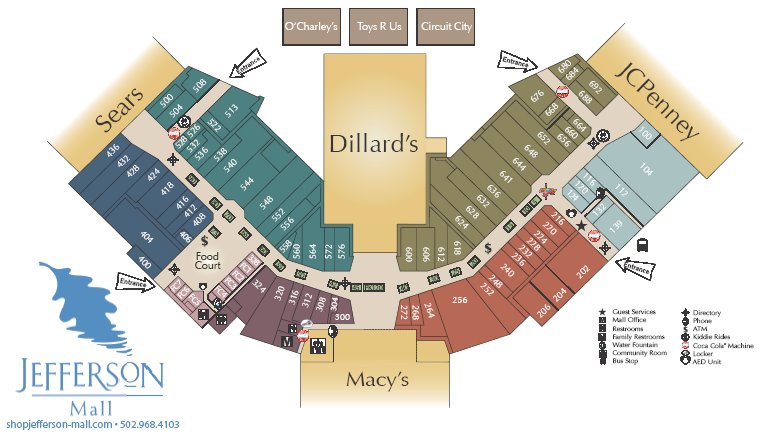
Take a look at this floor plan for an average indoor mall:

That’s a maze, with far too many entrances, exits and hiding spots.

You’d need an army to secure every entrance before clearing out each tiny store. Only then could you move on to Sears (no apostrophe, don’t ask why) and Macy’s (yes apostrophe, because grammar).

Rule Number 2: Go for big box stores and strip malls

Big box stores and strip malls are much easier to secure than an indoor mall. Plus we can do them in sequence instead of putting our eyes on swivel for zombies.

With your average big box store or strip mall joint, there’s just one main entrance and a back door with a loading dock. Let’s back up the bus on that sentence for a second: loading doooock. Oh yes.

Big Box stores also specialize, which gives us more selection.

Rule Number 3: Get your Mad Max on

For a dozen good reasons, relying on a motor vehicle during any sort of apocalypse is an Achy Breaky Big Mistakey. HOWEVER: This is one situation where you absolutely, positively have to get behind the wheel, at least temporarily.

Sedans aren’t a good choice. Can’t hold much loot.

Station wagons and SUV’s are better.

You’d think a semi would be perfect, except most people don’t know how to drive a semi and you need a haul your loot up a long ramp to get it inside.

Best bet: U-Haul trucks. There common, they’re easy to drive and they’ll hold a lot of stuff. Grab your friends and nab two or three of these before heading to the shopping center of choice.

Rule Number 4: Shopping carts are old and busted; handcarts and wheelbarrows are the new hotness

Speed is essential. You want to load up on treasures, roll them into your borrowed U-Haul, stack them neatly and skip back inside the store.

Shopping carts are the enemy of speed. They make it easy to put things inside and hard to take out.

This is why your first store should be in the Home Depot / Lowe’s family, where you can grab handtrucks and wheelbarrows right off.

Rule Number 5: Take what others don’t want

Here’s a short list of unsustainable items people will fight over to grab first, compared to the smart, sustainable alternative that you and your friends will take instead:

Unsustainable     Sustainable and smart
Flashlights, batteries and generators Lanterns and kerosene
Guns and ammunition Bows, crossbows and slingshots
Chainsaws and power tools Regular saws and hand tools
Lighters and matches Flint and steel
Canned food Wire, cordage and traps
Fishing poles Nets
Perishable food and vegetables Seeds to plant

Rule Number 6: Improve your start by starting at a home improvement store

The first stop should be a hardware/home improvement store like Home Depot or Lowe’s.

Here’s why: carrying things by hand stinks. Begin in the garden section to grab wheelbarrows and hand trucks.

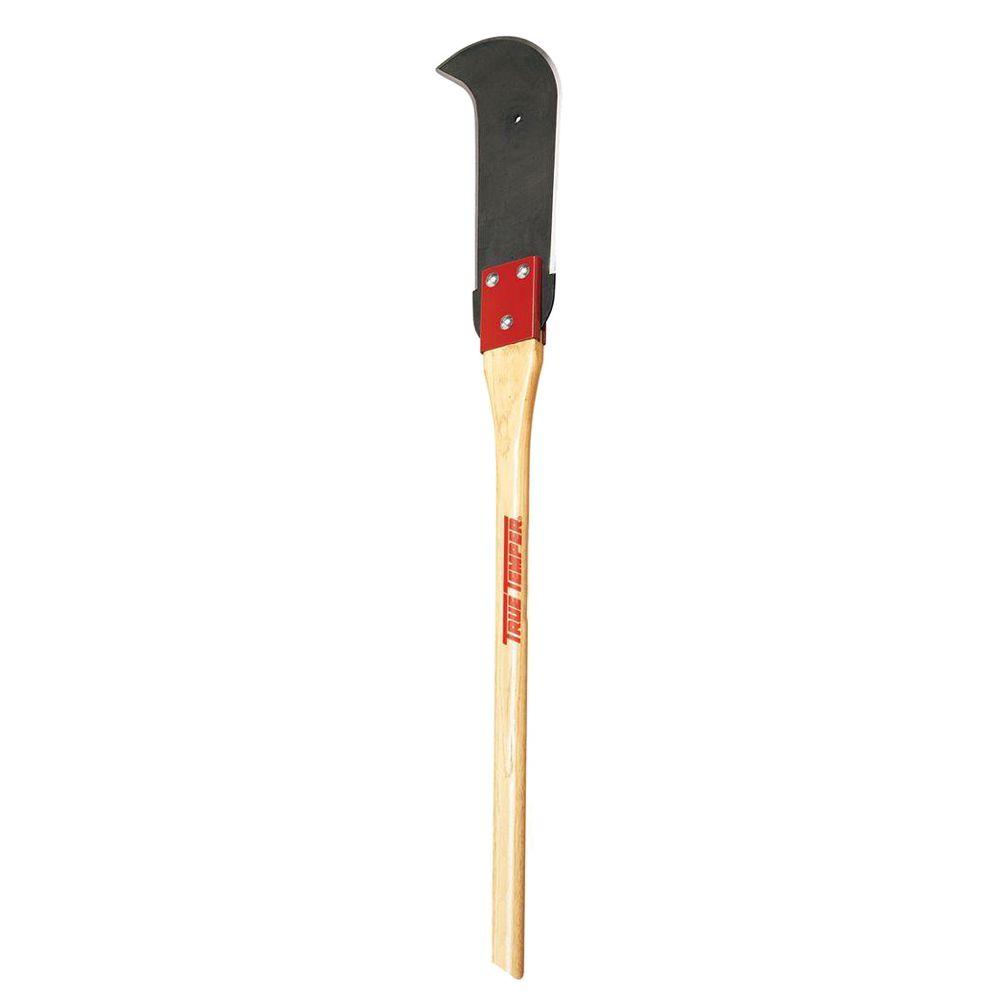
Stay there to fill your wheelbarrow full of every seed packet of edible goodness in sight and load up on machetes, axes, shovels and other good stuff right by the garden gnomes and garden hoses.

Sidenote: You would not believe some of the deadly stuff they have in the garden section, and it’s all sturdy, well-made stuff, which is in stark comparison to your average gas station ninja superstore, where the nonsense they sell (ninja swords for $12, throwing stars for $5) won’t cut through a snowman. Not kidding.

Check out this thing, which Home Depot calls a ditch blade. I call it a The Beheader of Giants.

After you pillage the gardening section, head inside the store proper to the tool section for heavy work gloves, hammers, crowbars and multi-tools.

Then swing over to the nuts-bolts-screws-nails aisle to snag a variety of boxes, especially oversized bolts and such you won’t be able to scrounge from the average garage of private home.

Then hit the rope and chain section for cordage, chains and padlocks (important!) before cruising over to grab all the Gorilla Glue / Crazy Glue / Super Crazy Gorilla Glue and such you can find.

Rule Number 7: Sporting goods will give you a sporting chance

Big 5, Dicks and other sports stores are pretty common.

Here’s why you want to head there second: a sports store is a great source for backpacks, hiking boots, socks and camping material: sleeping bags, tents, compasses, canteens, rain gear, fishing poles, slingshots, bows and arrows, crossbows, cheap guns and ammo, knives and clothing.

This is also your best bet to pick up practical armor, which is a topic deep enough for future post all by itself.

For now, just know that imitating the body armor of the Army and Marines isn’t a real option. What soldiers wear is incredibly heavy. Once you get shot, whatever panel that got hit needs to be replaced, which you won’t be able to do.

Sports stores have the kind of armor that’s sustainable and works against the main threat you’ll face: melee combat. Football helmets and pads are good protection against blunt instruments and blades.

Even better: motorcycle and mountain bike armor, which is tough leather with Kevlar inserts. This sort of armor is also easy to move in.

Rule Number 8: Don’t forget the small stuff

A little pharmacy may not seem like a top target, yet it’s a gold mine.

First aid kits, crutches, allergy pills, sunscreen, antibiotics, sunglasses, prescription drugs, toilet paper—the best stuff from a pharmacy is life-saving gold and perhaps the best trading material possible.

Let everybody else stock up on gold bars and AK-47s. When they run out of ammo, which will happen sooner than you think, what will they do with those heavy, useless gold bars? You can’t eat them. They won’t keep you warm at night. What are you gonna do, make necklaces out of them?

Raid a pharmacy and you’ll have what everyone else wants and needs. Because people will inevitably get cut, shot, sick or infected.

Rule Number 9: Before you start, figure out where you’ll safeguard all this good stuff

Any option you choose has to protect your liberated loot from the elements, wild animals and other survivors.

If you get a bunch of plastic bins, garbage bags and five-gallon buckets from your first top at Home Depot, you can hide and/or bury your loot all over the place. Just keep a map of where you put it all.

Unloading all the stuff into a safe building seems like a good choice until you think about how long any building will be safe when every single person is hungry, wandering around and breaking into places to scrounge for food and stay warm.

The best bets: (a) hide your fleet of U-Hauls in plain sight by driving them into a junk yard, (b) drive them far off into the woods on logging roads and ram those suckers into the forest until the wheels don’t move, (c) bury the moving trucks in junk, dirt and debris or (d) lock them with multiple padlocks and chains, then park them back-to-back, so nobody can get in until you return with the keys.

You can also make cheap, waterproof shebangs that can store a lot of stuff. PVC pipe is a good bet.

Rule Number 10: There’s nothing wrong with pre-looting

Ethically and morally, it’s completely wrong to loot a store today. During a zombie apocalypse or alien invasion, the moral compass changes polarity, because (a) it’s a question of survival and (b) when society collapses, there won’t be any cashiers waiting to take your checks, banks to cash those checks or functioning corporations to make a profit.

HOWEVER: There’s always the option of beating the crowds and the craziness by doing this carefully and comfortably, without worrying about getting munched by zombies or shot by other scavengers. Buy and cache a little every week, writing down what you stored and where you stored it.

It’s not hard to buy and cache a little every week. Because you’re going the smart, sustainable route instead of the expensive, unsustainable path, this won’t be expensive, either.

Below are some different ideas for pre-looting and caching:

  • Here you go, my friend: a backpack full of tools and gear, for when you add a new friend to your party.
  • Food, glorious food: a PVC pipe full of beef jerky, jars of peanut butter and MRE’s.
  • Shelter: a full-size tent, which you wouldn’t want to pack around, pre-placed in a good spot next to running water and a food source.
  • Hunting and gathering: Snares, traps, bows and arrows, slingshots, fishing nets and a sturdy metal pot to boil things up.
  • War: Let’s say a wannabe-Negan mugged you, taking all your gear and weapons. It’s never a back idea to have backups stashed someplace safe.

Next week: Chapter 6—Suit Up with Seriously Practical Armor

Previous posts:

33 ways to fight lies, propaganda and oppression—Chapter 1: Marching Toward Liberty

Across the world, a wave of authoritarian regimes is using lies, propaganda and oppression to attack the foundations of liberty and democracy.

This goes beyond politics. My father is a Vietnam vet and strong conservative; my grandfather was a World War II bomber pilot and FDR Democrat, and I’m a former journalist turned progressive speechwriter. Yet we’d all fight for the same bedrock values:

  • freedom of speech and of the press;
  • the Rule of Law instead of the Rule of Man;
  • a Constitution and Bill of Rights to protect the people; and
  • free and fair elections.

Regardless of your political beliefs, those values are the heart of the free world that’s served us so well since the end of World War II.

So this isn’t about politics or elections. It’s is a much bigger fight about whether laws and institutions should be designed to protect the people—or protect the ruler.

And this battle isn’t new. Kings, queens, warlords and dictators have used the same tactics for centuries. Instead of competing in the marketplace of ideas, authoritarians rely on lies and propaganda to generate Fear of the Other.

Instead of competing in fair elections, they rig the system, and the economy, for their personal benefit.

Yet if you google “how to fight propaganda,” it’s shocking how little turns up.

The same thing is true for tips on fighting lies and oppression.

There’s nothing really out there aside from the pamphlet INDIVISIBLE, which is great if you live in a democracy and want to influence a lawmaker in a swing district. It’s simply not designed to give you tips on dismantling a wall of lies, battling a sea of propaganda or fighting back against oppression. In too many nations in the world, the legislature is a rubber stamp, a thin veneer of democracy rather than a possible avenue of change and reform.

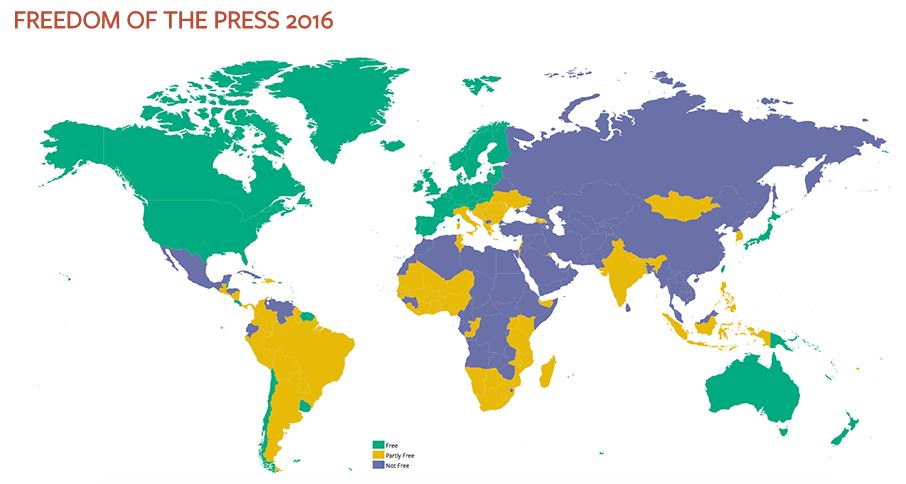
Freedom House has taken on this cause and they’ve done a meticulous great job of tracking and reporting each year. Here’s their map on freedom of the press, worldwide. Click on the map to read their latest report.

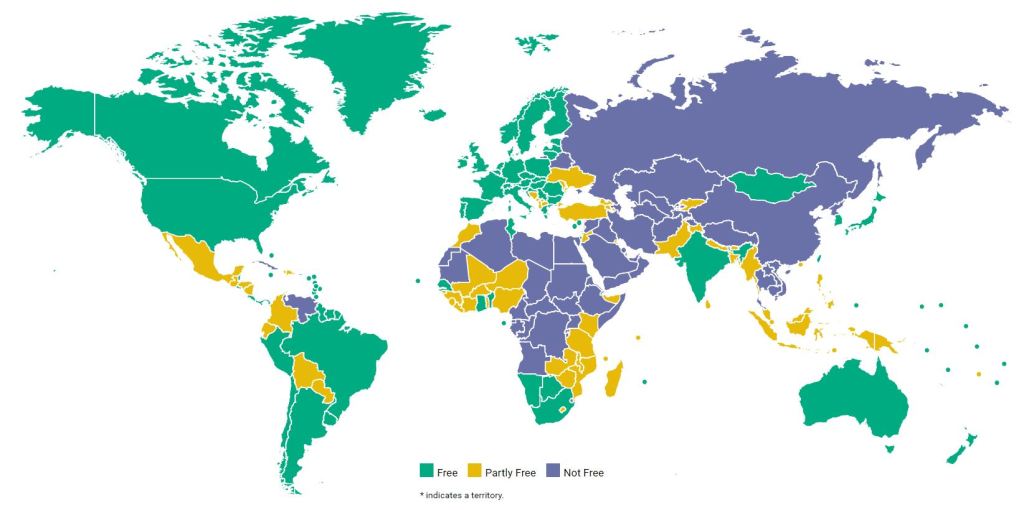
And this is their map dividing the world into Free, Partly Free and Not Free.

Bit sobering, isn’t it? There’s an awful lot of yellow and blue on both of those maps.

Below you’ll find the first of five chapters from TRUTH AND LIBERTY: 33 WAYS TO FIGHT LIES, PROPAGANDA AND OPPRESSION.

The guide borrows from journalism, rhetoric and public relations. It’s meant to be useful whatever continent you live on, whether you’re reading it today or 50 years from now.

It will always be free.

P.S. Since this blog has readers who are journalists, speechwriters, editors, writers and people with much larger brains than mine, I’ll happily take your suggestions when it’s time to revise the PDF. Please send ideas, comments or questions to truth.liberty.2017@gmail.com

Chapter 1: Marching Toward Liberty

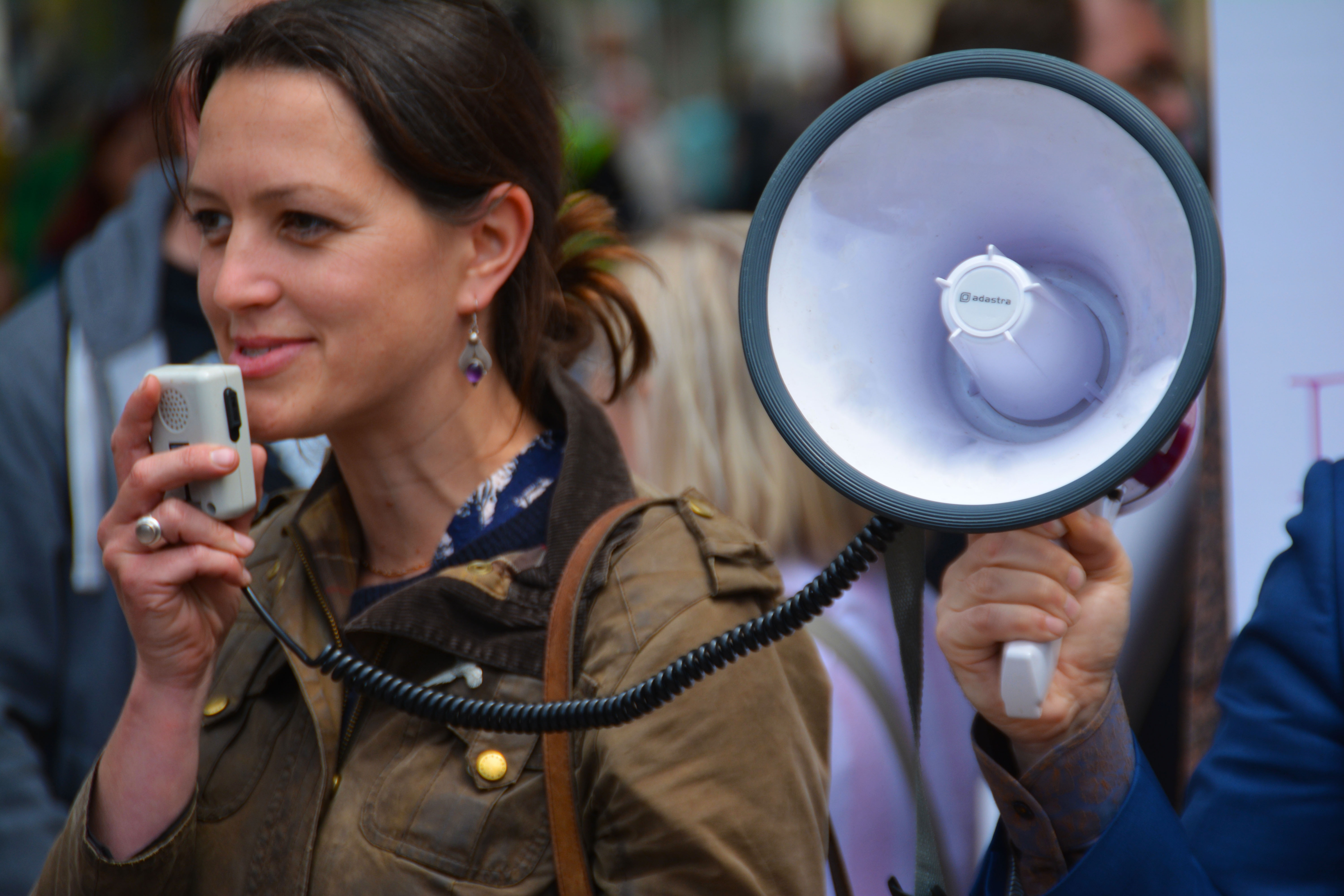
A march is the basic form of protest and has been for thousands of years.

Marches are still incredibly useful for any political movement, especially if you’re resisting lies, propaganda and oppression.

A single march can do what tyrants fear most:

  • Organize the people
  • Spread a message of truth, equality and democracy
  • End with an action, and
  • Set the stage for bigger marches and events.

This chapter is about maximizing any march, because history shows even a single march can be the seed of a national movement.

Step 1. Why tyrants fear protest marches

However invincible a regime appears, it will crumble without the compliance of average people. Even the harshest dictator doesn’t patrol the streets and do his own dirty work.

Nation-states require police officers, judges, soldiers, administrators—and modern economies require truck drivers, nurses, engineers and construction workers.

This is why authoritarian regimes do all they can to make you afraid, isolated, quiet and compliant.

Protests in the streets show that people are brave, unified, loud and resistant.

Riot police can handle a crowd of two hundred. They can bring in trucks and arrest everyone.  Police can’t arrest a crowd of ten thousand protestors.

They have no way of dealing with 100,000 non-violent marchers. And there aren’t enough police, courts and prison cells to arrest and lock up tens of millions of people peacefully marching.

Even if a regime tried to do this, they’d go bankrupt trying to build enough prisons and hire enough prison guards. The economy would sputter and die without all those workers, while the regime would look silly arresting peaceful grandmothers and kids.

This is why tyrants fear peaceful protests more than anything else.

So you march. Loudly and peacefully.

Together.

And you do not comply.

Step 2. Non-violence is your greatest weapon

An opposition movement must embrace non-violence, not just in protest marches, but throughout every action it takes.

That’s because the first instinct of a regime is to brutally crack down on any signs of rebellion while portraying protestors as paid, violent thugs.

Opposition groups, big or small, have to continually preach and practice non-violence, and renounce any violent protest as being outside the movement.

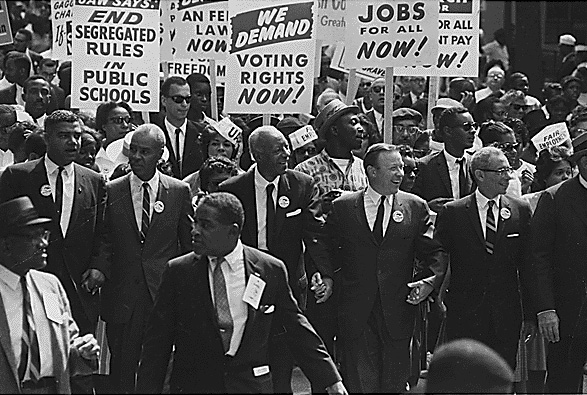
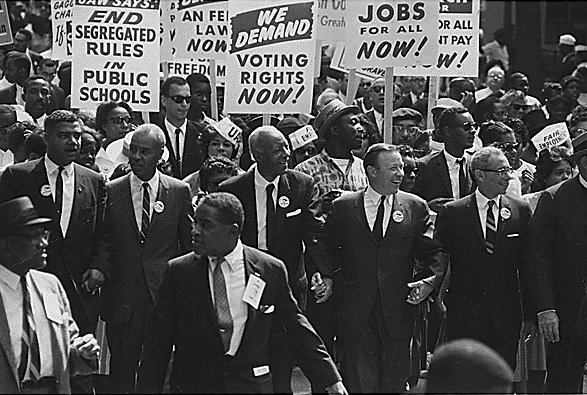
Dr. Martin Luther King, Jr. and his fellow Freedom Marchers knew they’d be greeted with the blows of police batons, the spray of fire hoses and the bites of police dogs.  They went out in the streets anyway to expose the ugly truth about Segregation.

Peaceful protest is also more effective than a violent uprising. Political scientist Erica Chenoweth studied major non-violent and violent uprisings since 1900. Violent uprisings succeeded 26 percent of the time and tended to lead to another tyrannical regime.

Researchers used to say that no government could survive if just 5 percent of the population rose up against it. Our data shows the number may be lower than that.

No single campaign in that period failed after they’d achieved the active and sustained participation of just 3.5 percent of the population. But get this: every single campaign that exceeded that 3.5 percent point was a nonviolent one. The nonviolent campaigns were on average four times larger than the average violent campaigns.

—Erica Chenoweth

Chenoweth found that non-violent resistance succeeded 53 percent of the time and tended to lead to greater democracy.

Step 3. Publicize a protest long before it happens

The more time you provide for logistics, publicity and planning, the better. Don’t wait until the day before. Start weeks before—the longer, the better.

Many protests and marches are held on weekends, because that’s when people have free time. The trouble with weekends is there aren’t many reporters working Saturdays and Sundays..

Advance notice is therefore key, especially for TV crews. A newspaper reporter can grab a notebook and camera and head out.  A TV reporter needs a camera person and a satellite van, so station producers plan in advance. And you want television coverage whenever possible.

To maximize press coverage before the march, gather a list of names, emails and phone numbers of your local media. Then write down the following in this format, which is the Five W’s of journalism:

  1. WHO: Who is expected to attend and speak at the march? Who is organizing it? And finally, who can the press contact for more information? List multiple organizers, because you should reply right away to any press request. Reporters are always on deadline and will contact different people until they get what they need.
  2. WHAT: What exactly is happening? Think like a reporter about events worth photos or coverage.
  3. WHEN:  Start time and end time.
  4. WHERE: Starting point and ending point.
  5. WHY: Why are you marching? This is best done through a quote from an organizer.

Use this raw material, those Five W’s, to spread your message.

  • Announce the event: Send an email with those exact things, in that format, to the local press with the subject line of the email announcing the event.
  • Share it on social media: Post that same information on social media and ask people to share with their friends and RSVP so you can get a rough headcount. Figure out a hashtag for the movement and event.
  • Turn it into letters to the editor: Get every organizer and ally who’s coming to the march to rewrite those Five W’s into letters to the editor. Have them say, in their own words, why they’re attending the peaceful march and why others should, too..
  • Talk to the press: Reporters doing announcement stories want more than the Five W’s.

Ideally, journalists want a great personal story about one of the organizers or speakers at the march.  The best stories are the ones that surprise and bring audiences on an emotional journey.Find those stories and connect people with journalists before the event.

Step 4. Use the  march to organize and message

Now that every smart phone can take photos and video, then send those images around the world, every march and event is an opportunity to spread your message on multiple platforms.

This is critical because regimes use lies and propaganda as part of a sophisticated, multi-media attack.

Combatting this assault on truth and liberty requires images, video, songs and stories.

Every step of the way, ask your fellow organizers and the crowd to post photos or video using the same hashtag.

  • Photos of the growing crowd: As the march starts, get people to take photos of the growing crowd. Post photos and video to social media to encourage those sitting on the fence to show up.
  • Video of every speaker: Shoot film—on smart phones, camcorders or better—during and after the march.
  • Stories: Set up stations, which can be as simple as a poster that says, “Tell Your Story Here,” and send roving volunteers to do the same around the crowd. Stories about real people are the most powerful form of messaging and communication.
  • Music and song: It’s not a party without music. Many people belonged to marching bands in school or college. Encourage people to bring their drums or guitars to entertain people. Shoot film of people dancing or singing protest songs.
  • Turn the march into an organizing tool: A simple clipboard can turn into an email list or phone tree. On that same clipboard, ask people what skills they have and what issues they’d like to work on.
  • Creative protest signs and costumes: Take photos of the best and funniest ones. Give people credit.
  • Announce the next event and other actions: In the warm-up speeches before the march starts, announce the next march or event.
  • Tell people other actions they can take, like writing letters to the editor, showing up at a lawmaker’s town hall meeting or emailing advertisers to boycott radio shows and blogs spewing fake news and hate.

Repeat these announcements at the end of the march, so you don’t lose momentum by having to track down and inform people after it’s over.

Step 5. Don’t just say you’re peaceful—show it

If the regime can portray protesters as angry and violent, they win. Oppressive regimes want photos and film of protests turned ugly.

They want red-faced people spitting on police, college students wearing black trashing cars and protestors looting shops.

This is why protest marches should be peaceful and joyful, with music and laughter. You want it to be completely clear that the march is a peaceful, happy event. A party people want to join.

For safety reasons, don’t block highways or do anything that could make a march dangerous to bystanders, drivers, police or fellow protestors.

Organize volunteers wearing something visible—hats or armbands—to keep the peace and offer bottles of water or first aid.

To emphasize how committed the opposition is to non-violence, put people who are obviously not threats in the front of any march:

  • Religious leaders
  • Grandmother and grandfathers
  • Retired veterans wearing their uniforms

Step 6. Reach out to the local police

No regime can survive without the support and obedience of local police.

Police have kids who go to the same schools as your kids or grandkids. They shop at the same grocery stores. These are your neighbors, whether you know their names or not.

So learn their names.

Before the march, reach out to the local police to make sure they know exactly what you’re planning.

Ask them for their advice on making it peaceful and safe, because you don’t plan on giving them any trouble whatsoever. And because they’ll know the logistics of a march, big or small. Your local police will know the safest routes you should march.

While the crowd gathers and organizers give speeches, tell the crowd that the local police aren’t the enemy. Explain how the regime really wants to portray protestors as paid thugs who smash windows and throw rocks at the police.

Remind everyone that your movement embraces non-violence in the tradition of Mahatma Gandhi and Dr. Martin Luther King, Jr.

During the march, smile and reach out to the police. Call them by the names on their uniforms and ask where they’re from.

Thank them for coming out to make the march safe. Give them flowers—or coffee and pastries.

If you see this happening, take a photo or video. Because news is the most interesting when it’s a surprise.  People expect protesters to treat the police as an enemy to be met with suspicion, fear and flying bottles. You’ll make news by doing the opposite.

After the march, get to know the police in your neighborhood.  Don’t lecture them—listen. Having coffee and donuts with your local police may sound like a joke. But it’s not.

Everyday police officers are a core pillar of any authoritarian regime. Without their support, the regime crumbles.

Step 7. End with action

If you end a march with nothing, that’s anti-climactic. That’s why most marches begin with warm-up speeches and end with their best speakers.

Surprise people by ending your march not just with a great speech, but with a non-violent action.

Sit-ins are effective, especially to publicize a lawmaker or elected official who refuses to meet with the people they’re supposed to serve.

It’s relatively easy for police to hustle off people who are standing up. It takes multiple police officers to pick up and carry each protestor staging a sit-in.

People around the world have also created variations on the protest march in respond to regime tactics like refusing to issue protest permits or blocking protest routes.

A silent, standing protest doesn’t have to march anywhere and is a powerful and unusual statement.

Street theater is a useful and creative outlet. Stage a short play or skit in a public place.

Picket lines, strikes and boycotts are effective in leveraging economic pressure for reform and justice.

Every oppressive regime is also a kleptocracy. Rulers, their families and cronies get rich through corruption, and major businesses must pay to play. Put pressure on key businesses that support the regime with picket lines, strikes and boycotts.

For a comprehensive list of 198 non-violent methods and actions, read Gene Sharp’s The Politics of Non-Violent Action.

Bring your brooms

At the end of any protest march or event, leave the place cleaner than you found it.

Nothing steps on your message more than photos of piles of trash.

End every event by cleaning up not just the protest area itself, but nearby places, whether it’s a shopping mall, a park or a neighborhood.

Brooms are also a potent symbol of cleanliness vs dirty corruption.  This is a simple, strong way to show that your movement is positive and constructive instead of threatening.

It’s hard to fight against this imagery .

A regime would look ridiculous if it tried to outlaw brooms or arrested groups of peaceful people cleaning up public streets and parks.

Who doesn’t like volunteers with brooms and trash bags, cleaning up local parks and streets?

This is also an opportunity for outreach. People will see you cleaning up outside their home or business and ask who you’re with and why you’re  doing it.

This is far more effective as a conversation starter than knocking on their door and trying to talk to about your movement.

By cleaning up, you’re showing people with deeds instead of words. You’re also creating curiosity, which is the first step to engaging an audience.


Next week—Chapter 2: Dismantling a Wall of Lies

Also: the full guide is below as a PDF.

Battle of the Hollywood Franchises, Week 1— GAME OF THRONES vs THE WALKING DEAD vs WESTWORLD

Right now, you can fire up your phone, computer, 4k television or seven other things with screens to binge upon amazing movies and television shows that make the classics of the ’70s and ’80s look like high school art projects.

The list of viewing choices is incredible: WESTWORLD, a Marvel superhero movie every time you sneeze, THE WALKING DEAD, a new STAR WARS movie once a year, GAME OF THRONES, BREAKING BAD, BROADCHURCH and the SHERLOCK series starring Khan/Dr. Strange and his hobbit friend.

It’s an embarrassment of quality. And meta-story is the key reason why.

Because it’s not just the quality of special effects, sets and acting at work here. It’s how well that meta-story is told that affects whether you (a) stay up until 3 a.m. binging the entire series or (b) keep flipping through shows and movies before you give up and watch YouTube clips of animals being bros.

I can’t remember any TV shows or movies back in the day that told a fully story, start to finish, with a concrete end to the series, except for the original three STAR WARS movies. (Note: the prequels are dead to me.)

Back in the ‘80s, the shows I watched and loved had the same hero and sidekicks and a Villain of the Week, unless it was a sitcom.

A-TEAM, REMINGTON STEELE, AIRWOLF – all these shows you could watch in any order, unlike the meta-stories of today, where if you miss 15 minutes, you might get lost.

It seemed pretty clear that showrunners back then were content to keep making new seasons until the ratings went south.

They kept going until the network ended the money train, which was reflected in the sudden demise of most TV shows where loose ends tended to stay loose.

So where are the new giants of meta-storytelling doing it right, and where are they tripping up?

Week 1—GAME OF THRONES vs THE WALKING DEAD vs WESTWORLD

All three of these are sprawling adventures with ensemble casts and no clear hero or villain.

But they are true meta stories. There’s nothing episodic about either show. Things constantly change and both are building up to a climax versus the old model of “petering out when they cancel us.”

A big strength for all three? Constant surprises. Anybody might die in any episode, except for Rick Grimes, who never dies for some reason, while Westworld reserves the resurrect any character as a robot and Game of Thrones can’t part with Captain Good Hair Who Lives Among the Snow.

All three series are full of deadly betrayal and high stakes. There are no cartoonish white hats and black hats. Each character tends to be a little good and a lot of bad.

You also don’t have to find a new job if your big star, the hero, decides to leave the series to try movies, or gets drunk and slams his Rolls Royce into the side of a cliff.

HOWEVER: The lack of bedrock heroes and villains can make the audience confused and scared off from getting attached to characters they like, seeing how at any minute they could get stabbed in the back, nom-nom-nommed by a zombie or shot by the Man in Black.

This sort of story also has problems with villains, because they tend to die off and need to get replaced.

GAME OF THRONES and THE WALKING DEAD have the advantage of known their destination, since the original authors mapped out the story in printed form using these things I like to call “words” placed inside these archaic, beautiful things they call “books.”

WESTWORLD will have to find its own way to the climax, since it’s based on a single movie from the ’70s. However: Season 1 was a brilliant start.

Verdict: GAME OF THRONES is the odds-on champion here, with a huge audience and a definite climax in the cards. THE WALKING DEAD feels a bit too uneven and small scale at times. How can they top Negan?

WESTWORLD is the hipster choice of these three, the one that feels most like a movie. Each episode shot and scored beautifully. It’s just harder to see where it goes after Season 1. But if they can pull it off, WESTWORLD will live forever as a classic.

Next week: D.C. versus Marvel, also known as ‘D.C. just can’t win’

Week 3—STAR WARS vs STAR TREK

Week 4—JAMES BOND vs JASON BOURNE

Week 5—HOUSE OF CARDS vs BREAKING BAD

Week 6—HARRY POTTER vs LORD OF THE RINGS

The Avalanches get weird with FRONTIER PSYCHIATRIST

OK, I have seen music videos from around the world.

Mediocre videos of singers dancing around.

Miniature movies, with actual acting and production values.

And then there are videos like these that are just flat-out weird.

It’s interesting, but only in a “Let’s drink coffee at Denny’s until five in the morning with my friend who’s an art teacher and his girlfriend, the philosophy professor, as we try to divine the deeper meanings of this thing.”

I’m not sure there really is a deeper meaning to this video and song. But yeah, this one is different enough to be special.

Fitness Tips for the Apocalypse: Chapter 4—One Backpack and a Pair of Hiking Boots

Fitness Tips for the Apocalypse

As we discovered from the first three posts, you can’t count on (a) lounging around in a bunker that never runs out of food and water or (b) cruising the wastelands in a vehicle. Which means (c) bushwhacking around while carrying all your possessions in a backpack.

Previous posts:

In apocalyptic movies, heroes tend to sprint around in ripped T-shirts with a single weapon. You never see them hefting around a sleeping back and a bunch of food.

Meanwhile, video game heroes carry around an entire gun store, plus food and medical supplies. If you’re playing a Fallout Game, the hero can scavenge entire cars and somehow lug all that around while running and fighting.

A huge part of really prepping for any sort of apocalypse—whether you favor Mad Max nuclear wastelands, alien invaders or zombies—has to be (1) figuring out the essential gear to put in your One Backpack of the Apocalypse, then (2) putting on good hiking boots and actually trudging through the wilderness for a mile, then two miles, then over downed trees, across streams and all that.

How much can you really carry over long distances?

Modern soldiers in the U.S. Army and Marines carry about 60 pounds of gear. On long-term patrols, maybe double that.

However: no sane human being should plan on lugging around 120 pounds of stuff all day, every day, during any sort of long-term apocalypse. Even slow zombies are not THAT slow.

MythBusters did a nice bit about this. How much you carry, and how you do it, matters more than you think.

What kind of backpack should you get?

There are all sorts of cheap, pre-packed survival backpacks these days. We got a couple from Costco to leave in the car. They’re great for a short-term problem, like a car breakdown in the middle of nowhere or an earthquake. These backpacks just aren’t a long-term solution.

What you really want is something proven to work that also works for you, specifically.

If you want to get the best of the best, hop on down to someplace like REI and actually put on backpack after backpack.

The cheaper option that doesn’t sacrifice practicality is a local Army surplus store. The military knows a lot about backpacks (they call them rucksacks) and how to make everything modular and attach to other bits you’re wearing. The old system was called ALICE; the new hotness is MOLLE, which is pronounced Molly and stands for Modular Lightweight Loadbearing Equipment.

Here’s a good comparison:

Which boots will last the longest?

This is a trick question, because eventually this won’t matter. Not one bit. Even the best, most expensive boots on the planet will wear out.

You’ll have to repair them. Eventually, those boots will be beyond repair. And this will be a big, big deal. Because you can’t walk around barefoot.

Repairing and replacing the soles is the biggest issue. Tires are a great material for soles. Tire rubber is insanely tough and will last a long, long time. Plus it will always be easy to find and scavenge old tires. The tough bit will be cutting it. A hacksaw might be required.

The design for this is important. Glue will be hard to find, and the last thing you want to do is wrestle a hungry polar bear, while the second-to-last thing you want to do is try to sew tire rubber onto the remaining bits of your hiking boots. No needle is that strong.

The best idea is use rope or straps. Here’s one way to make sandals out of a tire and some straps, and they smartly don’t try to pierce the bottom of the sole, which would stink in terms of waterproofing. Well done.

Socks will actually matter, so let’s get this right

There’s no perfect sock, and even if you had a pair, they’ll eventually get holes.

The best idea is to wear two pairs of socks. The first layer is a thin sock to cling to your feet. If you have to scavenge socks, thin white athletic socks work for this. The second pair of socks is good, thick wool for cushioning. This way, you don’t get blisters.

Wool is the only way to go here, and with most of your clothing. Remember these words: cotton kills, wool thrills.

What essentials go inside the One Backpack of the Apocalypse?

Fire: A way to make fire plus dry tinder. The quick answer here is a flint and steel plus a waterproof container full of dryer lint (free!) or cotton balls rolled in vaseline.

Water: Some sort of container to hold water plus a method to decontaminate it, such as a filter straw.

Warmth: Any sort of way to keep warm at night, whether it’s extra clothing, a wool blanket or a lightweight sleeping bag. This is crucial.

Wood: A way to cut or chop wood for fuel and shelter. Hauling a honking big full-size axe around isn’t an option. A hand axe, a heavy machete or a folding hand saw would work.

First-aid supplies: Absolutely essential. There are also military surplus first-aid kits that are a lot more hardcore than the dinky civilian kits at the grocery store. Get one.

Rope: Paracord is light and incredibly useful. Tie a bunch of logs together and you’ve got a raft. Lash your knife to a pole and you have a spear. Make a series of snares and you’ve got bunny stew tonight instead of a rumbling tummy.

Charmin: Maybe your neighbor is buying gold bars and putting them in a big safe, thinking gold will be worth more than boring paper money if things go bad. Instead of handing over valuable purple euros for mere ounces for gold, stock up on scads of toilet paper and put more than you need in the backpack. Toilet paper works as tinder to start a fire and, mark my words, soft toilet paper will be far, far more than gold once the zombies go nom-nom-nom.

A long-range weapon: A rifle, bow, crossbow, slingshot—something to help roast dinner on your campfire at night.

Food: You can’t count on living off the land every day. To start out with, the One Backpack of the Apocalypse needs high-calorie goodness that won’t go bad, like jerky, protein bars and MREs.

A knife: Not a folding knife. A full-size knife with a hilt, and none of that Rambo nonsense with a hollow hilt full of fishing hooks and a compass on the bottom.

This is a big topic, and future posts will break down each of these items into various options:

  1. Grizzly Adams: absolutely free and crafted from whatever you can find in the woods
  2. Scavenger Special: free or truly cheap, taken from recycled material, stuff you find in a junkyard or can buy today for almost nothing
  3. Best of Both Worlds: great quality for a great price
  4. Crazy Billionaire: the most expensive option, just for the sake of comparison

A short training program

Endurance alone isn’t enough. Say you can put the gym treadmill on a 10 percent incline and power-walk at 4 miles an hour for six hours. That’s amazing. It’s just not the same as bushwhacking through the forest or trudging through miles of sand while the sun tries to roast you.

Folks trying to make get into the Special Forces train for what they call ruck marches, which is exactly what we’re looking for here. The goal of this training program is to finish an 18-mile march carrying a 50-pound ruck in 4.5 hours.

They include strength building, like squats, because you need strength in your legs to go uphill while carrying weight, and you really need it to climb over downed trees and other obstacles like walls or cliffs.

For homework, find a good backpack, stuff it with the essentials, put on some hiking boots and see how comfortable it is to hike a mile or two. Then adjust what you’re carrying, figure out what gave you blisters, and hike double that the next weekend.

Next week: Chapter 5—Yes, Any Sort of Apocalypse Means Looting the Mall