My love for Luc Besson movies is strong. THE TRANSPORTER is beautiful and completely rewatchable, THE FIFTH ELEMENT is creatively wild, and pretty much anything he does is worth checking out.
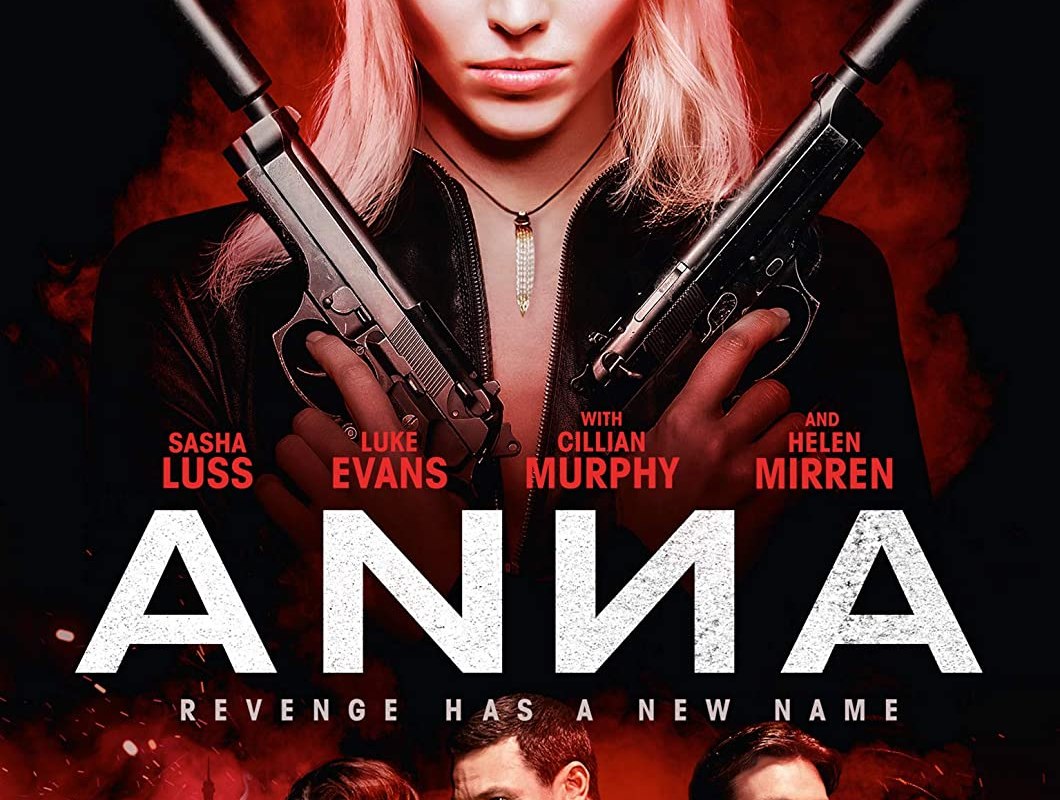
ANNA is another action movie with KGB spies, the CIA, John-Wick style gun fu and a lot to recommend it. You should fire up the interwebs and watch it when you’ve plumbed the depths of Netflix.
Yet there are laws for action movies, laws carved into our brains and souls by the sweat and blood of Action Movie Gods, and woe unto those writers and directors who willingly break these laws.
ANNA is good.
Unbreaking these laws could have made it great, and there’s always hope for a Special Edition Director’s Cut or whatever.
THE FIRST LAW OF ACTION MOVIES: SAVE THE BEST FOR THE CLIMAX
The exact genre doesn’t matter. Gunslinging westerns, martial arts films, spy thrillers, and Let’s Catch The Genius Serial Killer films all need to do one thing: escalate.
This rule actually applies to every movie and novel. Start strong, but end stronger.
It’s just easier to see and quantify with action movies, because you can do things like count bodies.
What do you want to avoid? The opposite, which would be starting out with your absolute best action scene, then a middling one, and finally an appetizer–or no action scene at all.
That’s basically what ANNA does. There’s a beautiful fight scene in a restaurant that happens early. You’re going to google the thing, so here it is:
Crazy good, right? It makes you expect something even bigger and better at the end.
Except you don’t get that. The climax kinda switches to pure spy thriller instead of action movie, giving the audience get triple-crosses and disguises and MISSION IMPOSSIBLE kinda stuff.
And it feels like a let-down. You’re cheering for our heroine to do the restaurant thing again on the bad guys, except everybody is basically bad and double-crossing each other.
THE SECOND LAW OF ACTION MOVIES: STICK TO ONE TIMELINE
When was the last time you saw a flashback that worked in a movie or book?
They don’t work. I hate them with the fire of a thousand burning suns.
Bad action movies give us a couple flashbacks of the Dead Mentor training the hero and imparting wisdom, right before being killed by gangsters or the villain. Good thrillers avoid flashbacks entirely.
ANNA gives us flashbacks and flashforwards out the wazoo, and it kills the story. Because really what they’re doing is going back to give the audience setups after they just watched the payoffs. It’s not surprising or fun–it’s a lazy way to patch holes in a story. “Hey, here’s three months earlier, which will explain why that just happened.”
No. Just no.
Keep it linear. One timeline, straight through.
THE THIRD LAW OF ACTION MOVIES: GIVE US A VILLAIN
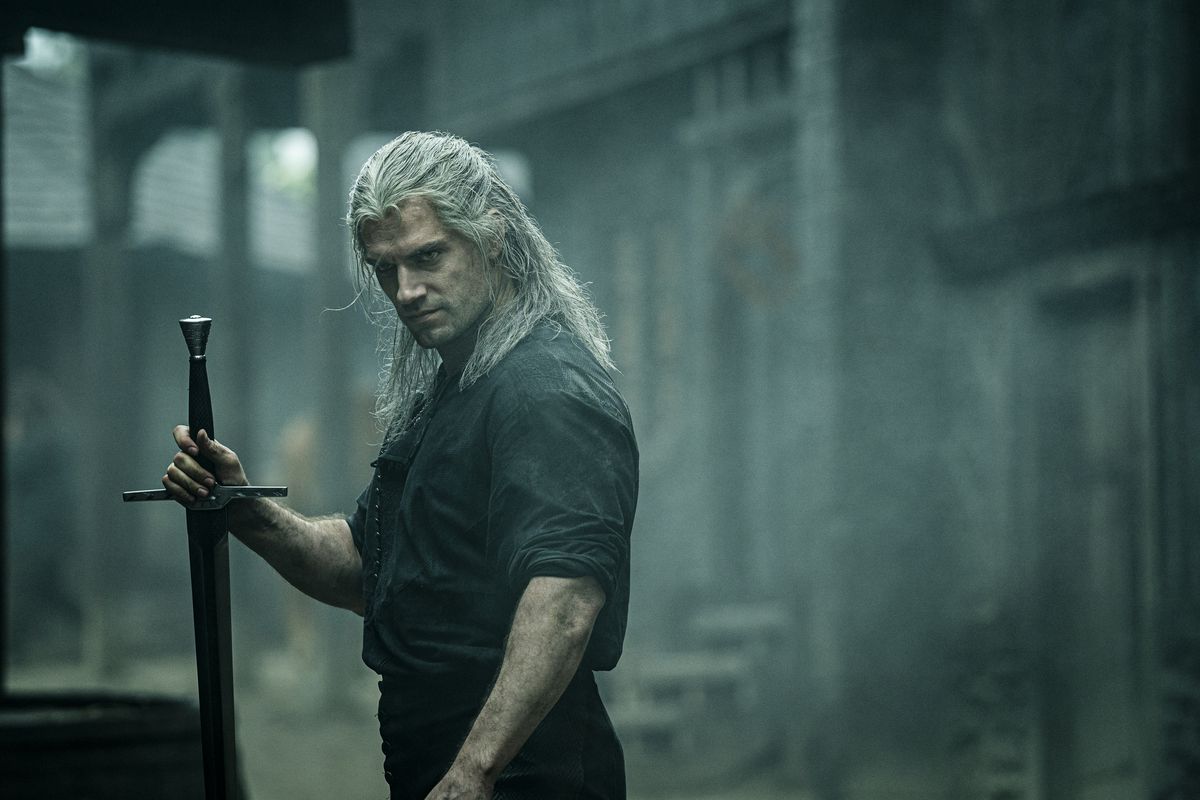
Whatever you think of Tom Cruise, the last MISSION IMPOSSIBLE gave us a great, great bad guy: Superman/The Witcher.
Sure, there was an overt baddie, but he was a puppet of Superman/The Witcher, who was pulling all the strings. And since thrillers are about betrayal, especially spy thrillers, this was a great twist.
ANNA doesn’t give us a villain. There’s no final faceoff and beautiful fight. She slips away.
I’d argue that the most villainous character is Helen Mirren’s, who you can see in the trailer for a bit.
She does all sorts of Very Bad Things, and deserves to get completely Restauranted–but instead, Anna helps her take control of the entire KGB.
So yeah, not a very satisfying ending. Bad guys kinda win while the hero disappears.
VERDICT
Hey, this thing is still fun and completely watchable. Well worth firing up, and there’s nothing wrong with the actors. The lead actor does an amazing job–put her in more movies.
It simply could be much, much better with some structural tweaks. Save the best for last, Luc!
Because we are all watching Netflix and Hulu and digging through the garage to find that old VHS player because we cannot stomach rewatching IRON MAN 2 again, there are 7 billion people desperate for something new and glorious they hadn’t seen already.
So what makes something great compared to that thing you clicked off after ten minutes because it put you in a coma?
THE WITCH PART 1: SUBVERSION is a beautiful example of a great movie with a meh title. It’s a South Korean action movie that isn’t like other South Korean action movies, because (a) yes, damn near everyone dies at the end, which is required, but (b) the story here is quite different.
It’s the structure and storytelling that makes this movie special, not the acting or special effects. Watch the trailer, then let’s dive into it.
Subverting expectations is glorious
This movie starts fast and is a slow burn in the first third. Then the last half has some of the best twists, reversals, revelations, and fights scenes in forever.
Here’s the crucial difference: in most movies, the hero/heroine is always a step behind the villains. Only in the end do they learn what’s really happening, usually during the Villain’s Big Monologue When He Should Be Killing Errybody, and the climax features an overmatched protag somehow finding a way to beat the unstoppable genius villain.
THE WITCH reminds me of why I love SHIMMER LAKE, and it’s because they reverse this normal dynamic. The villains are a step behind the hero the whole time, though you don’t know that until the end, and the climax features an overmatched villain getting outsmarted and crushed. So yeah, it’s a romp at the end, but so, so, satisfying.
Just for kicks, here’s the trailer for SHIMMER LAKE, which you should watch, then watch again. It’s brilliant.
Honestly, I’ve watched dozens of movies in the last few months, and even the decent ones don’t really surprise you at the end. They hit the same old notes and use the same old formulas.
It takes talent and discipline to structure a movie like THE WITCH, or SHIMMER LAKE, to subvert all those tropes and expectations. When it happens, it’s glorious to see.
VERDICT
Fire up the Netflix and watch this thing.
Then watch SHIMMER LAKE to see who two movies with completely different genres have similar clever endings that are so satisfying.
Listen, we’re all in quarantine so what are you gonna do, watch the same movies you’ve watched SEVEN BAZILLION TIMES?
No. You need some fresh content, new stuff. And the best stuff hiding on Netflix is definitely foreign films.
THE PLAGUES OF BRESLAU is tight, fast, and twisty. All the things a good mystery/thriller should be.
And that’s why I want to talk about it. Because structurally, it’s interesting, and well done. This film also brings up nerdy storytelling debates, such as, “What the hell is a mystery/thriller, and how is it different than a mystery or Jack Reacher punching people in the face one more time?”
Mysteries, thrillers, and mystery/thrillers
Mysteries are easy to spot: there’s (1) a murder in the beginning, (2) a grizzled, alcoholic detective who investigates multiple suspects, starting with trip to the local nudie bar–this is apparently required by law, and (3) a series of sketchy suspects who are all plausibly the killer.
In the end, our detective sobers up enough to unmask the killer and either slaps on the handcuffs or poses a math problem.
Thrillers are also pretty easy to define.
A bad thing may happen. The central narrative question is, can it be stopped?
That question is the same whether the threat is a great white shark going nom-nom-nom, an alien on a starship with Sigourney Weaver in a T-shirt, or a terrorist who stole a nuclear weapon or three.
So what’s a mystery/thriller?
Good question.
Pinning down mystery/thrillers
You can’t really pin them down, not before doing single-leg takedown and going for an armbar.
Okay, you can pin them down.
A pure mystery has ONE murder and makes you wonder who did it, why they did it, and whether they’ll get away with it. Which they won’t, so really the surprise is who, why, and how the hero catches them.
Mysteries merge into Thrillville, population zero because everybody dies in Act 3, when they do two things: (1) boost the public stakes by putting more people at risk, or underground, and (2) identify the villain far earlier in the story, when it pivots to a thriller.
You gotta have those two ingredients. More people in danger, or turning up dead, and that earlier pivot.
THE PLAGUES OF BRESLAU does this perfectly.
We find out who the villain is earlier than a pure mystery, and learn why they’re doing it. The stake are higher than a pure mystery because it’s not one murder, but a series of killings. A mystery is about getting justice for that one death. Thrillers are about stopping carnage.
What’s great is this movie doesn’t cheat. There are tons of mystery/thrillers where the villain’s motivation is paper-thin, or non-existent. And there are plenty of mystery/thrillers that aren’t suprrising or shocking. You see them coming, and that puts the B in Boring.
I truly enjoyed THE PLAGUES OF BRESLAU, which does a great job of subverting the detective genre.
SPOILER: the villain wins, despite dying, and the hero wins, too, because the villain prods her into getting rough justice for the death that haunts her. (Fiance/husband/partner? Not sure — I watched this thing with the subtitles on).
It reminds me of SHIMMER LAKE, where the character you think is the hero is really the anti-hero/villain, doing the wrong things for the right reasons. And you understand why and agree with him, because he’s getting justice when the system failed.
If you haven’t watched it yet, finish up the Polish mystery/thriller goodness, then fire up SHIMMER LAKE, which is funny, shocking, and brilliant. It’s also a movie told in reverse, except it’s not a Cheaty McCheatface like MEMENTO.
Listen: I adore Patrick Stewart, who’s a brilliant actor and a beautiful human being.
And I’d pay cash money to watch P-Stew (a) go grocery shopping, (b) walk his dog, or (c) drink a few pints and talk smack with his best friend, Gandalf the Grey.
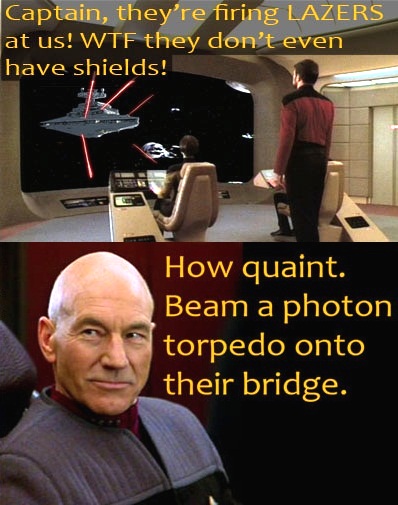
HOWEVER: We’re talking serious business here, a new STAR TREK series on the televisions, and these things are so rare and beautiful that five got announced while I made some fresh coffee. But a Trek series with Captain Picard? That’s special.
So yeah, I watched the entire series, start to finish, as a public service.
Here’s the deal: it’s a hot, hot mess.
Let’s start with the ending
You don’t need to know the entire plot. Going right to the end explains a lot of why PICARD went south.
For the entire series, we’re told there’s a secret society of Evil Romulan Spies who want to kill artificial life forms like Data, who’s already dead. Bear with me here. Data secretly had twin daughters, and the Evil Romulans killed one because they believed she’d kill all life forms by summoning the Angry Robot Monsters From Another Dimension or whatever.
In the last episode, we learn THE VILLAINS WERE RIGHT, because Data’s daughter and her android friends do build a beacon and summon the Angry Robot Monsters, who start bringing their 1987-style graphics robot tentacles through the portal until Picard convinces She-Data to shut it down.
So…we spend all these episodes fighting the Romulans who turned out to be completely right.
As a special bonus, there are about a half-dozen deus ex machinas and stupid plot holes in the same final episode. A partial list:
She-Data’s twin may have died in the first episode, but look, there’s another android on the robot planet clearly played by the same actress, but she’s not exactly her twin, though she is evil, and kills to get her way and start summoning the Tentacle Robot Gods.
Riker is totally retired and hanging out with Troi, so when Picard stupidly takes on the entire Romulan Bad Guy fleet of warships with a ship he’s never flown before, Riker magically re-enlists in Star Fleet and shows up with 5,000 identical starships to scare off the Romulans, who I want to remind you WERE RIGHT THE ENTIRE TIME.
Picard is dying from some brain disease, so when he does sacrifice himself by flying up there to fight, it doesn’t totally hit you in the feels because he’s dying anyway, and yeah, that stinks–but after he dies, and hangs out with Data in the Matrix, boom, they stick his mind and soul into a robot body that looks exactly like him, so no big deal, bring on Season 2!
If you’re going to kill a character everybody loves, and make them feel, you have to do it forever–or make the resurrection very, very hard. STAR TREK 2: THE WRATH OF KHAN killed Spock and made us all cry, then spent an entire move searching for Spock and bringing him back, making us cry more. You don’t get to do the old death switcheroo in, like, five minutes.
There are other stupid aspects of the finale that I won’t even get into.
The finale just feels sloppy, especially the static shots of a giant fleet of identical Romulan ships standing off against a giant fleet of identical Star Fleet vessels, like the director just told the CGI boys to hit cut-and-paste five hundred times.
STAR WARS knows how to do a space battle the right way.
STAR TREK, STAR WARS or LORD OF THE RINGS?
Half of the episodes, it feels like they’re trying to be Star Wars, with a big fight in a casino full of weird-looking cantina aliens and dusty, desert locations.
There’s are three common ingredients in every STAR TREK series, good or bad: a captain, a ship, and a crew.
These ingredients are incredibly weak in PICARD, where he’s not a captain, but a passenger. The ship is hired, and the crew is half holographic for some reason, with the actor playing the man who owns the ship also playing the ship’s medic, engineer and a bunch of other parts to show off how many accents he can do. It’s confusing and weird, and this scruffy captain’s ship is far too gigantic and squeaky clean. What STAR WARS got right is the Millenium Falcon is a dirty piece of junk, and Han Solo is always broke and in debt.
Other times, I swear the writers were dropping acid and binge-watching LORD OF THE RINGS. On a Romulan refugee world, Picard picks up some kind of elf-samurai Romulan man, I kid you not. It does not work.
Who’s on first?
Even though I’m not a Trekkie, or Trekker, or whatever the right name is today, I’ve seen enough movies and TV shows to know a Klingon from a Vulcan from a Romulan. For decades, Vulcans have had a specific style of dressing, speaking, and acting. Same with Klingons, those short guys with the big ears who love money.
Not in PICARD, where I can’t tell the Vulcans from the Romulans, who are all over the place. Some have deep forehead ridges, kinda like Klingons, while others look like elves and still other Romulans are shaggy hair dreamboats who sorta look like tall hobbits. And don’t start with the accents and speaking styles. Some of the Romulans had posh British accents and others talked like gangsters from LA–they were just all over the place. It kept throwing me off.
How to fix this dumpster fire
Hey, you’ve got Patrick Stewart, who I’d say is the best captain ever to put on the uniform. Absolutely beloved.
He doesn’t sneak around like a common criminal. That’s not his style.
Give him a ship–but make it a relic, obsolete, something Star Fleet was going to junk. Make his crew total newbies from the Academy, cadets who are on the edge of dropping out, and he’s only getting them on the promise that he’ll get them coached up and passing their exams after a little shakedown cruise.
Those are the three crucial ingredients to any STAR TREK series: a captain, a ship, and a crew.
After you have those three things in a way that makes sense, it’s a lot easier to fix the plot holes and random stupidity.
Listen: I am not one of those people who watches movies or shows to find 23 hidden easter eggs in Baby Yoda’s bowl of bone broth or whatever. I DO NOT HAVE TIME FOR THAT.
In fact, I have about five minutes to write this, and no, I did not play the Witcher game, or read the novels, so we are not diving deep into whatever Witcher craziness you’re into.
HOWEVER: If you own some form of Glowing Screen, whether it’s (1) a supercomputer in your pocket that was once used to make these things called telephone calls or (b) the lastest 120-inch, 8k television that cost more than my car, even though there is no 8k content to play on your expensive toy, then you should (c) fire up Netflix and watch all of THE WITCHER.
The whole thing. Start to finish.
Skip through the boring bits, though there aren’t many.
Here’s what I think they did right, what they could’ve done better, and why I’m looking forward to SEASON 2: THE WITCHER GRUNTS SLIGHTLY MORE DIALOGUE WHILE KILLING EVERYTHING.
What they did right
All the actors. Seriously.
All. Of. Them.
You may not know the name Henry Cavill right off, though you will remember the last actor who played Superman in a couple of movies, and the bad guy in the last Mission Impossible, and yeah, it’s that guy.
He’s amazing.
I won’t name all the other characters. The bard is funny, the sorceress is cool, the bad guys are sufficiently bad and scary. It’s well done.
Also good: sets, costumes, special effects. You know, all the things.
What they really did well: building up to a climactic battle where the good guys lose.
What they could’ve done better
Honestly, the only real flaw is jumping around in time.
I didn’t take notes, because nobody was making me write a term paper on this thing.
Halfway through, though, I’m wondering if all the queens in this thing are brunettes, and is this other queen related to the one I remember dying? Then five episodes later, I figure out oh, that’s not the dead queen’s sister or cousin, ruler of some other land, that’s the same dead queen, just earlier in time.
It’s not super clear. And honestly, the story would’ve worked chronologically, which is just a fancy way of saying, “Without jumping around in time like a rabid squirrel.”
Why I’m looking forward to Season 2
Not just because of the good acting, writing, sets, effects and all that.
Mostly because the showrunners had the guts and wisdom to put their heroes up a tree and throw rocks at them.
They really do lose the battle at the climax of the season. Things are not Good.
I like that.
It makes for better storytelling.
If the Witcher killed every monster and won the battle at the end of Season 1, why would you worry or care about what happens in Season 2? You’d expect him to keep on kicking butt. It would be a romp, and yes, romps can be kinda fun, like when your favorite football team absolutely smokes the Patriots, or when the hero of an action movie punches and kicks his way through 492 bad guys armed with meat cleavers and such.
Romps, though, aren’t actually that interesting or fun to the audience.
The Witcher was plenty of fun. 11/10 would watch again.
And just for kicks, here’s the cast of the show talking about it.
As is my custom, and habit, and my Bobby Brown prerogative, I’m going to go with the first page — as printed.
You know, printed with ink at these places we used to call “stores full of books,” where you handed the nice folks who live there paper decorated with dead presidents and they let you walk out with ALL KINDS OF YUMMY BOOKS.
So if you read the first page of this thing on a Kindle or iPad or Atari 2600, your page 1 will doubtless look different and such. Please give my regards to the Complaint Department.
After a line edit of Page 1, we’ll talk about our general literary impressions — about how metaphors are like similes, only different; about how my hatred of semi-colons runs deeper than my loathing of A-Rod; and how somebody wrote a mainstream and incredibly successful novel about sexy nonsense without putting any sort of sexy nonsense whatsoever on page 1.
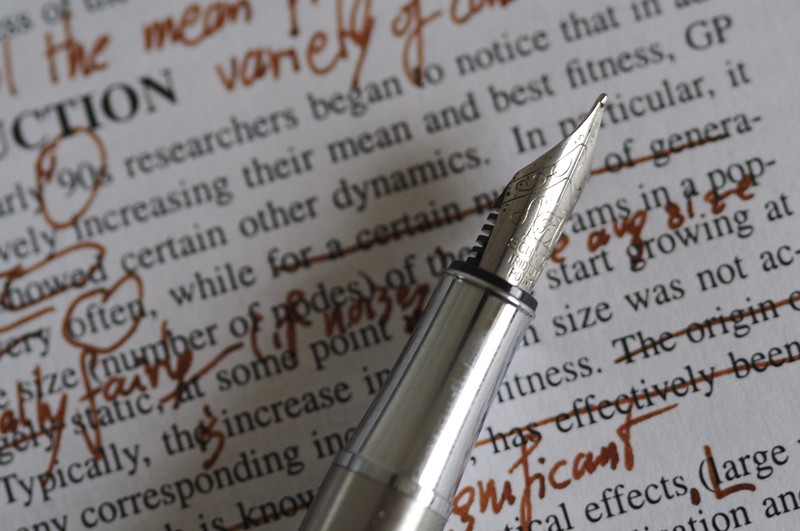
Note: I’m striking out text, with any replaced text or notes in red, because my version of this novel would be called ONE SHADE OF RED after all the red ink we spill on this thing. Also, I don’t know what happened to this post. A friend wants to use it as an editing example, so I’ve resurrected it and updated the piece a little. Enjoy.
Also: If you have a famous novel with a brilliantly awful first page that needs serious red ink, send me your nomination.
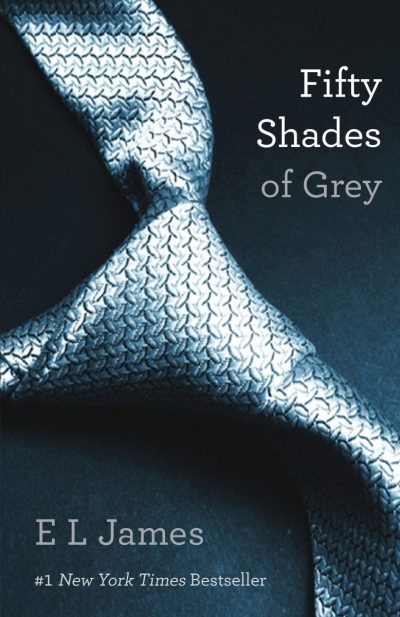
FIFTY SHADES OF GREY
I scowl with frustration at myself in the mirror. (This may be a world record: bam, in the first sentence, she breaks a cardinal rule of fiction writing: don’t tell readers what the hero or heroine looks like by having them stare into a mirror, gaze upon their reflection in a pond or, I don’t know, whip out their driver’s license and say, “Huh, five-foot-ten, a hundred and twenty pounds, red hair, green eyes and a few freckles. Howbout that?” Ugh. This is not exactly “Call me Ishmael.”)Damn my hair – it just won’t behave, and damn Katherine Kavanagh for being ill and subjecting me to this ordeal.(Unless the heroine’s hair is crucial to the plot — unless she starts out with unruly hair in Act 1, switches to a bob in Act 2 and shows how much she’s grown and changed by rocking a purple Mohawk in Act 3, the hair, it is Boring, and a Distraction. Also, nobody refers to friends and such by their full name. If she’s your bestie, you say “Katherine.”)I should be studying for my final exams, which are next week, yet here I am trying to brush my hair into submission. I must not sleep with it wet. I must not sleep with it wet.(Enough already with the hair. Seriously. The only two words with any kind of real conflict and potential are “final exams,” and unless she flunks those, and therefore gets kicked out of university and has to live under a bridge in a cardboard box, it does not matter for the story.)Reciting this mantra several times, I attempt, once more, to bring it under control with the brush.(More about the hair? MORE? Not necessary, not interesting and not entertaining, unless her hair is secretly a sentient being, organizing a plot to take over the world, one follicle at a time. I’m guessing Bruce Willis, being immune from such attacks, will foil this plot.)I roll my eyes in exasperation and gaze at the pale, brown-haired girl with blue eyes too big for her face staring back at me, and give up. (Back to the staring-at-the-mirror trick, which has to go. Find another way to describe the heroine.) My only option is to restrain my wayward hair in a ponytail and hope that I look semi-presentable.(Now we’re beating the Dead Hair Horse on its way to the glue factory.)
Kate is my roommate, and she has chosen today of all days to succumb to the flu. Therefore, she cannot attend the interview she’d arranged to do, with some mega-industrialist tycoon I’ve never heard of, for the student newspaper. (Awkward. First reference is Katherine Kavanaugh and now she’s Kate — just call her Kate both times, and let’s clean this whole thing up. Also, how many student newspapers score interviews with “mega-industrial tycoons” … who you’ve never heard of? If they’re really mega, then you have herd of them. Bill Gates, Steve Jobs and so forth. If they you haven’t heard of them, they aren’t mega at all. Edited text follows in red.)Kate is my roommate and she’s chosen today, of all days, to succumb to the flu. That means I’m stuck interviewing some industrial tycoon for the student newspaper.So I have been volunteered. (Redundant.) I have final exams to cram for, (already said that) one essay to finish, and I’m supposed to be working this afternoon, but no – today I have to drive a hundred and sixty-five miles to downtown Seattle in order to meet the enigmatic CEO of Grey Enterprises Holdings Inc. As an exceptional entrepreneur and major benefactor of our university, his time is extraordinarily precious – much more precious than mine – but he has granted Kate an interview. A real coup, she tells me.
Damn her extracurricular activities. (The last sentences were brought to you by the letter E: enigmatic, exceptional entrepreneur, extraordinarily, extracurricular. There are other modifiers that start with the letter E: extraneous, excruciating and ejector seat. I am looking for the handle, because it’s time to pull it.)
Kate is huddled on the couch in the living room.
“Ana, I’m sorry. It took me nine months to get this interview. It will take another six to reschedule, and we’ll both have graduated by then. As the editor, I can’t blow this off. Please,” Kate begs me in her rasping, sore–throat (compound modifier) voice. How does she do it? Even ill
(end of page 1)
Editing notes
Are you kidding me? ARE YOU KIDDING ME?
So this the first bit of a novel that sold a gazillion copies and rocked the literary world. It starts with an extended riff about wet hair and ponytails, as the author tells us how the heroine looks by having her look in a flipping mirror, goes back to the hair, uses every adjective and adverb in her dictionary that starts with the letter E and sets up the incredibly high stakes of whether or not a college student can tame her unruly hair and cram for her finals when she is forced — FORCED — to drive to Seattle and interview some billionaire for her friend.
God bless anybody who sells a ton of books or movie tickets. I adore books and movies, and the more people read books, and see good movies, the better.
HOWEVER: the first page of a book is a lot like the trailer for a movie. You start out with your best stuff, and it’s a rock-solid guarantee that the writing doesn’t get magically better ten pages or 100 pages later. The first page, and the first chapter, get polished and polished until they are a shiny diamond made of words.
Maybe you could argue this book is the one exception to that rule. From the reviews of this book, though, that’s not the case.
Why did it sell so well?
I believe, deep in my soul, that packaging matters more than the product.
The title of a book — or a movie, or a TV show — can save your bacon or kill you dead.
The cover of a book, or poster for a movie, is the next most important thing, because it’s what people see when they decide what to buy in Barnes and Noble or what to see on Friday night at those giant buildings where popcorn costs $9 a bucket.
You can’t pitch quality.
If you gave this a more typical title for the genre, and a more typical book cover, you’d probably end up with a title like A BUSINESS AFFAIR and some kind of Ryan Gosling looking guy wearing a suit on the cover with the heroine nearby, messing with her ponytail while she wears the highest of high heels and a business suit with a skirt that is just this side of immodest. Or the cover would feature a blindfold and a pair of handcuffs. That sort of thing. You know, something like this:
See? Here we go. The cover above isn’t just a good representation of what I’m talking about. I bet it’s a far, far better book. If you gave FIFTY SHADES OF GREY a more normal title like this, and more typical cover, I would bet you my house, my car and my first-born son that the book would not sell like hotcakes and get turned into movies.
The unusual title and cover isn’t a side issue. I believe it’s the entire reason this book went viral.
True story: guess what the author of THE GIRL WITH THE DRAGON TATTOO wanted as a title for his novel? Go ahead. Guess.
Here’s the answer: MEN WHO HATE WOMEN.
Raise your hand if you think that title would have set the world on fire and led to hit movies.
The title and cover — the packaging — are 90 percent of the battle.
The packaging matters more than the product.
FIFTY SHADES OF GREY is an interesting, literary title. The cover photo of a grey tie is also atypical of the genre and really stands out. The combined effect gives the book a literary veneer.
Some people might feel embarrassed getting on Flight 435 to Frankfurt and pulling out a paperback with A BUSINESS AFFAIR on the cover with a blindfold and handcuffs on the cover. And you can bet the male audience for such books is hard to find with a microscope.
Give it the gloss of lit-rah-sure, though, and that makes it okay for some people to read what they might never do: romance and erotica.
And hey, I respect the hell out of romance authors. Have learned a ton from them. So I’m not talking smack about the genre here–I’m specifically talking smack about the first page of this specific book. There are far, far better examples of romance out there. Amazing writers. Go support them.
FIFTY SHADES reminds me of the early Eric van Lustbader novels, like THE NINJA, which I think were hot sellers because they slipped in naughty bits to readers — mostly men — who expected, I don’t know, ninjas sneaking around at night and fighting. It was like a James Bond movie where they didn’t fade out when 007 kissed the girl. I can tell you 14-year-old boys around the globe had their minds blown. You can print this kind of stuff without getting arrested? I can buy it at the store and they don’t ask for ID? NO WAY.
And let’s give respect where it’s due: there’s an editor somewhere who came up with this title, and a cover designer who thought up the idea, got the right photo and nailed it.
Open up that brilliant cover, though, and you eventually get to the first page, which is a hot mess. And from the reviews, it doesn’t get better on page 2 or 152.
VERDICT
I truly thought, deep in my soul, that you couldn’t top the first page of THE FOUNTAINHEAD for a famous novel that is famously bad. But yes, we have a new champion.
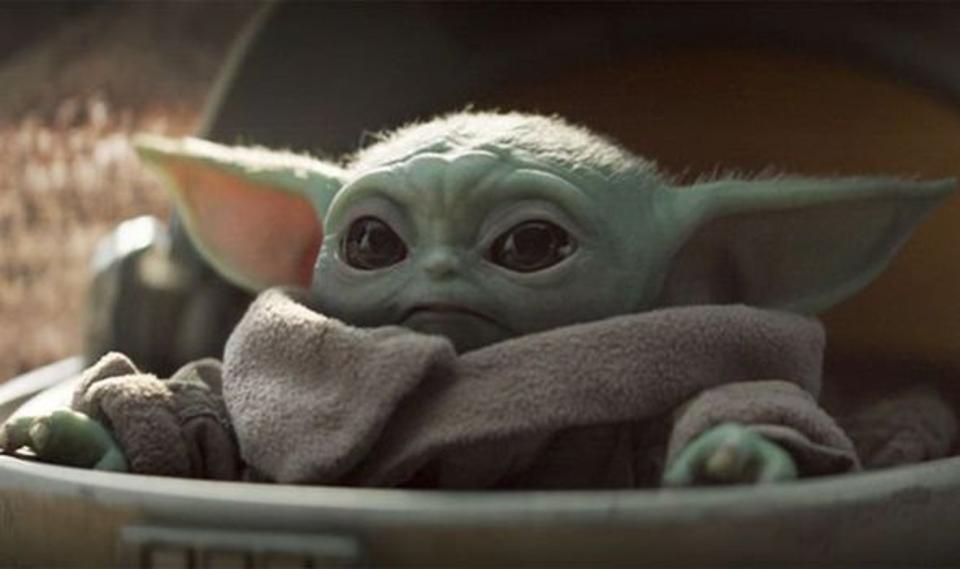
Listen, the short and Cheaty McCheatypants answer to this question is simple: Baby Yoda is TOTES ADORBS.
Yet the real answer goes a lot deeper than that, and there are lessons here in terms of story and structure. As somebody who grew up watching the original trilogy and hating the prequels, it gives me joy to see THE MANDALORIAN doing everything the opposite of the silly prequels.
Warning: this post is full of spoilers. I mean, completely packed with them, like chocolate chips in a gooey cookie.
Reason No. 1: Sparse, Memorable Dialogue versus The Worst Dialogue in the History of Cinema
The Mandalorian doesn’t talk much, and The Child (Baby Yoda) doesn’t talk at all. And mostly, they don’t need to, with a lot of storytelling done through visuals.
But when there is dialogue, it’s interesting and memorable. Two simple phrases are already being spread around IRL: “I have spoken” and “This is the way.”
In the three sequels, the dialogue is wooden, long and terrible. Nobody in the office is riffing off “I hate sand” unless they’re making fun of the sequels.
Reason No. 2: Gritty and Real versus CGI Fakeness
You can’t immediately tell what’s CGI and what’s a practical effect in THE MANDALORIAN, and they’re clearly leaning hard on practical effects and settings that are real, gritty and dirty.
Mando’s cape is torn. He’s always getting muddy, dusty or shot up.
In the sequels, everything is CGI’d to death. It feels too clean, too perfect, too fake.
Reason No. 3: Atmosphere versus Spectacle
Sure, there are giant battles and amazing special effects in the sequels. George Lucas put all his special effects people to serious work.
THE MANDALORIAN is about atmosphere, mood and characters that you care about–which makes the action smaller in scale and far more important to the audience.
Reason No. 4: Natural Humor versus Forced Dad Jokes
I love how there’s a lot of physical humor in the new series, along with unexpected surprises like the Jawas, who are a real problem after scrapping Mando’s ship but also a great bit of comic relief. You need that when Mando is basically the Man With No Name (Clint Eastwood) in all those spaghetti westerns.
The humor reminds me a lot of what we saw in the first few Indiana Jones movies, and in the original trilogy.
In the sequels, what passed for humor were essentially flat lines of dialogue–dad jokes–and the physical humor we got were things like Jar-Jar Binks being incredibly clumsy. No. Just no.
Reason No. 4: Making Us Care and Want More versus Telling Us Too Much and Expecting Us to Care
Exposition is ammunition. We hear just enough about Mando through dialogue from other characters and from his actions.
That taste, and the mystery about him, makes us want to know more.
In the sequels, we got lectures about senate politics and midi-chloridians. It was not pretty.
Reason No. 5: Real Surprises versus We Know Exactly What Will Happen
There are constant surprises in THE MANDALORIAN, but each payoff has setups that make sense.
In the sequels, we knew where the story would wind up, even when the setups weren’t really there, and there weren’t a ton of surprises on the way there. Nobody really suffered or changed except Anakin and Padme; all the other characters were flat. Obi-Wan and the Emporer didn’t really change from the first movie to the last. Neither did anybody else.
Mando is really an anti-hero. He does his job as a bounty hunter brutally and efficiently, including capturing The Child, and his decision to go back and save CUTE BABY YODA from the stormtroopers is not quick or easy. In fact, how they do it is rather neat, and done completely through visuals when he makes that decision. Beautiful.
Other characters also make surprising choices that do make sense, like the Jawas agreeing to trade The Egg for all of Mando’s ship parts. A less skilled writer would have had Mando hunt down the Jawas in their sandcrawler and shoot his way to those parts.
Verdict
The acid test for me is, “Would I watch this again?”
If you want to get completely serious, expand on that scale with, “How much would you have to PAY ME to watch this again” compared to “How much would I willingly PAY to see this again, whether it’s in a theater or on a magic smartphone?”
I’ve already watched all three episodes again. Did not get tired of them at all, and would happily watch all three again tomorrow. They’re fun and interesting.
The three sequels? You’d have to pay me to watch even one of them again.
Well done, Jon F., Deborah Chow, Pedro Pascal, Nick Nolte (what?!!), Carl Weathers (yes!) and everybody else involved in this show. You’ve restored my faith in Star Wars.
Yes, that headline is an intentional nod to Marie Kondo and her method of tidying up, where you hold up each possession and ask yourself, “Does this spark joy?”
I keep seeing some writers talk about how hard, or even painful, writing can be.
And sure, writing at a high level isn’t easy. It takes a lot of time, talent and sweat.
Yet I’m going to argue that conventional wisdom here is completely wrong. The entire process of writing and editing not only can be, but SHOULD BE, a joy. And if it’s not, you should switch things around to make it fun rather than torture.
Reason Number 1: A better product
Humans are designed, through millions of years of evolution, to seek out pleasure and avoid pain.
If your writing and editing process are inherently painful, your body and brain will rebel every time you sit down at the keyboard or pick up a pen.
That’s unhealthy and unsustainable. And it makes for a bad product, because you’ll rush through it as fast as you can, to get that pain over with.
I’m not arguing against speed here. Writing fast, and in the flow, is a beautiful thing that should be embraced.
Yet if the process itself is painful, you’re going to (a) avoid it, (b) catch writer’s block a helluva lot and (c) not produce what you’re capable of doing.
Reason Number 2: You have to make a mountain, then let things go
Marie Kondo’s key instruction when tidying up is to make a mountain–of your clothes, your books, your papers, whatever it is you’re cleaning up. Then you go through each item and decide whether it sparks joy. If it doesn’t, you give it away to Goodwill, recycle it or send it off to Never Never Land.
Writing anything important should begin the same way.
Never try to research and edit while your write a first draft. Make a mountain of your research, ideas and notes. Look at each item. Does it spark joy?
Put the ones that spark joy in a special file or folders.
Keep the marginal things in Give Away place, a scratch file. This is also a good way to let yourself edit ruthlessly, and avoid feeling terrible about possibly killing words that took you hours to research and write. You’re keeping them in a safe home. They’ll be fine, and you can recycle them for something else if needed.
Trash what you’ll never use. And surprisingly, doing all this tends to cut your mountain down to a hill that’s only 25 percent of your original pile.
When you’re only dealing with a tiny hill instead of a mountain, writing anything of length becomes insanely easier. Instead of feeling overwhelmed, you feel confident, and all the raw material’s you’re working with spark joy.
Writing anything of length takes discipline to get through the hard parts. Which will happen.
Joy is the fuel that gets you over those speed bumps. It’s hard to crank away at something kind of boring, like proofing a document, or doing layout, if you don’t have a reward waiting on the other side. If you only anticipate more drudgery and pain, why push through it?
Cutting down your mountain of raw material to a small hill that sparks joy also helps make these tough spots a lot smaller and more manageable.
Reason Number 3: You have to feel the emotion you want readers to feel
This is literally the advice we give, as speechwriters, because simply delivering lines without mangling them–in a speech, a play or a movie–isn’t enough.
You have to actually feel the raw emotions you want your audience to feel.
Because an audience doesn’t feel what you TELL them to feel. They mirror your emotions.
And I’ll argue that the best writing and speaking evoke the emotions of joy and wonder.
Sure, there are times in novel, screenplay or speech when you want the audience to feel sad or angry. But you can’t write anything of length that’s entirely angry or 100 percent sad. There has to be a mixture of emotions.
What do people want? They want joy, wonder and laughter. The other emotions, like anger, fear, sadness and horror, are powerful spices you can’t pour into a dish. They need to be used carefully and sparingly.
The best writing I do is full of joy and wonder because that’s what I feel while writing it. And yes, if you’re doing a story or speech about something sad, it’s a good sign that you tear up while writing it. If I don’t cry a little when writing something profoundly sad, then I’m doing another draft.
And if something buried in your mountain doesn’t spark joy–whether it’s a chapter in your epic novel about elves with lightsabers and the trolls who love them, a play where all the actors are hanging upside down the entire time or the process by which you edit and proof something–try something else.
Talk to other writers and editors on Twitter, by email or in person at conferences. They’re a friendly bunch. Ask what they’ve figured out to make some of the hardest and sometimes painful tasks into activities that are fun. Personally, I find the final spell-check and editing of a novel to be a long, hard slog, so I’ve turned it onto a game to see how many words I can kill, especially repetitive words or phrases. And now it’s a kick in the paints.
So please, embrace the pleasure of writing and editing. Feel the emotions you want the audience to feel. All of them.
Because writing and reading should do always, always spark joy and wonder.
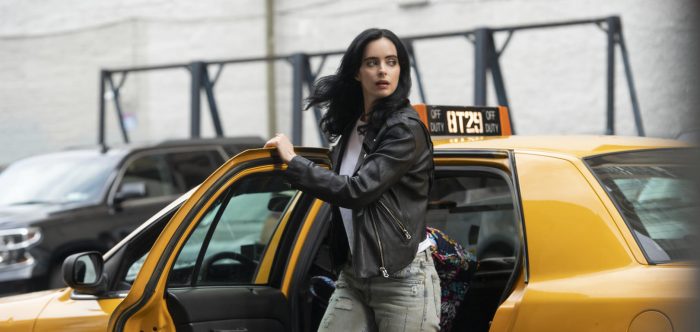
So the last season of GAME OF THRONES went sideways, according to All the Fans–and as somebody who’s now watched all three seasons of JESSICA JONES, the writers and showrunners make the same storytelling mistake with the ending.
And listen, the ending is everything.
How can a gritty, superhero series screw up in the same way as an epic with swords and dragons?
Here’s how. (Warning: this whole post is Spoily McSpoilerface.)
Reason No. 1: Always save the Big Bad Guy for the finale
For five-point-seven billion years, GAME OF THRONES built up the icy blue Avatar-looking guy, the Night King, as the Big Bad of the series.
At the same time, the show served up the Mother of Dragons and her cousin/boyfriend Jon Snow as heroes, as far as what passes for heroes go in a story where everybody is a murderous nutbag.
But there’s no real protagonist in this giant cast, and Ayra is the one who offs the Night King long before the final episode.
Same thing with the last season of JESSICA JONES.
For all of Season 3, the Big Bad was this serial killer known as Salinger.
But instead of saving a confrontation with the villain for the finale, we get meh from both series.
The Night King’s death should have been saved for the last episode, with the Mother of Dragons or Jon Snow being the fan favorites to sit on the Iron Throne.
Instead, the Night King got killed and the show became a hot mess. Nobody was aching to see Emilia lose it and have her dragon fry the city, or see Kit stab his former lover, or have Bron-whatever take the throne for some random reason after Tyrion goes all Jar-Jar in the Galactic Senate on us. No. Just no.
JESSICA JONES repeats the same mistake. Salinger gets offed before the final episode.
Reason No. 2: Once the Big Bad is dead, your momentum goes buh-bye.
Let’s talk about other movies we’ve all seen for a second and play this out.
RETURN OF THE JEDI — Instead of Vader tossing Emperor Wrinkly Face down the bottomless pit and the Death Star getting blown up, all that happens in Act 2, with the entirely of Act 3 all about how Luke has to hunt down and fight Han Solo after he went nuts and helped the Ewoks slaughter and barbeque 15,000 Imperial stormtrooper prisoners.
Terrible, right? This is much better.
You have to save the Big Bad for the final act, the final episode, the last thing. Anything else makes the story out of order and flat.
Reason No. 3: If you’re going for tragedy, you have to fully commit
A mixed ending can be amazing. Some of the best movies and books have mixed endings.
CASABLANCA has the hero giving up the girl for a greater cause–beating Hitler and winning World War II.
But a mixed ending is also tough to pull off.
When you get audience rooting for a character, and seeing them as a hero, it’s tough to see those character take a heel turn at the last minute.
In fact, audiences reject it.
This is why tragedies fully commit.
They show the full fall from grace, from beginning to end, with the protagonist serving as both hero and villain. And the protagonist falls due to their own hand, via hubris.
BREAKING BAD did this perfectly. Sure, you saw things from Walter White’s point-of-view, and rooted for him a lot of time, but his ending felt absolutely right. He’d definitely sinned, and his downfall was deserved.
If you’re going with a tragedy, do it from the beginning with the protagonist. Not a side character like Trish.
It can work for the main character hero to sacrifice themselves for the sake of a secondary character. That’s not a tragic ending; it’s noble and heroic. See PRIVATE RYAN and ARMAGEDDON and five zillion other movies.
Firing up Word is fine for writing anything short. For anything big–novels, screenplays and such–you need specialized tools.
Believe me. I’ve done it both ways, and trying to do something large and important on a word processor will drive you to drink.
Word processors don’t cut it
Writing a big project is like building a house. To keep on track and make sure the thing doesn’t fall down, you need (a) solid blueprints and (b) heavy equipment.
Short writing projects are like the little bits you can tackle in your garage, with the tools sitting around and the scrap wood in the far corner.
And sure, you can try to wrestle Word into doing heavy lifting by going wild with navigation options and headings. It’s sorta possible.
Sorta.
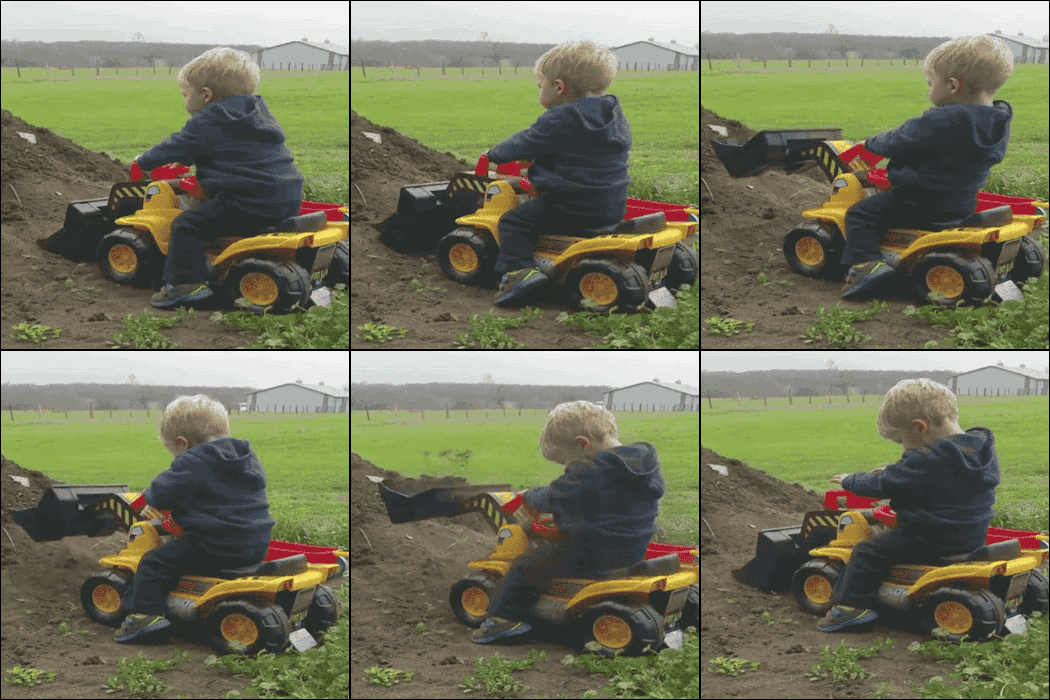
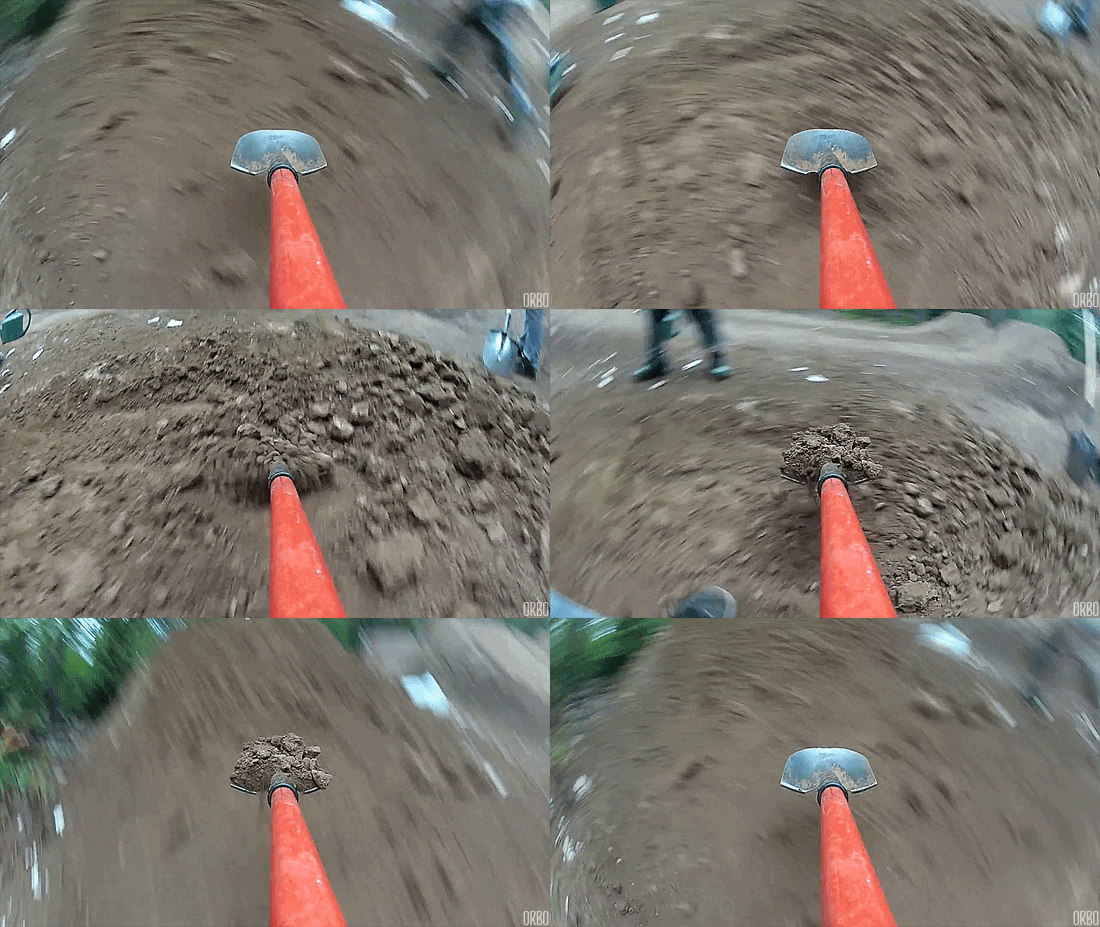
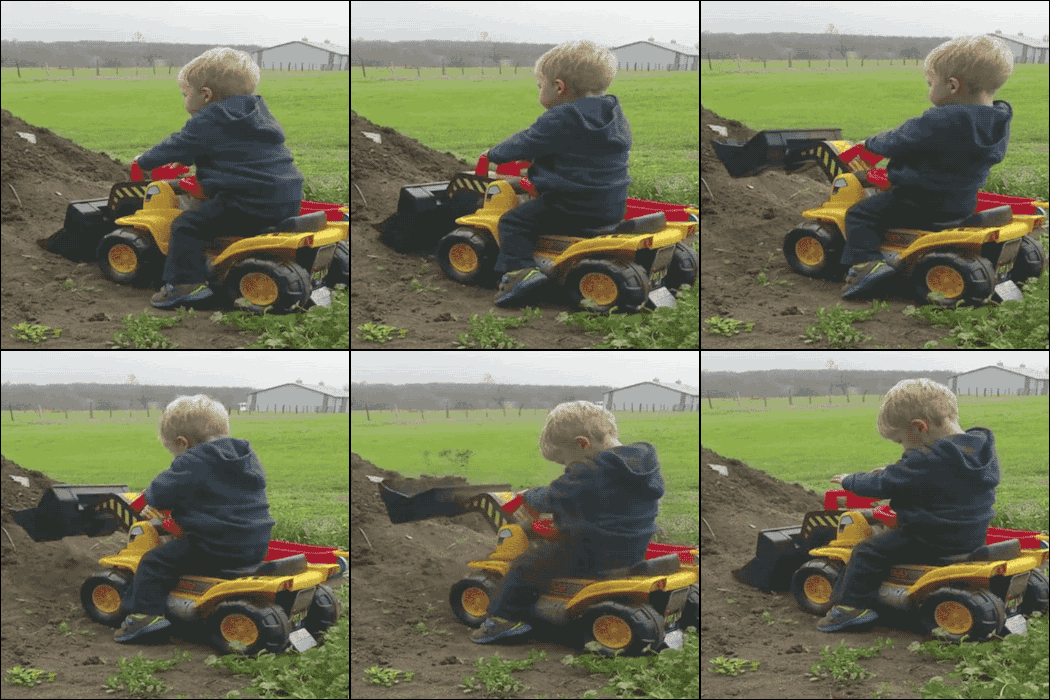
Yet no matter how hard you try to force Word into being able to handle a giant project, it’s like trying to excavate the foundation of your new house with a shovel instead of a bulldozer.
Even if you try to organize a single Word file that is organized enough to hold all three acts of a screenplay or all 100,000 words of your epic tale of when the elves rose up against the great tyrant, Santa the Claws, there’ll be all kinds of OTHER files hanging around.
A file about settings and another for characters. One for ideas and notes.
Another for loose text you cut out of a scene but might want to use elsewhere. You get the idea.
Switching between all those files is tough. Just getting a feel for things are is hard. How many words are all the chapters in Act 2 right now versus all of Act 1? Dunno. Get ready for a whole lot of highlighting and scrolling.
One tool to rule them all
I don’t care what you pick–Scrivener, yWriter, Manuskript, OneNote, Atomic Scribbler–as long as you test drive a bunch. For starving artists and writers out there, some of those choices are open source and free.
Try them all and pick one. You won’t go back.
There’s nothing like being able to see the whole project at a glance, then dive into different bits without digging around for which Word file or folder you put in all that stuff about pickpockets in Istanbul.
I just typed THE END on a novel written in Scrivener (yes! very excited about this one, and to beta readers, let’s chat). Am in the middle of transferring into Word for the final formatting and editing. Believe me, writing 80,000 words in Scrivener was a happy walk in the park compared to when I climbed that mountain using Word.
Haven’t used every single alternative, though I use OneNote at work and home and it’s both (a) pretty common and (b) pretty good.
A few lessons learned from my own silly mistakes
First, don’t get in a hurry to export your screenplay, Great American Novel or picture book about knitting hats for cats from Scrivener into Word.
You don’t want to export the whole thing right off because there’s an excellent, excellent chance you’ll have to import it all back in, which is a massive pain. Because once you look at it all in Word, you’ll spot six zillion structural things to fix that are a sweaty endeavor in a word processor and far, far easier in something like Scrivener.
And yes, I’ve made this mistake. As in last week.
Heavy equipment, right? If you’ve got a choice between hundreds of hours with a shovel versus two hours with a bulldozer, pick the dozer.
The second thing is don’t ever export the entire project.
Seriously. Do it in pieces.
Sure, every program out there has some kind of magical option on the menu tree that saves your entire creation as a .docx, PDF or whatever. Resist temptation.
Put the first few scenes of your screenplay or novel into Word for that final editing and polishing. Meanwhile, keep on doing heavier work on the later stuff of Act 2 and 3.
Only export scenes or chapters into that Word file when they’re truly, truly ready.
The third thing is that paragraphs that seem short and sweet in something like Scrivener–especially if you have a big screen–turn ginormous when you pop them into Word on double-spaced pages.
Finally, get religious about making backups. OneNote, Scrivener and similar programs work their magic in mysterious ways, especially in how they save all those separate bits. It’s complicated. I believe quantum particles and gravitational waves are involved.
The way these beasts save their files is nothing like a Word doc, where you can see that solitary file and copy the thing to a thumbdrive or email it to yourself. OneNote in particular is tricky with saving. I’m still not sure where, exactly, it’s saving things half the time. Be careful out there.
But those are little tips and tricks. There are no giant tradeoffs, like a choice between a moped and a pickup truck. The switch to heavy writing equipment is always worth it. The only real question is what type and brand of literary bulldozer you should drive.
P.S. What heavy writing equipment do you use today–and what other ones have you dated or divorced?



 The Red Pen of Doom