The business of music–and movies, books, plays, and all other art–has always been rather upside down when it comes to artists getting a decent share of the monies so they can, I don’t know, pay the rent.
And it’s no secret that musicians have had a rough time lately, just like other creative types, with people no longer paying cash monies to download mp3’s after they stopped swiping their debit cards for CD’s and cassette tapes and eight-tracks and vinyl. Yes, some hipster types still buy vinyl. Just not nearly not enough to support bands.
So musicians, big or small, rely on selling tickets to live shows along with T-shirts and other merch. If they are famous, and lucky, they get decent money from streaming sites.
Might be a musical revolution
Beyoncé and Taylor Swift are both going in a different, smarter direction with concert movies.
Taylor Swift: The Eras Tour Movie snagged $128 million million in it’s opening weekend. Not week, weekend. AMC alone said it got $100 million in advance ticket sales. This thing will break all kinds of records.
Beyoncé might go on and break the new records. It could get huge.
Why this is brilliant economics and marketing
Concert movies or documentaries aren’t completely new. The size and impact of these two movies, though, will shake up everything.
What’s hilarious is I doubt the expenses are that high. If you’re already putting on a concert, with lights and roadies and backup singers and musicians and dancers–it is not that much extra cost to hire professionals to film during the show and behind the scenes. It’s not much more money to hire a director and editors to go through all that footage to shape the best movie.
Shooting a movie from scratch, now, costs a mountain of cash. A single Marvel movie can run $200 million to $300 million. Or almost double, if you add in marketing. Nobody understands Hollywood accounting, not even Hollywood.
One music video can run up millions on the tab, since you’re also starting from scratch and need dancers, sets, and days to shoot it.
The numbers aren’t all in yet. But I would bet every dollar in my pocket, and yours, that the return on investment for Taylor’s movie and Beyoncé’s film will both be absolutely bonkers.
These two mega-movies will also boost the health of AMC’s stock, causing millions of redditors to lose their minds, refinance their mortgage to buy more stock, and get divorced when their spouse does not understand why their life’s savings got lost on some kind of NASA-related quest to “go to the moon.” Pro-tip: do not do this.
Will this be a trend? Yes, yes, and yes
So yes, this can and should start a trend.
I am only a casual fan of Taylor and Beyoncé, and would never spend a day & night driving to Seattle or Portland to shell out $300 or $500 to see a live concert plus more cash for a hotel because I would not make it home until oh-dark-thirty along with dinner and breakfast and all the things.
Yet I would happily, happily spend $19.89 (symbolic and funny, very nice, Taylor) to pop down to a local theater and watch the concert movie. Absolutely.
And the same would be true for at least 50 other bands, big or small, that I adore.
Can it scale down to smaller bands?
Absolutely. Medium-popular bands could easily spend a lot less and still come out with a cool concert movie.
Even local bands could pull this off. A band in my backyard keeps cranking out great music videos on a shoestring. Love them.
I’d much rather pay to watch a concert movie in a theater than wait around for a band to get close enough for me to drive or fly and see them.
Honestly, I’ve seen fewer and fewer movies in theaters lately after coming down with Superhero Movie Fatigue.
It would be seven separate flavors of awesomesauce to see a hot trend of new concert movies coming to our theaters, week after week. Bring it. I will buy popcorn.
A man on Twitter recently had the genius idea to mansplain to romance readers and authors all about their genre. He could separate the quality romances from the trash simply by looking at the cover. And yeah, he basically called most romances trash.
Somebody had to call 911, because that man was quickly murdered by words.
There’s no need to link to the Twitter thread, which is obscured by crime scene tape. Homicide detectives are still picking up bullet casings and bloody knives.
This man isn’t alone, though. Romance novels are the biggest sellers in the book industry, the foundation of the business, but they get a lot of grief, too.
Years ago, I was smart enough not to say such things on the interwebs, but I saw different genres of fiction as living on various planes of quality. Great Literature on top of the pyramid, then everything else.
Now, my thinking is completely turned around. Here’s why.
There’s no link between genre and quality
A lot of the classic of literature, now held up as the highest quality, were considered trash when they were first published.
Edgar Allen Poe wrote horror and died in poverty. You could call it literature, but it’s still horror.
Tons of what we hold up as of the highest quality are actually written for kids.
Dr. Seuss. Winnie the Pooh. Alice in Wonderland. Harry Potter.
There’s amazingly beautiful writing coming out of horror and sci-fi and romance–and totally unreadable nonsense on the shelves of Serious Fiction.
For every CATCH-22, there are 5.4 bazillion books like the just-released ANTKIND. Seriously, head to Slate and read the review.
What’s the purpose of a book or movie?
Stories have two basic missions: to entertain and educate.
To make you feel, and to show you worlds you didn’t know existed–or to look at the world in a different way.
There’s a misconception that Great Literature contains the highest meaning, that it’s the purest form with the strongest message. The opposite is true. I’ve read mountains of books, and I’m not alone in noticing that a lot of literature is dense and obscure. A slog. And because it’s too popular or Hollywood, the structure and endings of literary novels and movies are often backward, if not bizarre.
That muddles the message. Because even if somebody manages to slog through the entire thing, there’s a good chance they won’t understand the ambiguous and complicated point the author intends.
What’s worth living and dying for?
Think back to English Lit in college and the foundation. Literature, and all stories, are supposed to tell us what’s worth living for and what’s worth dying for.
Romances focus on what’s worth living for–who should you love.
Thrillers are centered around what’s worth dying for.
So those two “trash” genres split the great question in two. I’d say they do a beautiful job of tackling both halves of that question, too.
Every niche and genre has a question they’re trying to answer
Other fields of fiction derided as junk also tackle huge, deep topics.
Horror is really about dealing with fear and death.
Comedies each make fun of an institution: suburban family life, corporations, showbiz, war, politics.
Dramas show that no matter how bad things get, there will always be heroes trying to stand up for what’s right.
Sci-fi and fantasy ask, “What if?”
Each of these has a distinct message and way of looking at a piece of the world. And sure, there’s no law requiring you to love spy thrillers or watch superhero movies.
What I’m saying is (a) give them each a chance and (b) don’t disparage what other people enjoy.
Every genre of storytelling tries to a fundamental question about life. They all have value–especially to the people who love them.
My love for Luc Besson movies is strong. THE TRANSPORTER is beautiful and completely rewatchable, THE FIFTH ELEMENT is creatively wild, and pretty much anything he does is worth checking out.
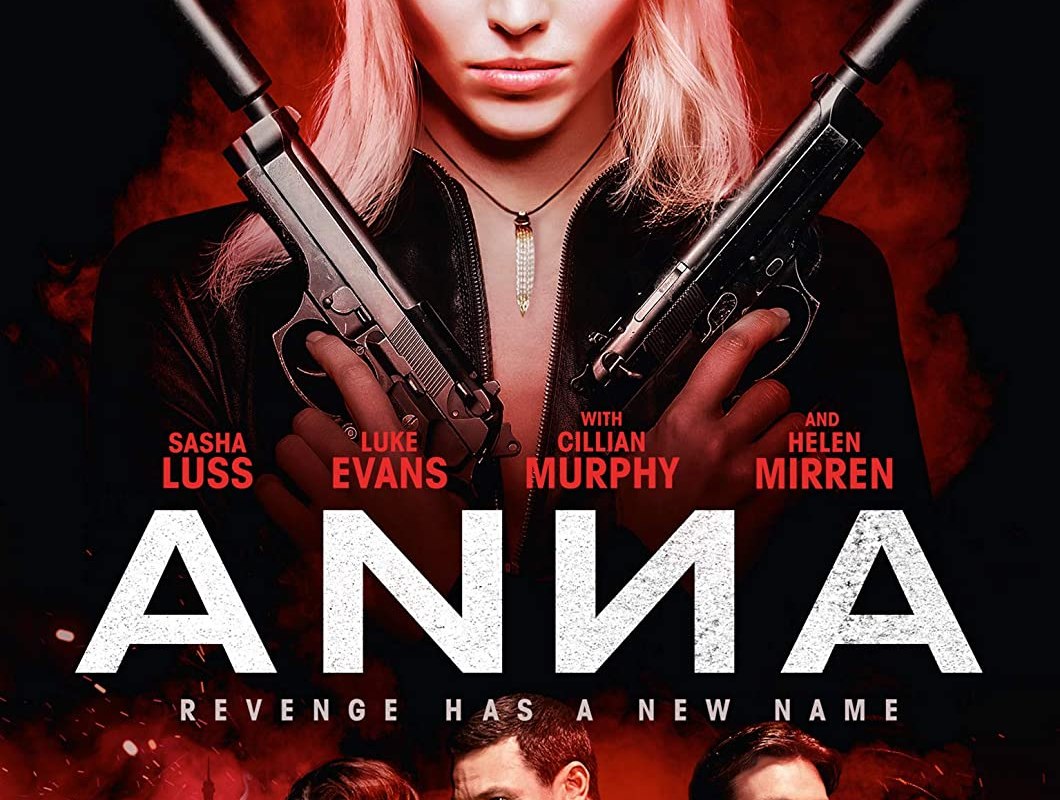
ANNA is another action movie with KGB spies, the CIA, John-Wick style gun fu and a lot to recommend it. You should fire up the interwebs and watch it when you’ve plumbed the depths of Netflix.
Yet there are laws for action movies, laws carved into our brains and souls by the sweat and blood of Action Movie Gods, and woe unto those writers and directors who willingly break these laws.
ANNA is good.
Unbreaking these laws could have made it great, and there’s always hope for a Special Edition Director’s Cut or whatever.
THE FIRST LAW OF ACTION MOVIES: SAVE THE BEST FOR THE CLIMAX
The exact genre doesn’t matter. Gunslinging westerns, martial arts films, spy thrillers, and Let’s Catch The Genius Serial Killer films all need to do one thing: escalate.
This rule actually applies to every movie and novel. Start strong, but end stronger.
It’s just easier to see and quantify with action movies, because you can do things like count bodies.
What do you want to avoid? The opposite, which would be starting out with your absolute best action scene, then a middling one, and finally an appetizer–or no action scene at all.
That’s basically what ANNA does. There’s a beautiful fight scene in a restaurant that happens early. You’re going to google the thing, so here it is:
Crazy good, right? It makes you expect something even bigger and better at the end.
Except you don’t get that. The climax kinda switches to pure spy thriller instead of action movie, giving the audience get triple-crosses and disguises and MISSION IMPOSSIBLE kinda stuff.
And it feels like a let-down. You’re cheering for our heroine to do the restaurant thing again on the bad guys, except everybody is basically bad and double-crossing each other.
THE SECOND LAW OF ACTION MOVIES: STICK TO ONE TIMELINE
When was the last time you saw a flashback that worked in a movie or book?
They don’t work. I hate them with the fire of a thousand burning suns.
Bad action movies give us a couple flashbacks of the Dead Mentor training the hero and imparting wisdom, right before being killed by gangsters or the villain. Good thrillers avoid flashbacks entirely.
ANNA gives us flashbacks and flashforwards out the wazoo, and it kills the story. Because really what they’re doing is going back to give the audience setups after they just watched the payoffs. It’s not surprising or fun–it’s a lazy way to patch holes in a story. “Hey, here’s three months earlier, which will explain why that just happened.”
No. Just no.
Keep it linear. One timeline, straight through.
THE THIRD LAW OF ACTION MOVIES: GIVE US A VILLAIN
Whatever you think of Tom Cruise, the last MISSION IMPOSSIBLE gave us a great, great bad guy: Superman/The Witcher.
Sure, there was an overt baddie, but he was a puppet of Superman/The Witcher, who was pulling all the strings. And since thrillers are about betrayal, especially spy thrillers, this was a great twist.
ANNA doesn’t give us a villain. There’s no final faceoff and beautiful fight. She slips away.
I’d argue that the most villainous character is Helen Mirren’s, who you can see in the trailer for a bit.
She does all sorts of Very Bad Things, and deserves to get completely Restauranted–but instead, Anna helps her take control of the entire KGB.
So yeah, not a very satisfying ending. Bad guys kinda win while the hero disappears.
VERDICT
Hey, this thing is still fun and completely watchable. Well worth firing up, and there’s nothing wrong with the actors. The lead actor does an amazing job–put her in more movies.
It simply could be much, much better with some structural tweaks. Save the best for last, Luc!
I take great pleasure in dissecting the first page of Popular Novels Which Actually Stink, or finding first pages that absolutely sing and figuring out why they’re so glorious.
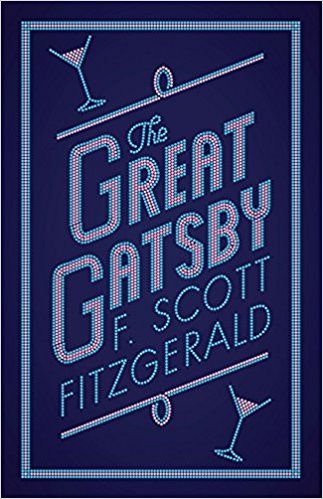
By request, today we’re taking on page one of a classic of lit-RAH-sure: THE GREAT GATSBY by F. Scott Fitzgerald.
Sidenote: There are 5,832 various editions and such, so you’re page one may end on a different sentence and such. I tried to stop at the end of a paragraph, though as this is an older book, back when paragraphs lasted longer than most CBS sitcoms, this is kinda hard.
THE GREAT GATSBY
In my younger and more vulnerable years, (missing a comma here) my father gave me some advice that I’ve been turning over in my mind ever since.
“Whenever you feel like criticizing any one,” he told me, “just remember that all the people in this world haven’t had the advantages that you’ve had.”
He didn’t say any more, (this feels like odd, unplanned repetition of the “any one” in the previous graf, so strike “any”) but we’ve always been unusually communicative in a reserved way, and I understood that he meant a great deal more than that. In consequence, I’m inclined to reserve all judgments, a habit that has opened up many curious natures to me and also made me the victim of not a few veteran bores. (Listen, we’re on the third graf already, and I’m not inclined to reserve all judgment, seeing how you’re coming off like a veteran bore.) The abnormal mind is quick to detect and attach itself to this quality when it appears in a normal person, and so it came about that in college I was unjustly accused of being a politician, because I wasbecame privy to the secret griefs of wild, unknown men. Most of the confidences were unsought — frequently I have feigned sleep, preoccupation, or a hostile levity when I realized by some unmistakable sign that an intimate revelation was quivering on the horizon.; for the intimate revelations(“intimate relations” twice in this sentence, so close together, doesn’t work at all)of young men, or at leastThe terms in which they express them, (comma deleted) are usually plagiaristic and marred by obvious suppressions. Reserving judgments is a matter of infinite hope. I am still a little afraid of missing something if I forget that, as my father snobbishly suggested, and I snobbishly repeat, (here we get repetition with a purpose for once and it does work) a sense of the fundamental decencies is parcelled out unequally at birth. (This is an awkward mouthful)
THOUGHTS: This is 100 percent interior monologue, which isn’t required by law to be boring. Though it sure leans that way.
Maybe it sets the mood.
However: If you’re basing a tragic hero’s entire motivation for making a ton of money to become a rich snob to impress a girl he loved and lost, and you’re hell-bent on starting page one with interior monologue about backstory, MAKE IT ABOUT THE GIRL.
Not the narrator. Not the narrator’s dad.
Not boring people who tell the narrator secrets while he pretends to sleep.
Make it all about the girl and Gatsby.
A huge part of the novel is throwing fancy parties to impress each other, right? I’m going off my memory from doing my own term papers on this thing. Never saw the movies. And when I do a first page, I try NOT to cheat by reading plot summaries and such, even if I’ve read the book.
Put a gun to my head and I’d delete this first page and start with the real inciting incident, which should be Gatsby and the narrator meeting the girl at a party way back when, so you can echo that later.
Or make it about about a small betrayal, from college or back during the war, to foreshadow the bigger betrayals and tragedies to come.
VERDICT: Doesn’t make me want to read more, which I wouldn’t unless the English 101 prof gave me no choice.
Sorry, F. Scott F.–can’t lie and say I liked this. Nuke the first page and go with a better hook.
Listen: the first page of a book shares something in common with the first moments of a song, the first five minutes of a movie, the first date, the first dance, the first steps of your first-born child.
It should be magic.
Raw and beautiful. Powerful and pure.
So on this silly blog, I pay particular attention to the first page of novels. Because you can bet Grandpa’s farm and every cow in sight that a brilliant page one foreshadows a good book, while a terrible collection of clichés and drivel on the first page will not suddenly improve by page 302 to make us laugh, cry and change our life forever.
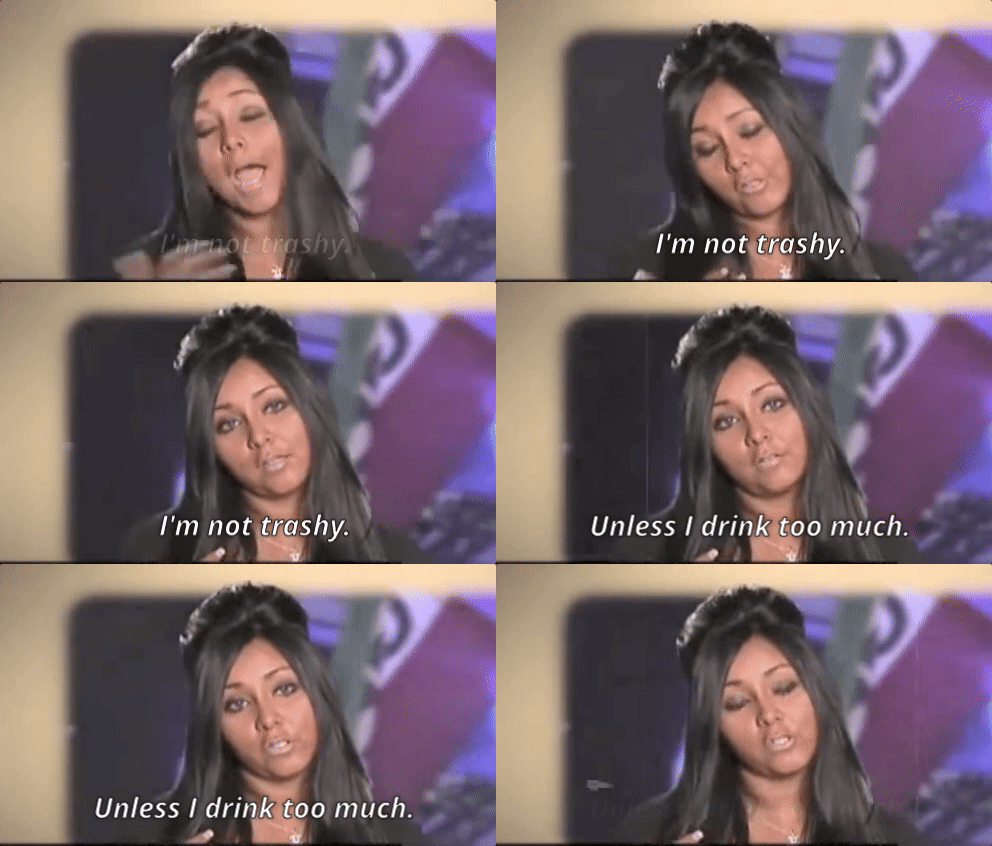
Today, we take on A SHORE THING, allegedly written by Snooki, though we all know she didn’t actually write it.
A professional ghostwriter did the boring “typing of words” part. Snooki did the hard work of cashing the check.
You will be shocked to learn her fellow castmates also got publishing deals, with Jwoww and The Situation also getting checks from publishers to put their infamous names on book-like substances.
Many trees gave their lives to give their words life.
I will pour one out for those trees tonight.
Here’s the text of page one, with edits and comments in red:
A SHORE THING
Life was hard. But a pouf? That should be easy. (Whoa, starting out a novel with a three-word cliché is a bold, bold move. Risky. And it doesn’t pay off here. Because anybody who says “life is hard” and follows that with an extended riff on the difficulties of Big Hair doesn’t actually have a hard life at all.)
Giovanna “Gia” Spumanti was a hair-raising pro. She’d been banging out poufs since age eleven, or as soon as her fingers were long enough to hold a bottle of Deluxe Aqua Net. (Maybe this is intentional, but the innuendo in the first two sentences of this graf is more juvenile than clever.) After ten years of trial and error to find the right combination of spray, twisting, and shine serum, Gia could add four inches to her overall height—which as five feet flat, she could use. Gia’s pouf defied the laws of gravity. It was her crowning glory. (“Crowning glory”–oh, how punny. Please riff on that more in the next sentence.) Although she’d love to wear an actual crown (here we go, as the prophecy foretold) of rhinestone tiara whenever she left the house, it just wasn’t practical. It could fly off on the dance floor and take out an eye. The pouf, however, wasn’t going anywhere (but up). (Wait: seriously? This is like one of those bad SNL skits with one joke they repeat for 10 minutes.)
Tonight, humidity was a bitch. Her thick black mane refused to cooperate. Gia brushed it out to start over—again—feeling discouraged. Her first night out in Seaside Heights, New Jersey, she wanted to present the best version of herself. Hundreds of guys would get a look at her, and she’d be searching among them for her near future fling(s). (I read a ton of fiction, and non-fiction, and this is the weirdest use of parantheticals I’ve seen in forever. Doesn’t work. Also, protags should be likable, and this graf of backstory just makes the reader see the protag as completely self-absorbed.) After the year she had back home in Brooklyn—landing and losing a couple of jobs and boyfriends—she deserved the sexiest summer ever.
Gia hoisted the front section of her hair, holding it high over her head with one hand.
COMMENTS
I binge-watched the first season of JERSEY SHORE while visiting my sister in H’wood, so I know enough to be dangerous about Snooki, The Situation and the entire sordid thing.
And no, this novel meant to be lit-RAH-sure.
However: Entertaining trash should still be entertaining, and well-done. This first page is neither.
In this sort of story, sure, you’re going to get a lot of interior monologue, including self-centered nonsense like this.
A full page about hair, though, is a bit much even if you put it in the middle of this kind of novel.
Dedicating the entire page to hair and backstory? Far worse.
Here’s the structural lesson I take from this hot mess: life is hard, and what’s even harder is turning a reality show villain into a fictional hero.
Because that’s what the stars of JERSEY SHORE are: comic villains absolutely swimming in a sea of nasty hubris.
Every comedy targets an institution. Sitcoms typically poke fun at families, marriage and kids. M*A*S*H* went after war. FRIENDS put the bull’s eye on young singles.
The producers of JERSEY SHORE knew Snooki, The Situation and the rest of the gang were comic villains. They’re only fun to watch to see what kind of trouble happens, and every piece of trouble is far from random. Nobody gets hit by a bus while they’re using a crosswalk.
Every episode is all about chaos and craziness that comes straight from the hubris of cast members.
Who will get drunk and start a bar fight?
Who’s so desperate tonight that they’ll hook up with anything and everything?
Which member of the cast is such a self-absorbed dipstick that they’ll get on the phone and try to order a pizza or a cab and give his last name as “Situation” and first name as “The”?
I haven’t read the rest of A SHORE THING and never will. The feeling I get, though, is this is meant to be a comic romp, with the Snooki character, Gia, set up as the protag. That we’re supposed to laugh with her instead of laughing at her.
Most people actively trying to collecting bazillions of Facebook “friends” are wasting everybody’s time, including their own.
Your number of Twitter followers doesn’t mean diddly.
Just saying these things is heresy to Internet Fanboys, who believe nothing is more powerful than the series of tubes.
If they can only find a way to implant a USB 3.0 socket in the back of their skull, they’ll be able to jack into the Matrix, do insane kung fu kicks and stop bullets JUST BY THINKING ABOUT IT, but they’re too busy looking at the woman in the red dress that they never leave the keyboard, go out in the real world and, I don’t know, kiss an actual girl.
Am I saying unplug from the series of tubes entirely? No. The internets, they are useful for many things.
I’m saying the real world is ALSO useful for many more things.
Why blog hits don’t matter
Everybody wants to be read. I mean, it’s sad to start a blog, put time and effort into writing great posts and have virtually no traffic.
However: let’s get practical.
When I started my old blog, it was to serve a specific purpose: a permanent home for the craigslist ad to sell the Epic Black Car.
WordPress is free. My sister, who is a flipping genius, told me that she loved working with the WordPress, that it was easy and fun. So I popped the ad on there, threw some photos in the craigslist ad and thought nothing of it.
Did it really matter whether I had 50 visitors a day, 500 or 5,000?
No. Not at all. Really, I wanted to sell one car to one person. Once.
The fact that silly ad went viral didn’t matter. Fun? Sure. But that’s all.
This post is like X-MEN: DAYS OF FUTURE PAST, except with printing presses and the web instead of Hugh Jackman.
We’ll go back in time, return to the present and into the future. Here’s how it started: for eons, news only traveled as fast as you could run, unless you had a horse or an army of trained pigeons. (Yes, this was a thing. Rather brilliant, really.)
Back in the 1700s, newspapers from London and Paris were put on sailing ships that crossed the Atlantic, and people lined up and paid real money to read news that was months old. Didn’t matter. It was new to them. Continue reading “The past, present and future of news”→
Why nine? Because Top 10 lists are popular, and therefore Boring.
But listen closely, for the case is strong for writing in the first-person plural, which we thought at first was second-person plural, and if we thought about it, which we should, first is better than second.
Also, research via the google proved that languages other than English include other amazing options. Just think of a novel written in fifth person past participle without a single letter E in the text. Think of it. Then think of a book cover with black text on a black background with black accents.
That artist from the ’60s who merely painted a canvas black will get sick with jealousy, and does he even know what presumptive mood is? Unlikely. But he’d talk our ear off about acrylic versus watercolor.
And now the list: Top 9 reasons to write in first-person plural
No. 9 — We create an immediate bond with our audience. We hear our voice, and we like it.
The only way to bond more quickly is if we put instant coffee in the microwave, going back in time.
No. 8 — First person is for narcissistic nancypants, polluting each page of text with “I,” “I,” “I,” and, for variety, strings of “me” and “my.”
It’s not about you, first-person singular. It’s about us, plural. Don’t we know that now?
No. 7 — The first-person plural has roots in the Greek chorus, a sturdy trunk from Ayn Rand’s Anthem and green, modern leaves with Joshua Ferris and his Then We Came to the End, which has to be doubly good because it also has “We” in the title.
No. 6 — It’s not “the royal he,” “the royal she” or “the royal I,” is it? No, no, no.
Take it from House Windsor: it’s the royal we. Accept no substitutes.
No. 5 — Third-person is common, bourgeois, and blasé. How many novels are written in third person, and do we ever read all of them?
There are too many, and the quality varies so much. That’s a sign and an omen, our astrology tells us.
No. 4 — First-person plural creates an emotional distance from the readers, which is sometimes necessary.
It’s like having wealthy relatives we don’t enjoy. We don’t have this problem, but if we did, we wouldn’t wish to spend time with them, but we wouldn’t want to get disinherited, either.
Plus, that exquisite distance creates a sense of foreboding and mystery.
If they can never know us, and believe we have no feelings, then we are, indeed, unknowable and omnipresent, literary gods. Or half-Vulcans with Underwoods and a hankering for Jeffrey Eugenides. We’re not sure yet.
No. 3 — A singular narrator can be mistaken, unreliable, reliably unreliabe, obtuse, acute but not cute, scalene or perpendicular.
But we are many, irrefutable, infalliable, translucent, effervescent, a closed plane of certainty and confidence.
We are legion, and it is Good.
No. 2 — Great literature is truly poetry, and great poetry uses first-person plural, such as Emily Dickison and her wonderful, “We send the wave to find the wave,/ An errand so divine.”
Do we want to be great or pedestrian? We choose great.
No. 1 — While second-person point of view was employed by Albert Camus, giving it the sheen of respect, and Jay McInerney found success with Bright Lights, Big City, we cannot ignore the massive volume of pulp fiction detective novels cheapening this choice.
Every such novel began in this sort of crude fashion: “You walk into your office and she’s already sitting behind your desk, drinking your Jim Beam and playing with your .38 special. But she’s got ruby red lips, trouble with the mob, and legs that just won’t quit, so you don’t do the smart thing and turn around to leave. No. You hang up your trenchcoat, take out your notebook, and listen to her sweet, sweet lies.”
His hero, Reacher, is beloved by fans for having the brains of Sherlock Holmes and the body of Conan the Barbarian. The man never gets outsmarted and is invincible in a fight. Here’s the last post about these books: Secret recipe for any Lee Child novel
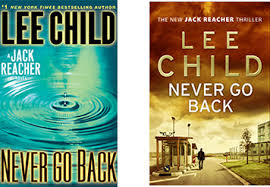
The latest Reacher book, NEVER GO BACK, slams smack-dab into the Superman problem. Because an invincible hero puts the B in Boring.
Did I enjoy the book? Yeah, it’s always fun to read about Reacher. With every new novel, though, Reacher struggles less and less to overcome the bad guys.
If the hero doesn’t sweat, the reader doesn’t worry. Or care.
Because I do care about Reacher and Lee Child, here are six ways to fix NEVER GO BACK.
Lee Child’s NEVER GO BACK. Buy two copies, one of each cover, because I say so.
1) Don’t simply remake THE ENEMY
The only other novel with Reacher in the Army was Child’s best book: THE ENEMY, a true mystery with all kinds of crazy twists and turns and a real sense of menace. Just like that book, the latest novel has big-shots in the Pentagon and such as the criminal masterminds, using other officers as their puppets.
That book was first-person and visceral. It put you in the head of Reacher and made you feel what he felt, see what he saw. I’ve happily read that book seven bazillion times.
NEVER GO BACK starts out feeling like that book, with the full force of the Pentagon and Homeland Security poised to squash Reacher … until he escapes them, easily and repeatedly.
THE ENEMY was amazing, and the ending isn’t a clear win. Reacher is demoted and leaves the service. This latest novel doesn’t hold a candle to that classic. Which proves that yeah, you should never go back.
2) Give Reacher a real daughter, not a fake one
What are the odds that the bad guys randomly picked a fake daughter for Reacher who looks like him, thinks like him and even talks like him?
I’ll tell you the odds: zero.
The fake daughter is an achy breaky big mistakey. It feels like Child planned on making the daughter real up to the end of the book, then decided nope, Reacher can’t have a teenage daughter, because that would tie him down in future books. So he turned her into a ruse.
If you’re gonna do it, do it.
3) One-sided beatings aren’t really fights
Fight scenes are a Reacher staple. A novel without Reacher getting blood on his elbows would be like a Jean Claude Van Damme movie without him doing the side splits and kicking a single guy in the face.
However: there’s a big difference between a fight and a beating. Every fight in NEVER GO BACK is a cake walk for Reacher, who doesn’t even break a sweat when he takes out two angry rednecks with both hands behind his back.
Give us a real fight. Let’s be realistic and let the bad guys land a punch for once.
This leads to Number 4.
4) Tough guy villains better be tough
In this book, there’s one thug we keep getting told is a giant muscle-freak with weird ears. A monster who looks like a match for Reacher.
So for hundreds of pages, you keep expecting the final battle between these two men to be epic. I was getting the popcorn out.
The fight between Reacher and this incredible hulk was over in about two seconds. Boring, and a huge let-down. Come on. That’s like showing us Darth Vader on screen for 90 minutes and Luke training with Yoda for 20 minutes only to have the two meet for the Greatest Lightsaber Battle of All Time … and have Luke cut Darth Daddy in half within two seconds. No.
The badder the bad guy, the longer the fight should last. Redneck idiots can get dispatched in a paragraph. Medium baddies should take a chapter. The boss villain should take a couple of chapters.
When every villain, big or small, goes down without Reacher chipping a nail, or doing anything at all (see Number 6), it’s not exciting.
5) The Girl with a Gun has to be some kind of Challenge
It’s totally fine for Reacher to swim in a sea of attractive women, just like 007.
What’s not fine is for the Girl with the Gun to fall in love with Reacher in about two micro-seconds and be like a loyal puppy dog for 300 pages. THE ENEMY had a good love interest, with a conflict: he was an officer, and her commanding officer, and she was a sergeant. There was risk, and you got a real feel for the sergeant with them doing the investigation a long time before falling in the sack. It was credible and interesting.
A perfect woman who falls in love with Reacher instantly and never really does anything, well, she’s cardboard and snooze city.
6) Finish with a bang
So the bad guys are two high-powered dudes with insane connections, the ability to track Reacher in real-time, a lust for power and a network of thugs. It’s suicide for Reacher to go after them, right? They have the full reach of the Pentagon and Homeland Security to smack him like a fly.
Yet the final confrontation … never happens. Because the bad guys shoot themselves in the head.
What?
Maybe I’m nuts, but I believe, deep in my Swedish soul, that the end of a novel or movie should be more exciting than the beginning. The beginning was exciting. This ending wasn’t even as suspenseful as six random rednecks surrounding Reacher in the motel.
If you set up Reacher as some kind of invincible Superman, the bad guys can’t be cream puffs who fold at the end. To make it interesting, you have to make the villains even tougher than Reacher.
That hasn’t happened yet. Not even close.
I hope someday it will. Because that would be an amazing book.
Twitter isn’t built to sell books. Or anything else.
Yet if you belong to the Twitter, you see all sorts of authors pimping their books.
Some do it subtly, or randomly. Others do it faithfully, if not relentlessly.
And even if they mount a full Social Networking Offensive — a combined-forced attack with tweets on the ground, blog battleships at sea and Facebook fighter planes swooping down from above — even if they do all that, they will fail.
Attack of the Internet Fanboys
Oh, this is sacrilege. I know it.
Internet Fanboys believe that the Twitter, the Book of Face, blogs, the entire series of tubes — hey, that’s the future. Old Media is so old. They say, “Social media once was the student, and now it is the master. If you only KNEW the power of the Dark Side…”
Except they’re wrong. No matter how much you want it to work, how hard you squeeze your eyes and reach for that Internet lightsaber, it doesn’t fly through the air and into your hand. Even when you pick it up and push the button, nothing happens.
Faith isn’t enough.
Here comes the science
But spam works, right? And it uses the series of tubes.
Sure spam works. That’s why most email being sent today is spammalicious. Scammers send billions of emails every day, despite all the spam filters and barriers, because all they need to make money is a 1 percent response rate.
One percent. That’s a terrible success rate. Horrible. That’s like asking 100 girls out and hoping one says yes. But with enough volume, you can make money.
Surely, authors will do better than spammers. They aren’t peddling cheap Viagra and penis pills. They’re (a) pitching great books and (b) targeting their audience to book lovers rather than random people, therefore (c) the response rate for authors should be way, way better than 1 percent.
These are your internet friends, fans and family, right? They know you. They talk to you every day. They’re gonna buy your book.
But they don’t.
Want to know why?
Snooki vs. Nathan Bransford
Snooki can’t string a sentence together without committing sins against the English language. Yet she “wrote” a novel.
Nathan Bransford, on the other hand, is a muffin of stud.
He was a literary agent and understands the business of selling books
The man looks like a movie star.
He’s got 100,000-whatever Twitter followers and a blog with a lot of hits
He wrote a great book — a YA novel, which a hot genre, and his book got buzz and good reviews
THE MAN LOOKS LIKE A MOVIE STAR
If there ever was a picture of literary studliness, it’d be Nathan.
This isn’t an agent writing a book about writing (cliché). This man is writing a novel (brave!). So if anybody was poised for success using the Series of Tubes, it’d be this man.
I don’t know Nathan, but what I’ve heard of him made me root for the man. People say nothing but nice things about him. Every indication is that he’s smart, talented, good-looking — a literary rock star.
And his book had buzz before it even came out. I expected — and hoped — that he’d have a best-seller.
Snooki, on the other hand, is firing blanks.
She’s more infamous than famous
No sane human being would call her a writer and nobody believes she wrote this novel of with her name on it
She’s a walking, talking train wreck — would you let her borrow your car or babysit your firstborn?
It’s safe to say Nathan’s audience — people who follow him on Twitter and read his blog — are literary types who not only love books, but actually BUY book via the series of tubes — or, if they’re feeling really frisky, walk inside giant buildings stacked with bazillions of books where they hand people pieces of paper decorated with images of dead white guys, or let them touch a rectangle of plastic, then the people who seem to live in this giant buildings hand you books of your choosing and complete the ritual by asking you to have a nice day.
You could also bet the farm that 99 percent of people who know Snooki’s name and have seen her on the Glowing Tube would never guess, not even if you put a Nine against their noggin and started counting down from five, that Snooki has ever read an entire novel, much less written one. Her most avid fans, the ones who don’t watch her for the live-action train wreck and the irony of wallowing in low-brow nonsense, are 125.6 times more likely to be in a tanning booth than a bookstore.
Before we make our predictions about how well Nathan’s book did vs. Snooki’s book-like substance, let’s do some math.
The math, it is BRUTAL Nathan having 100,000 Twitter followers should be a huge marketing advantage.
Marketing Architects used this formula: “If half the people in the networks actually see my posting, and one percent of them respond, and 5% of the responders buy, what will the outcome be?”
(possible audience) x (% who see it) x (% who pay attention) x (% who buy it) = sales
So for this example with Nathan: (100,000 followers) x (50 % see it) x (1 % pay attention) x (5 % buy it) = 25 sales.
Here’s another bit of math from Dan Zarrella, social media scientist, who I believe is the World’s Greatest Expert on Twitter.
He takes raw data from bazillions of tweets and studies the heck out of them. The rate for retweets is actually even more pessimistic than the first bit of math I used above from Market Architects. Now, retweets cost you nothing. The actual purchase of books, movies and whatnot will be far lower than the rate of retweets.
But let’s be generous and go with the actual math of what Dan has discovered from sifting through all that Twitter data.
Viral math formula from social media scientist Dan Zarrella, who is a Muffin of Stud.
Go read up on Dan the Zarrella, especially this post: Viral Math: R-Naught and Zarrella’s Hierarchy of Contagiousness. He’s a brilliant man, dedicated to using real science and math to get things done, and he hates the whole unicorn-and-rainbow advice out there about the series of tubes.
Back to the math: it’s brutal and evil. Surely this didn’t happen to Nathan, who I do believe is a literary muffin of stud. If I were a betting man, I would say no. He should buck this bad math and sell better.
Most authors don’t even have up-to-the-minute sales figures. We can’t know exactly how many books sold. We can get a good peek at Amazon sales, though, and if the Internet Fanboy theory is right, when you pimp your book via Twitter and Facebook, people click their mouse and presto, massive online sales.
The Amazon sales rank of Nathan’s book is 267,136 — which doesn’t tell us anything yet.
Rachelle the Gardner, another literary agent with a blog and a brain, blogged about a study from a major publisher that tracked Amazon sales rankings and sales over six months.
Books ranked 1 to 750 = 75 to 275 sales per week
Books ranked 750 to 3,000 = 40 to 75 sales per week
Books ranked 10,000 or above = 0 to 5 books sold per week
So that rough math isn’t crazy, at least in terms of sales on the Series of Tubes. I bet Nathan sold more than that. Maybe his physical book sales were a lot higher. HOWEVER: the Internet Fanboy theory that tweets lead to online sales of books gets shredded here.
What’s the Amazon sales rank of Snooki’s novel? 13,812.
How could a literary loser like Snooki do better — with a terrible book — than a literary rock star with a great book and a huge online following of book-loving writer types?
Why this happened
Part of the reason is simply this: if you’re friends with 500 writers and authors, you can’t buy all their books. Because you couldn’t afford to pay rent.
Same thing with politics. People who work in politics naturally know hundreds of elected officials and candidates, but donate to very, very few. Why? Are they heartless? No. They can’t afford to do otherwise. If you work in politics and gave $200 to all 200 candidates you know, that’s $40,000 out the door. You’d be living in a cardboard box.
Same thing with books. Most of the 13,000-whatever folks I’m connected to on Twitter and the blog are writers and authors. Love these people. Some authors send me free ARCs or e-books, which is great, and I do buy books from authors I know sometimes. But you can’t buy them all. Let’s say only half of those folks have books out this year. $10 times 6,500 is $65,000 in books.
Therefore, I’m not shocked that book-loving followers don’t buy books from each other all day. We’d go broke.
Back to my favorite New Jersey train wreck, Snooki. She isn’t a special case or some crazy outlier.
There are scads of untalented hacks — people who couldn’t write their way out of a paper sack if you handed them a sharpened pencil, people who typically don’t even WRITE THEIR OWN BOOKS — who sell more books than great writers.
It doesn’t even matter how bad the ghostwriters do their job. These books sell like hotcakes anyway.
And no, I’m not talking about some weird subgenre of books that live an in alternative universe. These untalented non-writers sell all kinds of books: fiction, non-fiction, children’s books, whatever.
What’s the secret?
You know their name.
That’s it. Name recognition. Nothing is more powerful.
Kim Kardashian could do nothing more than wave her mascara wand over a manuscript that her agent had some ghostwriter crank out, and yet she’d sell more copies of KIM KARDASHIAN’S ILLUSTRATED GUIDE TO QUICKIE MARRIAGES AND DIVORCES than 99 percent of people who’ve dedicated their lives to writing literature so good you cry tears of unbearable joy and beautiful sadness.
Here’s a number that will blow your mind: Kim Kardashian makes $10,000 per tweet.
That’s right. Kardashian makes more for some 140-characters of product placement — something she probably has a staffer write for her in about 30 seconds — than some authors get for an advance on a book they spent years polishing and perfecting.
Kardashian got a reported $10 million for her fake wedding and could earn $5 million for her divorce. Yes, that’s a link to a story quoting an expert who has math backing him up. Click it and cry.
This doesn’t happen because Kim Kardashian is the prettiest woman on the planet or because oozes from her every pore. There are thousands of actresses on Broadway who can sing, act and dance circles around any of the Kardashians, but those Broadway actresses don’t have their own reality TV show.
Kardashian and Snooki make money, and sell books, because they are famous. Because you KNOW THEIR NAME.
I’ve written about name recognition for The New York Times’ about.com, as their expert on public relations, publicity and whatever. They sent me checks that said The New York Times on it, and I cashed those checks. As a journalism major, that was fun. The next three links are from stuff I wrote for that blog. There are reasons why corporations spend billions on ads that repeat the name of their company billions of times. Also, there is real science on how name recognition works — read it here at the brilliantly titled post, How Name Recognition Works — and finally, there are ways — evil, secret ways — to boost your name recognition.
(Yes, I know the last post says “Four Ways to Boost Your Name Recognition” when the url-whatever says Five Ways — this is a mistake. The internets, they are fallible, and I told folks to fix that long ago.)
Back to talentless celebrities who write books which make more money than people with writing talent on loan from God.
Glenn Beck wrote a terrible thriller, something that people said sounded like a bad parody of a bad parody, and yet it became a best-seller. Is he a talented writer? No. Did he even hire a talented ghostwriter? Nah. There’s no point in bothering with that when your name alone sells things.
Sarah Palin has “written” best-selling books that are — and this is a strange coincidence — all about Sarah Palin.
The fact these celebrities had best-sellers has nothing to do with talent and everything to do with name recognition.
That begs the question, how did they get such amazing name recognition?
Here’s the answer that will blow the minds of Internet Fanboys and make them wish they had the strength to run from the keyboard and wrap their Cheetos-covered fingers around my neck and squeeze really, really hard: all that name recognition came from dead, tired, obsolete OLD MEDIA.
It came from the millions of people who see Snooki and Kim Kardashian and Paris Hilton on the Glowing Tube.
It came from the covers of People and US and The National Enquirer, who seem to be spending a lot of ink on real housewives who are on reality shows despite the fact that many of these women are not housewives, or married, or interesting at all except in a train wreck kind of way. But they’re on TV.
It came from newspaper interviews and entertainment sites like TMZ and from tired, obsolete Old Media standbys like Entertainment Tonight and hip new cable shebangs like The Colbert Report.
And it came from the millions of people who listened to Glenn Beck on the radio.
All these people with huge name recognition are doing something far, far different than the hordes of authors and writers placing their faith in the power of social networking and the Series of Tubes.
They’re using Old Media. There’s a reason it’s called “mass media.” It reaches the masses.
Bottom line: You could spend three years building a popular writing blog and getting to 10,000 Twitter followers, or 100,000 followers, and it wouldn’t be as useful as 10 minutes on a cable reality show with a weekly viewership of 3.5 million.
Think about that. Ten minutes beats three years.
Social networking — it’s not social media — is for meeting people. A few hundred people, or a few thousand, but not millions.
Social networking is meant for dialogues, not monologues where you spew links asking people to buy something, even something as nice as a book.
If you want to reach a mass audience, you must use the mass media. Must. Not “should.” Must. IT IS REQUIRED.
Now, it is true that big corporations are spending a lot of money on internet advertising. Banner ads do reach millions of people. That’s advertising, not social networking. And yes, it boosts name recognition. It just costs a lot of money. Earned media — coverage by the press — is free and has more credibility than ads.
Even the worst movies are a publicity godsend It’s not an accident that a ton of big-shot authors got a rocket boost to their careers when one of their books became a movie.
Stephen King started out with CARRIE, which was a bestselling novel and then a movie — boom, off he went.
Scott Turow had an injection of Harrison Ford with PRESUMED INNOCENT.
Joseph Finder, Carl Hiaasen (funny man – but he needs more vowels, doesn’t he?), Elmore Leonard, Tom Clancy, Clive Cussler, J.K. Rowling — a ton of authors that are household names got that way not just from having bestselling books, but from having movies made from those books.
The power of name recognition is also why Hollywood has lost its mind and is busy making movies out of board games (Battleship – seriously) and Every Bad ’80s Cartoon Known to Man (G.I. JOE, TRANSFORMERS, HE-MAN, SMURFS and so forth).
Why are those good fodder for movies? We already know the name.
Here’s the rub: the movie doesn’t have to good, or a hit, for the author to get a massive shot of sales. That’s because studios spend millions promoting each movie.
You see endless trailers on TV, ads in the paper, posters. You hear radio ads and read reviews of the movie in the newspaper. The entertainment shows and blogs plug the movie, or pan it. The movie stars go on the talk-show circuit. Publishers put out new editions of the book that say, “Now a major motion picture starring this handsome man and that sexy woman on the cover, the two of them kissing while they hold a gun or whatever.”
Even if the movie bombs, the author just got millions of dollars in publicity, seen and heard by hundreds of millions of people around the world.
Am I saying you need a movie to sell a book? No, that’s not the point. I’m saying even the worst movie, and the worst book, will sell a lot simply because of the publicity budget Hollywood spends.
Let’s take a horrible example: BATTLESHIP was a bad, big-budget movie based on a board game. It only got made because toy companies like Hasbro realized they’ve built up so much name ID with G.I. Joe and Monopoly and every other toy, they can make bad movies with those titles and people will see them. And as a bonus, they can sell more toys, including special movie editions of Battleship and G.I. Joe dolls (sorry, “action figures”) and even rush books of the novelization of the movie.
Those bad books about bad movies based on toys? They’ll sell. Quality doesn’t matter when name ID is high.
Here’s the math: let’s saying only 200 million people get exposed to the trailers, reviews and hype for a movie. That’s a huge understatement, since movies make most of their money overseas now, and publicity campaigns for movies are global today, aimed at billions. Either way, I’m going with 200 million out of a sense of fairness, justice and equality or whatever.
(200,000,000 people) x (50 % see it) x (1 % pay attention) x (5 % buy it) = 50,000 sales.
That’s a bestseller right there.
The point is, quality doesn’t necessarily matter when exposure is that high.
The new math: to sell thousands, you need to reach millions
If you’re going from the other direction — high quality, no advertising and publicity budget — you can’t get to the audience needed via social media.
Without a big advertising budget, you’ve got to use the mass media to reach the masses. That means earned media, and reaching audiences in different ways.
Some people rely entirely on the Glowing Tube for entertainment and news. Other people listen to NPR as they drive to work. Others read the paper.
If you only focus on the series of tubes — and you don’t have a presence on radio, TV and print — then you don’t exist to those people. They’ll never see or hear your name.
But don’t tell the Internet Fanboys trying like mad to add more Twitter followers and Facebook friends and blog hits, like this is some kind of Tetris game where the winner is whoever racks up the highest score. “You just don’t understand the power of new technology — Old Media is so 1982.”
Think about big-shot authors again. What do they have in common? They go on book tours. They give interviews to newspapers and magazines and TV shows. They get movies made from their books.
They don’t just use mass media. They use the hell out of it.
Do most bigshot authors go all-out for social networking? No. Some ignore it entirely. Others have people handle that. Because it’s not critical. It’s a bonus rather than a pathway to success. They know something most people don’t: to sell 50,000 books, it’s not enough to tweet to 10,000 followers, or even 100,000.
You need to reach for a mass audience. Millions — or hundreds of millions. The only way to do that is through mass media.
The thing people can’t wrap their head around is that by using the Series of Tubes, anybody can reach any mass media market anywhere in the world, for free. But you need to know how to do it, and you need something worth that free ink and airtime.
The fact that your punk rock album / novel about elves with lightsabers / book of poetry Gertrude Stein would write if she were alive today is “super, super great” doesn’t get any ink and airtime. You can’t pitch quality — you need something worthy of free ink and airtime. And that’s a different topic entirely.







 The Red Pen of Doom