I believe, deep in my soul, that Zack Snyder-style gritty darkness isn’t bad simply because Zack Snyder directs it. Gritty Dark Dourness would be bad if the love child of Steven Spielberg and Alfred Hitchcock sat in the director’s chair.
And yes, it’s still fun to laugh at BATMAN VERSUS SUPERMAN: THE DAWN OF JUSTICE.
But there’s something smart and deeper behind the idea that the Marvel movies got things right by being (a) funny and (b) exciting, while the DC / Snyderverse went wrong by taking itself far too seriously and going Full Melodrama, with a color palette full of grays and blacks contrasted by grays and more blacks. You never go Full Melodrama, because it makes your audience feel like the movie’s being written and directed by a bipolar Michael Bay who’s crying in a corner when he’s not blowing stuff up.
And all this made me think.
Because comedy isn’t actually light and fluffy. True comedy points out how absurd and unfair the world is, and how you can’t fix it and have to laugh at the insanity of it all.
My proposition is this: adding comedy to a book or movie doesn’t make it light and lame kiddie fare. Interweaving comedy into whatever–an action movie (every Marvel movie ever), a romance (ROMANCING THE STONE and every rom-com), a mystery (SHIMMER LAKE is perfect perfect perfect, go watch it now on Netflix, kthxbai)–can make it infinitely better.
We were talking yesterday about our favorite books of high lit-rah-sure, and my favorites were CATCH-22, Kurt Vonnegut and the ALL CREATURES GREAT AND SMALL books, because I’ll happily go back and re-read any of these. What do they have in common? They’re universally beloved, recognized as classics, and funny as hell.
But making you laugh isn’t their only trick, like a SNL skit that repeats itself 459 times in four minutes. The best storytellers serve us different courses for our emotions over the length of a movie or book. They don’t dish up sad scene after sad scene, or pile up joke after joke. You get an appetizer, a main course, side dishes and dessert. Not five appetizers in a row or a plate full of six desserts.
ALL CREATURES GREAT AND SMALL does this beautiful. The original book and its sequels are really short stories strung together. Each one, though, makes you feel a variety of emotions. Joy, sadness, laughter, love. You see the struggling young vet and the hard-scrabble farmers, and when an animal dies, or a sick cow makes it because a poor farmer stayed up all night tending to that animal, yeah, you might tear up.
That’s what makes us come back to those books and movies.
Not the plot points–we know what will happen. Not the writing.
We want to feel.
So that leads me to the acid test for me, as a writer. It’s how I know whether a draft is working or not.
Here’s the test: If I’m not tearing up, it’s not working.
Tears of joy, tears of laughter, tears of sadness–I better be feeling something as I write the ending. If I don’t, bring on the rewrite.
So yes, we can make fun of the dour, dark Snyderverse, and relentlessly depressing lit-rah-sure like THE ENGLISH PATIENT, where the scenery is beautiful and everybody’s rich and having affairs and in the end, everybody sells out to the Nazis and dies, the end, roll credits, and THROW SILVERWARE AT THE SCREEN BECAUSE THIS IS STUPID.
What do you want the audience to feel?
That’s the real question. And you have to feel it first.
A man on Twitter recently had the genius idea to mansplain to romance readers and authors all about their genre. He could separate the quality romances from the trash simply by looking at the cover. And yeah, he basically called most romances trash.
Somebody had to call 911, because that man was quickly murdered by words.
There’s no need to link to the Twitter thread, which is obscured by crime scene tape. Homicide detectives are still picking up bullet casings and bloody knives.
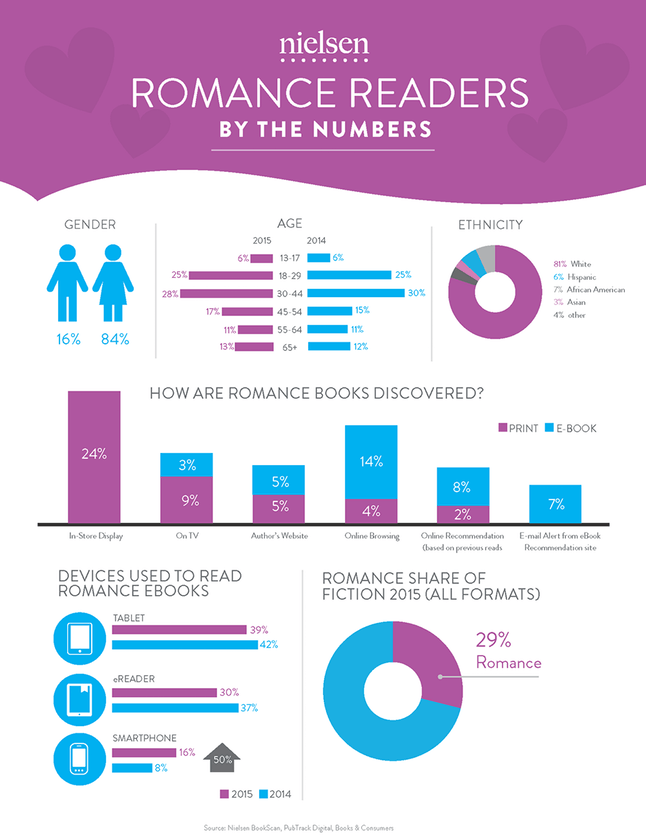
This man isn’t alone, though. Romance novels are the biggest sellers in the book industry, the foundation of the business, but they get a lot of grief, too.
Years ago, I was smart enough not to say such things on the interwebs, but I saw different genres of fiction as living on various planes of quality. Great Literature on top of the pyramid, then everything else.
Now, my thinking is completely turned around. Here’s why.
There’s no link between genre and quality
A lot of the classic of literature, now held up as the highest quality, were considered trash when they were first published.
Edgar Allen Poe wrote horror and died in poverty. You could call it literature, but it’s still horror.
Tons of what we hold up as of the highest quality are actually written for kids.
Dr. Seuss. Winnie the Pooh. Alice in Wonderland. Harry Potter.
There’s amazingly beautiful writing coming out of horror and sci-fi and romance–and totally unreadable nonsense on the shelves of Serious Fiction.
For every CATCH-22, there are 5.4 bazillion books like the just-released ANTKIND. Seriously, head to Slate and read the review.
What’s the purpose of a book or movie?
Stories have two basic missions: to entertain and educate.
To make you feel, and to show you worlds you didn’t know existed–or to look at the world in a different way.
There’s a misconception that Great Literature contains the highest meaning, that it’s the purest form with the strongest message. The opposite is true. I’ve read mountains of books, and I’m not alone in noticing that a lot of literature is dense and obscure. A slog. And because it’s too popular or Hollywood, the structure and endings of literary novels and movies are often backward, if not bizarre.
That muddles the message. Because even if somebody manages to slog through the entire thing, there’s a good chance they won’t understand the ambiguous and complicated point the author intends.
What’s worth living and dying for?
Think back to English Lit in college and the foundation. Literature, and all stories, are supposed to tell us what’s worth living for and what’s worth dying for.
Romances focus on what’s worth living for–who should you love.
Thrillers are centered around what’s worth dying for.
So those two “trash” genres split the great question in two. I’d say they do a beautiful job of tackling both halves of that question, too.
Every niche and genre has a question they’re trying to answer
Other fields of fiction derided as junk also tackle huge, deep topics.
Horror is really about dealing with fear and death.
Comedies each make fun of an institution: suburban family life, corporations, showbiz, war, politics.
Dramas show that no matter how bad things get, there will always be heroes trying to stand up for what’s right.
Sci-fi and fantasy ask, “What if?”
Each of these has a distinct message and way of looking at a piece of the world. And sure, there’s no law requiring you to love spy thrillers or watch superhero movies.
What I’m saying is (a) give them each a chance and (b) don’t disparage what other people enjoy.
Every genre of storytelling tries to a fundamental question about life. They all have value–especially to the people who love them.
Skits are largely the same, mostly because of format. If you only have three to five minutes for a bit, it’s not going to be packed with revelations, reversals, and scads of character development.
This is why 99.96 percent of skits–on Saturday Night Live, Key and Peele, or anywhere else–are one-trick ponies.
Here’s a good example from another Adam Driver skit:
Not terrible, not great–pretty typical, right? You do something funny like “That’s what she said” from THE OFFICE, except instead of sprinkling it throughout a series, you pack it into a single skit.
So yeah, these can be hilarious, and they can be highly, highly repetitive.
Check out this one by Adam Driver, then we’ll talk about why it’s different for two key reasons.
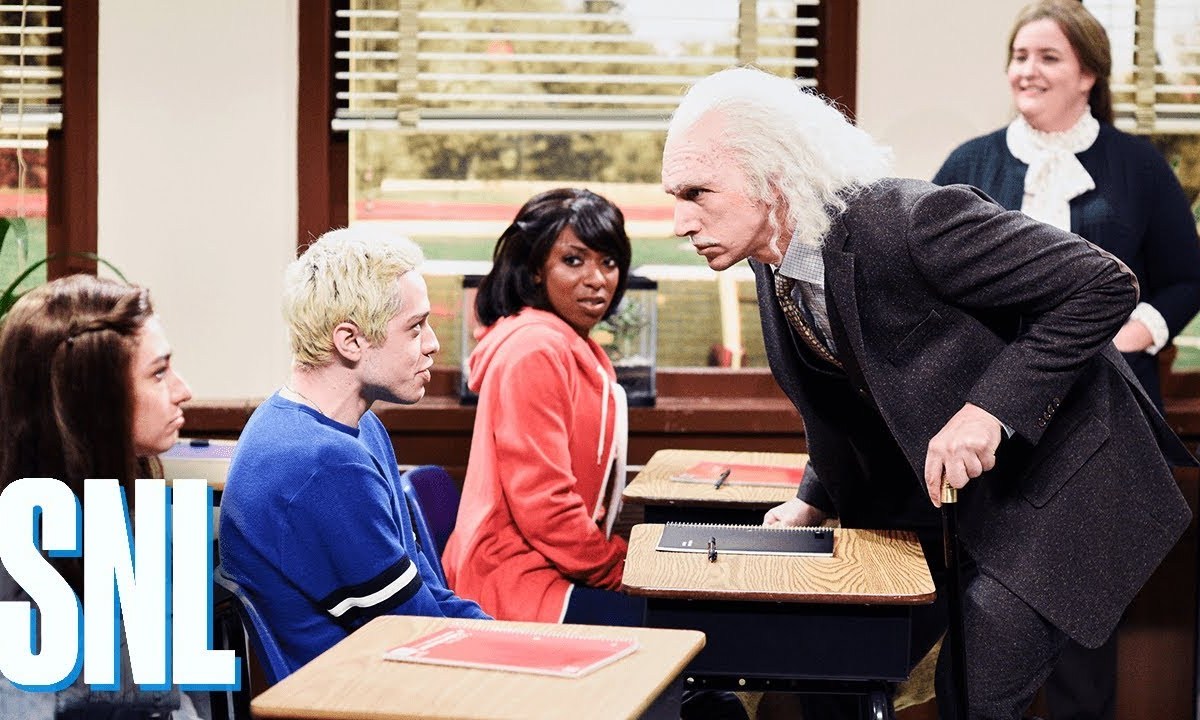
Sure, there’s a central joke–“crush your enemies!”–but instead of endless repetition we actually get (1) the best acting in any SNL skit ever and most importantly, (2) beautiful writing that surprises you.
There’s so much good dialogue that it’s hard to pick the best ones.
My favorite is, “I was born seven months too early. Incubation technology was still in its infancy, so they placed me in a cast iron pot inside of a pizza oven until I was ripe enough to walk. My bones never hardened but my spirit did. Be strong and crush your enemies!”
Yet the best part about this is the storytelling and writing. Unlike your average skit, there’s some real interpersonal conflict underneath it with real depth and a payoff at the end after multiple setups–the fact the entire class thinks his son is weak; the introduction of H.R. Pickens, his nemesis that he crushed; and finally the revelation that his weak son, rather than being a disappointment, is a rousing success in his eyes.
It all pays off in a few short lines: “I killed you Mr. Pickens! I crushed you into the ground and now your bones turn to oil beneath my living feet! I married your granddaughter, filled her belly with my festering seed and sired a boy! He is my final revenge, H.R.!”
VERDICT
I like it, I love it, I want some more of it.
Seriously. Give us a full two-hour movie about Adam Driver’s oil baron, shot on a budget of “Yo, the director sold his Kia, so here’s the cash we got” and people would watch the hell out of it until there was no hell left.
Because we are all watching Netflix and Hulu and digging through the garage to find that old VHS player because we cannot stomach rewatching IRON MAN 2 again, there are 7 billion people desperate for something new and glorious they hadn’t seen already.
So what makes something great compared to that thing you clicked off after ten minutes because it put you in a coma?
THE WITCH PART 1: SUBVERSION is a beautiful example of a great movie with a meh title. It’s a South Korean action movie that isn’t like other South Korean action movies, because (a) yes, damn near everyone dies at the end, which is required, but (b) the story here is quite different.
It’s the structure and storytelling that makes this movie special, not the acting or special effects. Watch the trailer, then let’s dive into it.
Subverting expectations is glorious
This movie starts fast and is a slow burn in the first third. Then the last half has some of the best twists, reversals, revelations, and fights scenes in forever.
Here’s the crucial difference: in most movies, the hero/heroine is always a step behind the villains. Only in the end do they learn what’s really happening, usually during the Villain’s Big Monologue When He Should Be Killing Errybody, and the climax features an overmatched protag somehow finding a way to beat the unstoppable genius villain.
THE WITCH reminds me of why I love SHIMMER LAKE, and it’s because they reverse this normal dynamic. The villains are a step behind the hero the whole time, though you don’t know that until the end, and the climax features an overmatched villain getting outsmarted and crushed. So yeah, it’s a romp at the end, but so, so, satisfying.
Just for kicks, here’s the trailer for SHIMMER LAKE, which you should watch, then watch again. It’s brilliant.
Honestly, I’ve watched dozens of movies in the last few months, and even the decent ones don’t really surprise you at the end. They hit the same old notes and use the same old formulas.
It takes talent and discipline to structure a movie like THE WITCH, or SHIMMER LAKE, to subvert all those tropes and expectations. When it happens, it’s glorious to see.
VERDICT
Fire up the Netflix and watch this thing.
Then watch SHIMMER LAKE to see who two movies with completely different genres have similar clever endings that are so satisfying.
Listen, we’re all in quarantine so what are you gonna do, watch the same movies you’ve watched SEVEN BAZILLION TIMES?
No. You need some fresh content, new stuff. And the best stuff hiding on Netflix is definitely foreign films.
THE PLAGUES OF BRESLAU is tight, fast, and twisty. All the things a good mystery/thriller should be.
And that’s why I want to talk about it. Because structurally, it’s interesting, and well done. This film also brings up nerdy storytelling debates, such as, “What the hell is a mystery/thriller, and how is it different than a mystery or Jack Reacher punching people in the face one more time?”
Mysteries, thrillers, and mystery/thrillers
Mysteries are easy to spot: there’s (1) a murder in the beginning, (2) a grizzled, alcoholic detective who investigates multiple suspects, starting with trip to the local nudie bar–this is apparently required by law, and (3) a series of sketchy suspects who are all plausibly the killer.
In the end, our detective sobers up enough to unmask the killer and either slaps on the handcuffs or poses a math problem.
Thrillers are also pretty easy to define.
A bad thing may happen. The central narrative question is, can it be stopped?
That question is the same whether the threat is a great white shark going nom-nom-nom, an alien on a starship with Sigourney Weaver in a T-shirt, or a terrorist who stole a nuclear weapon or three.
So what’s a mystery/thriller?
Good question.
Pinning down mystery/thrillers
You can’t really pin them down, not before doing single-leg takedown and going for an armbar.
Okay, you can pin them down.
A pure mystery has ONE murder and makes you wonder who did it, why they did it, and whether they’ll get away with it. Which they won’t, so really the surprise is who, why, and how the hero catches them.
Mysteries merge into Thrillville, population zero because everybody dies in Act 3, when they do two things: (1) boost the public stakes by putting more people at risk, or underground, and (2) identify the villain far earlier in the story, when it pivots to a thriller.
You gotta have those two ingredients. More people in danger, or turning up dead, and that earlier pivot.
THE PLAGUES OF BRESLAU does this perfectly.
We find out who the villain is earlier than a pure mystery, and learn why they’re doing it. The stake are higher than a pure mystery because it’s not one murder, but a series of killings. A mystery is about getting justice for that one death. Thrillers are about stopping carnage.
What’s great is this movie doesn’t cheat. There are tons of mystery/thrillers where the villain’s motivation is paper-thin, or non-existent. And there are plenty of mystery/thrillers that aren’t suprrising or shocking. You see them coming, and that puts the B in Boring.
I truly enjoyed THE PLAGUES OF BRESLAU, which does a great job of subverting the detective genre.
SPOILER: the villain wins, despite dying, and the hero wins, too, because the villain prods her into getting rough justice for the death that haunts her. (Fiance/husband/partner? Not sure — I watched this thing with the subtitles on).
It reminds me of SHIMMER LAKE, where the character you think is the hero is really the anti-hero/villain, doing the wrong things for the right reasons. And you understand why and agree with him, because he’s getting justice when the system failed.
If you haven’t watched it yet, finish up the Polish mystery/thriller goodness, then fire up SHIMMER LAKE, which is funny, shocking, and brilliant. It’s also a movie told in reverse, except it’s not a Cheaty McCheatface like MEMENTO.
Listen: as a four-year-old, you can’t deduct and reason your way out of the mystery of Who Is Santa Claus.
What my sister and I did was sneak out after bedtime to hide beneath the couch in the living room. This was base housing in Tacoma, row after row of identical ranchers. A simple couch in the simple house of an enlisted man.
We waited until a tall man, a giant to us, came into the room and put present after present under the tree.
And as a kid who didn’t talk except to Pam—my sister, interpreter and guardian—this was a brave and grand adventure. I used to stand in front of the fridge until Pam came along, opened it and took out the food I pointed at, with petrified carrots under my pillow as a long-term food supply in case something happened to her.
Hiding under that couch, waiting to learn the identity of Santa Claus, was one of my first memories.
Because hiding under that couch was how the huge mystery got solved: Santa Claus was our father.
This only added to his mythical status to me. He wore an Air Force uniform and disappeared at work for long shifts. All we knew was he worked on F-15’s and other military jets, like the bombers his father flew during World War II and the Cold War.
That he rode motorcycles, could pick us up like we weighed nothing, ate Daddy Go to Work Sandwiches and seemed to know everything.
When the military transferred us to Germany, and then the Netherlands, he drove us on weekends in a white VW van with a kitchen sink and room to sleep. We visited castles all over and saw a lot of Europe, with my sister taking the wrong train once and heading to east Berlin before the Wall fell.
We had a dog that was already trained, so you had to speak Dutch to it to have it sit, and base housing in the Netherlands was unlike any military housing on the planet, with nice brick houses that weren’t boring boxes thrown up by the lowest bidder.
It was an adventure, and I can still recognize F-15’s and F/B-111’s by their profile in the sky or the sound they make roaring overhead. I remember watching second-run movies for a dollar at base theaters, mowing lawns to make money and going to see Star Wars or Indiana Jones once a day all summer. Why not? It was a buck.
I remember my father telling me crazy GI stories, like the one where enlisted men would always drive across Lake Champlain during winter when you could go from base to Burlington, Vermont, except people always had to push it, every year, and drive when the ice was too thin. There’s a fair number of pickup trucks that fell through the ice.
This is the father I knew growing up. The one my wife and son never got to see.
By the time my wife met him when we were in college, he was a disabled vet, long retired, and already sick–diagnosed with cancer when I was in high school.
Our son didn’t see him until ten years after we got married.
So this isn’t an obituary, which I find dry and boring. I wrote plenty of those as a journalist. Obituaries are usually a series of dates and places, recitations of facts that really don’t tell you anything about the real person.
And I’ve seen enough people die by now to have some thoughts about it beyond the raw emotion of grief.
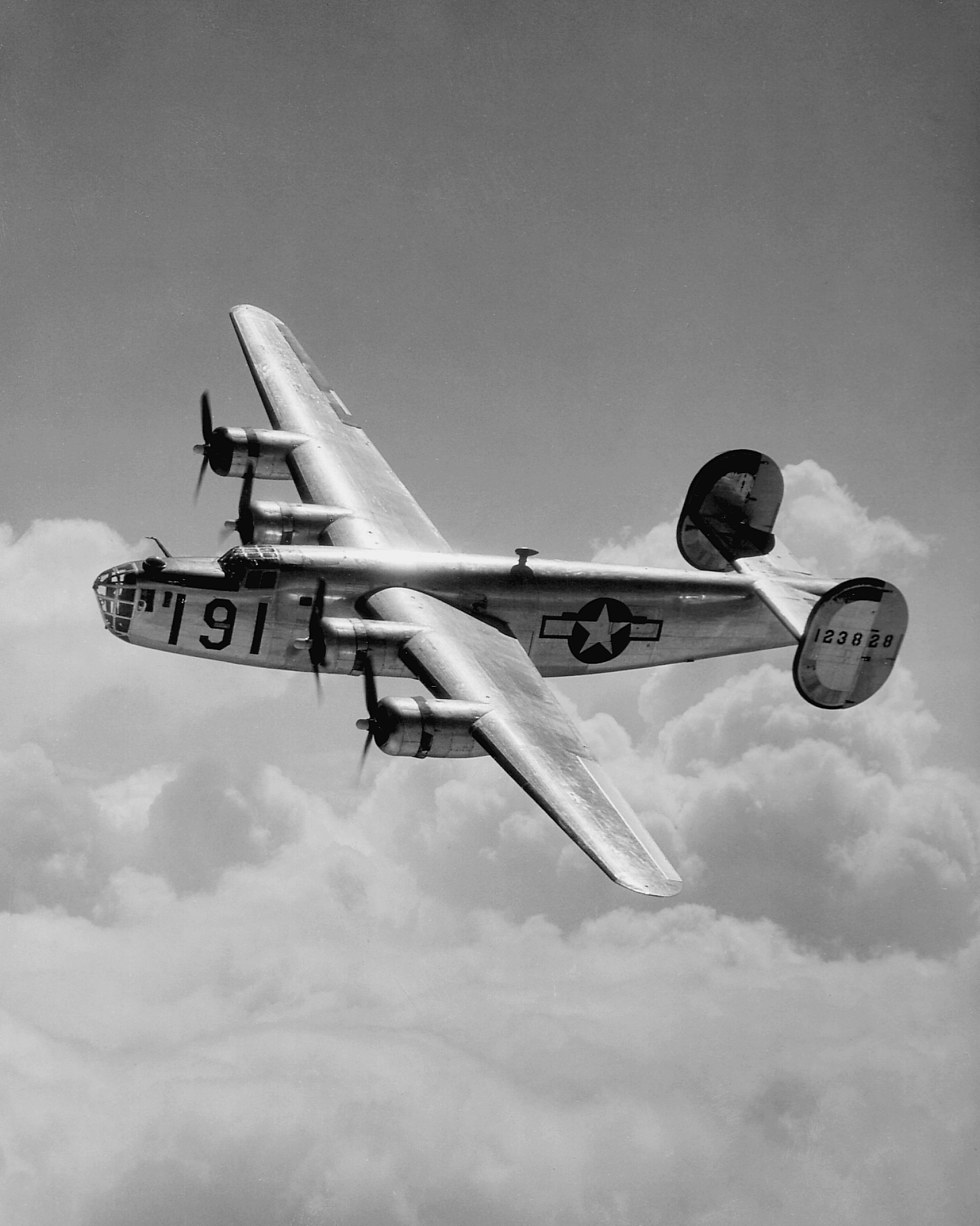
I went through all of my grandparents dying. Some fast, some slow. Losing my grandfather was especially hard, and I’m bothered by the fact that I can’t remember if he flew B-24’s or B-17’s in the Pacific, though I know he flew B-52’s for decades after the war and once had a heart attack mid-flight, with a load of nuclear bombs, and landed on a dry salt lake in Utah.
I remember my favorite journalism professor, Pete Steffens, and a great philosophy professor, Rex Hollowell.
Robin Boyes, my mentor on speechwriting and rhetoric, found alone in his home, every room filled with books. My boss, Jim Richards, dying unexpectedly last year, right before his son’s wedding.
And I believe two things: that everybody has a list like that, a list that keeps growing year by year, and that your list never gets lighter or easier.
You don’t just mourn the inability to see them again, to talk or laugh or go on a trip. It’s the loss of everything they could ever do, or should have done, with or without you.
I miss the stories my father told about growing up on the farm, like the cow named Stupid that his brother rode, pulling its tail to go left or right and straight up to stop, which worked fine until the cow ran too fast and pulling up made it stop too fast and my uncle flew into a pile of manure.
When he needed my labor after he retired from the service, he’d yell for me and say he required my strong back and weak mind. We re-roofed a barn that’s now falling down and fixed the carburetor on the Plymouth Fury I drove in high school, a beast of a car older than me, one he bought new and put into storage when we moved to Europe.
That car never ran right after we fixed the carb. Tended to stall and die all the time. But I’ll always remember doing that with him.
He was terrible on the phone but great at stories and jokes, and incredibly social when I was growing up.
My wife and son never really got to see him at full strength like that.
So this isn’t for my father, who’ll never read it.
This is for Pam.
This is for my brother Nate, for my wife and son.
And it’s for me, to remember that he was a soldier, a father and will always be Santa Claus.
Listen: I am not one of those people who watches movies or shows to find 23 hidden easter eggs in Baby Yoda’s bowl of bone broth or whatever. I DO NOT HAVE TIME FOR THAT.
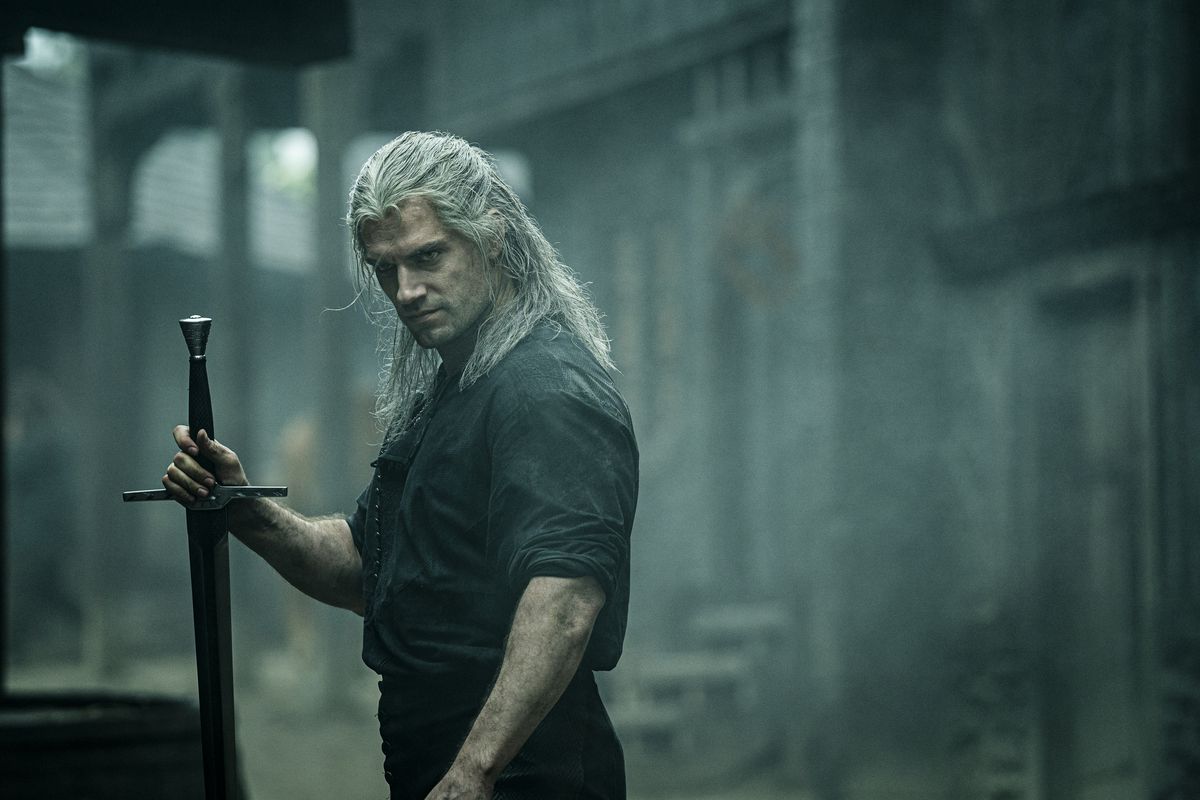
In fact, I have about five minutes to write this, and no, I did not play the Witcher game, or read the novels, so we are not diving deep into whatever Witcher craziness you’re into.
HOWEVER: If you own some form of Glowing Screen, whether it’s (1) a supercomputer in your pocket that was once used to make these things called telephone calls or (b) the lastest 120-inch, 8k television that cost more than my car, even though there is no 8k content to play on your expensive toy, then you should (c) fire up Netflix and watch all of THE WITCHER.
The whole thing. Start to finish.
Skip through the boring bits, though there aren’t many.
Here’s what I think they did right, what they could’ve done better, and why I’m looking forward to SEASON 2: THE WITCHER GRUNTS SLIGHTLY MORE DIALOGUE WHILE KILLING EVERYTHING.
What they did right
All the actors. Seriously.
All. Of. Them.
You may not know the name Henry Cavill right off, though you will remember the last actor who played Superman in a couple of movies, and the bad guy in the last Mission Impossible, and yeah, it’s that guy.
He’s amazing.
I won’t name all the other characters. The bard is funny, the sorceress is cool, the bad guys are sufficiently bad and scary. It’s well done.
Also good: sets, costumes, special effects. You know, all the things.
What they really did well: building up to a climactic battle where the good guys lose.
What they could’ve done better
Honestly, the only real flaw is jumping around in time.
I didn’t take notes, because nobody was making me write a term paper on this thing.
Halfway through, though, I’m wondering if all the queens in this thing are brunettes, and is this other queen related to the one I remember dying? Then five episodes later, I figure out oh, that’s not the dead queen’s sister or cousin, ruler of some other land, that’s the same dead queen, just earlier in time.
It’s not super clear. And honestly, the story would’ve worked chronologically, which is just a fancy way of saying, “Without jumping around in time like a rabid squirrel.”
Why I’m looking forward to Season 2
Not just because of the good acting, writing, sets, effects and all that.
Mostly because the showrunners had the guts and wisdom to put their heroes up a tree and throw rocks at them.
They really do lose the battle at the climax of the season. Things are not Good.
I like that.
It makes for better storytelling.
If the Witcher killed every monster and won the battle at the end of Season 1, why would you worry or care about what happens in Season 2? You’d expect him to keep on kicking butt. It would be a romp, and yes, romps can be kinda fun, like when your favorite football team absolutely smokes the Patriots, or when the hero of an action movie punches and kicks his way through 492 bad guys armed with meat cleavers and such.
Romps, though, aren’t actually that interesting or fun to the audience.
The Witcher was plenty of fun. 11/10 would watch again.
And just for kicks, here’s the cast of the show talking about it.
As is my custom, and habit, and my Bobby Brown prerogative, I’m going to go with the first page — as printed.
You know, printed with ink at these places we used to call “stores full of books,” where you handed the nice folks who live there paper decorated with dead presidents and they let you walk out with ALL KINDS OF YUMMY BOOKS.
So if you read the first page of this thing on a Kindle or iPad or Atari 2600, your page 1 will doubtless look different and such. Please give my regards to the Complaint Department.
After a line edit of Page 1, we’ll talk about our general literary impressions — about how metaphors are like similes, only different; about how my hatred of semi-colons runs deeper than my loathing of A-Rod; and how somebody wrote a mainstream and incredibly successful novel about sexy nonsense without putting any sort of sexy nonsense whatsoever on page 1.
Note: I’m striking out text, with any replaced text or notes in red, because my version of this novel would be called ONE SHADE OF RED after all the red ink we spill on this thing. Also, I don’t know what happened to this post. A friend wants to use it as an editing example, so I’ve resurrected it and updated the piece a little. Enjoy.
Also: If you have a famous novel with a brilliantly awful first page that needs serious red ink, send me your nomination.
FIFTY SHADES OF GREY
I scowl with frustration at myself in the mirror. (This may be a world record: bam, in the first sentence, she breaks a cardinal rule of fiction writing: don’t tell readers what the hero or heroine looks like by having them stare into a mirror, gaze upon their reflection in a pond or, I don’t know, whip out their driver’s license and say, “Huh, five-foot-ten, a hundred and twenty pounds, red hair, green eyes and a few freckles. Howbout that?” Ugh. This is not exactly “Call me Ishmael.”)Damn my hair – it just won’t behave, and damn Katherine Kavanagh for being ill and subjecting me to this ordeal.(Unless the heroine’s hair is crucial to the plot — unless she starts out with unruly hair in Act 1, switches to a bob in Act 2 and shows how much she’s grown and changed by rocking a purple Mohawk in Act 3, the hair, it is Boring, and a Distraction. Also, nobody refers to friends and such by their full name. If she’s your bestie, you say “Katherine.”)I should be studying for my final exams, which are next week, yet here I am trying to brush my hair into submission. I must not sleep with it wet. I must not sleep with it wet.(Enough already with the hair. Seriously. The only two words with any kind of real conflict and potential are “final exams,” and unless she flunks those, and therefore gets kicked out of university and has to live under a bridge in a cardboard box, it does not matter for the story.)Reciting this mantra several times, I attempt, once more, to bring it under control with the brush.(More about the hair? MORE? Not necessary, not interesting and not entertaining, unless her hair is secretly a sentient being, organizing a plot to take over the world, one follicle at a time. I’m guessing Bruce Willis, being immune from such attacks, will foil this plot.)I roll my eyes in exasperation and gaze at the pale, brown-haired girl with blue eyes too big for her face staring back at me, and give up. (Back to the staring-at-the-mirror trick, which has to go. Find another way to describe the heroine.) My only option is to restrain my wayward hair in a ponytail and hope that I look semi-presentable.(Now we’re beating the Dead Hair Horse on its way to the glue factory.)
Kate is my roommate, and she has chosen today of all days to succumb to the flu. Therefore, she cannot attend the interview she’d arranged to do, with some mega-industrialist tycoon I’ve never heard of, for the student newspaper. (Awkward. First reference is Katherine Kavanaugh and now she’s Kate — just call her Kate both times, and let’s clean this whole thing up. Also, how many student newspapers score interviews with “mega-industrial tycoons” … who you’ve never heard of? If they’re really mega, then you have herd of them. Bill Gates, Steve Jobs and so forth. If they you haven’t heard of them, they aren’t mega at all. Edited text follows in red.)Kate is my roommate and she’s chosen today, of all days, to succumb to the flu. That means I’m stuck interviewing some industrial tycoon for the student newspaper.So I have been volunteered. (Redundant.) I have final exams to cram for, (already said that) one essay to finish, and I’m supposed to be working this afternoon, but no – today I have to drive a hundred and sixty-five miles to downtown Seattle in order to meet the enigmatic CEO of Grey Enterprises Holdings Inc. As an exceptional entrepreneur and major benefactor of our university, his time is extraordinarily precious – much more precious than mine – but he has granted Kate an interview. A real coup, she tells me.
Damn her extracurricular activities. (The last sentences were brought to you by the letter E: enigmatic, exceptional entrepreneur, extraordinarily, extracurricular. There are other modifiers that start with the letter E: extraneous, excruciating and ejector seat. I am looking for the handle, because it’s time to pull it.)
Kate is huddled on the couch in the living room.
“Ana, I’m sorry. It took me nine months to get this interview. It will take another six to reschedule, and we’ll both have graduated by then. As the editor, I can’t blow this off. Please,” Kate begs me in her rasping, sore–throat (compound modifier) voice. How does she do it? Even ill
(end of page 1)
Editing notes
Are you kidding me? ARE YOU KIDDING ME?
So this the first bit of a novel that sold a gazillion copies and rocked the literary world. It starts with an extended riff about wet hair and ponytails, as the author tells us how the heroine looks by having her look in a flipping mirror, goes back to the hair, uses every adjective and adverb in her dictionary that starts with the letter E and sets up the incredibly high stakes of whether or not a college student can tame her unruly hair and cram for her finals when she is forced — FORCED — to drive to Seattle and interview some billionaire for her friend.
God bless anybody who sells a ton of books or movie tickets. I adore books and movies, and the more people read books, and see good movies, the better.
HOWEVER: the first page of a book is a lot like the trailer for a movie. You start out with your best stuff, and it’s a rock-solid guarantee that the writing doesn’t get magically better ten pages or 100 pages later. The first page, and the first chapter, get polished and polished until they are a shiny diamond made of words.
Maybe you could argue this book is the one exception to that rule. From the reviews of this book, though, that’s not the case.
Why did it sell so well?
I believe, deep in my soul, that packaging matters more than the product.
The title of a book — or a movie, or a TV show — can save your bacon or kill you dead.
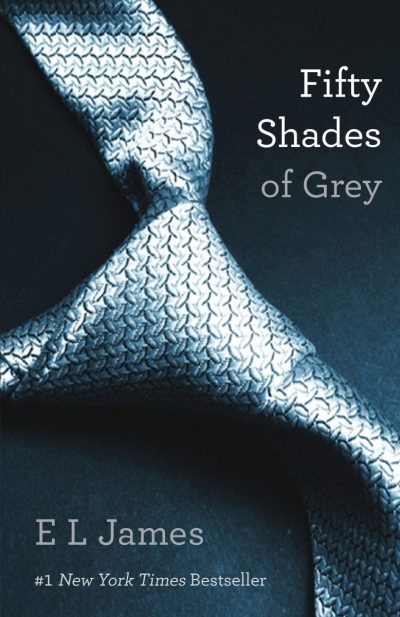
The cover of a book, or poster for a movie, is the next most important thing, because it’s what people see when they decide what to buy in Barnes and Noble or what to see on Friday night at those giant buildings where popcorn costs $9 a bucket.
You can’t pitch quality.
If you gave this a more typical title for the genre, and a more typical book cover, you’d probably end up with a title like A BUSINESS AFFAIR and some kind of Ryan Gosling looking guy wearing a suit on the cover with the heroine nearby, messing with her ponytail while she wears the highest of high heels and a business suit with a skirt that is just this side of immodest. Or the cover would feature a blindfold and a pair of handcuffs. That sort of thing. You know, something like this:
See? Here we go. The cover above isn’t just a good representation of what I’m talking about. I bet it’s a far, far better book. If you gave FIFTY SHADES OF GREY a more normal title like this, and more typical cover, I would bet you my house, my car and my first-born son that the book would not sell like hotcakes and get turned into movies.
The unusual title and cover isn’t a side issue. I believe it’s the entire reason this book went viral.
True story: guess what the author of THE GIRL WITH THE DRAGON TATTOO wanted as a title for his novel? Go ahead. Guess.
Here’s the answer: MEN WHO HATE WOMEN.
Raise your hand if you think that title would have set the world on fire and led to hit movies.
The title and cover — the packaging — are 90 percent of the battle.
The packaging matters more than the product.
FIFTY SHADES OF GREY is an interesting, literary title. The cover photo of a grey tie is also atypical of the genre and really stands out. The combined effect gives the book a literary veneer.
Some people might feel embarrassed getting on Flight 435 to Frankfurt and pulling out a paperback with A BUSINESS AFFAIR on the cover with a blindfold and handcuffs on the cover. And you can bet the male audience for such books is hard to find with a microscope.
Give it the gloss of lit-rah-sure, though, and that makes it okay for some people to read what they might never do: romance and erotica.
And hey, I respect the hell out of romance authors. Have learned a ton from them. So I’m not talking smack about the genre here–I’m specifically talking smack about the first page of this specific book. There are far, far better examples of romance out there. Amazing writers. Go support them.
FIFTY SHADES reminds me of the early Eric van Lustbader novels, like THE NINJA, which I think were hot sellers because they slipped in naughty bits to readers — mostly men — who expected, I don’t know, ninjas sneaking around at night and fighting. It was like a James Bond movie where they didn’t fade out when 007 kissed the girl. I can tell you 14-year-old boys around the globe had their minds blown. You can print this kind of stuff without getting arrested? I can buy it at the store and they don’t ask for ID? NO WAY.
And let’s give respect where it’s due: there’s an editor somewhere who came up with this title, and a cover designer who thought up the idea, got the right photo and nailed it.
Open up that brilliant cover, though, and you eventually get to the first page, which is a hot mess. And from the reviews, it doesn’t get better on page 2 or 152.
VERDICT
I truly thought, deep in my soul, that you couldn’t top the first page of THE FOUNTAINHEAD for a famous novel that is famously bad. But yes, we have a new champion.
Yes, that headline is an intentional nod to Marie Kondo and her method of tidying up, where you hold up each possession and ask yourself, “Does this spark joy?”
I keep seeing some writers talk about how hard, or even painful, writing can be.
And sure, writing at a high level isn’t easy. It takes a lot of time, talent and sweat.
Yet I’m going to argue that conventional wisdom here is completely wrong. The entire process of writing and editing not only can be, but SHOULD BE, a joy. And if it’s not, you should switch things around to make it fun rather than torture.
Reason Number 1: A better product
Humans are designed, through millions of years of evolution, to seek out pleasure and avoid pain.
If your writing and editing process are inherently painful, your body and brain will rebel every time you sit down at the keyboard or pick up a pen.
That’s unhealthy and unsustainable. And it makes for a bad product, because you’ll rush through it as fast as you can, to get that pain over with.
I’m not arguing against speed here. Writing fast, and in the flow, is a beautiful thing that should be embraced.
Yet if the process itself is painful, you’re going to (a) avoid it, (b) catch writer’s block a helluva lot and (c) not produce what you’re capable of doing.
Reason Number 2: You have to make a mountain, then let things go
Marie Kondo’s key instruction when tidying up is to make a mountain–of your clothes, your books, your papers, whatever it is you’re cleaning up. Then you go through each item and decide whether it sparks joy. If it doesn’t, you give it away to Goodwill, recycle it or send it off to Never Never Land.
Writing anything important should begin the same way.
Never try to research and edit while your write a first draft. Make a mountain of your research, ideas and notes. Look at each item. Does it spark joy?
Put the ones that spark joy in a special file or folders.
Keep the marginal things in Give Away place, a scratch file. This is also a good way to let yourself edit ruthlessly, and avoid feeling terrible about possibly killing words that took you hours to research and write. You’re keeping them in a safe home. They’ll be fine, and you can recycle them for something else if needed.
Trash what you’ll never use. And surprisingly, doing all this tends to cut your mountain down to a hill that’s only 25 percent of your original pile.
When you’re only dealing with a tiny hill instead of a mountain, writing anything of length becomes insanely easier. Instead of feeling overwhelmed, you feel confident, and all the raw material’s you’re working with spark joy.
Writing anything of length takes discipline to get through the hard parts. Which will happen.
Joy is the fuel that gets you over those speed bumps. It’s hard to crank away at something kind of boring, like proofing a document, or doing layout, if you don’t have a reward waiting on the other side. If you only anticipate more drudgery and pain, why push through it?
Cutting down your mountain of raw material to a small hill that sparks joy also helps make these tough spots a lot smaller and more manageable.
Reason Number 3: You have to feel the emotion you want readers to feel
This is literally the advice we give, as speechwriters, because simply delivering lines without mangling them–in a speech, a play or a movie–isn’t enough.
You have to actually feel the raw emotions you want your audience to feel.
Because an audience doesn’t feel what you TELL them to feel. They mirror your emotions.
And I’ll argue that the best writing and speaking evoke the emotions of joy and wonder.
Sure, there are times in novel, screenplay or speech when you want the audience to feel sad or angry. But you can’t write anything of length that’s entirely angry or 100 percent sad. There has to be a mixture of emotions.
What do people want? They want joy, wonder and laughter. The other emotions, like anger, fear, sadness and horror, are powerful spices you can’t pour into a dish. They need to be used carefully and sparingly.
The best writing I do is full of joy and wonder because that’s what I feel while writing it. And yes, if you’re doing a story or speech about something sad, it’s a good sign that you tear up while writing it. If I don’t cry a little when writing something profoundly sad, then I’m doing another draft.
And if something buried in your mountain doesn’t spark joy–whether it’s a chapter in your epic novel about elves with lightsabers and the trolls who love them, a play where all the actors are hanging upside down the entire time or the process by which you edit and proof something–try something else.
Talk to other writers and editors on Twitter, by email or in person at conferences. They’re a friendly bunch. Ask what they’ve figured out to make some of the hardest and sometimes painful tasks into activities that are fun. Personally, I find the final spell-check and editing of a novel to be a long, hard slog, so I’ve turned it onto a game to see how many words I can kill, especially repetitive words or phrases. And now it’s a kick in the paints.
So please, embrace the pleasure of writing and editing. Feel the emotions you want the audience to feel. All of them.
Because writing and reading should do always, always spark joy and wonder.
In college, wise men with Einstein hair stood in front of lecture halls to tell you literature isn’t really about verbs, adverbs and dangling modifiers. No. Beneath the surface, lit-rah-sure asks a fundamental question that some believe is just as important as religion or science.
That question is this: “What’s worth living for, and what’s worth dying for?”
Nine words.
But I’m not banging on the keyboard late at night, powered by industrial amounts of coffee, to channel those old men wearing corduroy jackets with patches on the elbows. My closet contains no corduroy whatsoever.
I’m here to talk about those nine words, and why it leads me to one inescapable conclusion: that I do, in fact, know how to spell “inescapable.” Bit surprising. Thought I’d muff that one.
Note: I know there are men who not only read romance novels, but write them. Same thing with thrillers: plenty of women read them and author great thrillers. I’ve had the pleasure of interviewing some of those authors. In this post, I’m trying to make the case that people shouldn’t stubbornly stick to their favorite genre. Venture forth. Surprise the good people at Barnes and Noble with the breadth of your bookish selections.
Why every man must read a romance
Not to pick up girls–and not, if you’re married, to improve your odds of staying out of the dog house.
Every man should read a romance for an entirely different reason. It’s the first part of the question, the bit about, “What’s worth living for?”
You could walk into (1) a cubicle farm, (2) factory break room or (3) sports bar and show ten random single men a photo from the Sports Illustrated swimsuit edition, and ask them, drunk or not, whether they would marry this swimsuit model. I’m only half kidding when I say some of those men would shrug and say, “Sure.” Because we men can be stupid that way.
HOWEVER: We need to get over it, and start thinking about these sorts of things. And yes, a fine first step would be reading a romance novel. Watching a rom-com starring Matthew McConaughey, who’s last name is impossible to spell, does not count. Neither does firing up Netflix for SEX AND THE CITY 3: SARA JESSICA PARKER SHOPS FOR PURSES IN PARIS.
You must read an actual romance novel, with words and sentences, though I’ll leave it up to you whether it involves Men in Kilts.
On the surface, sure, romances are about relationships. How two people meet, how they fall in love, all that.
Beneath that, romances are often about a massively important choice: Who should you commit to and love?
And that, my friends, is the biggest decision you make in life.
Nothing else comes close. Not where you go to college, what career you chose, where you pick to live. No other decision comes close.
Classics like PRIDE AND PREJUDICE feature a lot of talking, thinking and scheming about who should get matched up with who. At first I thought this was a lot of gossipy gossip nonsense. But it’s not. These choices are hard, and they mirrored real life. Back then, who a woman married meant everything. It wasn’t like folks had a lot of career choices and birth control options. Could this man be a good provider not just for one or two children, like people might have today. Back then, it could be eight or ten kids. If I were a woman in those days, listen, I’d be insanely careful about this choice. So yeah, there’s a good reason stories back then often featured the archetype of a handsome prince. Tell me that story. Let me live that dream, not the one where I die in squalor giving birth to child No. 9.
High stakes back then. High stakes now, and a big deal for everyone involved.
Who should you marry and have kids with? Can’t think of a bigger decision, and it’s definitely worth thinking about, if not agonizing over.
A lot of men tend to avoid talking about love and relationships. It makes them uncomfortable.
I feel lucky. Also, my beautiful and brilliant wife devours novels like candy, including not just lit-rah-sure but romances of all shapes and sizes, and our house is full of books. So I know enough to be dangerous: that there are romances which really dive into the struggle to choose between two different partners and that it’s cheating to make one a villain and one a hero. That there are romances where the choice is binary: is this relationship going to happen at all, which is the A story in ALWAYS BE MY MAYBE.
All of these choices must have merits and demerits. BRIDGET JONES’ DIARY makes you think twice about the handsome bad boy and take a second look at Colin the Firth and his ugly Christmas sweater.
There’s a long list of stories diving into that decision. They’re worth reading, and watching, and talking about.
Because in the end, a lot of people figure out “What’s worth living for?” isn’t about money, fame or spending more time at the office.
Life’s about picking somebody you love and maybe starting a family with them.
Pick wisely, men. Get all the help you can get, and not from your buddies, because they’ll say things like “Dude, the choice is obvious: Kelly the waitress with the sweet Mustang, unless you want to cruise around town in Sarah the lawyer and her hand-me-down minivan.”
Why every woman MUST read a thriller
Thrillers answer the second half of the question: “What’s worth dying for?”
These days, men and women serve in the military, as firefighters and police officers. Which is as it should be. And if you answer the call to serve — as a firefighter or homicide detective, a Marine or a smokejumper, a coal miner or logger — there’s a chance you’ll die on the job.
The question is, how often do you roll the dice? When do you decide something is worth dying for?
Thrillers answer that question in a visceral way, with the stakes raised as high as they go.
Should you answer the call of your country and fight a war, taking the lives of other young men with families of their own, and possibly coming home in a body bag yourself — even if you suspect the war is wrong?
If a serial killer kidnaps your daughter, do you put your faith in the cops — or turn your CIA training loose and go after the whackjob yourself, despite the risk? Liam Neeson votes for hunting down whackjob kidnappers, which only happens to him every other month.
Should your family suffer under the oppressive fist of a planet-destroying dictatorship, or will you risk your freedom and life by joining the rebellion, which probably has the same chance of victory as the Seattle Mariner’s have of winning the World Series?
When the only hope to save the world is to get on an armored space shuttle with Bruce Willis, fly to an asteroid, drill deep inside and set off a nuclear explosion, will you go on that suicide mission, knowing that you probably won’t come back, or will you stay behind to enjoy one last week of picnics and bottles of Riesling with Liv Tyler before the world goes kaboom?
Just as betrayal is a common theme in romances, it’s also a huge element to thrillers. Because there’s nothing worse than doing dangerous, deadly work for a boss who is secretly an evil jerk. Not only did you get duped, but you did dangerous things, maybe violent and murderous things, for the wrong cause.
Even though it’s a cliche, there’s truth to the typical action movie nonsense about a lone wolf detective, Green Beret or assassin who’s weary and retired from the game. It takes a lot to convince him (or her) to return to work, having lost faith that all the suffering and sacrifice is worth it. Too many good people have died already. Often, the story proves this to be right. The weary warrior is a cog in the machine, a machine that sees everyone as disposable. And is that worth dying for? No.
Action movies and thrillers are about the need to make that choice decisively and wisely. There’s no “I’ll go halfway with you on this assault the Death Star thing.” You only die once, except in Bond movies, though I’m not exactly sure why Bond gets to die twice. I do know this: Bond has terrible taste in women. Are they beautiful? Sure. But after they sleep with him, they all turn up dead. EVERY TIME.
Not your usual sitcom nonsense
All this is why romances and thrillers can be epic. The stakes are high and the emotions are visceral. It’s not the usual nonsense you see in a sitcom every night, where Bart Simpson shoplifts for the first time and in 30 minutes learns the important life lesson that stealing is wrong, wrong, wrong. Roll credits.
Harry Potter is really one big long thriller about whether Harry will get Voldemort — a serial killer who happens to be a wizard — before Voldemort gets him.
STAR WARS takes an unexpected twist, with a father sacrificing his life to save his son and free a galaxy from oppression. I expected the new Death Star to simply get blown up in an even fancier explosion than the first time. I did not expect Darth the Vader to toss Emperor Wrinkly Face of the Lightning Fingers down an endless shaft. A father’s love turned out to be the biggest deal in the end. Interesting, though having Darth Vader be a sad old man with a wussy voice was a let-down. J.J. Abrams, I have faith that you’ll do better.
There’s a reason why many thrillers start out with a family being slaughtered and the lone survivor setting out to avenge them. You’re taking away what’s worth living for, and that leads the hero to answer the question of what’s worth dying for. Your family and kids mattered. You can’t let that slide, and you won’t.
Thrillers aren’t as compelling when the hero is aloof and the mission has nothing to do with his emotions, family or country, when it’s just a job where the hero is busy looking cool while wearing sunglasses and shooting guns. There’s nothing behind it. It’s flat and empty. And yes, though I love the Bond movies, they suffer from this. Bond rarely suffers or grows as a person, unless it’s Daniel Craig, who turned out to be a great Bond because he plays up the damage the job does to a person.
Everybody wants something worth living for, to dedicate themselves wholly and completely to something, because otherwise, what’s the point of waking up, fighting traffic and slaving away in a cubicle for thirty years until you die, right? People get that. It’s why people become obsessive fans of the Green Bay Packers or STAR TREK, why people dedicate themselves to politics, religion or a cause. Some folks divert this urge into collecting every Beanie Baby every made. Don’t.
Great stories, whether movies or books, speak to this need to matter, to belong, to put a stamp on life, to give your all, even if it’s bonkers.
And truly great stories take us deeper.
Harry the Hedonist will argue that lovers leave you, husbands divorce you, kids randomly get leukemia, and in the end, we all die, so pass the wine and live it up.
Isaac the Idealist says you should dedicate yourself to great ideas and institutions, which are the only things that last.
Ned the Nihilist trumps that with, “Nothing truly lasts. Institutions don’t care about you and even a killer asteroid, nuclear war or homicidal robots from the future fail to destroy us, the sun will eventually turn into a red giant, doing a burnt-toast number on earth before ruining THE ENTIRE NEIGHBORHOOD by going supernova.”
Do I have video? Yes I do.
But if nothing truly lasts, there’s no point in sacrificing friends and family for an institution or an idea. Be good to others. Do the right thing. Love with all your heart. Or use two cows on a silly blog to explain all of politics and philosophy. (The world explained by TWO COWS)
These questions are tough, interesting and complicated. And every tough, complicated problem has an easy, simple-to-understand wrong answer.
You can get into these kinds of questions with romances and thrillers in a way that Philosophy 402 classes simply can’t touch. Because if you put human faces and names behind the ideas, and real emotions, the neat logic about the deontological notion of equal treatment versus the greatest good for the greatest number turns to dust.
Also, take it from Plato and every dictatorship on the planet: literature and stories are the most powerful, and dangerous, way to talk about ideas. That’s why evil governments burn books and censor movies.
So if you haven’t read a romance, pick something that won an award, or one with Fabio on the cover. But grab one.
And if you haven’t read a thriller, grab one of those. My personal favorite is the Reacher series by Lee Child, who should be sending me kickbacks by now.
Then start a literary knife fight in the comment section about Men in Kilts versus Haunted Homicide Detectives Who Are Allergic to Razors.





 The Red Pen of Doom