HEIST is a master class in tying character arcs to plot twists

As a public service, I’ve watched 99.9 percent of everything on Netflix, Amazon Prime, and Whatever Blu-Rays are Inside that Shoebox I Found in Yonder Cupboard.

HEIST is what I saw last night, and (1) yes, it’s worth sending radiation at dried corn kernels for you to snack on while watching this thing, and (2) there are interesting storytelling techniques we’re going to talk smack about here on this website blog WordPress thing.

Because I care about you, this is the trailer:

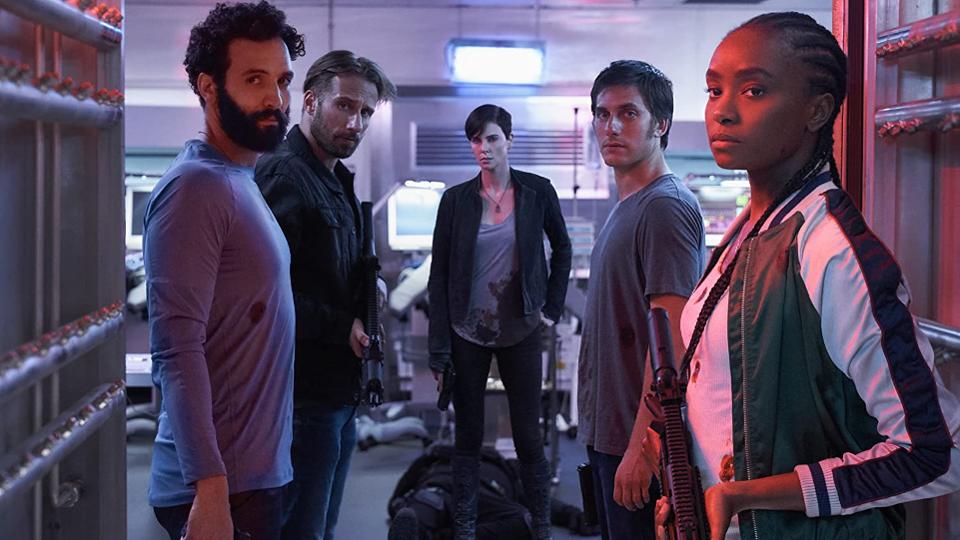
So yes, you’ve got Negan (whoa!), Drax the Destroyer (double-whoa!!), and Robert-Freaking-DeNiro (you lie!!!) in the same movie? Plus Gina Carano? NO WAY.

Way.

Here’s the thing that I want to talk about: each of these characters has a distinct arc, one that not only works by itself, but is a vital part of the twists and reversals that serve as the V-8 engine of this story.

  • Negan is the hero with a deadline, an Army vet and card dealer who needs to find $400,000 by 7 p.m. on Friday for his daughter’s cancer treatment.
  • Drax the Destroyer is the casino security guard with the idea of robbing the place, and the one running the job.
  • Robert DeNiro is the cut-throat businessman who owns the casino and is (a) estranged from his daughter, his only family, and (b) dying of cancer.
  • Gina Carano is the cop chasing Negan and Drax in their getaway bus.

That’s right, a getaway bus. Remember SPEED, with Neo stuck on a bus that can’t go less than 55 or the bus and all its passengers go boom? This movie isn’t a straight ripoff. Being stuck on the bus, though, with the cops surrounding you, is a great premise. They run out of diesel once, and have to work around that. The cops shoot out a tire. There are just all sorts of great problems presented by being stuck on that bus.

But I want to talk about the intersection of the character arcs and story beats.

Negan improves the plans of Drax, who’s running the job, and he’s clearly smarter than the hothead Drax.

So it makes storytelling sense that instead of letting Drax kill a hostage–the bus driver–Negan shoots Drax instead.

Then it’s the bus driver who has the idea of how to get Negan off the bus while leading the bad detective (in the pay of Robert DeNiro) to chase the bus somewhere else.

To get the money off the bus, Negan uses a fake pregnant “hostage”–his sister–and makes sure she’s the first hostage released. Clever.

And when DeNiro spares Negan, shooting his hotheaded protege before he can kill the card dealer who stole his money, you believe it, because DeNiro has been questioning his path the whole movie, and this makes sense. He’s trying to do right by the world now.

Finally, you believe Gina’s police officer character looking the other way at the end, and letting Negan save his daughter, because it’s not a sudden change of heart. They’ve set this up with scene after scene where Negan and Gina both try to do the right thing, regardless of the personal cost, while Drax tries to MURDER DEATH KILL everything in sight.

There isn’t a lot of Christopher Nolan cheating going on here, storywise. The setups are all there if you look for them, or remember. I just enjoy how the character and story beats mesh so well, and when the revelations all hit at the end, it makes you impressed with Negan’s cleverness and selflessness and happy about DeNiro’s final acts and Gina’s compassion.

All of this is nice contrast to most action movies, where evil and bloody things happen to just about any character at any time, except for the hero, because everyone but the hero is basically a bad guy who’s gonna die or a sidekick type who’s also gonna die. I mean, come on. White Bearded Mentor Who’s Kinda Like Obiwan Crossed with Mr. Miyagi? Dead by the end of Act 1. Hot girlfriend, sweet wife, or cute little daughter? Kidnapped by the end of Act 2. Sidekick who’s there mostly for tech support and comic relief? Impaled on a swordfish at the beginning of Act. 3. Femme Fatale with a thing for the hero? Fed to the sharks with lasers right before the rooftop battle with the Final Boss.

VERDICT

HEIST is clever and entertaining movie that reminds me a lot of SHIMMER LAKE (a perfect movie, go watch it, DO IT NOW) in that you’re cheering on a good man doing wrong things for the right reasons. It’s free on Netflix so fire it up.


GUNS AKIMBO tests the Five Unwritten Laws of Action Movies

Unless you are allergic to 007, Jason Statham, and Jackie Chan–and somehow managed to dodge all 5,392 Marvel films–you’ve seen plenty of action movies.

GUNS AKIMBO is on the interwebs now, and it stars Daniel Radcliffe, so that automatically makes people like me perk up. Can a grown-up Potter carry an action movie, with zero wands and magic, and no Hermione to save him from hubris and idiocy? Will there be any sarcastic jokes or easter eggs referencing a villain who looks like a methed-up cousin of Voldemort? And does the movie work as entertainment?

Here’s the trailer, then let’s talk smack not just about this movie, but about how this film illustrates–for good and bad–the Five Unwritten Laws of Action Movies.

Interesting, right? The premise is good. You have an Average Joe sucked into an action movie in a plausible way, and he doesn’t have an easy out.

Those elements are the first three Unwritten Laws.

The First Unwritten Law of Action Movies: The Hero Cannot Be Superman

I don’t literally mean the Man of Steel, though talking about Supes can illustrate the extreme limits of how action movies go bad.

The more amazing and unbeatable you make the hero in the beginning, the less thrilling any action movie becomes. Superman is invincible, so it’s kinda impossible to worry about him getting hurt or killed, which absolutely murders any tension in the movie.

James Bond and other action movies keep breaking this law. They’re super tough, ice cold, and irresistible to the opposite sex from the first minute of the film, which not only kills tension–you know they’re gonna win–but it also destroys character growth, as in THERE IS NONE.

The acid test for a movie smashing the first law into itty bitty pieces is this: Is there a scene near the climax where our Ultracool Hero beats up and mows down a faceless army of bad guys before he gets to the Final Boss? You know the scene, because you see it all the time. Like this one.

Daniel Ratcliffe in this movie is definitely an Average Joe, completely unskilled compared to those he’s matched up against, so that ratchets up the tension. The question isn’t “how many bad guys will he mow down?” It’s, “How many minutes will Harry Potter With Guns survive?”

The Second Unwritten Law of Action Movies: Is This Plausible?

A lot of movies get the first law right, then immediately commit a Class B Storytelling Felony by having their Average Joe, an accountant from the suburbs, involved in a crazy plot involving Russian spies, the mafia, and a suitcase containing an alien artifact.

Whether the hero is a professional or amateur, the premise needs to be exciting, yet reasonable. If a gangster with his own private army kills your kung fu mentor, are you really going to take on and kill 300 armed criminals with your bare hands, on a rooftop in the rain? No. Not plausible. A movie that did this right was IN ORDER OF DISAPPEARANCE. The hero is an average man who takes out the drug dealers who murdered his son, but he does it step-by-step in clever ways.

The Third Unwritten Law of Action Movies: Is There No Way Out?

It’s not just a cool Kevin Costner movie. IT’S A LAW.

Horror movies are notorious for this, but action movies aren’t far behind. If the hero could solve this easily, say by calling 911 or renting a car and driving the hell away, then it’s lazy storytelling.

GUNS AKIMBO does this right in a clever way by bolting guns on Harry Potter’s hands. He can’t get them off, can’t open doors, can’t put on pants. It’s terrifying and funny and works beautifully.

The Fourth Unwritten Law of Action Movies: The Villain Must Be Bigger, Badder, and Better

It’s an achy break big mistake to make the hero smarter, tougher, stronger, taller, or generally better than the villain. The villain needs to be (a) scary, and (b) the most deadly thing in the movie. Period.

You can see action movies that shatter this law all the time, with savage, scary henchmen who the hero struggles to beat. Then when he finally gets to the villain pulling the strings, that fight feels anti-climactic.

This is the opposite of the Superman problem. Go ahead and make your villain super. Darth Vader, Hannibal Lecter, the shark in Jaws, Thanos–all of those bad guys are great because they’re scary and tough one-on-one. They don’t need a bunch of minions to back them up.

The villain in this movie does sort resemble a methed-up and tattooed cousin of Voldemort, though I’m not sure that’s intentional. But he’s plenty scary, and definitely bigger, badder, and more deadly than Daniel Radcliffe’s character, so they do it right.

The Fifth Unwritten Law of Action Movies: The Best Scenes Go Last

There’s a great fight scene with Nix, the blonde killer, early in the movie. Then she sacrifices herself (yeah, spoiler alert) so Harry Potter can make it to the final boss battle.

Except her final scene is nothing compared to that earlier scene. It’s meh. Switch those around in the editing room and IT WOULD BE MAGIC.

The same is true for chases, witty dialogue, suspenseful moments–put the best last. Escalate up to the end.

VERDICT

Listen, it’s the year 2020, which the prophecy apparently foretold was the Apocalypse, except nobody warned us, so I know that you know that we’re all plumbing the depths of Netflix and Amazon Prime for decent things to watch.

GUNS AKIMBO commits a few misdemeanors, but it gets the big things right and is definitely worth watching.

GET UP by the Bingo Players is pure weirdness, but in a good way

It’s not hard to find weird music videos, mostly because (a) you can’t throw a rock on YouTube without smacking five different music vids and (b) musicians tend to play it really, really safe or truly let their freak flag fly. There’s no in-between.

This video is the good kind of weird. Watch, then let’s chat about why.

Okay, so that’s definitely something I hadn’t seen before: a music video where the heroes are a gang of ducks, getting revenge on an actual gang for their misdeeds.

And yeah, there are seventeen ways this video could’ve gone wrong. But I think it works.

They set things up properly by showing the human gang doing bad things, both to other humans and to the ducks, and the ducks starting to go into action, building up suspense. Then they paid all that off with a nice variety of surprising montage of Duck Vigilante Justice with a good sense of variety and surprise, escalating to a climax. I particularly liked the duck driver–a nice touch.

VERDICT

Yes, this video is definitely weird, but the risks paid off. Well done, Bingo Players.

The rise of viral video weirdness

A group of powerful trends have gathered together and magnified their power–like Voltron except the robot beast is made of Karens–to create today’s tsunami of insanity captured on film.

The first trend? Everybody has a supercomputer in their pocket, connected to the Series of Tubes, with a built-in video camera and microphone. Within seconds, they can push buttons and bear witness to Darwin Award winners, a Florida Man doing Florida Man things, or a doggo being cute.

The second trend? Different tech platforms and social media channels allowing the cross-posting of videos. I can see TikTok videos on Twitter, embed Twitter videos on WordPress and throw YouTube stuff on Facebook.

The third trend is the COVID 19 global pandemic, which has given us 6,943 videos of Karens refusing to wear masks and acting like loons.

I’ll end on a serious note. Sure, smart phones today give all of us the power to be a roaming TV studio, and you can use that power to shoot videos of your dog playing with a baby deer. You can also use your phone to get footage that may change the national and global debate about police violence, or whether the people of Hong Kong will still have democracy and freedom.

Anybody can be a citizen journalist now. And that changes things forever.

The acid test for all writing

I believe, deep in my soul, that Zack Snyder-style gritty darkness isn’t bad simply because Zack Snyder directs it. Gritty Dark Dourness would be bad if the love child of Steven Spielberg and Alfred Hitchcock sat in the director’s chair.

And yes, it’s still fun to laugh at BATMAN VERSUS SUPERMAN: THE DAWN OF JUSTICE.

But there’s something smart and deeper behind the idea that the Marvel movies got things right by being (a) funny and (b) exciting, while the DC / Snyderverse went wrong by taking itself far too seriously and going Full Melodrama, with a color palette full of grays and blacks contrasted by grays and more blacks. You never go Full Melodrama, because it makes your audience feel like the movie’s being written and directed by a bipolar Michael Bay who’s crying in a corner when he’s not blowing stuff up.

And all this made me think.

Because comedy isn’t actually light and fluffy. True comedy points out how absurd and unfair the world is, and how you can’t fix it and have to laugh at the insanity of it all.

My proposition is this: adding comedy to a book or movie doesn’t make it light and lame kiddie fare. Interweaving comedy into whatever–an action movie (every Marvel movie ever), a romance (ROMANCING THE STONE and every rom-com), a mystery (SHIMMER LAKE is perfect perfect perfect, go watch it now on Netflix, kthxbai)–can make it infinitely better.

We were talking yesterday about our favorite books of high lit-rah-sure, and my favorites were CATCH-22, Kurt Vonnegut and the ALL CREATURES GREAT AND SMALL books, because I’ll happily go back and re-read any of these. What do they have in common? They’re universally beloved, recognized as classics, and funny as hell.

But making you laugh isn’t their only trick, like a SNL skit that repeats itself 459 times in four minutes. The best storytellers serve us different courses for our emotions over the length of a movie or book. They don’t dish up sad scene after sad scene, or pile up joke after joke. You get an appetizer, a main course, side dishes and dessert. Not five appetizers in a row or a plate full of six desserts.

ALL CREATURES GREAT AND SMALL does this beautiful. The original book and its sequels are really short stories strung together. Each one, though, makes you feel a variety of emotions. Joy, sadness, laughter, love. You see the struggling young vet and the hard-scrabble farmers, and when an animal dies, or a sick cow makes it because a poor farmer stayed up all night tending to that animal, yeah, you might tear up.

That’s what makes us come back to those books and movies.

Not the plot points–we know what will happen. Not the writing.

We want to feel.

So that leads me to the acid test for me, as a writer. It’s how I know whether a draft is working or not.

Here’s the test: If I’m not tearing up, it’s not working.

Tears of joy, tears of laughter, tears of sadness–I better be feeling something as I write the ending. If I don’t, bring on the rewrite.

So yes, we can make fun of the dour, dark Snyderverse, and relentlessly depressing lit-rah-sure like THE ENGLISH PATIENT, where the scenery is beautiful and everybody’s rich and having affairs and in the end, everybody sells out to the Nazis and dies, the end, roll credits, and THROW SILVERWARE AT THE SCREEN BECAUSE THIS IS STUPID.

What do you want the audience to feel?

That’s the real question. And you have to feel it first.
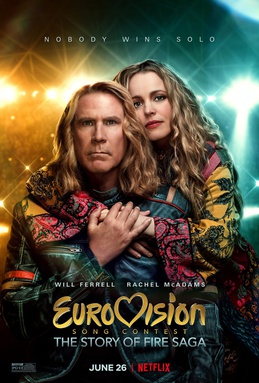
Should you fire up Netflix and watch EUROVISION SONG CONTEST?

Listen: comedy is incredibly hard. Maybe the hardest thing when it comes to storytelling and entertainment. Because you have to take risks, and most of those gambles won’t pay off.

This is why movies coming out of Saturday Night Live alums are hit-and-miss. A joke that gets stale and repetitive during a three-minute sketch is just about impossible to stretch into a 120-minute movie.

I swear the best comedies are made in the editing suite–throw 100 things at the wall, go wild, and have the editor and director pick the 10 things that really work while chucking the other 90.

EUROVISION SONG CONTEST may seem like one of those skits, something that might be hilarious for one song and painful to sit through for an entire movie. Check out the trailer.

I’m happy to say the opposite is true. This is fresh, funny, and surprisingly good.

The movie is set in Iceland, which needs to be featured more. It’s a wild place. Having visited there, it’s nice to see it in a major movie.

And while this is a comedy, the ending is excellent and surprisingly moving. TEARS MAY BE SHED. I won’t spoil it all by including the final song. Instead, here’s VOLCANO MAN, a great appetizer for the movie.

VERDICT

You’ve already burned through everything else on Netflix, Amazon Prime, and your brother’s DVD collection.

Give EUROVISION SONG CONTEST a go–it won’t disappoint.

1944 is a song that will make you cry

The great thing about the Series of Tubes is you stumble upon random treasures, like this cover of 1944 by Elina Ivaschenko.

Beautiful, right?

Obviously, her coach’s reaction help makes this video great. You can see and feel the joy as her singer nails this.

What hit me was the universality of music. Most of these lyrics are not in English and it doesn’t matter, because the emotion comes through, strong and clear.

I’ve seen research by ACTUAL SCIENTISTS that music has near-magical powers when it comes to generating human emotions. You can pinpoint the exact notes and chords that generate joy, sadness, and other emotions.

Here are the lyrics:

When strangers are coming
They come to your house
They kill you all
and say
We’re not guilty
not guilty
Where is your mind?
Humanity cries
You think you are gods
But everyone dies
Don’t swallow my soul
Our souls
Yaşlığıma toyalmadım
Men bu yerde yaşalmadım
Yaşlığıma toyalmadım
Men bu yerde yaşalmadım
We could build a future
Where people are free
to live and love
The happiest time
Where is your heart?
Humanity rise
You think you are gods
But everyone dies
Don’t swallow my soul
Our souls
Yaşlığıma toyalmadım
Men bu yerde yaşalmadım
Yaşlığıma toyalmadım
Men bu yerde yaşalmadım

There’s real pain and history behind the song, which is about Stalin’s deportation of the Crimea Tarters.

The original song is by Jamala, a Eurovision winner from Ukraine.

So this is one of the rare covers which improves the original. Kind of like how Meg Myers took RUNNING UP THAT HILL and transformed it into a rocket ship full of beautiful noise.

Here’s the original song for comparison.

VERDICT

11/10 for making me tear up.

Trump would torch his own house to get a headline

I’ll add to that headline: Donald Trump wouldn’t just light his own house on fire if that’s what it took to get some press and a crowd.

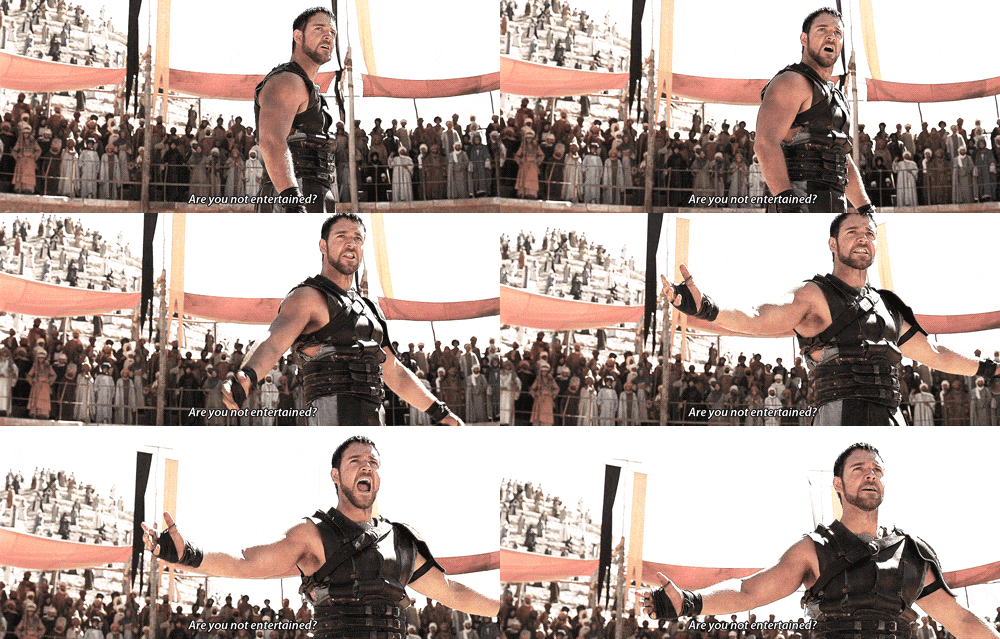
He’d do it after getting the job of fire chief. After half the town burns, Trump would pull a Russell Crowe.

Gladiator GIF - Find & Share on GIPHY

Because that’s what he sees his job: entertainer-in-chief, not commander-in-chief.

Governing is Complicated and Boring to him. His tweet about Joe Biden being a boring ratings disaster as president, now, that’s telling. This is what matters to him: ratings, not results. Trump doesn’t solve problems. He’s hard-wired to create new ones.

It’s why he loves giant rallies and the ability to move the press with constant tweets.

And this is why Trump continually generates controversy, even when it hurts him. He believes in the theory that there’s no such thing as bad press, and that worked for him to generate name ID and coverage when he was a real estate developer. You can make a living selling overpriced condos and fake Trump University degrees if millions of people know your name. Doesn’t matter if 90 percent of people think you’re a buffoon–10 percent of millions of people is all you need.

Politics is different. Name ID can get you through a crowded primary, but it doesn’t help you run a country.

This is why I never look at Trump’s weird moves as three-dimensional chess. He’s doing what he knows, picking weird fights to get maximum media coverage even though (1) as president, he naturally gets more coverage than any person on earth, and (2) many of these battles are insane and counter-productive.

There’s nothing smart about picking a fight with Bubba Wallace and defending the Confederate flag when everybody is going the opposite direction: NASCAR, the state of Mississippi, the leaders of the military, voters.

If it generates press, owns the libs, and makes his base happy, he does it. Goya beans, marching neo-Nazis, kids in cages, travel bans–the list is endless. I don’t have time to type all the horrors.

So what changed?

The COVID pandemic, economic crash, and protests against police violence all hit at once this year. They exposed Trump’s incompetence in the face of a single real crisis, much less three simultaneous ones.

When times are good, sure, people like to be entertained and diverted. You can dominate the headlines with fights about the Confederate flag or whatever.

But if the nation is on fire, with the economy in shambles from the pandemic, people dying, and the largest civil rights protests in history, that’s what will dominate the press and the minds of voters. They won’t be distracted, no matter how shiny the object. Only a spectacular fool would try to divert attention from those pressing issues.

Here’s a headline for you: As COVID-19 Toll Soars, Trump Brags About Bringing ‘Back’ Incandescent Light Bulbs

So yes, Trump is a spectacular fool.

After years of this, he won’t change. Maybe he can’t. Clearly, he doesn’t want to, no matter how many advisors tell him it’s not working.

I think Mary Trump has it right: Donald Trumps is still a damaged little boy, the kind of kid who will swear at the Thanksgiving table and knock things over because he’s incredibly desperate for attention.

It’s not a brilliant political strategy. Any fool can make a packed room full of people turn around and pay attention.

Walk into a Safeway and throw a tantrum–about masks, QAnon conspiracy craziness, flat-earth theories, whatever–and kick over a carefully stacked pyramid of Coors Light and tortilla chips. With cell phones turning every person into a mobile, worldwide TV studio, you could easily go viral doing that sort of trashy nonsense. The shares and retweets might go crazy.

But it doesn’t make you a media savant.

And it’s not a good habit for an elected leader who’s supposed to be solving problems, especially when millions of people are out of work or infected with a deadly virus.

Why we’re desperate today for a different flavor of weird news

Typically, the weird news that goes viral is something like this: Kangaroo captured after hopping through Fort Lauderdale streets

You have the typical ingredients–(a) Florida and (b) police–with a new twist: (c) an unusual wild animal instead of a criminal idiot. Yet I don’t see the same fervor for stories like this today.

Instead, what seems to go more viral are stories like this one.

Beautiful, right?

This is my theory: when times are good, we seek the opposite when it comes to news and entertainment.

The economy is roaring? Give us all kinds of zombie movies and Mad Max apocalyptic stuff.

Whenever times are bad–and they’re truly bad right now with the COVID pandemic and economic crash–I believe people seek feel-good stories like the piano player. Because we don’t have to search hard for weird and wacky news. You can turn on CNN or fire up Twitter and have your mind blown by the hourly nuttiness, often coming straight from the White House from the tweeting fingers of the man who possesses the codes to Earth’s largest nuclear arsenal.

So yes, give us a chimp helping a human.

And show us a bird who has different dances for each ringtone.

People need this sort of thing right now, a bit of humor or a dose of kindness.

I’m happy to see more of this style of weird news get attention and traction. It’s a good switch. We’ve had enough Florida Man nuttiness to last us decades.


Why “romance novels are trash” is such a bad take

A man on Twitter recently had the genius idea to mansplain to romance readers and authors all about their genre. He could separate the quality romances from the trash simply by looking at the cover. And yeah, he basically called most romances trash.

Somebody had to call 911, because that man was quickly murdered by words.

There’s no need to link to the Twitter thread, which is obscured by crime scene tape. Homicide detectives are still picking up bullet casings and bloody knives.

This man isn’t alone, though. Romance novels are the biggest sellers in the book industry, the foundation of the business, but they get a lot of grief, too.

Years ago, I was smart enough not to say such things on the interwebs, but I saw different genres of fiction as living on various planes of quality. Great Literature on top of the pyramid, then everything else.

Now, my thinking is completely turned around. Here’s why.

There’s no link between genre and quality

A lot of the classic of literature, now held up as the highest quality, were considered trash when they were first published.

Edgar Allen Poe wrote horror and died in poverty. You could call it literature, but it’s still horror.

Tons of what we hold up as of the highest quality are actually written for kids.

Dr. Seuss. Winnie the Pooh. Alice in Wonderland. Harry Potter.

There’s amazingly beautiful writing coming out of horror and sci-fi and romance–and totally unreadable nonsense on the shelves of Serious Fiction.

For every CATCH-22, there are 5.4 bazillion books like the just-released ANTKIND. Seriously, head to Slate and read the review.

What’s the purpose of a book or movie?

Stories have two basic missions: to entertain and educate.

To make you feel, and to show you worlds you didn’t know existed–or to look at the world in a different way.

There’s a misconception that Great Literature contains the highest meaning, that it’s the purest form with the strongest message. The opposite is true. I’ve read mountains of books, and I’m not alone in noticing that a lot of literature is dense and obscure. A slog. And because it’s too popular or Hollywood, the structure and endings of literary novels and movies are often backward, if not bizarre.

That muddles the message. Because even if somebody manages to slog through the entire thing, there’s a good chance they won’t understand the ambiguous and complicated point the author intends.

What’s worth living and dying for?

Think back to English Lit in college and the foundation. Literature, and all stories, are supposed to tell us what’s worth living for and what’s worth dying for.

Romances focus on what’s worth living for–who should you love.

Thrillers are centered around what’s worth dying for.

I did a giant post all about this. Click here: Why every man must read a romance – and every woman a thriller

So those two “trash” genres split the great question in two. I’d say they do a beautiful job of tackling both halves of that question, too.

Every niche and genre has a question they’re trying to answer

Other fields of fiction derided as junk also tackle huge, deep topics.

Horror is really about dealing with fear and death.

Comedies each make fun of an institution: suburban family life, corporations, showbiz, war, politics.

Dramas show that no matter how bad things get, there will always be heroes trying to stand up for what’s right.

Sci-fi and fantasy ask, “What if?”

Each of these has a distinct message and way of looking at a piece of the world. And sure, there’s no law requiring you to love spy thrillers or watch superhero movies.

What I’m saying is (a) give them each a chance and (b) don’t disparage what other people enjoy.

Every genre of storytelling tries to a fundamental question about life.  They all have value–especially to the people who love them.