Writing secret: all you need is CURIOSITY and SURPRISE

The kitteh is surprised

Whether you write novellas about fierce mermaids, magazine stories for Cosmo (insert your own joke here) or speeches about the Austrian school of economics for the IMF — whatever sort of writer you are, two things matter most.

Not correct grammar and spelling. Those things are assumed.

Not pretty paragraphs and sentences that sing. That’s word gravy, while we’re talking about the main course.

What matters most: making your readers curious, then surprising them.

The kitteh is surprised
Surprise Kitteh is surprised.

This is why the inverted pyramid is a terrible structure for any writer. (Click with your mousity mouse to read Why the Inverted Pyramid must DIE.)

The inverted pyramid grabs a heavy rock and smashes the skull of curiosity. Then it takes that same bloody rock and crushes all hope for any surprises.

How does it achieve this epic level of failure? By giving you the answers before you even know the questions. The payoffs have no setups.

Ways to make your audience curious

Create setups by raising interesting questions (a) about real people where there are (b) high public stakes or (c) high private stakes and (d) serious conflict.

WHAT happened? (mystery)

Debates about the past are about facts, and assigning blame.

  • Who really killed JFK?
  • Did aliens really land at Area 51?
  • What caused the Great Depression?

WHY did it happen? (whydunit)

This is often more interesting than the question of who did it.THE BUTLER ALWAYS DOES IT, so tell us why instead.

How do you CHOOSE between two goods or two evils?

Debates about the present are value choices.

Choosing between good and evil is simple and cartoonish. That’s why its for kids. Truly tough choices are between two good or two evils. Does believing in true justice mean setting a killer free? That sort of stuff. These things are deep. They’ll exercise your head.

What WILL happen? (thriller)

  • Can we stop these evil cats from taking over the earth BEFORE a giant comet destroys it?
  • What might happen if you brought dinosaurs back to life?
  • Will 5.93 gazillion pounds of TNT make a dead whale disappear from a beach — or will something else happen instead?

WHO will get together — or split up? (romance)

  • Will Matthew McConaughy get together with Kate Hudson already or do we have to suffer through all 120 minutes of this stinker?
  • Why is Tommy Lee Jones in some movie with Meryl Streep about lovey-dovey nonsense?
  • What specific drugs were involved when Hollywood executives decided that Sarah Jessica Parker was some kind of sex symbol? (I’m cheating here and inserting a mystery question about the past into a romance setup, and I should be punished by the Storytelling Gods but, to be completely honest, and to use more commas, which is usually against my religion, I JUST DON’T CARE)

What should you do about the FUTURE?

Debates about the future involve costs versus benefits.

  • As a promising high school athlete, should you let your studies suffer to chase the dream of playing in Major League Baseball, when there’s a greater chance of being hit by a logging truck than being drafted?
  • Should we try to go back to the gold standard, to make Ron Paul all happy as he shuffles off into retirement, or does destroying the global economy kinda put a damper on that whole idea?
  • Next year, should you sell all your possessions to build a zombie-proof bunker in Montana for a zombpocalypse that will never come but is fun to think about — or should you focus on that whole “driving to work and paying the bills” thing?

Ways to surprise your audience

It’s unfair to have things happen for no reason, like Anne Hathaway getting smooshed by a truck in ONE DAY.

Also cheating: letting people off the hook via deus ex machina, which is fancy Latin for “the sidekick shows up at the last minute to shoot the bad guy, right before the hero dies” (every action movie known to man) or “it was all a dream!” (an entire season of DALLAS) or “let’s bring in something we never told you about, then run away” (every sci-fi movie you’ve ever seen on cable).

Surprises shatter expectations and stereotypes. Did you expect the scientist handling the landing of Curiosity on Mars to be a young man rocking a mohawk? No. You expected a stereotypical nerdy McNerd, and bam, that little surprise turned Mohawk NASA man into a national phenom.

A good surprise must reveal something:

  • a secret you hinted at before
  • how a person has changed after suffering and sacrificing
  • a subtle setup that they may have noticed, but will remember (PRESUMED INNOCENT does this better than Anything in the History of Stories)
  • how society has changed after suffering and sacrificing
  • a shocking decision (the hero gets what he wants but rejects it, an unhappy ending to a Hollywood movie OR a happy ending to a French existentialist movie, a romantic comedy that doesn’t feature an put-together and ambitious heroine with a loser man she fixes up)

Stretch your editing muscles

Proofing for boo-boos is easy. Line editing is tougher.

Structural editing is the toughest.

So let’s play around with a little flash fiction from Joey’s contest and see what we can do, first with a standard edit job, then with a different kind of big-picture spitballing.

Original flash fiction entry by Mayumi – 196 words

Stone stairs and the blood of Landstanders foolish enough to raise arms against him disappear beneath Fin’s boots, as every step takes him closer to the top of this tall, windowed tower, and to the girl trapped within.

“Wavewalker!” a guard warns, but he’s silenced by metal tines already streaked red; it’s the same for his partner beside. And up Fin runs, never stopping. His muscles ache, his lungs burn, but the door is just ahead, and suddenly he’s crying her name as his spear splinters the heavy wood:

“Cauda!”

He’s barely broken through when she rushes up, arms thrown around him. And though her eyes are wide and frightened, her voice drifts to him with such gentle love, like the dreamy sway of the coral among which they used to swim. “You came.”

Time is short – more Landstanders are surely already racing to reclaim their princess prize – but still he cups her face, so sea-pale and soft, and kisses her, for fear it will be the last thing he ever does.

He draws back at the taste of tears.

“There’s no way out,” she whispers.

The spear creaks in his fist. “There’s always a way.”

# # #

Comments:

Of all the entries, this one had the most action, which is probably why I liked it. Other stories mostly hinted at action to come, or actions in the past.

Edits: switched to past tense instead of present, fixed various things.

Edited version – 178 words

Blood on the stone stairs disappeared beneath Fin’s boots, every step taking him closer to the top of the tower and the girl trapped within.

A guard’s shout was cut off by a blade already streaked with red. And up Fin ran, never stopping. His muscles ached, his lungs burned, but the door was just ahead, and he cried her name as he spear splintered the heavy wood.

“Cauda!”

He’d barely broken through when she rushed to throw her arms around him. Though her eyes are wide and frightened, her voice drifted to him with such gentle love, like the dreamy sway of the coral among which they used to swim.

“You came,” she said.

Time was short – more soldiers were surely racing to reclaim their princess prize – but he cupped her face, so sea-pale and soft, and kissed her despite the fear it would be the last thing he ever did.

Fin drew back at the taste of her tears.

“There’s no way out,” she whispered.

The spear creaked in his fist.

“There is always a way.”

# # #

So, a typical editing job. Nothing fancy.

I’m more interested in the guts of a piece — short story or stump speech, HBO series or Hollywood blockbuster. What’s the structure, the setups and payoffs? How do things change?

So here’s another flash fiction entry. No line editing here. Let’s look at the bones and spitball some options.

# # #

I’ll never forgot that old, mossy stone porch. Johnny and I used to lie there after the dances, enjoying the smooth coldness of the stone against our sweaty skin, and talk about what we would do with a building like this if it were our home.

“First off,” he would say, “I’d kick all these damned people out!”

He used to love to make me laugh. I thought I couldn’t live without him. We were both 17, and it seemed like the perfect life lay before us. Everything in the world was perfect, if only for a moment.

That, was of course, before the booze took hold of him.

It’s hard to believe, only a few short years later, here I stand looking at that porch, with its glorious white columns, standing tall and proud, with the fadings of Johnny’s fists on my face. Oh how life changes so cruelly.

He will wake up soon, in the E.R., and wonder how he got there. He will yell and call out my name. The nurses will not know that “Jenny” means Jessica, because they will not know that in his drunken confusion he often mistakes his mistress for his wife.

# # #

Nice. I like it. There is a difference between the beginning (Love Story by Taylor Swift) and the end (Goodbye Earl by the Dixie Chicks).

How can we pump up the story without adding Michael Bay explosions, robots fighting and Megan Fox randomly running around in short-shorts?

Most of this piece is either remembering the past or predicting the future. So my first crazy idea is to make it all present tense, because there’s instantly more tension if it’s all happening now.

Let’s strip away the pretty words and look at the bones. Boil it all the way down. Right now, the original gets down to something like, “Wife plans revenge on cheaty McCheater.”

How can we change the structure to something happening now, and make it so memorable that it gets down to a sentence that makes your jaw drop. So, let’s spitball here. (Note: theese are not the words, but story / structure / outline.)

# # #

Jessica loves Johnny SOOOO much that she wants to marry him. They’re on a picnic at this amazing stone tower. It’s romantic, and yeah, she actually bought him a gold band and might ask him tonight, if it feels right. It’s a modern world. She wants to be married, and to him. And he seems super polite and nervous today, like he maybe is thinking the same thing. Her entire life could change tonight. It’s beautiful and perfect.

She’s decided to ask him. Why not? But he beats her to the punch. “Jessica, can we talk about us?”

She says, sort of quietly, “I’d like us to be forever.” But he’s starts talking about some new job, in some other city, and some girl named Jenny who he sort of slept with.

So when he stands up to awkwardly hug her goodbye, she sort of pushes him off the tower.

# # #

Now that can boil down to “You would not BELIEVE what happened last night” headline: Woman pushes cheating lover to his doom — on night she hoped to get engaged

Why the Inverted Pyramid must DIE

If you are a writer, you know all about the inverted pyramid. It’s one of the first blueprints we get taught: put the most important stuff on top and the least important on the bottom, like an upside-down pyramid.

As a reformed journalist, was I familiar with the inverted pyramid? Nah. I only wrote  5,931 bazillion stories using the damn thing. We were practically married.

Every day, millions of reporters use it to write stories for Papers of News and programs on the radios and the Glowing Tube, so if there was ever a sacred cow in writing and journalism, that cow would be named Inverted Pyramid, and the milk from its udders would contain perfect chocolate-flavored milk decorated with specks of gold.

The technique of journalism writing.

HOWEVER: I want you to know something. Come a little closer so I can whisper it in your ear: “The inverted pyramid MUST DIE.”

As a blueprint, it’s inherently flawed and bores readers. If you wrote novels, screenplays and TV shows using the inverted pyramid, they’d all fail, because all the good stuff would be in the beginning. The middle would be boring and the end would put the entire audience in a coma.

The inverted pyramid is useful for short news bulletins, and there were technical reasons why journalists use it. You want to get the maximum amount of information to the reader in a minimum amount of time, and if a story runs long, you can lop off the end without consequence. These days, however, the inverted pyramid is simply a flashing neon sign that says, “Reader, you can stop reading any time, because it only gets more boring from here on.”

Look at your local Sunday newspaper. I read The Seattle Times here, and they tend to do these big investigative stories that start on page one, jump to page 5, then jump to pages 7, 8, 9 and 12. I mean, these stories never end. Are they important? Sure. Can I finish them? No. Because they’re written using the inverted pyramid, and even a reformed journalist who loves papers — if you cut me, I still bleed newsprint — can’t get through that ocean of words.

However: a 10,000-word newspaper story is nothing compared to a 100,000-word novel, and I have no problem reading novels. Love ’em.

It’s the structure, the blueprint. The inverted pyramid sucks.

Here, I’ll give you proof.

Years ago, as a cub reporter right out of college, I’d write at least 10 to 20 stories a week. Let’s say  500 a year. And I’d win journalism awards every year. But hey, if I wrote 500 stories, some of those better be good and a few of them better be brilliant, right?

A few years ago, I freelanced a newspaper story, not simply because I still love papers, but because this story happened to a friend of mine.

One story instead of 500. And that story won some journalism award. I went one for one instead of five for 500 or whatever. Hmm.

I wrote this story about 7 years ago. Looking back at this piece, I’m a much better writer today. Parts seem quite clunky. But this piece didn’t win an award because each sentence was poetry. It got an award because I abandoned the inverted pyramid entirely and wrote this piece as narrative non-fiction, which is a fancy way of saying “storytelling.”

If I’d written it using the stupid inverted pyramid, I’d give away the ending in the damn headline, and the last line of the piece — instead of being something you remember — would be something like “The dog was yellow.”

Read this sucker. Look at the structure, the setups and payoffs, instead of the words. And tell me if you think it would be one-tenth as compelling written using the inverted pyramid. Then make a vow to never, never use that obsolete blueprint ever again.

Lost and trapped at 4,500 feet

Special to The Vidette

by Guy Bergstrom


MONTESANO – From the top of Colonel Bob Mountain– nearly 4,500 feet high – Adam Pratt and family friend Amy Smith could see the Pacific Ocean to the west, Mount Rainier to the southeast and everything in between.

The one thing they couldn’t see was Lucas, Adam’s golden retriever.

“Luke had been up Colonel Bob four or five times before,” said Adam, a carpentry instructor at Grays Harbor College who lives in Montesano with his wife, Sara.

“He was just there beside me a second ago, and he always stays right next to me on the trail,” Adam said. “So I figured that maybe he went back down toward a stream that we crossed 30 minutes down the mountain.”

Adam and Amy called for Lucas; they whistled and clapped.

“I expected his happy face and wagging tail to come running back, as he always does,” Adam said.

They went back down the trail to the stream and thought maybe Lucas would head back to the car, at the trailhead.

Adam put his sweaty T-shirt and a bowl of water where they’d parked, hoping the familiar smells and fresh water would serve as a homing beacon for Lucas.

The beacon failed; Lucas never showed up.

The search

To prepare for a search of the wilderness, Adam drove back to Montesano for clothes, food and camping gear.

He dropped off Amy, jumped in his wife’s Subaru – which she’d already packed with supplies – and they raced the setting sun back to the trailhead at Pete’s Creek, about 20 miles into the wilderness.

“I strapped on my headlamp and went up the trail by myself about a mile and a half,” he said. “It’s not wise to hike alone in the dark, especially in black bear and cougar country. I was drained and emotional, making bad decisions.”

He returned to the car. He couldn’t eat. He and Sara tried to sleep, but they lay awake most of the night in the Subaru, thinking the worst.

Where was Lucas? Was he wandering the forests? Injured and unable to move? Or a late-night snack for a mountain lion?

To the top again

Just before daybreak, Adam strapped on his backpack, kissed Sara goodbye and headed back up the mountain again.

He decided to reach the top of the Colonel and search. If he didn’t find Lucas, he’d continue down the trail on the other side of the mountain toward Lake Quinault.

Maybe the dog had headed toward the small town near the lake. Since it was Labor Day weekend, there’d be more people and activity.

Sara drove to Lake Quinault and started putting up lost dog posters. She asked people she met if they’d seen a yellow dog. She alerted the park ranger station, in case they’d heard any reports of a lost dog with a collar. No one had seen Lucas.

The cave

Adam clapped, whistled and called for Lucas as he reached the top of the mountain.

Near the top, he heard faint howling.

“I reached the lookout area and looked down,” Adam said. “About seventy-five feet below the summit, there he was, on this tiny ledge a hundred-twenty feet above the next flat spot.”

Lucas looked scared, but he didn’t seem hurt. But how could Adam reach him?

At the summit, Adam’s cell phone had some reception, so he called Sara and left the message that Lucas was alive, but stuck on a cliff.

He pushed through brush and trees on the steep sides of Colonel Bob, traveling through a twenty-foot cave he had to crouch and crawl through. Then he side-shuffled through open-topped crevice and popped out the other side of the mountain.

To reach the ledge, Adam climbed 60 feet up by hanging onto huckleberry roots and scrub brush.

After being alone on the cliff, Lucas was thrilled to see Adam, wagging his tail and licking his face. He checked Lucas for injuries and was amazed to find the dog didn’t have any broken bones from the fall.

Then the thrill of the reunion hit the Cold Wall of Reality.

“I hate heights,” Adam said, “and it was then and there I realized how stupid I had been. My emotions had got the best of me and now I was sitting on a six-foot by three-foot ledge with my buddy, wondering how we were getting of this mountain.”

No help

Adam offered Lucas a dog bone, but he wasn’t interested in eating. After letting Lucas lap some water out of his hands, he knew he had to go before they both were stuck up there another night.

“Without opposable thumbs, he wasn’t able to follow me off the ledge,” Adam said. “I King-Konged it down the cliff, using the shrubs and roots as handholds, like a monkey.”

After making it through the cave again and back to the summit, Adam went down the mountain yet again, his muscles shaking, his mind spinning. He heard voices coming up the trail but had to stop to rest and eat some trail bars.

At the same time, Sara was at the Forest Service headquarters, asking for help. They told her rescue teams were looking for a group of four lost teens, plus another couple of hikers about 150 miles away.

Stranded dogs? Not a priority.

Lost hope

Sara sobbed; they’d worked so hard to find Lucas, and now he’d starve or freeze to death on a cliff.

She left a voice mail with the only person she could think of back in Montesano: Leo Nixon, a 71-year-old retired dentist and they’d met at Friday wine tastings at Savory Faire, a man who shared their love of hiking local mountains.

Adam headed back down the trail toward the voices. He met a father and daughter hiking up Colonel Bob with their chocolate lab. He asked if they had any rope or a cell phone, since his battery was now dead.

“They helped calm me down,” said Adam, “and they actually landed some of their lunch on Luke’s ledge. To them, I must have seemed like a crazy person. It’s good they didn’t have a rope. I wasn’t qualified to use it to climb. Even if I had training, I was in no condition to do it.”

A daring plan

Heading down the trail, Adam saw another couple heading up the hill, and then a face he knew: Leo, who hadn’t gotten Sara’s message.

“He just happened to take that hike, that day,” Adam said.

Leo climbed to the summit to take a look. He said he had all the necessary climbing gear at home in Montesano and that they could rescue Lucas themselves.

They wouldn’t try it from the top of Colonel Bob, but from below, where Adam had reached the ledge in his earlier, impulsive attempt without equipment or backup.

Since it would soon be dark, they needed to wait until Saturday morning, meaning Lucas would spend his second night alone on the freezing ledge.

On the drive back to Montesano, Leo tried to calm the fears of Adam and Sara, to assure them that it wouldn’t rain, that Lucas wouldn’t try to jump, that no bears or cougars roamed the area.

“Lies, but comforting lies,” Adam said.

Leo stopped at Savory Faire, where Adam and Sara would have been that Friday night for wine tasting if they weren’t spending their time climbing and re-climbing the mountain.

Leo walked inside and casually asked the restaurant owner, Randi Bachtel, if he could borrow his climbing equipment. He refused offers of help, saying he’d called two friends of his who were mountaineers.

Randi, a veteran of Vietnam and local high school teacher, said Leo knew what he was doing. If he had to choose anybody to do a rescue, it’d be Leo, 71 years old or not.

The Silver Panther Rescue Team

At 4:30 Saturday morning, Adam and Sara arrived at Leo’s house, where two of his mountain-climbing friends joined them: Mike Riley of Olympia and Rich Irwin of Raymond.

This would be the third climb up to the summit in 36 hours for Adam, who was exhausted and questioning himself. Could he do it again?

On the way to the mountain, they picked up Amy and her husband, Nate, who’d agreed to make the climb with what they’d nicknamed “The Silver Panthers Rescue Team.”

Adam and Sara couldn’t stop thinking about whether Lucas had survived the night, about the cold, the bears, the cougars.

Driving through the rain and the dark, a dark shape – a cougar – leapt in front of the Subaru and Adam jammed both feet on the brakes.

“It was the first time that any of us had ever seen a mountain lion,” Adam said. “Truly an amazing creature. Truly terrible timing. We said nothing to each other, but we all entertained the same thoughts.”

The cougar spun around and sprinted the opposite direction.

They kept driving.

All seven climbed the trail to Colonel Bob’s summit while it was still dark. The Silver Panthers didn’t lose one step to the younger hikers.

As they reached the top, the sun showed up.

Leo led the way as they bushwhacked through the brush and trees on the side of the mountain. On a semi-flat spot, they gathered their gear and prepared for the rescue attempt.

Leo, Mike, Rich and Adam put on climbing harnesses and helmets.

They walked a narrow ledge to the start of the route Leo had picked out.

And then they started climbing.

Do or die

There’s no half-way in mountain climbing. You make it safely or fail spectacularly.

Rich and Leo set a bottom anchor in the cliff to belay Mike as he climbed toward Lucas.

Mike set a second anchor at twenty feet up, then another at forty feet before making the final climb to the tiny ledge and Lucas.

After taking a minute to calm the dog, Mike set up a rope to top-belay Adam up sixty feet to the ledge.

“I have very little climbing experience,” Adam said, “but I had the best chance to calm down Lucas and bring him down.”

Adam made it up. They attached a harness to Lucas, then hooked that harness to Adam, who pulled the dog tight against his chest.

They would make it down – the slow way or a much speedier one – together.

Home

“I stepped off the cliff,” Adam said, “and the guys lowered us down. Then Mike rappelled down and we all made our way to flat ground and safety.”

After giving Lucas some water and food, the seven-member team celebrated and decompressed. They still had four miles to hike out, downhill, but Adam barely felt it.

“We couldn’t feel anything,” he said, “but relief.”

Leo, Rich and Mike peeled away to climb a nearby peak.

Lucas rode home with his friends. And his family.

Epilogue

Sunday afternoon: Lucas is sprinting around the playground at Crait Field, playing with a three-year-old boy who can’t stop laughing. Lucas leaps off the retaining walls as if he’s weightless and happily picks up his leash to get Adam to play tug-of-war with him.

Adam and Sara talk about their ordeal being unreal, a waking nightmare with a fairy tale ending.

“Retired dentist extracts canine from Colonel Bob,” Adam jokes.

Behind the kidding around, there’s a deep sense of gratitude and community. The couple moved here from Michigan and have only lived in Montesano since last November, so they’re amazed and grateful at how people stepped forward to offer their help.

“We couldn’t have possibly rescued him without the help of our friends,” Adam said, “and the kindness of strangers.”

But there’s also an undercurrent of resolve. Of loyalty.

“We couldn’t just leave our little buddy,” said Adam, “on a mountain cliff to die.”
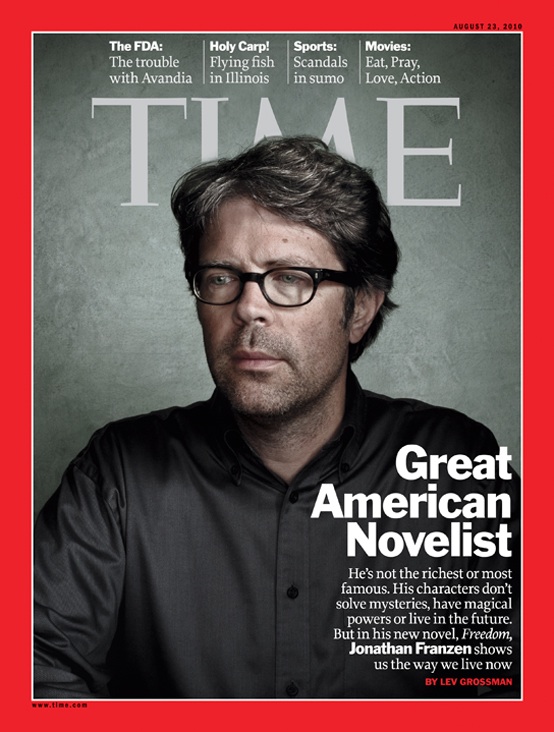
The Red Pen of Doom destroys FREEDOM by Jonathan Franzen

FREEDOM

By Jonathan Franzen

The news about Walter Berglund wasn’t picked up locally – (add spaces here to match dash format in 2nd graf) he and Patty had moved away to Washington two years earlier and meant nothing to St. Paul now – but the urban gentry of Ramsey Hill did were not so loyal to their city as not to (if we can replace 10 words with one word, those 10 words are deader than Charlie Sheen’s acting career) read The New York Times, which ran According to a long, and very unflattering story in the Times, on how Walter had made quite a mess of his professional life out there in the nation’s capital. His old neighbors had some difficulty trouble reconciling the quotes about him in the Times (“arrogant,” “high-handed,” “ethically compromised”) with the generous, smiling, red-faced 3M employee they remembered pedaling his commuter bicycle (maybe bicycle geeks know or care, but humans do not get into bike vs. commuter bike, and I’m entirely unclear whether Walter was a U.S. Senator or a staffer or a lobbyist, and how he made the transition from bigshot in Congress or whatever to 3M employee on a bicycle, or whether he started as a nothing at 3M on a bike and went to D.C. or is now pedaling to work after screwing up big enough to be in the Times yet not go to federal prison) up Summit Avenue in February snow;. (let’s use a period, because semi-colons at the end of endless sentences are for professors and pretentious chowderheads) It seemed strange that Walter, who was greener than Greenpeace and whose own roots were rural, should be in trouble now for conniving with the coal industry and mistreating country people. Then again, there had always been something not quite right about the Berglunds.

Walter and Patty were the young pioneers of Ramsey Hill – the first college grads to buy a house on Barrier Street since the old heart of St. Paul had fallen fell on hard times three decades earlier. They paid nothing for their Victorian and then killed themselves for ten years renovating it. (contradicts last sentence of the first graf, since buying a beater house and working crazy hard to fix it says there’s something very right about the Berglunds) Early on, Some very determined person torched their garage and twice broke into their car before they got the garage rebuilt. Sunburned bikers descended on the vacant lot across the alley to guzzle drink Schlitz and grill knockwurst and rev engines at small hours until Patty went outside in (Drunken bikers would be afraid of some housewife? Um, no.)

(end of page 1)

Time Magazine - Jonathan Franzen - Great American Novelist

Notes from the Red Pen of Doom

Yes, I know that critics went gaga over this book, and they loved THE CORRECTIONS, too.

I hate this first page. It rubs me wrong, and makes me feel like I’m about to read a 895-page doorstop of a book, something my sadistic Contemporary English Literature professor assigned me to read as punishment for my literary sins.

Here’s the deal: Franzen writes about families in the suburbs. Basically, the same topic that every sitcom has tackled for the last 50 years. Instead of making it funny, he makes it deep and depressing.

Is what Franzen writes – when he closes his eyes and composes after receiving inspiration directly from a muse that circles his head and descends, like a butterfly, or a silken bat, to kiss his unshaven cheeks with the kiss of creative genius – is it fun to read? No.

Don’t care about Walter and Patty as characters. I’d rather read about that biker gang guzzling Schlitz and grilling knockwurst while the talk smack and plan crimes that go epically wrong.

As with all literature – as Camryn Rhys or Elisa Logan would say, LIT-rah-SURE – the beginning is deep and mundane and depressing. It only gets worse from there. While the writing may be beautiful and amazing (though it is not beautiful or amazing on this first page yet) that’s not going to make me want to read more of the story. If I want to be depressed, I’d watch daytime TV.

The first page is all over the place. Also, he adores adjectives and adverbs, while I believe, deep in my dark heart, that all those modifiers simply mean Franzen should’ve picked stronger nouns and verbs in the first place.

It pains me that Franzen is half-Swedish and spent time in Germany as a student, because I am Swedish and lived in Germany as a child. But we are nothing alike, and I care nothing for this first page.

Which is too bad. Franzen has talent to burn. I bet if he wrote about the biker gang instead, it would be seven separate flavors of awesomesauce, and the Coen brothers would make a movie out of it.

Verdict: From this first page, you’d have to hand me stacks of purple euros to convince me that reading FREEDOM would be a good use of my limited time on this planet.

The Red Pen of Doom murders THE FOUNTAINHEAD by Ayn Rand

THE FOUNTAINHEAD

Cover of The Fountainhead

by Ayn Rand

Howard Roark laughed. (I approve of this. It asks a narrative question – who is this guy, and why did he laugh? – and I like short sentences anyway.)

He stood naked at the edge of a cliff. The lake lay far below him. A frozen explosion of granite burst in flight to the sky over motionless water. (Whoah, whoah, hold up. So far, it was all tight and Hemingway-esque. “The pants fit him. They felt good.” Now you suddenly switch to purple prose, with granite bursting in flight? I didn’t know that granite rocks flew, or exploded when they did decide to take wing. No.) The water seemed immovable, the stone flowing. The stone had the stillness of one brief moment in battle when thrust meets thrust and the currents are held in a pause more dynamic than motion. The stone glowed, wet with sunrays. (More purple prose. Hate it. Though I do smile at all the double-entendre action. Let’s try again.)

The lake below was only a thin steel ring that cut the rocks in half.  The rocks went on into the depth, unchanged. They began and ended in the sky. So that the world seemed suspended in space, an island floating on nothing, anchored to the feet of the man on the cliff. (What? I think Ayn Rand was smoking a bowl here.)

His body leaned back against the sky. It was a body of long straight lines and angles, each curve broken into planes. (Things are either curved, straight or angled. That pretty much covers it. Maybe the only other people in this book are Flat Stanley and the Blob.) He stood, rigid, his hands hanging at his sides, palms out. He felt his shoulder blades drawn tight together, the curve of his neck, and the weight of the blood in his hands. He felt the wind behind him, in the hollow of his spine. The wind waved his hair against the sky. His hair was neither blond nor red, but the exact color of ripe orange rind. (No man would ever describe his hair as “ripe orange rind.” He’d say, “I’m a red-head” or “I’m blond” or “I don’t know.”)

He laughed at the thing which had happened to him that morning (Oh, right. So funny!) and at the things which now lay ahead. (Yes — also hilarious. I laugh at that all the time. Maybe let’s use different ways to hint at backstory and do foreshadowing.)

He knew that the days ahead would be difficult. There were questions to be faced and a plan of action to be prepared. He knew that he should think about it. He knew also that he would not think, because everything was clear to him already, because the plan had been set long ago, and because he wanted to laugh. (Enough with the laughing about things that may or may not have happened, and difficult plans, and thinking about not thinking. We can go to this well once or twice, but not every sentence.)

He tried to consider it. But he forgot. (Or maybe we can jump into that well and stay there forever.) He was looking at the granite.

He did not laugh (Oh, we’re NOT laughing now?) as his eyes stopped in awareness of the earth around him. His face was like a law of nature— (You have got to be kidding me.)

End of Page 1

Notes from The Red Pen of Doom

I believe the readers of today – like me – don’t want (a) tons of purple prose, (b) paragraph after paragraph of character description or (c) 3.4 metric tons of purple prose that’s all character description and internal dialogue.

But there are bigger fish to fry here, both in the literary sense of Is This A Good Page One? and in the story sense.

Ayn Rand is a deity among conservatives, because her novels underpin what she calls the “philosophy” of objectivism, which says it’s quite unselfish to be selfish. This is obviously counter-intuitive and quite appealing in a juvenile kind of way, because hey, it’s now my moral duty to do whatever I want. The best way to take care of others is to only care about yourself. The surest path to aid the poor is to cut taxes for the rich. And so forth.

This philosophy intrudes upon the story. Roark, the hero of this novel, roughly has his way with Dominique, the heroine, when they first meet. She later describes it as rape. Dominique makes Sylvia Plath look mentally stable. To show her undying love for Roark, she marries … some rich man. Then she tries to destroy Roark, divorces that rich man to marry another rich dude, keeps on trying to destroy Roark, then finally divorces that other rich schmuck to marry Roark in the end, but only after Roark TRIES TO BLOW UP A BUILDING that he designed.

If you said “This is a book that makes a hero out of a selfish architect who’s a strong-willed, good-looking rapist and terrorist,” you’d kinda sorta be accurate. And yes, I read the entire book. Twice. I WROTE A PAPER ON IT.

So the first page does foreshadow a lot of things. Ayn Rand has “a frozen explosion of granite” in the second graf. She has a whole bunch of imagery and descriptions of Roark’s perfect body.

HOWEVER: If I hadn’t already read this book, I’d see this first page and think it was some kind of historical romance, with Roark’s kilt and dirk sitting over on that rock, his trusty horse waiting for him after he took a swim and rode off to rescue his favorite maiden, a red-haired beauty held captive by the twisted and disfigured Baron of Whateverthehell.

Otherwise, I don’t hate her writing per se. I merely despise it.

Usually, I can fix a line or a paragraph. Big chunks of this first page simply need to die. The best thing is to cut them out.

Does that whack about half of this first page? Yes.

Would that make it better? Yes.

There’s a weird mix of styles going on here. You get short, clipped sentences, tight and hard, with zero fatty modifiers. But then Ayn the Rand switches to long stretches of not only purple prose, but outright wackiness I expect from college sophomores writing flash fiction at three in the morning on the deadline day after hitting the bong FAR TOO HARD.

The Verdict:

There’s a reason 12 publishers rejected this novel before it found a home. Hate the first page. Hate the hero, and the heroine who tries to destroy Roark because she loves him so much. Hate the story. Hate the “philosophy.” It’s a tough call, whether THE FOUNTAINHEAD or OUTLANDER are more deserving of being thrown across the room. But I’m going with THE FOUNTAINHEAD.

Writers: social media is a tool — not a magic bullet

Every novelist, journalist and aspiring writer I know is all over social media. They’ve got a blog and a Twitter account, or a Tumblr and a Facebook page.

Or they have all four, plus three things that are so bleeding edge, I haven’t heard of them yet.

HOWEVER: you could spend all day banging out blog posts and tweets and Facebook updates. It could suck up all your free time. And you might not get that much out of it.

I see people doing it wrong all the time, and it kills me.

So let’s get some things straight:

  • It’s not about how many friends you have on Facebook.
  • It’s not about how many hits you get on your blog.
  • It’s not about how many people follow you on Twitter.

If you want to make more money writing for a living — or quit your day job to write full-time — then you need to look inside the media toolbox and see each type of social media for what it is: a tool.

Not a magic bullet. Not a sure-fire path to fame and fortune.

You also need to realize that social media can’t be your entire media plan. And no, you are not the exception, Internet Boy.

Here’s a quick-and-dirty look at each tool:

Twitter

This whole Twitter thing is for meeting people.

The social barrier is incredibly low, because tweets are by definition super-short.

Nobody is going to send you a rambling five-page email about their feelings. There’s a lot of freedom in 140 characters.

Want to BS with other writers? Look up the right hashtag for the kind of writing you do. I bet #poems will get you in touch with poets around the world.

Movies, romance, thrillers, journalism, whatever you’re into, you can find people with the same interests on Twitter, and it’s non-threatening.

It’s like a big bar that’s always open where the drinks are always free and the people are friendly, because they’re drunk. I said THE DRINKS ARE FREE.

Facebook

The Book of Face is nothing like Twitter, nothing at all. It’s a closed system.

If Twitter is a big bar where anybody can talk to anybody, then Facebook is a giant hotel with 500 million rooms where you’ve got to know the right hotel room number, knock on the door and have the person behind the peephole look at you and say OK before they open the door and let you in the private party.

Facebook is for friends and family.

It’s for people you’ve had dinner with, or would have dinner with, and want to share baby photos and wedding photos and private things you don’t want to share with the world.

Maybe you think a Facebook fan page is the best thing ever, and you swear by it, and it’s the reason why you went from reporter at The Willapa Valley Shopper to editor of Vanity Fair.

I don’t recommend it. Facebook’s niche is friends and family. There are better tools.

Also: don’t play Farmville, or Bejeweled, or whatever on Facebook, for doing so a Sin, and the Flying Spaghetti Monster DOES NOT FORGET.

He doesn’t forgive, either. Not his thing.

Blogs

Blogs are a bit like Twitter, in that everybody can see them. It’s not a private party like Facebook.

With a blog, you can write a helluva lot longer than 140 characters and put in silly photos of zombies and movie clips about hair bands from the 1980s. IT IS GLORIOUS.

Blogs are where the people you meet on Twitter can come to hang out. You can have literary flame wars in the comment sections about whether the Spork should be sent along with Snooki and the Situation on a one-way mission to Mars.

Different tools for different jobs

Think about those three tools — Twitter, Facebook and blogs — compared to a face-to-face meeting, a phone call and an e-mail.

  • Asking for a face-to-face meeting with an important and powerful stranger is the highest possible hurdle, right? A six-foot brick wall to climb over.
  • A cold call is chain-link fence. A little easier.
  • E-mailing that same VIP is three-foot wall.
  • Posting a comment on their blog is a little hop over decorative plants.
  • Tweeting is like hopping over a crack in the sidewalk. It’s nothing. Go give Yoko Ono a tweet. DO IT NOW.

It’s not about getting hits

Social media is not a games of Tetris, where you’re trying to get the high score.

Having 500,000 hits to your blog or 20,000 followers on Twitter doesn’t do anything, by itself.

Social media is about meeting people and learning things. It’s about a dialogue, not a monologue.

Fame and fortune still comes from old-fashioned mass media.

Do people like Charlie Sheen start Twitter accounts and instantly get 6.8 bazillion followers? Yes.

And there is a reason for that. That reason is simple: he was already a famous movie and TV star.

Also, he is an infamously insane train wreck, which is hard not to watch.

Want to reach a mass audience? Use the mass media

If you want national success, you need to reach a national audience.

To sell a million movie tickets, or novels, you’ve got to reach tens of millions of people with the mass media — and if you’re lucky, advertising. National success means trying to reach 330 million people. International success means reaching out to all 7 billion on this rock.

You can’t do that with Facebook and Twitter and a blog. Not everybody uses it. The only real way to reach a mass audiences is by using the mass media. TV. Newspapers. Radio.

A big chunk of the population only gets their news and entertainment from the idiot box. A different chunk only listens to the radio. A smaller bit rely on newspapers and magazines.

If you’re not on all of those channels, you don’t exist to those different audiences.

Social media isn’t a magic bullet

Old-fashioned mass media still has the biggest bullets and the biggest guns.

Is this heresy to the fanatics of the web? Yes. Too bad, so sad, tell your dad. Journalists and public relations pros will tell you this is the truth. Suck it up, internet boy. Sometimes, you have to get up from behind the keyboard and talk to real reporters, live and in person.

Someday, you have to go on a radio show. Eventually, you need to get on TV shows — not once, repeatedly — to reach all those people who only watch TV, even if you’re just trying to reach a local or statewide audience.

Say you’re a playwright in Seattle trying to make your debut play a success. Are you gonna sell out the season by having a blog and a Facebook fan page and tweeting twice a day? No.

Don’t waste your time dreaming that lightning will strike via the internets.

Get on the local TV stations, on radio, in the newspapers, on local blogs that are already popular. Your own blog and whatnot is gravy. It’s not a serious media plan.

Take solace from the fact that with 5.84 bazillion people trying to do via the series of tubes, there’s less competition for serious, hard-working people who know how to work the mass media. By “work” I don’t mean “annoy.” You need to do it right.

It isn’t easy. It isn’t simple. But it’s a lot more effective for reaching a mass audience than hoping hits on your blog will turn into magic, like lead into gold.

There are gold mines out there. That’s where you should take your pick and your axe and your mighty pen to look for the shiny yellow stuff. Because that’s where it lives.

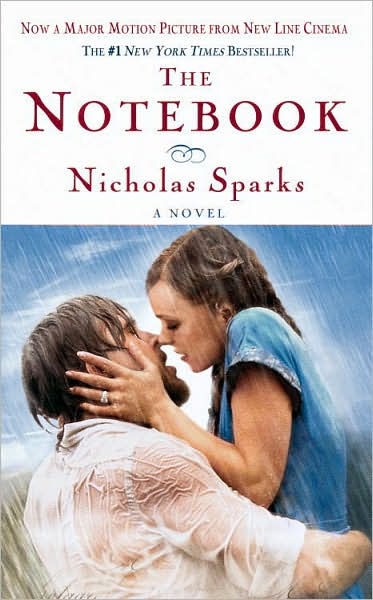
The Red Pen of Doom guts THE NOTEBOOK

THE NOTEBOOK

(The title makes sense, since the story turns on an actual notebook.)

by Nicholas Sparks

Chapter One: Miracles

Who am I? And how,I wonder, will this story end?

The sun has come up and I am sitting by a window that is foggy with the breath of a life gone by. (Melodramatic and clunky.) I’m a sight this morning: two shirts, heavy pants, a scarf wrapped twice around my neck and tucked into a thick sweater knitted by my daughter thirty birthdays ago. The thermostat in my room is set as high as it will go, and a smaller space heater sits directly behind me, clicking and groaning and spewing hot air like a fairytale dragon — and still my body shivers with a cold that will never go away, a cold that has been eighty years in the making. Eighty years. , I think sometimes, and dDespite my own acceptance of my age, it still amazes me that I haven’t been warm since George Bush was president. I wonder if this iIs this how it is for everyone my age?

My life? It isn’t easy to explain. It has Not been the rip-roaring spectacular I fancied it would be, but neither have I burrowed around with the gophers. I suppose it has most resembled a blue-chip stock:

(end of page 1)

the notebook by nicholas sparks
THE NOTEBOOK by Nicholas Sparks. A book that belongs next to Hemingway. A movie that should have won many, many more Oscars, yes? Nicholas Sparks was ROBBED.

Notes from the Red Pen of Doom

The biggest problem isn’t the line editing, though it’s clunky. While clearly first-person P.O.V., he keeps inserting needless attributions like “I wonder” and “I think.” Here’s the monster problem: 90 percent of page one is spent telling the reader — repeatedly — that the first-person narrator is (a) 80 years old and (b) seriously obsessed with talking about how cold it is.

Space on page one is precious. It’s for raising narrative questions that won’t be answered for 400 pages. Compelling questions.

Life or death. Together or alone. Freedom or slavery.

I can imagine a story where being 80 years old and cold is the problem. Maybe a doctor is headed to a remote Alaskan village when his snowmobile breaks down. He’s  the only doctor within 200 miles, the only hope for a mother who’s in the middle of a labor gone wrong. Now you’ve got public stakes and private stakes. If he doesn’t strap on snowshoes and get past hungry wolves and polar bears, he’ll die, and the mom in labor might die, and her baby might die — and they’ll be no doctor out in the bush for a lot of people.

So: a cold old man becoming warm can matter a lot in a story.

Not in this story. On this page one, it’s boring.

Having an 80-year-old hero can make this hard. Go back to the first line: “And, I wonder, how will this story end?” Not a lot of suspense there. It’s hard having high stakes when the protag is already looking back on his life, as if it’s already over.

This is why most novels and movies feature younger protags. The more you have to lose, the higher the stakes.

It’s why you have movies like INDIANA JONES AND THE TEMPLE OF DOOM, not INDIANA JONES AND THE CONTENTIOUS BINGO GAME.

You certainly can have great stories with older heroes. They just have to DO something.

Anthony Hopkins did a great job with Hannibal Lecter, an active and charming killer. Old, yes, but he didn’t act like Sparks’ old man. There is no book called HANNIBAL LECTER AND THE SPACE HEATER.

So, back to THE NOTEBOOK: the beginning should set up the ending. Does the climax hinge on whether our 80-year-old hero puts on another ugly Christmas sweater and finally stops kvetching about being cold? No.

It’s about whether or not he’s alone or together. Whether his wife remembers him or not.

So the first line is on track. Almost. Not “Who am I?” but “Who are you?” And that question should come out of the mouth of the wife.

Or, if Sparks wanted some misdirection, have that question come from somebody else. But since the end is about togetherness, about love and romance and faithfulness, the first chapter should be full of loneliness. Not cold. Not sweaters and scarves and space heaters.

Talk about how friends move, how coworkers get different jobs, kids grow up and stop calling.  Spend the first page on loneliness, if you want the ending to be about togetherness.

Had I not read the back cover, and didn’t know the climax of this story, reading page one would not motivate me to read more.

If the narrator complains a lot, and doesn’t think his own life is exciting, why the hell would I keep reading about him? I will now praise the One Known as the Spork: the ending of this book, as a plot, isn’t bad. Page one doesn’t do it justice.

Verdict: Take out the Nine and shoot it full of holes, then burn whatever’s left and start over with a fresh sheet of paper.

Writing secret: Light as air, strong as whiskey, cheap as dirt

Those nine words are magic.

And those words help sell 5.842 gazillion miles of barbed wire back in the late 1800s, when the West was still wild and there weren’t handy trees or stones to make fences.

Light as air, strong as whiskey, cheap as dirt – I’ll remember that for days. Forever, maybe.

It’s honed down to perfection. Nine words, and not a one is wasted.

barbed wire
A little strand of steel with a twist and BOOM, you are golden. Photo by Guy Bergstrom.

In the five seconds it takes to hear those words, or read them, you’re sold.

Writers struggle with those first five seconds.

  • What’s the best way for a reporter to convince the city editor put a story on A1 instead of buried next to the obituaries on B15?
  • How can you sum up a 100,000 novel in a single page – or a single sentence?
  • When a magazine editor is buried with pitches, how does yours stand out from the slush pile?
  • What should a screenwriter say about his script while riding in an elevator for 30 seconds with Steven Spielberg?

Science shows us secrets

Here comes the science: people make up their mind about you – or your writing – in the first five seconds.

Viscerally. Unconsciously.

Their little reptile brains see your face or your words and make a split decision.

Later on, our oversized frontal lobes justify that snap judgment.

It’s not a rational thing. I’ve seen the science. Go read BLINK by Malcolm Gladwell. (Go on, read it. I’ll be over here, drinking Belgian ale.)

Different researchers testing for different things found the same result.

  • The first five seconds of a job interview determines whether you get it
  • The first five ticks of the clock during a professor’s first lecture of the semester, with the sound turned off, can be used to predict exactly how students will rate that professor.
  • A quick glance – less than – at two candidate mug shots will predict who will win the race. This works with adults or five-year-olds. Mug shots. No names. No parties. The shape of the face.

This last result fascinated me. Researchers had people glance at those mugs, then rate the candidates on attractiveness, intelligence, competence and whatnot.

They thought attractiveness would matter.Nope. They thought race and sex and age would matter. Nope.

Competence was the only thing related to the eventual winner.

This makes sense. If somebody’s attacking your village, you don’t pick Nerdy McNerdy as the leader of the defense. Brains without brawn won’t work.

You don’t pick Miss America to lead the troops into battle, either, because she’ll simply be nice to look at while you all get slaughterd.

And you don’t pick Mr. Neanderthal, tough but stupid.

Who do you want? Somebody who looks competent – tough but smart. A Clint Eastwood, somebody who looked like he knew what the hell he was doing.

Hold it out and squint

Alright, you’re already thinking of the Greatest Squinty Eyed Tough Guy in Movies, so remember this rule: Hold it out and squint.

Hold out your first page of your text and squint.

Is it a sea of gray?

Is there a photo or graphic? Are all the paragraphs the same length? Do you have any subheads or anything to break up the text?

Now, this doesn’t work for certain things. You can’t have photos and whatnot in screenplays or manuscripts.

Later on, though, it will make or break you.

When you go to rent a movie (yes, I know Blockbuster is dead to you and it’s all Netflix now, so pretend you’re clicking away with Mr. Mouse), you make decisions in far less than five seconds. You glance at the front cover and move on.

Same thing with books. Glance and move. Glance and move.

Maybe you pick a book up and read the text. What makes you pick it up? Images first. Maybe a good title. Glance and move.

That’s why the Squint Test is so important.

Think about movie posters with too much going on. When you squint, you don’t know what’s what.They’ve got the star and the co-star and seven different sidekicks in there, plus the villain and two random thugs. It’s a mess.

Less is more. Simple works best.

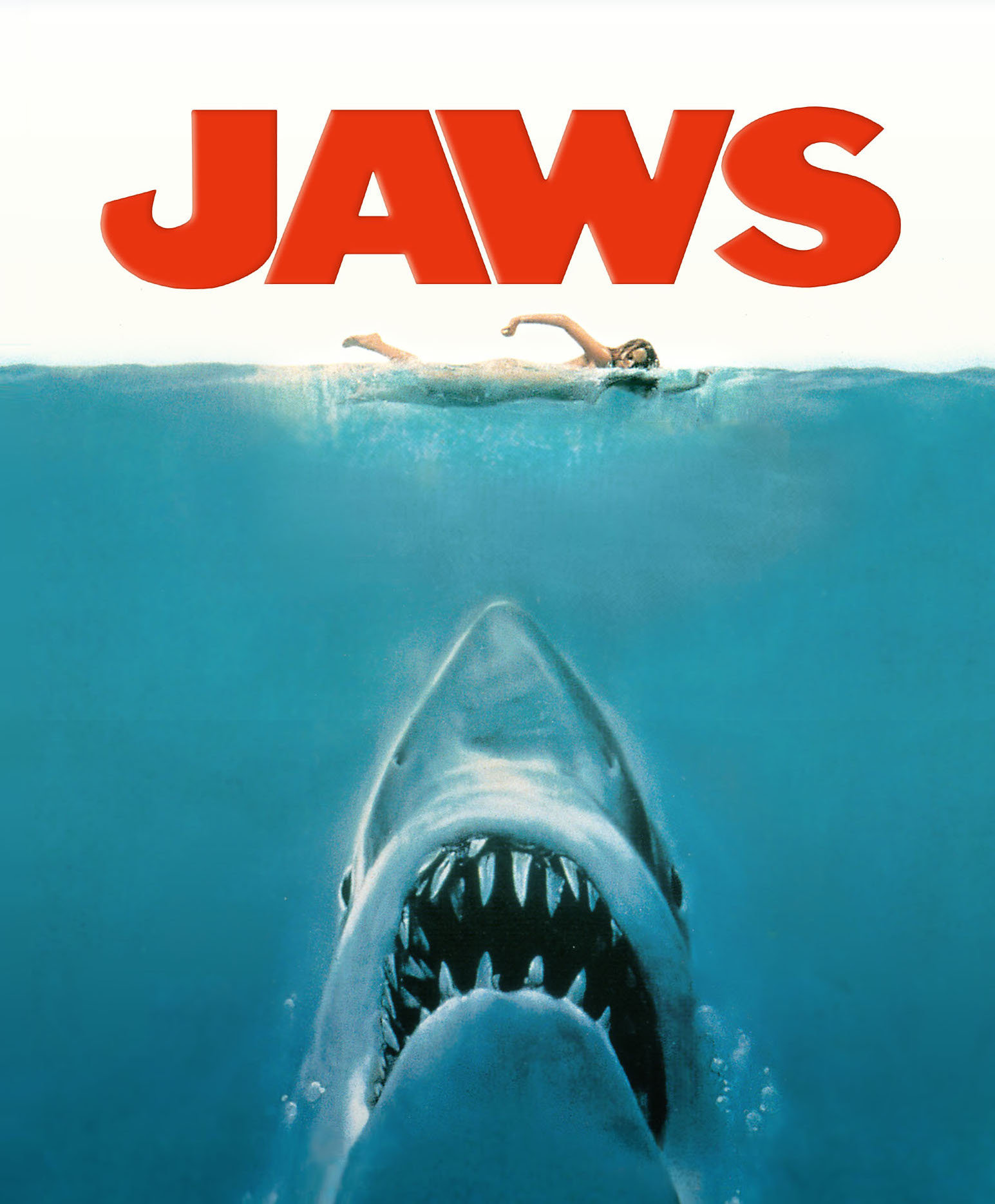
The poster for JAWS is perfect: a pretty young woman swimming along and a giant invincible shark roaring out of the depths of the ocean. It doesn’t get any more primal than that. We need the shark and a pretty girl. That’s it.

jaws movie poster
The JAWS movie poster is classic, and will always be classic, because it is simple and brutal and seven separate types of awesome. Steven the Spielberg, stick with this movie thing — you have talent.

Putting this knowledge to evil use

Our conscious brains aren’t really running the show. We’re like a mouse riding on top of an elephant, sometimes biting the elephants ear to go left or right.

How can we writers use that knowledge?

Tap into the reptile part of our brains. Go for the gut.

Blake Snyder hit this idea with his Hammer of Truth in SAVE THE CAT when he demolished the conventional wisdom of genres.

JAWS isn’t a horror movie. ALIEN isn’t a sci-fi movie. FATAL ATTRACTION isn’t a domestic drama. All three are the same story, the same primal threat: there’s a monster in the house. You can’t get away. Either you fight it and kill it, or it eats you.

Hollywood screenwriters are masters of the first five seconds. Fire up the google and check out “loglines” to see how they sum up a movie in a sentence. They make writers of novels look like silly chatterboxes. Think you’re being hip with a one-page synopsis instead of five pages? Hollywood laughs at a full page of text. One sentence, buddy.

Can you do it in a sentence?

How about nine words?

Copywriters are also world-class at those first five seconds. Visit copyblogger and soak up their wisdom. DO IT NOW.

The best five-second pitches — whether it’s a headline for a newspaper story, a poster for a movie or a pitch for a novel — tap into those primal needs and instincts that Blake Snyder talks about.

Survival vs. death. Love vs. loss.

You know what the stakes are. Instantly. Not 30 seconds into it. Not 15 seconds after learning about the when and where and who. You see what’s at stake, right away.

Here are four words: COMET WILL DESTROY EARTH.

That’s a newspaper story everybody will read. Everybody. It’s a movie people saw twice (ARMAGEDDON and DEEP IMPACT).

Part of the secret seems to what’s missing: the hero. You don’t hear a damn thing about the hero after you’ve boiled it all down, do you? Screw the hero. Heroes are plain vanilla and boring. The best ones, the ones that hook us, talk about the bad guy: the alien, the shark, the comet. Hmm. Maybe there’s a reason for that. But that’s a post for another day.