Listen: it’s hard to slog through the first page of a novel by Snooki, a literary zero.
And beating up the first page by a literary hero, F. Scott Fitzgerald, feels rebellious, as if I’m giving sending a chunk of English teachers and profs into therapy. Even so, it doesn’t feel good. Giants of literature need to remain giant and omnipotent in our minds, not bogged down with meandering prose that doesn’t go anywhere for a full page.
So as a palate cleanser, this week we’re dissecting page one of a brilliant, relatively obscure novel by Donald Westlake, a master of the craft.
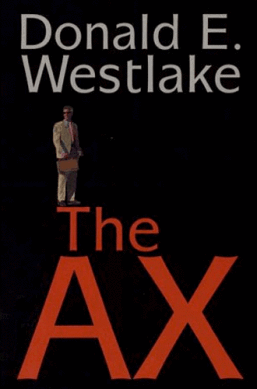
THE AX by Donald Westlake
I’ve never actually killed anybody before, murdered another person, snuffed out another human being. In a way, oddly enough,I wish I could talk to my father about this, since he did have the experience,had what we in the corporate world call the background in that area of expertise, he having been an infantryman in the Second World War, having seen “action” in the final march across France into Germany in ’44—’45, having shot and certainly wounded and more than likely killed any number of men in dark gray wool, and having been quite calm about it all in retrospect. How do you know beforehand that you can do it? That’s the question.
Well, of course, I couldn’t ask my father that., discuss it with him, Not even if he were still alive, which he isn’t, the cigarettes and the lung cancer having caught up with him in his sixty-third year, putting him down as surely, if not as efficiently, as if he had been a distant enemy in dark gray wool.
NOTES FROM THE RED PEN OF DOOM
This is an intense thriller, with an everyman anti-hero who responds to getting laid off in an interesting way: taking out a fake job ad, then collecting those resumes and killing off the competition for his specialized trade (managing paper mills, if I remember right). It’s a short, intense, amazing book by a master of his craft.
So, I didn’t get itchy pencil on this page one, though there are some easy edits. The run-on sentences are clearly on purpose, a little conversational tic of the narrator. My personal feeling is they get just a bit annoying early on here. Pretty easy to kill a few words and make it more readable.
What’s truly great is how Westlake strikes at the heart of his anti-hero, and the novel, not just on the first page but in the very first line.
You rarely see that. Not in movies, not in books.
Westlake takes a carpenter’s hammer and smacks you in the nose with this first line and I could not love it more.
The whole novel is like that.
If you’re a fan of BREAKING BAD, this is a similar story with a different ending. It’s not a tragedy, with a hero falling, sinning and dying due to hubris. This is a story of a suburban schlub who suffers, sacrifices and does terrible things to provide for his family…and wins in the end. He gets the job. The house doesn’t go into foreclosure, his family isn’t on the street. He wins, not that Westlake is saying what his character did is right and good.
BOTTOM LINE
This is a great first page that doesn’t meander around, and a terrific way to put the reader into the essential question of the story, a neat twist on “What’s worth living for and what’s worth dying for?”
Zombie movies are epic and wonderful and far, far superior to the Standard Horror Movie featuring horny teenagers getting mowed down by the Boogeyman, or silly scientists who create genetically modified super-sharks which, of course, escape their tanks and EAT EVERYONE.
People–especially those who wear tweed and like to talk about “dialectical materialism” all the time–tend to lump horror movies along with other B movie trash, including zombie movies.
They are wrong.
Zombie movies are NOT like your Standard Horror Movie.
Here’s why:
(1) They are better.
(2) They feature zombies.
(3) Zombies rock.
Seriously: zombie movies are different. Let’s pry open the skull of moviegoers — and people who read Stephen King and other horrornovels — to see what’s really going on, which is more interesting than you’d expect.
Dance and music videos go together like peanut butter and chocolate, salt and pepper, bacon and eggs, coffee and newspapers.
Janet Jackson has made dance music videos forever, and my fake news version of “forever” includes before Dua Lipa was born. (She’s 23, so yes, no lie.)
Today, we’re looking at the latest from Janet, MADE FOR NOW, versus an interesting twist on the dance video from Dua, IDGAF, and yes, if you’re offended by bad words, Dua has a bad one right up there in the title. Sorry. Didn’t write the song.
First up: Janet, then Dua, before we dissect both videos.
I bet you the title to my car that Janet’s video cost far, far more than Dua’s–it certainly looks slick and expensive.
In this case, money and production values don’t win.
Dua has a better song and a far, far more entertaining video.
The acid test to me is whether (a) you’d have to pay me to rewatch it or (b) I’d happily watch and listen to something again. I’ve happily put IDGAF on loop while you’d have to pay me to hit replay on MADE FOR NOW, a repetitive song and boring video.
And that’s too bad. Janet’s got talent to burn. She’s made iconic music videos for years.
RHYTHM NATION was groundbreaking and still works today.
So I’m disappointed because Janet’s playing it safe with this. So safe that it fails.
Here’s the thing: once you’ve already had crazy success and so much cash you can’t spend it without buying private islands in the South Pacific, playing it safe is a losing strategy. You’re coasting instead of pushing yourself, and the audience feels it.
Though I’m no fan of Madonna’s music, she did a tremendous job of recognizing this and picking a hot new producer for every album to reinvent herself. That was bold and risky. It made her a star for decades instead of a one-hit wonder.
The best music–rock, pop, rap, whatever–attacks the status quo.
Aggressively. Relentlessly. Without mercy.
The worst music defends the status quo.
Limply. Lamely. Apologetically.
If you’re a famous singer or band, please take your piles of money and try to make something insanely different, new and interesting.
Rebel again.
Because that’s the real point of art, to shock us into seeing the world in a different way.
Note: First, let’s celebrate the fact that Alex Jones just got kicked off Twitter forever and ever, which means he’ll be screaming into the void for a long time. Praise the gods. Now onto the meat of this post.
Listen: the advice you see on the Series of Tubes isn’t just bad. All too often, it’s seriously, tragically wrong.
Good info is quickly outdated, especially if it’s about social media.
Even if you do your due diligence–say that three times fast–and read seven different articles about best practices, it may not help.
Whatever article you read will typically be one of three things: (a) conventional wisdom, meaning it’s standard fluff which will get you standard, meh results, (b) bland instruction-manual drivel that won’t help you unless you’re hopeless with technology or (c) some kind of smooth come-on pivoting to a pitch for you to spend $199 on an app or service that promises the moon.
I’m not selling anything.
HOWEVER: I love Twitter, despite its flaws. Nothing is better for learning about breaking news, exploring your favorite niche and making friends.
So let’s talk smack.
1) Don’t treat Twitter like Facebook
Facebook is for friends and family you already have. You don’t take friend requests from 5,492 strangers on Facebook because hey, I’m not letting those people see family photos and all that. There’s a higher barrier to making connections.
Twitter is like a friendly bar where the drinks are always free.
The barriers are low to non-existent. I don’t risk or lose anything by making new connections.
Posts that make sense on Facebook don’t work on Twitter and vice versa.
Facebook is about memories and moments and relationships. Good posts are timeless.
Twitter is about now now NOW, and tweets have an incredibly short half-life. (Note: HALF-LIFE 3 is never happening. Valve simply enjoys teasing and torturing you, and they’ll keep doing it forever.)
On the Book of Face, it’s fine to share personal moments–though don’t get too TMI and become Complainy McComplainface–because your friends and family already know and care about you. So yeah, the clip of your daughter tasting ice cream for the first time is hella cute.
On the Twitter, people will wonder why some dude with Yoda as their avi is putting up shaky video of their labrodoodle puking up two pounds of Easter chocolate on the living room rug.
2) Facebook a little, tweet a lot
You could post on Facebook a couple times a week, or once a day, and nobody would bat an eye. Pretty normal.
Once a month and people will wonder if you’ve gone into hiding.
If you posted on Facebook five to ten times a day, people would start avoiding you like that neighbor who always comes over to chat and won’t escape after an hour of yakking about something you don’t like or understand, like cricket.
The rules are reversed for Twitter.
Post once a day and most people won’t see the post.
Post once a week and congratulations, you’ve invented an invisibility cloak. Patent that thing.
Twitter feeds scroll by crazy fast. Unless somebody follows you, or the hashtags you’re using, and is online THAT VERY SECOND, they won’t see your post. (This is true even though Twitter changed its algorithms to be more like Facebook so your absolute besties on Twitter will see your stuff more often with the IN CASE YOU MISSED IT shebang. However, 99 percent of people will not see your posts unless they’re staring at the screen right that second, which is not happening. The math starts getting cray cray. Say you have 2,000 followers. It’s a good bet maybe 200 of them, max, will say any random tweet you post. Then we get into the standard ratios: If 200 people see it, 20 will actually read it and 2 will respond.)
It’s smart to tweet five or ten times a day. No problem. Because even then, only a minority of your followers will even see it.
3) Forget the usual advice on who, and how, to follow
Conventional wisdom goes like this: figure out hashtags for things you love, or whatever your niche is, and follow scads of people with that hashtag in their bio.
No.
Here’s why this doesn’t get the job done: (a) you’ll miss a ton of people who post to that hashtag and skip having it in their bio, (b) you’ll wind up following an army of zombie twitter accounts of people who have your hashtags in their bio but haven’t tweeted since 1977, and yes, I know Twitter didn’t exist, this is a Dad Joke, just go with it and (c) most of the live accounts you do follow with that hashtag won’t be that active.
Who do you want to follow?
Not just people who care about your special niche, whether it’s Hand-Stitched Hats for Cats or novels about Men in Kilts and the Women Who Love Them.
You want interesting people in that hashtag who are huge fans or experts. You want people who are actually on Twitter a lot, and not as lurkers, but chatterbugs. And you want people who are friendly and take the time to talk with other people, not just use Twitter as a vehicle for self-promotion.
Instead of the hashtag bio thing, this is what you do: Search for a keyword (doesn’t have to be a hashtag) or phrase in the Twitter search box. Look through the most recent tweets about that subject and follow people who are tweeting about it, and talking to each other, RIGHT NOW.
That way, you know it’s not a zombie account. You know if they’re actually having conversations with other people or just pumping out content.
Then follow the friendliest people who like talking about what you love.
4) Never troll, and never feed the trolls
Let’s say somebody invited you to their home for a party. They’re providing the food and wine. You just have to show up.
And let’s say you told them their house is too small, their Ford Explorer sucks and their kids are ugly. You’re gonna get kicked out of the party. Maybe punched in the face.
Sure, being a troll can get you attention. The wrong kind of attention.
There’s a difference between being famous and being infamous.
Still, you’ll run into plenty of trolls on Twitter and other corners of the Series of Tubes, and there’s only one strategy that works.
Ignore them.
No matter what they do or say, never, ever respond. Not once.
Blocking them is fine, because you never have to deal with their nonsense.
Muting them is far more evil and enjoyable, since they’ll keep shouting into the void and won’t understand why you’re an unmovable rock. Why they can’t provoke you, no matter how insane they get.
Mute away. It’s pure torture for trolls.
Also, what Ken M. does isn’t really trolling. He’s a derp, and plenty funny.
5) Retweet, respond and comment 80 percent of the time
With the Book of Face and other platforms, if you’re only posting a few times a week, or once a day, it’s fine to use that one shot to say the thing you really need to say. Go ahead and post that video of Sue Bird losing her mind in the fourth quarter and hitting threes from downtown Tacoma, or put in a link to your latest blog post.
On the Twitter, try to retweet, respond and comment four times for every other thing you say. (Yes, the math works out. Four-to-one works out to 80 percent. I didn’t even bust out the calculator, that’s how certain I am.)
Because like I said earlier, Twitter is like a bar where the drinks are free. There’s nothing friendlier than liking, retweeting and commenting what other people post. And there’s nothing more self-absorbed and lame than only talking about yourself. Wouldn’t fly in real life, even if we were actually in a bar and had done six shots of really good tequila in the last two hours when you said, “Enough about me. What do YOU think about me?”
And that’s the final lesson. All media, including social media, goes back to a basic rule of rhetoric: it’s not about you.
Because we’re apparently living in a reality show dystopia, and watching the news can put you in therapy, take a little break to watch this video.
Then cuddle your cat, play with your dog or befriend a murder of crows by feeding them peanuts (in the shell, it’s a happy puzzle!) every day until they start bringing you shiny objects as tribute. These shiny things may include car keys. Resist the temptation to turn your crow army into a crime ring with a chop shop behind the wrecking yard.
If taking some time with your furry pookies doesn’t help, watch THIS video of unlikely wild animal-human friendships.
Donald Trump and every other carbon-based lifeform who cares about politics is frantically trying to figure out which senior White House official wrote this oped in The New York Times.
So yes, staffers in the White House are actually texting each other “the sleeper cells have awoken” as they huddle behind closed doors and speculate on who it might be.
Now, I write serious things all day and do this silly blog for fun, and for free. So in normal times I’d post something about weird news, why the third act of the latest DC movie doesn’t work or dissect the first page of novel.
But times are not normal. This is an important moment in history, not just for American democracy and the rule of law, but around the world, as Putin and Russia wage a secret and sustained war against the foundations of democratic countries in Europe and elsewhere.
Let’s talk about how conventional wisdom on the oped is wrong.
1) Unmasking the author doesn’t help Trump one bit
Here’s the thing: solving that mystery won’t help Trump.
The author of this oped is taking a big risk to their job, and career, to warn America.
That warning went out. Unmasking the author doesn’t reverse time and unpublish the oped. We’ve all read it.
The dam broke and the damage is done.
2) Punishing the oped author won’t fix a thing, either
If the author gets revealed, sure, they’ll get fired–if they haven’t resigned already and revealed themselves.
Won’t matter.
The author may not have a future in Republican politics, at least for a few years.
If the author is a staffer and not a cabinet official or former elected official, their name recognition and status will increase exponentially.
No matter who they are, they won’t starve on the unemployment line.
Whoever wrote that oped can write their own ticket with publishers. They’ll be booked solid on every political show when they’re not getting magazine profiles and interviews with newspapers.
3) The incentives are now reversed
Sure, everybody in D.C. leaks to reporters. The normal incentive, though, is for seniors staffers at the White House and cabinet officials to be loyal to the president, or the presidency, until they leave office for a job with a lower profile and higher salary. To keep their nose clean.
That’s why most standard leaks are self-serving and minor.
This oped isn’t self-serving or minor. It’s the nuclear bomb of leaks.
The Trump White House already had reversed incentives in many ways. President Barack Obama cultivated a culture of no drama, as it’s toxic and unproductive if you can’t trust your colleagues and boss.
Trump treats the White House like his old reality show. He likes teasing that a staffer or cabinet official might get fired, and they know from history it may well happen by a random tweet. Just like in reality shows, contestants have to deceive and betray just to survive in this White House.
Now, the incentives are fully reversed from normal. Loyalty isn’t helpful anymore in any respect.
This oped, and the new book by the legendary Bob Woodward, create a new incentive to leak more about Trump and get on the right side of history.
Because they know it’s a train wreck. They see it every day and there’s a distinct feeling that we’ve turned a corner, and the end is near.
If they can’t be quiet and loyal to wait for one of those cushy jobs, the other option—the new incentive—is to beat other leakers at the game and hope the history books make you look like a hero instead of a complicit villain.
4) This will paralyze an already paranoid Trump
Running the most powerful country on the planet is the toughest job on the planet. It takes a team that trusts each other and believes in the boss.
After this oped and the Woodward book, it’s clear they don’t believe in the boss and can’t trust each other.
Anyone could be the mole. Half the staff apparently talked to Woodward.
If you think the White House was dysfunctional before, you ain’t seen nothing yet.
5) It’s a race now
The hunt for the identity of the author won’t scare other staffers into not leaking.
It will embolden them.
They know they’re not alone. Woodward’s new book shows how many senior staffers agreed to sit down, with the tape running, to tell the truth.
They know the incentives have flipped, and that subverting a dangerous and dysfunctional White House from within makes them look patriotic instead of disloyal.
And they know the first person to go public—like the oped author—will get far more press and attention than the seventh or tenth.
Leaks to the press will accelerate and escalate.
Expect more anonymous opeds, document dumps and secret tapes.
This week was incredibly awful for Trump, with the Woodward book and NYT oped two mortal blows that will continue to bleed and bleed.
And things will only get worse from here, since no staffer fears getting fired from a sinking ship.
I take great pleasure in dissecting the first page of Popular Novels Which Actually Stink, or finding first pages that absolutely sing and figuring out why they’re so glorious.
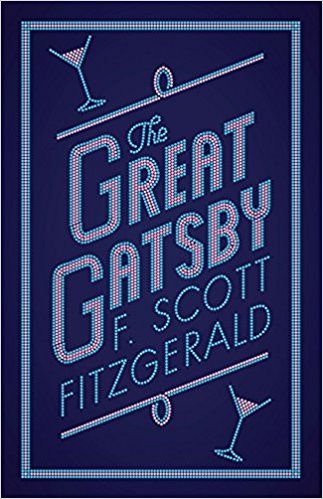
By request, today we’re taking on page one of a classic of lit-RAH-sure: THE GREAT GATSBY by F. Scott Fitzgerald.
Sidenote: There are 5,832 various editions and such, so you’re page one may end on a different sentence and such. I tried to stop at the end of a paragraph, though as this is an older book, back when paragraphs lasted longer than most CBS sitcoms, this is kinda hard.
THE GREAT GATSBY
In my younger and more vulnerable years, (missing a comma here) my father gave me some advice that I’ve been turning over in my mind ever since.
“Whenever you feel like criticizing any one,” he told me, “just remember that all the people in this world haven’t had the advantages that you’ve had.”
He didn’t say any more, (this feels like odd, unplanned repetition of the “any one” in the previous graf, so strike “any”) but we’ve always been unusually communicative in a reserved way, and I understood that he meant a great deal more than that. In consequence, I’m inclined to reserve all judgments, a habit that has opened up many curious natures to me and also made me the victim of not a few veteran bores. (Listen, we’re on the third graf already, and I’m not inclined to reserve all judgment, seeing how you’re coming off like a veteran bore.) The abnormal mind is quick to detect and attach itself to this quality when it appears in a normal person, and so it came about that in college I was unjustly accused of being a politician, because I wasbecame privy to the secret griefs of wild, unknown men. Most of the confidences were unsought — frequently I have feigned sleep, preoccupation, or a hostile levity when I realized by some unmistakable sign that an intimate revelation was quivering on the horizon.; for the intimate revelations(“intimate relations” twice in this sentence, so close together, doesn’t work at all)of young men, or at leastThe terms in which they express them, (comma deleted) are usually plagiaristic and marred by obvious suppressions. Reserving judgments is a matter of infinite hope. I am still a little afraid of missing something if I forget that, as my father snobbishly suggested, and I snobbishly repeat, (here we get repetition with a purpose for once and it does work) a sense of the fundamental decencies is parcelled out unequally at birth. (This is an awkward mouthful)
THOUGHTS: This is 100 percent interior monologue, which isn’t required by law to be boring. Though it sure leans that way.
Maybe it sets the mood.
However: If you’re basing a tragic hero’s entire motivation for making a ton of money to become a rich snob to impress a girl he loved and lost, and you’re hell-bent on starting page one with interior monologue about backstory, MAKE IT ABOUT THE GIRL.
Not the narrator. Not the narrator’s dad.
Not boring people who tell the narrator secrets while he pretends to sleep.
Make it all about the girl and Gatsby.
A huge part of the novel is throwing fancy parties to impress each other, right? I’m going off my memory from doing my own term papers on this thing. Never saw the movies. And when I do a first page, I try NOT to cheat by reading plot summaries and such, even if I’ve read the book.
Put a gun to my head and I’d delete this first page and start with the real inciting incident, which should be Gatsby and the narrator meeting the girl at a party way back when, so you can echo that later.
Or make it about about a small betrayal, from college or back during the war, to foreshadow the bigger betrayals and tragedies to come.
VERDICT: Doesn’t make me want to read more, which I wouldn’t unless the English 101 prof gave me no choice.
Sorry, F. Scott F.–can’t lie and say I liked this. Nuke the first page and go with a better hook.
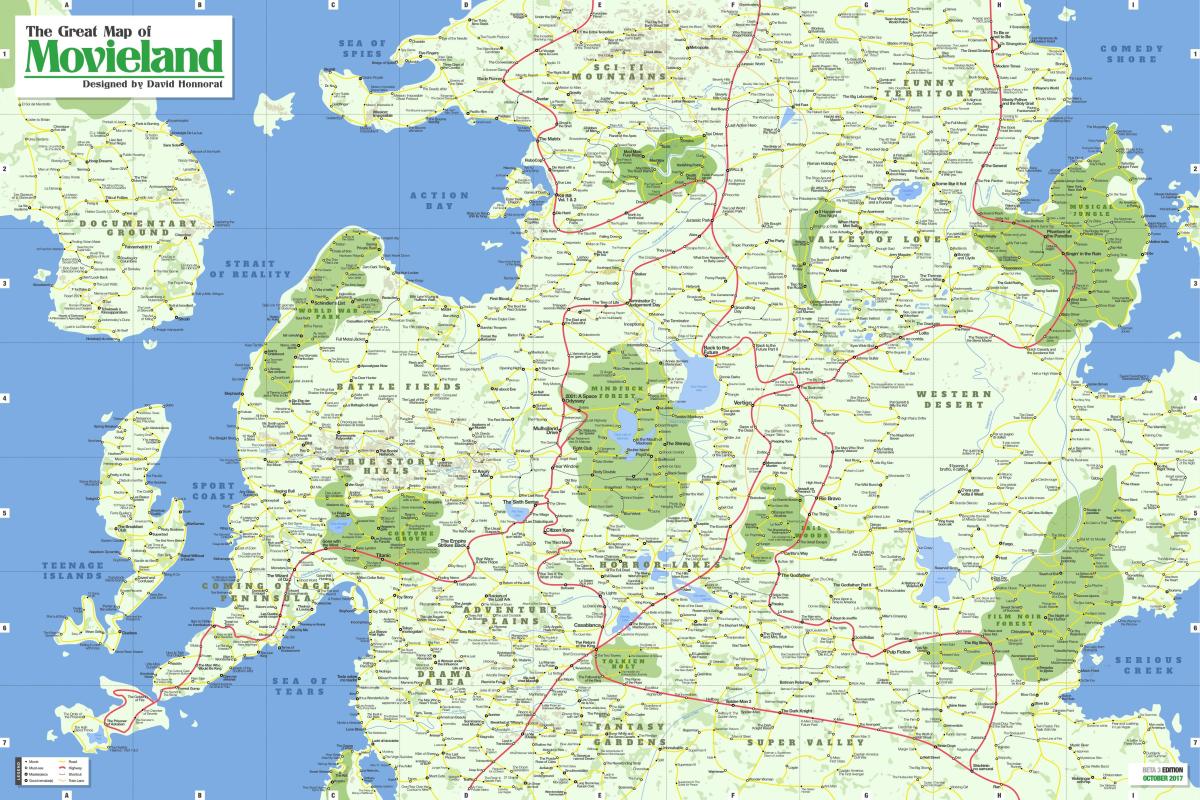
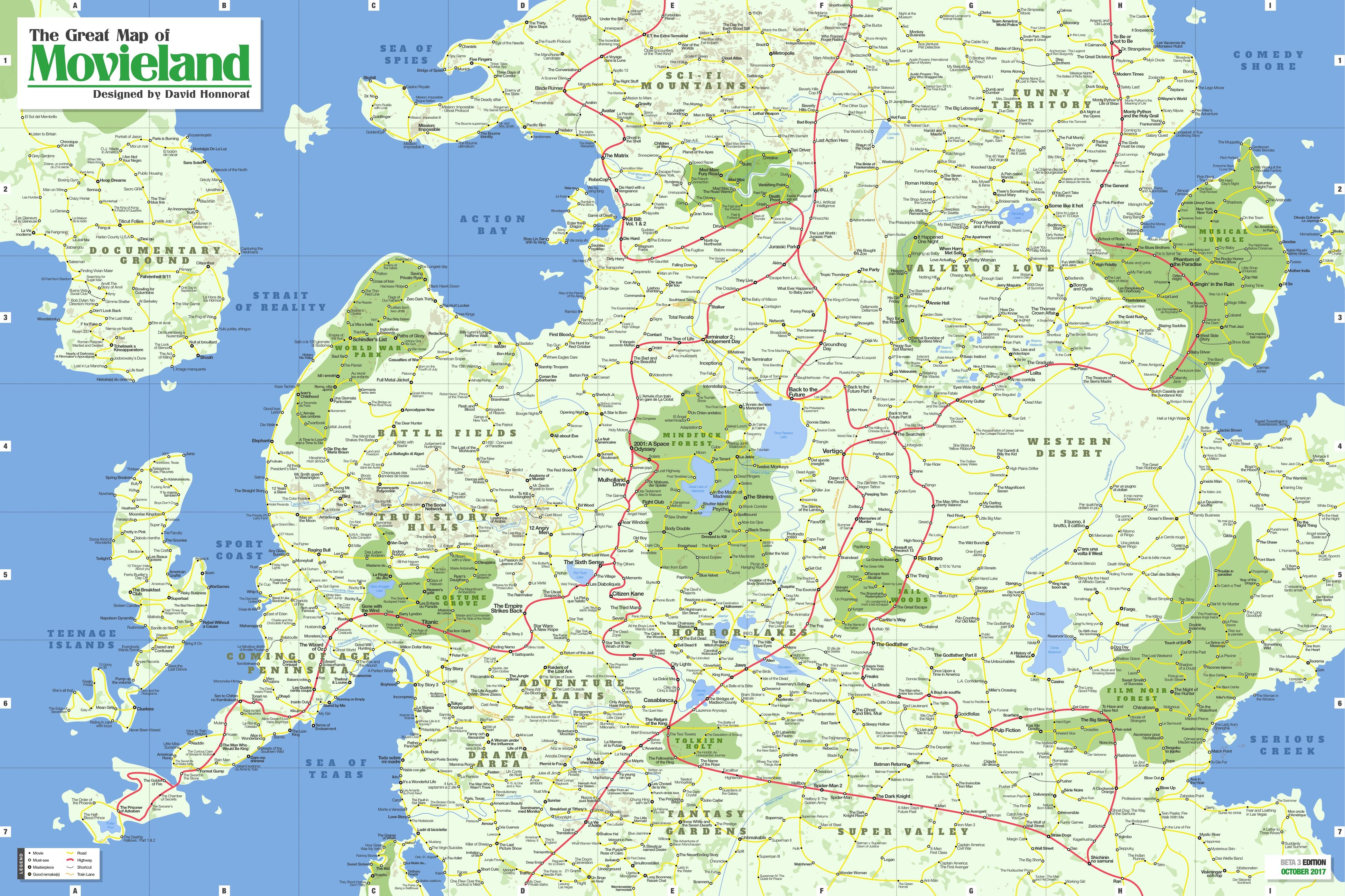
Start somewhere familiar, in one of your favorite haunts, and follow a back road to hidden treasures, films you didn’t know existed.
There’s an explosion of obscure movies now, with Netflix, Amazon and others bankrolling films that wouldn’t have been made 10 years ago.
I’ll give a pitch for two: THE EDGE OF TOMORROW and SHIMMER LAKE. Here’s the trailer for the second one, which deserves a lot more love. Fire up Netflix and watch this thing. It’s a better movie-in-reverse than MEMENTO.






 The Red Pen of Doom