Now, I enjoy bad music videos as much as any carbon-based life form on this planet. I’m a connoisseur of crazy.
There are different flavors, however.
Insanely Bad and Weird is far, far more interesting than The Quality’s So Low, You Have to Do the Limbo.
WILDER simply plumbs the depths of low-quality. We’re dragging a boat anchor on the floor of an ocean of garbage: terrible singing, horrible sound mixing, repetitive visuals, terrible dancing and extreme close-ups. It’s just a fiery train wreck packed with Nope.
Our second terrible video by WICKED WISDOM is an entirely different brand of bad. Check it out.
Polar opposites, right?
In the first video, we have an unknown singer toiling away with bad production values. You can understand the quality being bad. The budget was probably nothing.
In our second video, a famous actress–Jada Pinkett Smith–is performing on national TV with a band packed with professional musicians. They can play. She can sort-of sing while screaming, which is appropriate to the metal genre. Yet it’s still bad.
Most people won’t think less of the first singer. She’s not rich and famous, and she doesn’t do anything horribly obnoxious in the video. Maybe this is the first video she ever tried to do. We all can understand and feel for her. I actually would root for her to follow this up with something that actually rocked.
As for movie stars trying to be singers–and singers trying to be movie stars, and professional athletes trying to be either–there’s zero sympathy from the audience. You’ve got mountains of money already, 12-car garages full of Italian sports cars, bodyguards, stylists, PR agents–everything in the world. But you want more.
So unless they’re truly, truly world-class as two different things, a celebrity is risking a lot doing something like this. The audience expects a lot more from you. They’ll get a lot more pleasure in laughing at your mistakes and failures than seeing you succeed.
VERDICT
Movie stars and other celebrities should, as a rule, stay in their lane to avoid train wrecks like WICKED WISDOM.
As for the first singer, I actually root for her to come back with something better. Give it a go.
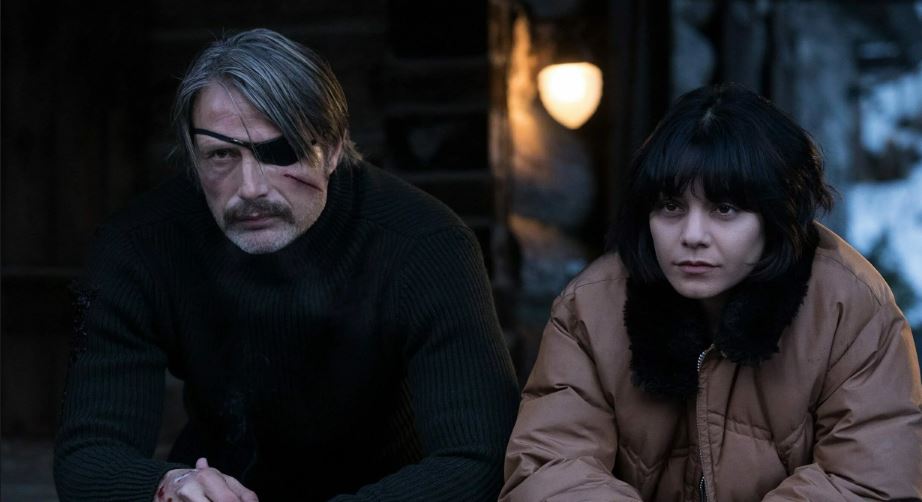
Good trailer, right? And there’s a good movie buried in here. Mads Mikkelsen is a great actor. His whole performance is perfect. It just feels like Mads is in a different movie than everybody else.
POLAR is best described like this: picture a bunch of screenwriters or studio execs watching JOHN WICK and saying, “What if we did that, but had Quentin Tarantino direct the thing, like KILL BILL?”
Except they couldn’t book Tarantino and decided to turn up the cray-cray up to 11.
I’m a huge fan of action movies, so sure, it was fun. There was just a disconnect between the gritty performance of Mads and the villains chewing up the scenery.
Since this silly blog is all about taking things apart and seeing how they work, or could be fixed, here’s what went wrong and how to fix it.
Three easy fixes, one small and early, one middling and the final fix big and late:
1) Lose the dog
Early on, Mads retires and buys a puppy, which was way too on-the-nose for me with the movie already super close to the plot of JOHN WICK.
Soon after, Mads has a nightmare and accidentally shoots the puppy. No. Don’t even go there.
In fact, action movies need to spike any scene where the bad guys kill the retired killer’s dog, cat or favorite horse, because JOHN WICK slayed that forever.
2) Keep the same tone
Scenes with Mads and the girl he later protects feel like part of the same gritty movie.
All the scenes with the villain and his minions feel like they were written, shot and directed by somebody else–a younger director who spent every night binge-watching Miami Vice and hanging out in strip clubs as he wrote these scenes.
Pick a style and stick with it. As in, pick the style that fits your lead actor, not your side characters.
3) Give us a villain as strong as Mads
Mads is a great character and we get to see him in action multiple times. A fast, powerful killer. The main villain, the boss of a pack of bad guys, is far less scary. In fact, his minions are stronger and better than he is.
This turns the villain into a joke, and he really only shows up for comic relief.
In the climax, when Mads enters the villain’s lair for the final confrontation, it’s a boring mismatch the director chooses to not even show. We just see the villain’s head fly through a window after Mads chops it off.
That’s a huge disappointment. An action movie’s climax needs to be, I don’t know, climactic. There were tons of other set pieces earlier in the film that were far more interesting and exciting, so it left a bad taste at the end.
VERDICT
There are good ingredients here, especially the performance of Mads.
It’s just overcooked and feels like two different movies.
A long, long time ago, in a galaxy called Oregon, the local Empire decided to used tons of explosives to blow up a whale on their beach. It did not go well. But it was a prophecy, foretelling the explosion of weird news we see today.
Why is the exploding whale footage such a harbinger of things to come?
Maybe I just like to use the words harbinger and prophecy in nearby sentences.
Maybe I’m a trained journalist who loves to collect, analyze and dissect weird news stories.
And maybe, just maybe, I have a theory that explains the whole glorious Florida Man-style mess.
A Grand Unified Theory of Weird News
First: Weird news is omnipresent.
You’ll find it on an Oregon beach, in the middle of Alaska or on every acre of this land I call Florida.
There are strange people and bizarre bits of mayhem anyplace you look.
While my wife was in law school, I worked in this small-town paper in a place you can’t pronounce.
And listen, you would not believe the amount of mayhem I witnessed and wrote about, and not because the little town was a war zone.
Massive floods, with houses floating down the river. At least two serial killers. Political scandals. A man who died when a mobile home fell on him as he installed it. A sniper who shot at me (and everybody in sight) until the county sheriff deputies rolled up in a tank.
But if you look, there are always crazy stories happening locally.
Second: Weird news is not related to the crime rate.
This seems counter-intuitive. Criminals and criminally idiotic people make up the majority of weird news.
Take away petty crime and Florida Man stories would wither and die.
Yet the numbers are nuts, when you look at them. Crime is down and has been going down for years.
Things were actually wilder and crazier before today’s explosion of weird news. I mean, the late ’70s and early ’80s were Animal House.
You just didn’t know about every single thing that happens like you do today. Why is that?
Third: Weird news lives on the interwebs
Without the speed and reach of the Series of Tubes, you’d never hear about 99.9 percent of weird news.
Before, the only real way crazy news would spread was by newspapers, so feeding your need for Florida Man stories would require serious resources. Because your local paper would not devote a full page to random wire stories about crazytown happening far away.
There are entire sites devoted to the daily collection and curation of funny and bizarre stories.
Fourth: Weird news is intensely visual
This is the most essential ingredient. As a writer, it’s hard to fully describe the insanity of what you see.
Photos help.
Video is better. There is no substitute.
This is why Russian dash cam footage goes so viral. It’s raw, it’s real and the cameras are on all the time, so they capture all kinds of crashes and cray-cray.
Fifth: Smart phones, smart phones and more smart phones
Now that everybody has iPhones or Samsungs in their pockets, weird news is constantly being not only captured, but shared with the world.
All day and night. Everywhere.
You don’t need to have a TV crew on site, or watch the broadcast at 11 p.m.
So get out there and keep your phone handy. Florida Man doesn’t just hang out in Florida–he’s everywhere you look.
Listen–whether you write for fun or to pay the rent, and whether it’s (a) screenplays about mafia members dumb enough to kill Keanu’s puppy or (b) novels featuring elves with lightsabers and the robot ninja pirates who love them, one thing is constant: editing is everything.
Editing and rewriting is where the magic happens.
Magic because the first draft of anything is a warm bucket of spit.
And magic because a great editor can polish your text until it’s a shiny diamond made of words.
HOWEVER: Despite my love for skilled, professional and fully human editors, I do believe in using whatever tool you can.
Is this sacrilege?
Will they kick me out of the writing temple?
No. It’s good manners to clean up your text. That lets your human editor focus on kicking butt instead of chasing down typos, split infinitives and dangling modifiers.
Here’s the problem: just about all the non-human editing tools stink worse than a corpse flower, you know, the one that only blooms every 10 years because smelling it once every decade is torture enough for any soul.
You won’t notice how badly these editing tools stink when you edit small projects.
Spend the entire month of December editing 74,000 words, though, and all of these flaws become insanely clear.
Problem No. 1: Spell-check has transmogrified into a Grammar Nazi that’s terrible at his job
So you want to hunt down typos, do you? Good luck.
Standard spell-check in Word doesn’t want to let you do that job. It wants you to swan dive into a lava pit full of demons with pitchforks labeled Punctuation, Usage and Grammar, all of which are typically blinder than the referees at an NFC championship game.
Come on, man. Let’s hunt down typos. Nobody likes them, nobody needs them and we all want to squash them like cockroaches hiding under your kitchen cabinets.
The workaround solution: Turn off grammar checking entirely in Word, and if you can, kill it with fire. Nuke it from orbit. Go with old-fashioned spelling only.
A better solution: Separate spell-check from grammar, usage and punctuation entirely. Don’t even give people the option of combining them all, seeing how that idea is an achy breaky bad mistakey.
Problem No. 2: Grammar checkers tend to be stubborn beasts
Grammarly is a decent spell-checker and far, far better than Word at pure grammar, which shouldn’t be shocking since the word “grammar” is in the tool’s name.
The trouble with Grammarly is I couldn’t find a way to tweak settings, so 80 percent of the errors it found were…missing Oxford commas.
Want to take a guess on how many missing Oxford commas you might find in a ginormous document that purposefully didn’t include a single one?
Yeah. It was a fiery train wreck.
I don’t believe in Oxford commas, though I’m agnostic about the matter and have no quarrel with my brothers and sisters who adore them. God be with you.
Wading through five bazillion false positives, though, got old in a hurry. And yes, I tried everything possible to find a way to toggle Oxford commas on or off.
There are other style choices that would be super useful to turn on or off. I simply couldn’t find a way to toggle them.
The workaround: I have no idea. Help me, Obi-Wan.
A better solution: Grammarly and similar tools need to give users more options, so we don’t waste crazy amounts of time catching errors that are actually style choices.
Problem No. 3: Online-only tools aren’t super useful for anything large
Autocrit is an app full of good ideas and features. It catches all kinds of things spellcheck and apps like Grammarly don’t even touch, like over-used words and phrases, which is beautiful. I like it, I love it, I want some more of it.
Here’s the deal-breaker: you have to paste your text into online apps like Autocrit, do your business, then paste your text back into Word (or whatever final shebang you use).
Most online apps like Autocrit have upper limits on how much text they can digest at a time. This can be an explicit limit or one that you find out when you cram enough words in there and watch it jam up.
I’ve subscribed to Autocrit a couple different times and had to stop using it for that reason. It chocked on the text, every time, and feeding it bits and pieces just wasn’t practical.
The workaround: It is possible to help apps like this handle big meals by predigesting your words and turning them into plain text. However: Even if these online-only tools cranked through 74k or more with ease, the trouble is you have to then paste it back into Word and REFORMAT THE WHOLE MSS AGAIN. No. Just no.
A better solution: Not sure. Unless online apps can fix the reformatting problem, there’s no way I’m going back to them for anything large and important.
How we can do better
I wound up only using things that worked within Word, to avoid the whole cut-and-paste then reformat-an-entire-novel dance. Because it takes more than one pass to edit things right.
What worked for me this time? (1) plain old spell-check in Word with grammar turned off, (2) Grammarly for actual grammar and punctuation and (3) SmartEditPro for the tougher stuff like over-used words and phrases. It’s similar to Autocrit but works inside Word.
I believe, deep in my soul, two things would make the life of writers far, far easier:
First, having every writing app and tool work inside your doc as a plug-in vs. a separate app or web page.
Second, focusing on doing one thing well. One thing, not three or five. Because that’s how writers tend to edit, in phases.
What do you think?
Tell me your editing horror stories. Whisper the names of apps I’ve never heard about and reveal the secret ways you’ve tweaked Grammarly to ignore missing Oxford commas and such. I would offer a reward for that.
It’s fun to talk about getting ready for a zombie apocalypse–or imagine what kind of spiked muscle-car you’d fill with guzzeline if we were living in a Mad Max wasteland.
Yet if we’re going to be brutally practical, and that’s what this series of posts is all about, we need to focus on two key things:
(1) What ideas, fitness regimens and gear would actually work to prepare you for a disaster or apocalypse of any sort, whether it’s a 9.0 earthquake or a super-volcano going off at Yellowstone?
(2) Whatever we come up with must fit the budgets and lifestyles of everyday people. As in nothing on this silly blog can include things like (a) borrowing $400,000 to build an underground bunker next to your house, (b) spending $$$$ on a tricked-out AR-15 and a fancy $2,000 katana for yourself when you could spend a tiny faction of that for an arsenal of cheap, tough machetes ($15 apiece) along with bows and arrows for all your neighbors and friends, or (c) quitting your job and moving your entire family to a log cabin in Nome, Alaska.
To boil that down: what are the cheapest, smartest things you can do to prepare for the most likely craziness?
That means no, don’t prep for zombies, because they don’t exist. And it means yes, think about evil robot soldiers and artificial intelligence gone wrong, because that is not science fiction anymore.
The most likely apocalypse may already be happening, because all the ice in Antarctica (and Greenland, and the north pole) is melting. Insanely fast.
Which means the biggest box-office bombs of apocalyptic movies, WATERWORLD, may be a prophecy.
For those who didn’t watch the whole story, or read about this in the papers of news, plain old global warming would raise sea levels enough to turn coastal cities into water parks. Not good.
Antarctica holds about 90 percent of the world’s freshwater in its ice sheet.
If all the ice in Antarctica melts, you’re looking at a sea level rise of 230 feet.
Yeah. Not two feet, or 23 feet. Two hundred and thirty.
I already did an entire post on what makes sense to prepare for a global warming or WATERWORLD scenario, and that post still holds true.
What’s important here is to recognize the news happening. Because honestly, if CBS reported a small horde of zombies taking over Nome, Alaska, people would lose their minds, even if scientists said it would take 50 years for those zombies to march through the snow and get to Anchorage to start causing real trouble.
OK, I have plenty of affection for the Shatner, who embraces his inner cheesiness with glee. Never takes himself too seriously.
So is this new Christmas song from Captain Kirk–who actually puts out entire Xmas albums–weirdly good or just good and weird?
Take a look.
I’m gonna say good and weird instead of weirdly good.
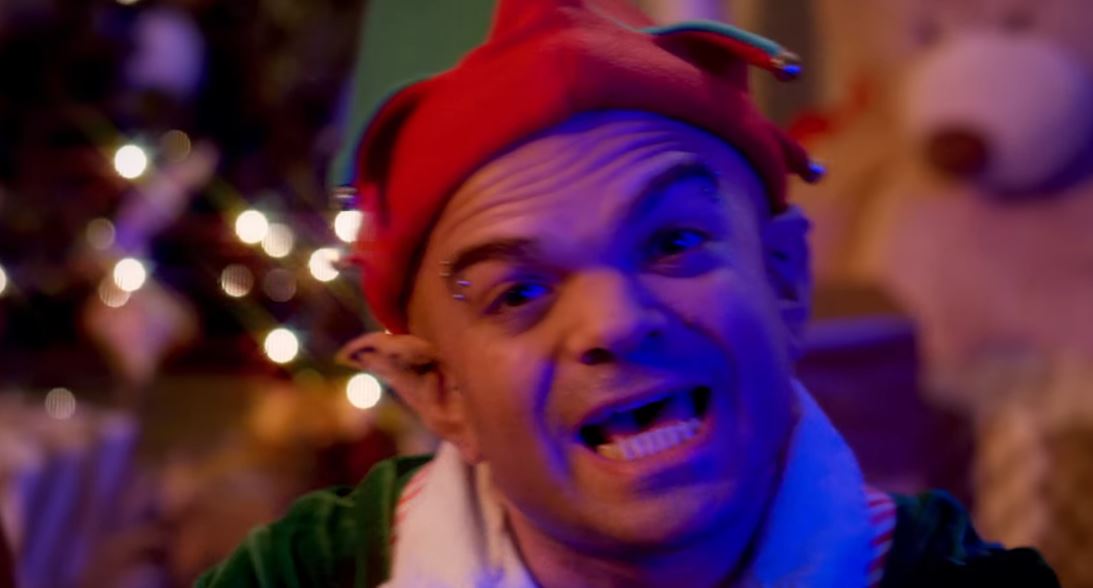
Here’s the deal: You can play it straight, and make a song for kids with kids in the video, or you can go cray-cray with creepy adults pretending to be child-sized elves mixed in with actual pookies.
This is a lot like the uncanny valley. We accept cartoonish images of people and super-realistic CGI, but the in-between business doesn’t work. Freaks us out.
Shatner’s video and song freaks me out, and not in a good way. I get that he’s trying to do a twist on a song that’s been done a zillion times. But you gotta decide, and he’s trying to have it both ways: a song for kids but also for adults. Which means you’ve got the sweet and light elements mixed with pierced elves and pseudo-heavy metal. The ingredients just don’t work together.
If you want to make chocolate chip cookies, you get busy and make ’em. If you want to bake a cheesecake, you make that. Where this video gets into trouble is trying to split the difference, meaning it doesn’t really appeal to kids or adults.
VERDICT
Points for trying something bold and risky. Demerits for not executing. But love ya anyway, Shatner–keep on singing.
No, I did not make up that headline. That’s the real deal, word for word.
Shockingly, this did not happen in Florida.
Let’s break it down, journalism-style.
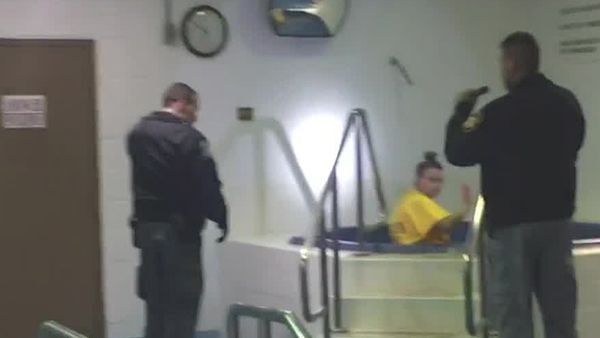
WHO: A female inmate, 34 years old.
WHAT: An escape from custody while she was getting booked on a drug possession charge.
She was later found hiding in the hot tub of a senior center, still wearing her orange jumpsuit from the jail.
WHEN: December 19, 2018. It took police hours to find her after the escape.
WHERE: Waverly, Ohio.
WHY: That’s the mystery.
Hiding in a senior center could make sense. It’s not like the cops have to show up there every Friday night to break up bar fights. But to make that plan work, you’d have to change your clothes and pretend to be a visitor, or a janitor, that sort of thing. You don’t hang out in the hot tub, where you’ll (a) get spotted by all kinds of people who (b) maybe want to use that hot tub and (c) will definitely call the cops when they see your orange jail gear.
And for those who don’t get it, the headline is a great riff on the movie HOT TUB TIME MACHINE, brought to you by the same geniuses now doing COBRA KAI.
However, this story is only the latest entry into the proud historical record of Criminals Who Stink at Hiding.
Florida Man takes the top spot in my book, with a man running from the police late at night getting the bright idea that he’ll hide in a pond. True, the 5-0 didn’t find him. That’s only because an alligator did first.
There are hundreds of other stories of criminals hiding in stupid places: in a dumpster, a manure lagoon, the lion cage at a zoo–you name it, some idiot has done it.
So I salute you, Hot Tub Crime Machine Woman–you get an F for achieving your goal but an A+ for style.
I’m an original viewer of OG MTV–which actually played music videos all the time instead of JERSEY SHORE SEASON 11: LET’S PRETEND SNOOKI AND THE SITUATION AREN’T BOTH 37 AND MARRIED, OK?.
So I take pride in knowing my weird and wonderful music videos, from the Hair Bands of the ’80s to Adam Ant and poofy shirts to Drake making roller-skating look cool again.
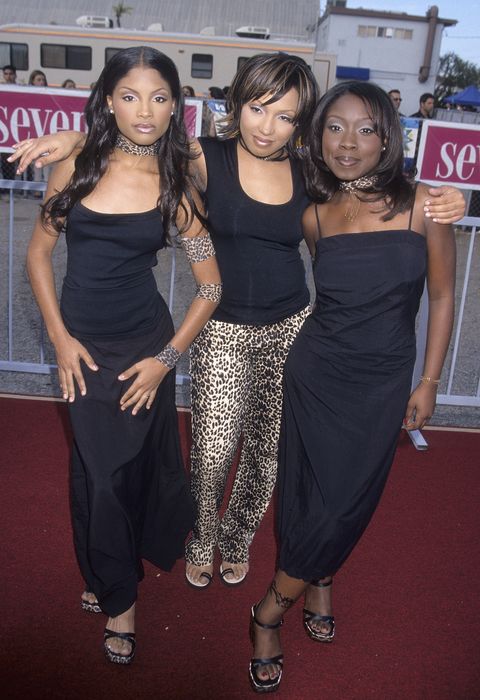
How could something like YOU DON’T KNOW by 702 slip past me?
It’s got everything a weird music video needs. Take a look and we’ll chat.
Taking it apart
Since I know nothing about the band 702, here’s my take:
This is one of those things that FEELS like a good idea, when you talk about it, then doesn’t work on film.
The production values are high. The space apocalypse costumes look good, like they stole them from a movie set. The music and singing is fine, and the band looks great.
Where does it get weird but go wrong?
First thing: The robotic dancing.
You can dance like a droid without looking like a dweeb. It is possible. Breakdancers have an entire branch where that’s their schtick, and there are amazing dancers out there.
The singers aren’t any good at it. They should have stuck to singing and leave the dancing to professional dancers.
Second thing: I kept getting the feeling a studio exec built this band from the ground up, trying to copy TLC, down to the haircuts. Could be completely wrong. Maybe TLC copied 702, for all I know, back in the paleolithic era. This is just the feeling I get without using any googling powers to divine the truth and it kept distracting me the whole time. Is this one trying to be Left Eye or Chili?
Third bit: This video keeps switching from robot space apocalypse to modern dresses and sets, which is confusing. Stick to one or the other.
Lastly, the storyline, whatever it is, didn’t catch my interest or make any sense.
Were the singing, dancing robot people from the space apocalypse really in any danger? Why were they being chased? The song and visuals never made me care or understand.
Verdict
Weird, but not wonderfully so. Would not watch again.
There’s nothing unusual about seeing a duck paddling around the ponds of Central Park–or any pond, lake or stream. But one duck has caught the attention of Gotham and the world.
Check out the video:
OK, that is one spectacular duck, and it’s nice to see a weird news story that doesn’t involve Darwin Award winners or Florida Man.
So why did this story spread so far and wide?
Amazing images drive coverage
The shots are amazing. It’s far, far easier to get media coverage when the visuals rock–and a lot tougher when you have zero visuals.
TV stations live and die on good visuals. And this duck makes for great shots.
Once you get TV coverage, that drives newspaper, radio and web stories, too.
Plus it’s a lot easier to share a story that has all kinds of videos on YouTube already, whether shot by an NYC station or amateurs using their iPhones.
Mysteries make people curious and give a story legs
Nobody knows how the Hot Duck got to Central Park in the first place. This species of duck isn’t native. It should be halfway around the world in Japan, where these ducks are common.
Was it a pet somebody let go or an escapee from a zoo?
How far could a duck fly, if it wanted to?
Another mystery happened when the Hot Duck disappeared. Did it get eaten, trapped, run over by a car or sucked into the engine of a Boeing 787? People care about this duck now, and they got worried.
Turns out the duck took a side trip. Maybe he went on vacation.
Then when he returned, that was a big happy story, too.
Unlikely animal friendships are always a good story
The Hot Duck has good manners, making friends with the local ducks and some of his biggest human fans.
If he was a loner, or a jerk, this story wouldn’t have legs. People would root for the evil show-off duck to beat it.
His good manners make you root for the Hot Duck, to hope he keeps on making friends and thriving.
It’s just a sweet little story that makes people smile. Kind of like red pandas, genetically engineered by mad scientists to be the most heart-melting animals ever.
Firing up Word is fine for writing anything short. For anything big–novels, screenplays and such–you need specialized tools.
Believe me. I’ve done it both ways, and trying to do something large and important on a word processor will drive you to drink.
Word processors don’t cut it
Writing a big project is like building a house. To keep on track and make sure the thing doesn’t fall down, you need (a) solid blueprints and (b) heavy equipment.
Short writing projects are like the little bits you can tackle in your garage, with the tools sitting around and the scrap wood in the far corner.
And sure, you can try to wrestle Word into doing heavy lifting by going wild with navigation options and headings. It’s sorta possible.
Sorta.
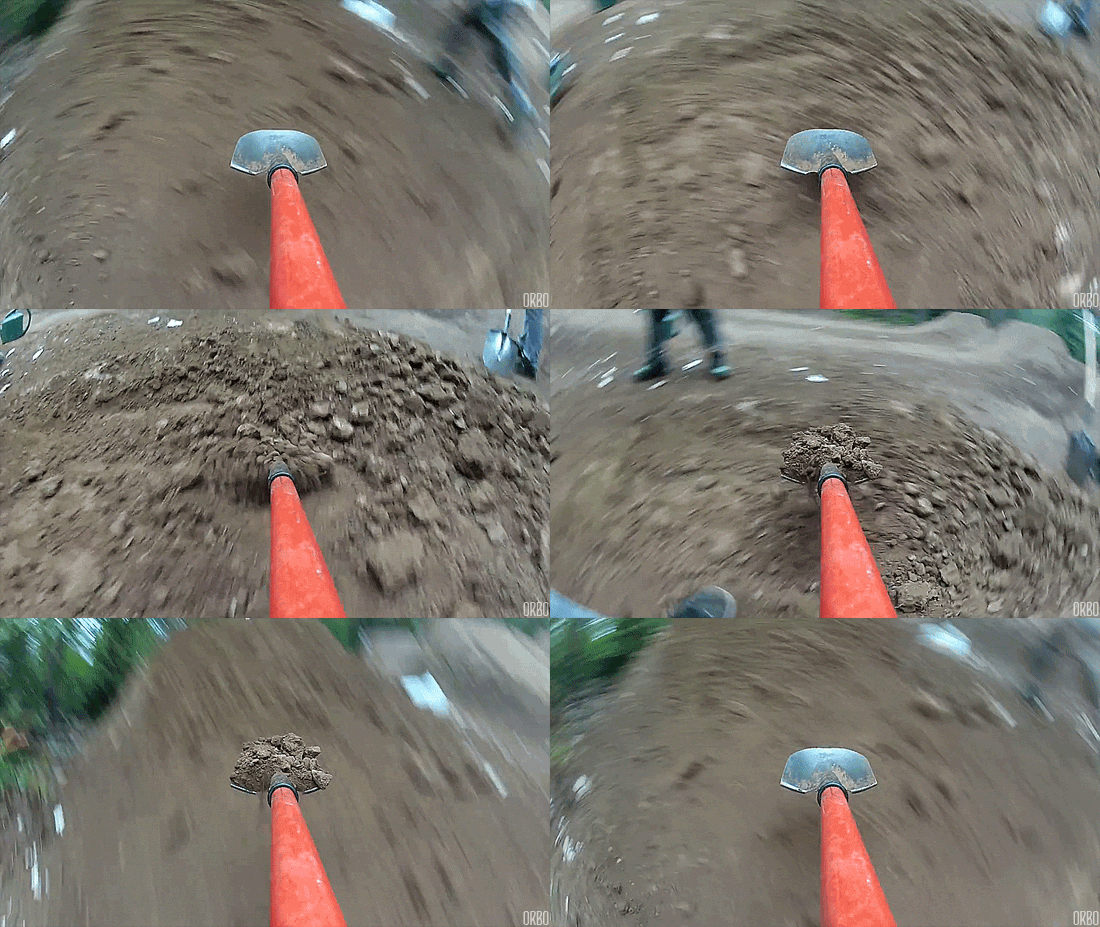
Yet no matter how hard you try to force Word into being able to handle a giant project, it’s like trying to excavate the foundation of your new house with a shovel instead of a bulldozer.
Even if you try to organize a single Word file that is organized enough to hold all three acts of a screenplay or all 100,000 words of your epic tale of when the elves rose up against the great tyrant, Santa the Claws, there’ll be all kinds of OTHER files hanging around.
A file about settings and another for characters. One for ideas and notes.
Another for loose text you cut out of a scene but might want to use elsewhere. You get the idea.
Switching between all those files is tough. Just getting a feel for things are is hard. How many words are all the chapters in Act 2 right now versus all of Act 1? Dunno. Get ready for a whole lot of highlighting and scrolling.
One tool to rule them all
I don’t care what you pick–Scrivener, yWriter, Manuskript, OneNote, Atomic Scribbler–as long as you test drive a bunch. For starving artists and writers out there, some of those choices are open source and free.
Try them all and pick one. You won’t go back.
There’s nothing like being able to see the whole project at a glance, then dive into different bits without digging around for which Word file or folder you put in all that stuff about pickpockets in Istanbul.
I just typed THE END on a novel written in Scrivener (yes! very excited about this one, and to beta readers, let’s chat). Am in the middle of transferring into Word for the final formatting and editing. Believe me, writing 80,000 words in Scrivener was a happy walk in the park compared to when I climbed that mountain using Word.
Haven’t used every single alternative, though I use OneNote at work and home and it’s both (a) pretty common and (b) pretty good.
A few lessons learned from my own silly mistakes
First, don’t get in a hurry to export your screenplay, Great American Novel or picture book about knitting hats for cats from Scrivener into Word.
You don’t want to export the whole thing right off because there’s an excellent, excellent chance you’ll have to import it all back in, which is a massive pain. Because once you look at it all in Word, you’ll spot six zillion structural things to fix that are a sweaty endeavor in a word processor and far, far easier in something like Scrivener.
And yes, I’ve made this mistake. As in last week.
Heavy equipment, right? If you’ve got a choice between hundreds of hours with a shovel versus two hours with a bulldozer, pick the dozer.
The second thing is don’t ever export the entire project.
Seriously. Do it in pieces.
Sure, every program out there has some kind of magical option on the menu tree that saves your entire creation as a .docx, PDF or whatever. Resist temptation.
Put the first few scenes of your screenplay or novel into Word for that final editing and polishing. Meanwhile, keep on doing heavier work on the later stuff of Act 2 and 3.
Only export scenes or chapters into that Word file when they’re truly, truly ready.
The third thing is that paragraphs that seem short and sweet in something like Scrivener–especially if you have a big screen–turn ginormous when you pop them into Word on double-spaced pages.
Finally, get religious about making backups. OneNote, Scrivener and similar programs work their magic in mysterious ways, especially in how they save all those separate bits. It’s complicated. I believe quantum particles and gravitational waves are involved.
The way these beasts save their files is nothing like a Word doc, where you can see that solitary file and copy the thing to a thumbdrive or email it to yourself. OneNote in particular is tricky with saving. I’m still not sure where, exactly, it’s saving things half the time. Be careful out there.
But those are little tips and tricks. There are no giant tradeoffs, like a choice between a moped and a pickup truck. The switch to heavy writing equipment is always worth it. The only real question is what type and brand of literary bulldozer you should drive.
P.S. What heavy writing equipment do you use today–and what other ones have you dated or divorced?




 The Red Pen of Doom