Let it be known: Romance authors have a good point when they say, “Romance is not a type of story.”
There are all sorts of different romance stories.
Which brings me to a deep, dark truth that needs to be said: They’ve done us wrong.
All of them.
Teachers and professors, authors and instructors and writing gurus of all stripes.
You’ve been done wrong, bamboozled, hornswoggled
My secret lair includes a turret that is a library, full of Every Book on Writing, Rhetoric and Journalism Known to Man, and those books are 99 percent useless claptrap about either (a) the correct placement of semi-colons, which I believe should simply be shot, or (b) finding your happy place while you write at the same time every day. These books are only good for kindling during the zombie apocalypse.
Your corduroy-clad creative writing teacher was wrong to say there are only three kinds of stories: man vs. self, man vs. man and man vs. society. Those are three types of conflict. Not stories. Also, there are far too many reference to “man” in there.
Aristotle was full of falafel when he told his eager fanboys there are only two stories: tragedies and comedies.
George Polti made things far too complicated when he gave us 36 Dramatic Situations, when what he really did was list 36 complications and conflicts, and if you want to drive down that twisty path, hell, I can write you a list of 532 Dramatic Situations before noon. If you gave me a pot of coffee, by 5 p.m. we’d get to 3,982 Dramatic Situations. (Yes, Mr. Internet Smarty Pants, you a genius for using the google to find a Wikepedia thing explaining that Polti was merely following in the footsteps of that literary giant Carlo Guzzi, but hear me know and believe me later in the week: Carlo Guzzi was also an overcomplicated doofus.)
Also: just as there is no romance story type, there is no such thing as a Western, though if you watch THE GOOD, THE BAD AND THE UGLY, you are required by law to take a swig of decent tequila whenever Clint shoots a man and down two shots if he actually speaks a line of dialogue.
For you D & D and World of Warcraft and Lord of the Rings dorks–I say that lovingly, though I want you to put down the Cheetos and the Playstation controller to go out in the world to kiss a girl, though please make sure she wants to be kissed first, and does not Mace you–there is also no such thing as a sci-fi or fantasy story.
You can set a novel or movie a dusty Arizona mining town in 1875, or put the guts of that same story into a space station orbiting the second moon of Zenon or whatever. Either way, it’s the same story.
You can add dragons, trolls or elves with lightsabers and it’s still the same story in a different setting and context.
Because in the end, story is about structure–how you put the pieces together. Is the ending up, down or mixed? What are the setups and payoffs, reversals and revelations?
They don’t really teach us structure or storytelling
Blake Snyder cut through all this tradition and nonsense with his SAVE THE CAT books.
Blake points out that it’s patently stupid to call FATAL ATTRACTION a domestic drama and ALIEN a sci-fi movie and JAWS a horror flick, because they all three classic movies are the same basic, primal story: there’s a monster in the house. Either you kill it or it kills you.
Period. End of story.
I will not summarize Blake’s book here by giving away all his other evil secrets. He’s boiled things down to ten primal stories, and yes, you can insert as many Dramatic Situations as you want into those ten stories.
Blake has done all writers a great service with his two books, which have silly titles and a cover with a cat. As the writer of a silly blog, I give him slack for that. He’s not pompous, arrogant or overly complicated. Blake was simply a freaking genius when it comes to storytelling, and the world is a poorer place now that he died young.
If you write, and care about your craft, go buy his book. DO IT NOW. Then come back here to talk smack about structure, the real secret to writing of all sorts.
And that’s slow. I type about 80 or 90. Faster, if I have coffee. Even quicker with headphones blasting, or on deadline.
Coffee plus headphones plus a deadline? Fuggetaboutit. That keyboard is gonna sing.
The thing is, all the speed in the world doesn’t really matter.
Here comes the math
Let’s say you write full-time, all day, every day. No day job to worry about, no cramming in writing at 4 in the morning when the kids are asleep or scribbling forty minutes a day on a yellow legal pad (are there other colors? why yes, there are, including PURPLE) as you ride the train from New Jersey to the NYC.
Say you’re not that fast. Fifty words a minute.
Fifty words per minute =
3,000 words per hour
24,000 words per eight-hour day
120,000 words per week
That’s a ton of words. An incredible amount.
Let’s do a little more math to see how much we should be cranking out, if we’re not surfing the net, Twittering our lives away and checking out Facebook photos all day.
Here come the word counts:
200 words = letter to the editor
500 words = five-minute speech
600 words = news story
800 words = oped
1,000 words = 10-minute speech
Up to 3,000 words = profile or magazine piece
Up to 8,000 words = short story
3,000 words = 30-minute keynote speech
15,000 words = screenplay
20,000 to 60,000 words = novella
60,000 to 120,000+ words = novel
Of course, people don’t type every second of the workday.
Let’s say half your day is eaten by meetings, research and other things, and you only write four hours a day, or 20 hours a week. Even then, we’re talking about 60,000 words.
That’s most of a novel, four screenplays, 20 keynote speeches or 100 opeds.
In a single week.
Nobody writes that much. NOBODY.
Not even Stephen King, back when he was fueled by industrial amounts of caffeine, nicotine and other substances.
In fact, writers of all sorts are happy to produce between 500 and 2,000 good, usable words a day.
I know novelists who are happy to produce one good novel per year. If you divide 100,000 words by 52 weeks, you get a smidge less than 2,000 words per week and, I kid you not, less than 300 words per day.
I know reporters who crank out two stories a day, five days a week and columnists who do one or two opeds a week.
There are pro speechwriters, brilliant people I’ve known for years, who take two solid weeks to nail down a 30-minute keynote speech (3,000 words).
Before the invention of word processors, writing gods like Hemingway would pound on their Underwoods and count every word, quitting for the day when they hit 1,000–or even 500–that day.
But let’s be generous and say 2,000 words a day is a good day.
Where are the missing words? Why are all sorts of pro writers–reporters, novelists, poets, speechwriters–producing about 20 percent of what the math says?
Suspect No. 1: It’s not really eight hours or even four hours
This looks like the obvious culprit, because it’s the only person sneaking away from the crime scene with a guilty look and blood on the bottom of their shoes.
Reporters have to cover stories, get quotes from sources and meet with editors.
Novelists need to do research, talk to their agent, go on book tours and so forth.
Every writer, reporter and novelist has to do research, travel and attend meetings. Nobody is chained to the desk the entire workday, pounding on the keyboard like a typist. They need to eat of the food sometimes, and drink of the wine, and have a life.
HOWEVER: A lack of hours isn’t what’s wrong here.
Let’s say even more of the day is toast. Research. Phone calls. E-mail. Lunch with some big important person. Twittering to your buddies.
Fine, let’s go all the way down and say six of your eight hours are toast, and there are only TWO HOURS of actual banging on the keyboard.
3,000 words per hour X 2 hours = 6,000 words a day.
And yet the most writers typically can hit, day after day, is 2,000 words.
Where are the missing words?
Also, I know writers who spend six hours a day in meetings, doing research, returning e-mail and all that — and they still bang on the keyboard at least four to eight hours a day because they’re working crazy hours. A lot of writers work weekends, too. Writing is often a daily habit.
Yet 2,000 words per day seems like a kind of universal wall for writers of all stripes. Why?
Suspect No. 2: We type slower than narcoleptic turtles
This suspect doesn’t even get handcuffed and taken down to the station for a chat.
I used 50 words a minute because it’s the average typing speed of the general population.
Serious and professional writers are typically a lot faster, unless they’re hunting and pecking on an Underwood because that’s what they’ve always done since they first got published in 1926. There aren’t that many authors in that category.
If you dictate your stuff with Naturally Speaking or whatever, it’s more like 100 words a minute.
But let’s be generous again and pretend we all type really, really slow.
25 words a minute = 1,500 words an hour.
Even if we say Suspect No. 1 (Miss Most Hours of the Day Get Wasted) and Suspect No. 2 (Mr. Types Slowly) shacked up in a cheap motel and conspired to murder the creativity of all writers, it doesn’t get us down to 2,000 words a day.
Four hours at the keyboard at 30 words per minute is still 6,000 words a day. Two hours is 3,000 words, which is closer, but not plausible. Professional writers aren’t much slower than average typists–they’re a lot faster.
We need a better theory of the crime.
Suspect No. 3: Writing requires deep, deep thinking
Ah, this one is good. It’s lurking in the shadows.
It’s evil. Hard to refute.
How can you say that writing is shallow and easy?
How can you deny the art required, the creativity?
This isn’t an assembly line. It’s not a factory where we churn out widgets. Writers create something original, whether it’s a 500-word story for the newspaper or a 100,000-word novel.
Except I know better. Because I’ve been watching.
Going off my own experience wouldn’t be proof of squat. Maybe I’m an anomaly. Maybe I type 80+ words per minute (true) and separate writing from editing (also true).
But I know writers of all sorts. Reporters, speechwriters, novelists, you name it, and just about everybody who writes for money bangs on the keyboard at least four hours a day, and they’re all faster than 50 words a minute. That’s 3,000 words per hour.
Even going with four hours a day of actual writing, we should be at 12,000 words a day. Except we’re not.
Suspect No. 4: We’re creating while destroying
This is our killer. I’ve seen him at work.
I’ve helped other writers catch the evil scumbag, convict him and send him upstate so he can’t do any more damage.
We are typing away on the keyboard, and we’re not doing it at 10 words per minute. We are writing fast. It’s just that we destroy those words just as fast.
Why do we writers destroy more than we create?
Not because the words aren’t pretty. Sentence by sentence, they’re fine.
It’s because the structure is wrong.
I’ve looked at bad drafts that hit the roundfile. The sentences were pretty. It was the structure that failed.
We spend so much time trying to fix these things because we nobody teaches us structure.
Oh, they taught me the inverted pyramid in journalism school, which is the best possible blueprint for a story if you want to give away the ending right away and put people in a coma the longer they read.
Creative writing professors teach us characterization and the three types of conflict in creative writing.
Rhetoric professors give us logical fallacies and different types of arguments in speech and debate.
Journalism profs teach us hard and soft headlines and the different types of ledes.
Yet that’s not really structure. It’s tiny bits and pieces.
Building a house one room at a time, without blueprints
They way most of us write is like trying to build a house one room at a time. Winging it, without any blueprints.
Pour the foundation for the front door and foyer.
Frame it. Wire it for electricity. Drywall it. Paint it.
Now dig the foundation for the kitchen and build that.
Where should the living room go? OK, we did that, but forgot to put in stairs to the second floor, so we’ve got to tear it all down and start over.
That’s how I used to write. It’s how most writers I know do it.
You start at the beginning and work your way through it, trying to fix any problems with structure along the way.
My old friend and mentor, Robin, was guilty of this. He’d spend a week on an oped, which is only 800 words. He was a brilliant man, one of the smartest I’ve ever known, and a good example of why mixing research, writing and editing into a single process slowed everything down to a snail’s pace. He’d create and destroy thousands and thousands of words before he had 800 on a final draft.
Doing research, writing and editing all at once is no way to run a railroad. It’s building a house without blueprints, blindly hoping the beginning will magically connect with the middle and an end you haven’t figure out yet.
I’ve had houses designed and built. If a contractor tried to build a house the way we writers work, it wouldn’t take six months to finish it. It’d take six years, or forever.
So this is our killer, our time-suck, our nemesis.
Question is, how do you DO structure — and how do we, as writers, learn to draw good blueprints, so we stop spending 80 percent of our time at the keyboard destroying what we created?
A classic post from my old blog, updated a bit. For new folks, enjoy.
Let it be known: we men must rethink our natural manly instinct that romance novelists are something to avoid, like SEX AND THE CITY 2, which is indeed worthy of scorn, and woe unto any man whose girlfriend or wife coerced them into wasting two hours of their life to see that stupid thing. No bribe is sufficient.
Published romance novelists are not only talented and funny, but many can write circles around the 6.57 gazillion reporters, writers and novelists I know.
These women are more talented than most folks writing about elves and spaceships, or elves riding spaceships, because there is so much freaking competition with romance novels.
Are there bad romance novels out there? Sure, just like any genre. But with so many books and writers, it’s like throwing 10,000 authors into the Thunderdome, tossing in a single chainsaw and refusing to unlock the door until there’s only one woman left. That woman is going to kick tail. She will be a writing goddess.
And the message is good. Romance novels don’t want men to be to be office drones, worried about TPS reports, or moody, over-educated basket cases you read about in literary novels.
Romance novels want men of action and charm, packing swords if not guns, and sometimes guns and swords. Any man can learn this from googling “romance novel covers.” IT IS AN EDUCATION.
Fabio and a sword is all you need. Shirts are optional.I hadn’t read romance novels, or even checked covers until now. Yet now that my eyes are open, we men should band together to pool our resources to give romance novels serious tax subsidies, because romance authors and readers are a secret army doing a $16.5 billion public relations campaign for men everywhere.
And, yes, the genre is bigger than that. It’s a big push for love of all stripes, which is a good thing. Life isn’t about having the biggest pile of dead presidents. It’s about family and who you love. As a husband and father, I get that.
So, romance novelists and readers, I am holding a mug of Belgium beer which I raise your direction.
Listen: it’s hard to slog through the first page of a novel by Snooki, a literary zero.
And beating up the first page by a literary hero, F. Scott Fitzgerald, feels rebellious, as if I’m giving sending a chunk of English teachers and profs into therapy. Even so, it doesn’t feel good. Giants of literature need to remain giant and omnipotent in our minds, not bogged down with meandering prose that doesn’t go anywhere for a full page.
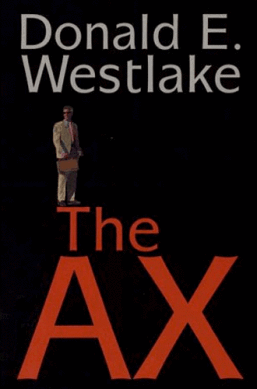
So as a palate cleanser, this week we’re dissecting page one of a brilliant, relatively obscure novel by Donald Westlake, a master of the craft.
THE AX by Donald Westlake
I’ve never actually killed anybody before, murdered another person, snuffed out another human being. In a way, oddly enough,I wish I could talk to my father about this, since he did have the experience,had what we in the corporate world call the background in that area of expertise, he having been an infantryman in the Second World War, having seen “action” in the final march across France into Germany in ’44—’45, having shot and certainly wounded and more than likely killed any number of men in dark gray wool, and having been quite calm about it all in retrospect. How do you know beforehand that you can do it? That’s the question.
Well, of course, I couldn’t ask my father that., discuss it with him, Not even if he were still alive, which he isn’t, the cigarettes and the lung cancer having caught up with him in his sixty-third year, putting him down as surely, if not as efficiently, as if he had been a distant enemy in dark gray wool.
NOTES FROM THE RED PEN OF DOOM
This is an intense thriller, with an everyman anti-hero who responds to getting laid off in an interesting way: taking out a fake job ad, then collecting those resumes and killing off the competition for his specialized trade (managing paper mills, if I remember right). It’s a short, intense, amazing book by a master of his craft.
So, I didn’t get itchy pencil on this page one, though there are some easy edits. The run-on sentences are clearly on purpose, a little conversational tic of the narrator. My personal feeling is they get just a bit annoying early on here. Pretty easy to kill a few words and make it more readable.
What’s truly great is how Westlake strikes at the heart of his anti-hero, and the novel, not just on the first page but in the very first line.
You rarely see that. Not in movies, not in books.
Westlake takes a carpenter’s hammer and smacks you in the nose with this first line and I could not love it more.
The whole novel is like that.
If you’re a fan of BREAKING BAD, this is a similar story with a different ending. It’s not a tragedy, with a hero falling, sinning and dying due to hubris. This is a story of a suburban schlub who suffers, sacrifices and does terrible things to provide for his family…and wins in the end. He gets the job. The house doesn’t go into foreclosure, his family isn’t on the street. He wins, not that Westlake is saying what his character did is right and good.
BOTTOM LINE
This is a great first page that doesn’t meander around, and a terrific way to put the reader into the essential question of the story, a neat twist on “What’s worth living for and what’s worth dying for?”
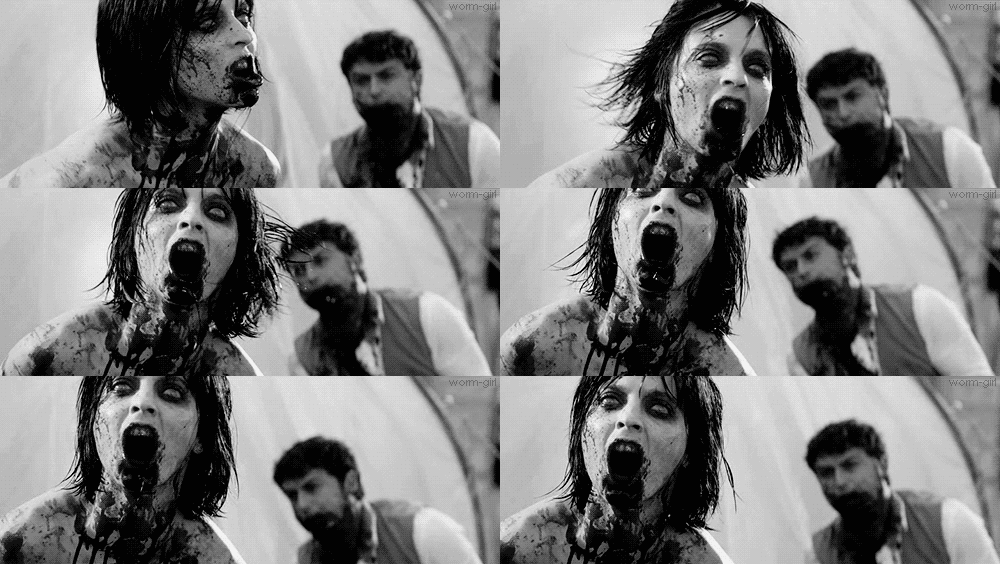
Zombie movies are epic and wonderful and far, far superior to the Standard Horror Movie featuring horny teenagers getting mowed down by the Boogeyman, or silly scientists who create genetically modified super-sharks which, of course, escape their tanks and EAT EVERYONE.
People–especially those who wear tweed and like to talk about “dialectical materialism” all the time–tend to lump horror movies along with other B movie trash, including zombie movies.
They are wrong.
Zombie movies are NOT like your Standard Horror Movie.
Here’s why:
(1) They are better.
(2) They feature zombies.
(3) Zombies rock.
Seriously: zombie movies are different. Let’s pry open the skull of moviegoers — and people who read Stephen King and other horrornovels — to see what’s really going on, which is more interesting than you’d expect.
Dance and music videos go together like peanut butter and chocolate, salt and pepper, bacon and eggs, coffee and newspapers.
Janet Jackson has made dance music videos forever, and my fake news version of “forever” includes before Dua Lipa was born. (She’s 23, so yes, no lie.)
Today, we’re looking at the latest from Janet, MADE FOR NOW, versus an interesting twist on the dance video from Dua, IDGAF, and yes, if you’re offended by bad words, Dua has a bad one right up there in the title. Sorry. Didn’t write the song.
First up: Janet, then Dua, before we dissect both videos.
I bet you the title to my car that Janet’s video cost far, far more than Dua’s–it certainly looks slick and expensive.
In this case, money and production values don’t win.
Dua has a better song and a far, far more entertaining video.
The acid test to me is whether (a) you’d have to pay me to rewatch it or (b) I’d happily watch and listen to something again. I’ve happily put IDGAF on loop while you’d have to pay me to hit replay on MADE FOR NOW, a repetitive song and boring video.
And that’s too bad. Janet’s got talent to burn. She’s made iconic music videos for years.
RHYTHM NATION was groundbreaking and still works today.
So I’m disappointed because Janet’s playing it safe with this. So safe that it fails.
Here’s the thing: once you’ve already had crazy success and so much cash you can’t spend it without buying private islands in the South Pacific, playing it safe is a losing strategy. You’re coasting instead of pushing yourself, and the audience feels it.
Though I’m no fan of Madonna’s music, she did a tremendous job of recognizing this and picking a hot new producer for every album to reinvent herself. That was bold and risky. It made her a star for decades instead of a one-hit wonder.
The best music–rock, pop, rap, whatever–attacks the status quo.
Aggressively. Relentlessly. Without mercy.
The worst music defends the status quo.
Limply. Lamely. Apologetically.
If you’re a famous singer or band, please take your piles of money and try to make something insanely different, new and interesting.
Rebel again.
Because that’s the real point of art, to shock us into seeing the world in a different way.
Note: First, let’s celebrate the fact that Alex Jones just got kicked off Twitter forever and ever, which means he’ll be screaming into the void for a long time. Praise the gods. Now onto the meat of this post.
Listen: the advice you see on the Series of Tubes isn’t just bad. All too often, it’s seriously, tragically wrong.
Good info is quickly outdated, especially if it’s about social media.
Even if you do your due diligence–say that three times fast–and read seven different articles about best practices, it may not help.
Whatever article you read will typically be one of three things: (a) conventional wisdom, meaning it’s standard fluff which will get you standard, meh results, (b) bland instruction-manual drivel that won’t help you unless you’re hopeless with technology or (c) some kind of smooth come-on pivoting to a pitch for you to spend $199 on an app or service that promises the moon.
I’m not selling anything.
HOWEVER: I love Twitter, despite its flaws. Nothing is better for learning about breaking news, exploring your favorite niche and making friends.
So let’s talk smack.
1) Don’t treat Twitter like Facebook
Facebook is for friends and family you already have. You don’t take friend requests from 5,492 strangers on Facebook because hey, I’m not letting those people see family photos and all that. There’s a higher barrier to making connections.
Twitter is like a friendly bar where the drinks are always free.
The barriers are low to non-existent. I don’t risk or lose anything by making new connections.
Posts that make sense on Facebook don’t work on Twitter and vice versa.
Facebook is about memories and moments and relationships. Good posts are timeless.
Twitter is about now now NOW, and tweets have an incredibly short half-life. (Note: HALF-LIFE 3 is never happening. Valve simply enjoys teasing and torturing you, and they’ll keep doing it forever.)
On the Book of Face, it’s fine to share personal moments–though don’t get too TMI and become Complainy McComplainface–because your friends and family already know and care about you. So yeah, the clip of your daughter tasting ice cream for the first time is hella cute.
On the Twitter, people will wonder why some dude with Yoda as their avi is putting up shaky video of their labrodoodle puking up two pounds of Easter chocolate on the living room rug.
2) Facebook a little, tweet a lot
You could post on Facebook a couple times a week, or once a day, and nobody would bat an eye. Pretty normal.
Once a month and people will wonder if you’ve gone into hiding.
If you posted on Facebook five to ten times a day, people would start avoiding you like that neighbor who always comes over to chat and won’t escape after an hour of yakking about something you don’t like or understand, like cricket.
The rules are reversed for Twitter.
Post once a day and most people won’t see the post.
Post once a week and congratulations, you’ve invented an invisibility cloak. Patent that thing.
Twitter feeds scroll by crazy fast. Unless somebody follows you, or the hashtags you’re using, and is online THAT VERY SECOND, they won’t see your post. (This is true even though Twitter changed its algorithms to be more like Facebook so your absolute besties on Twitter will see your stuff more often with the IN CASE YOU MISSED IT shebang. However, 99 percent of people will not see your posts unless they’re staring at the screen right that second, which is not happening. The math starts getting cray cray. Say you have 2,000 followers. It’s a good bet maybe 200 of them, max, will say any random tweet you post. Then we get into the standard ratios: If 200 people see it, 20 will actually read it and 2 will respond.)
It’s smart to tweet five or ten times a day. No problem. Because even then, only a minority of your followers will even see it.
3) Forget the usual advice on who, and how, to follow
Conventional wisdom goes like this: figure out hashtags for things you love, or whatever your niche is, and follow scads of people with that hashtag in their bio.
No.
Here’s why this doesn’t get the job done: (a) you’ll miss a ton of people who post to that hashtag and skip having it in their bio, (b) you’ll wind up following an army of zombie twitter accounts of people who have your hashtags in their bio but haven’t tweeted since 1977, and yes, I know Twitter didn’t exist, this is a Dad Joke, just go with it and (c) most of the live accounts you do follow with that hashtag won’t be that active.
Who do you want to follow?
Not just people who care about your special niche, whether it’s Hand-Stitched Hats for Cats or novels about Men in Kilts and the Women Who Love Them.
You want interesting people in that hashtag who are huge fans or experts. You want people who are actually on Twitter a lot, and not as lurkers, but chatterbugs. And you want people who are friendly and take the time to talk with other people, not just use Twitter as a vehicle for self-promotion.
Instead of the hashtag bio thing, this is what you do: Search for a keyword (doesn’t have to be a hashtag) or phrase in the Twitter search box. Look through the most recent tweets about that subject and follow people who are tweeting about it, and talking to each other, RIGHT NOW.
That way, you know it’s not a zombie account. You know if they’re actually having conversations with other people or just pumping out content.
Then follow the friendliest people who like talking about what you love.
4) Never troll, and never feed the trolls
Let’s say somebody invited you to their home for a party. They’re providing the food and wine. You just have to show up.
And let’s say you told them their house is too small, their Ford Explorer sucks and their kids are ugly. You’re gonna get kicked out of the party. Maybe punched in the face.
Sure, being a troll can get you attention. The wrong kind of attention.
There’s a difference between being famous and being infamous.
Still, you’ll run into plenty of trolls on Twitter and other corners of the Series of Tubes, and there’s only one strategy that works.
Ignore them.
No matter what they do or say, never, ever respond. Not once.
Blocking them is fine, because you never have to deal with their nonsense.
Muting them is far more evil and enjoyable, since they’ll keep shouting into the void and won’t understand why you’re an unmovable rock. Why they can’t provoke you, no matter how insane they get.
Mute away. It’s pure torture for trolls.
Also, what Ken M. does isn’t really trolling. He’s a derp, and plenty funny.
5) Retweet, respond and comment 80 percent of the time
With the Book of Face and other platforms, if you’re only posting a few times a week, or once a day, it’s fine to use that one shot to say the thing you really need to say. Go ahead and post that video of Sue Bird losing her mind in the fourth quarter and hitting threes from downtown Tacoma, or put in a link to your latest blog post.
On the Twitter, try to retweet, respond and comment four times for every other thing you say. (Yes, the math works out. Four-to-one works out to 80 percent. I didn’t even bust out the calculator, that’s how certain I am.)
Because like I said earlier, Twitter is like a bar where the drinks are free. There’s nothing friendlier than liking, retweeting and commenting what other people post. And there’s nothing more self-absorbed and lame than only talking about yourself. Wouldn’t fly in real life, even if we were actually in a bar and had done six shots of really good tequila in the last two hours when you said, “Enough about me. What do YOU think about me?”
And that’s the final lesson. All media, including social media, goes back to a basic rule of rhetoric: it’s not about you.
Because we’re apparently living in a reality show dystopia, and watching the news can put you in therapy, take a little break to watch this video.
Then cuddle your cat, play with your dog or befriend a murder of crows by feeding them peanuts (in the shell, it’s a happy puzzle!) every day until they start bringing you shiny objects as tribute. These shiny things may include car keys. Resist the temptation to turn your crow army into a crime ring with a chop shop behind the wrecking yard.
If taking some time with your furry pookies doesn’t help, watch THIS video of unlikely wild animal-human friendships.





 The Red Pen of Doom