Three giant holes in REBEL MOON

Yes, you could write about 17 massive problems with this film, or 99 reasons I will never get these two hours of my life back.

HOWEVER: I want to focus on three actual storytelling lessons.

For educational purposes and such.

But hey, we will still make fun of this stinker.

HOLE NUMBER ONE: Our rebel heroine

Zack Snyder wants this to be Star Wars, so let’s get into the structural trouble at the crumbling foundation of this passion project.

Luke Skywalker starts out as a farmer, an orphan. So does this character.

After that, nothing is the same.

Luke has a secret Jedi pedigree, but he isn’t secretly a master warrior. It takes him three freaking movies, and a ton of training from two different mentors, to improve and improve before he starts kicking butt. Luke has to suffer and sacrifice.

He nearly dies a zillion times and gets his hand lopped off by Vader in the second film. He would have failed and died in the third film, except Daddy Vader switches sides.

Luke also learns a number of cool skills, and it takes time for him to master them. Fighting with a lightsaber. Force pull or whatever. Force jumping. All kinds of force stuff. It works as storytelling. You buy into it.

REBEL MOON makes the opposite choice. Our heroine randomly takes out an entire squad of baddies. Afterward, we get a flashback explaining how she’s a super warrior. Uh, no.

Yes, it’s a cool fight scene. There’s simply no setup to this payoff.

Then she kills the bad guy in the first movie, her first try, only for him to get un-Palpatined in a Bantha tank or whatever.

No mentor, no practicing, no suffering, no losses, no growth. This heroine starts out as a badass and ends the movie as a badass. That makes for a flat, boring arc.

HOLE NUMBER TWO: Our lame villain

This movie is trying to be Star Wars, which features maybe the most iconic villain of all time, the towering and powerful Darth Vader.

And they go with a skinny man with a British accent, a thing for tentacle porn, and the worst haircut in the galaxy.

Darth Vader wielded a scary red lightsaber and force-choked generals who annoyed him.

This villain has a walking stick. OMGWTFBBQ.

HOLE NUMBER THREE: Seven million sidekicks

Yes, this movie copies Star Wars, but it’s also trying to copy Seven Samurai, so we have all kinds of extra characters taking up all kinds of screen time.

None of them are essential. Seriously.

What we needed was a mentor, an Obi-Wan figure, to help our heroine learn and grow. Because she’s already amazing, there’s no room for that.

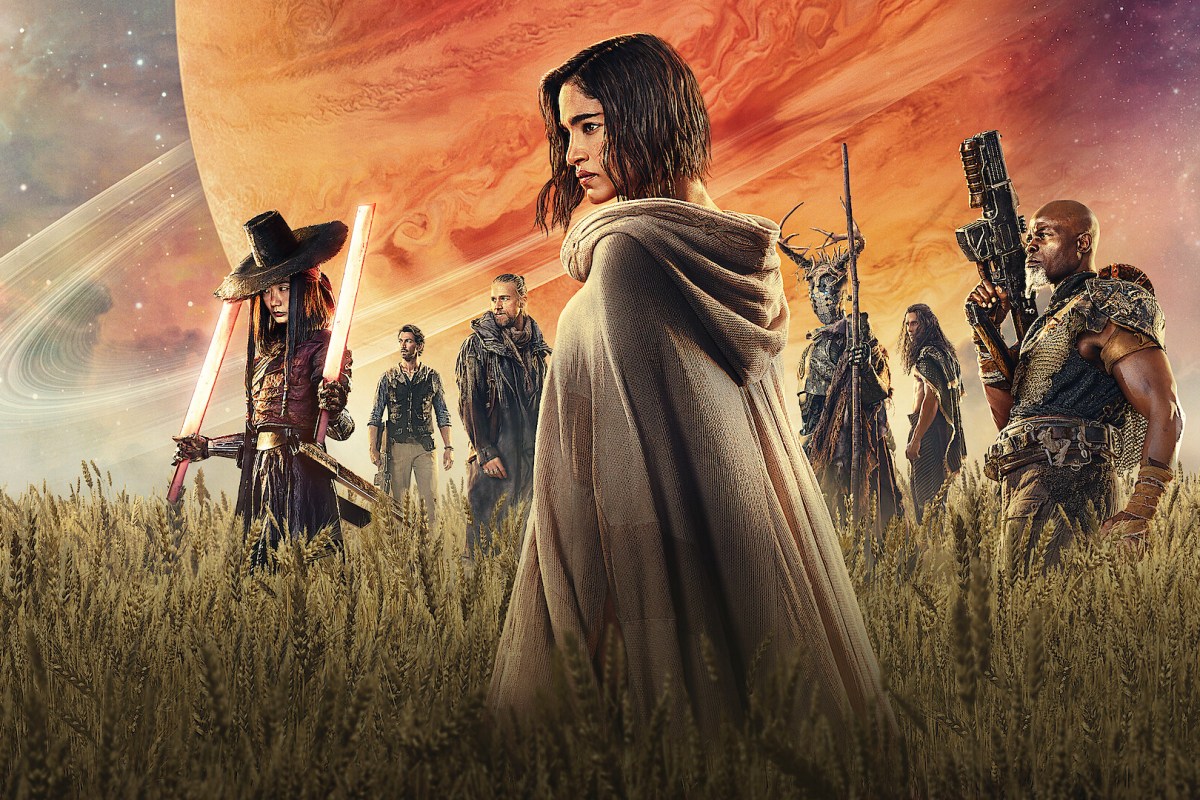
Therefore we get random characters who add nothing. A farmer who follows her on the journey. A rebel leader who only shows up and dies in order for her to assume that role. Bare Chested Beastmaster, a rogue spaceship pilot, a samurai woman with glowing red These Are Not Lightsabers, and so forth.

All forgettable and unnecessary. The one you could argue for needing is Rogue Spaceship Pilot, who is not Hans Solo but more of a Lando because he betrays them to the Empire or whatever.

The only side character who resonated, and should not get ripped from the script, is the robot voiced by Anthony Hopkins–and this character gets built up in the beginning, abandoned, and cameo’d at the end.

Honestly, the easiest way to fix the structural problems is to strip away all the side characters.

Send a real farmer girl, with no skills, with Anthony Hopkins as her Robot Obi-wan.

Have him teach her to fight, and hide, and sabotage the bad guys. Have her suffer and lose and learn.

Give her and the robot interesting weapons and powers other than “she just kicks ass.”

BOTTOM LINE

Huge budget. All kinds of special effects and possibilities. It all goes to waste because the heroine, villain, and story don’t work. 0/10, spend the sequel money on SHIMMER LAKE PART 2: GIVE THIS TOWN A BATH.
The acid test for all writing

I believe, deep in my soul, that Zack Snyder-style gritty darkness isn’t bad simply because Zack Snyder directs it. Gritty Dark Dourness would be bad if the love child of Steven Spielberg and Alfred Hitchcock sat in the director’s chair.

And yes, it’s still fun to laugh at BATMAN VERSUS SUPERMAN: THE DAWN OF JUSTICE.

But there’s something smart and deeper behind the idea that the Marvel movies got things right by being (a) funny and (b) exciting, while the DC / Snyderverse went wrong by taking itself far too seriously and going Full Melodrama, with a color palette full of grays and blacks contrasted by grays and more blacks. You never go Full Melodrama, because it makes your audience feel like the movie’s being written and directed by a bipolar Michael Bay who’s crying in a corner when he’s not blowing stuff up.

And all this made me think.

Because comedy isn’t actually light and fluffy. True comedy points out how absurd and unfair the world is, and how you can’t fix it and have to laugh at the insanity of it all.

My proposition is this: adding comedy to a book or movie doesn’t make it light and lame kiddie fare. Interweaving comedy into whatever–an action movie (every Marvel movie ever), a romance (ROMANCING THE STONE and every rom-com), a mystery (SHIMMER LAKE is perfect perfect perfect, go watch it now on Netflix, kthxbai)–can make it infinitely better.

We were talking yesterday about our favorite books of high lit-rah-sure, and my favorites were CATCH-22, Kurt Vonnegut and the ALL CREATURES GREAT AND SMALL books, because I’ll happily go back and re-read any of these. What do they have in common? They’re universally beloved, recognized as classics, and funny as hell.

But making you laugh isn’t their only trick, like a SNL skit that repeats itself 459 times in four minutes. The best storytellers serve us different courses for our emotions over the length of a movie or book. They don’t dish up sad scene after sad scene, or pile up joke after joke. You get an appetizer, a main course, side dishes and dessert. Not five appetizers in a row or a plate full of six desserts.

ALL CREATURES GREAT AND SMALL does this beautiful. The original book and its sequels are really short stories strung together. Each one, though, makes you feel a variety of emotions. Joy, sadness, laughter, love. You see the struggling young vet and the hard-scrabble farmers, and when an animal dies, or a sick cow makes it because a poor farmer stayed up all night tending to that animal, yeah, you might tear up.

That’s what makes us come back to those books and movies.

Not the plot points–we know what will happen. Not the writing.

We want to feel.

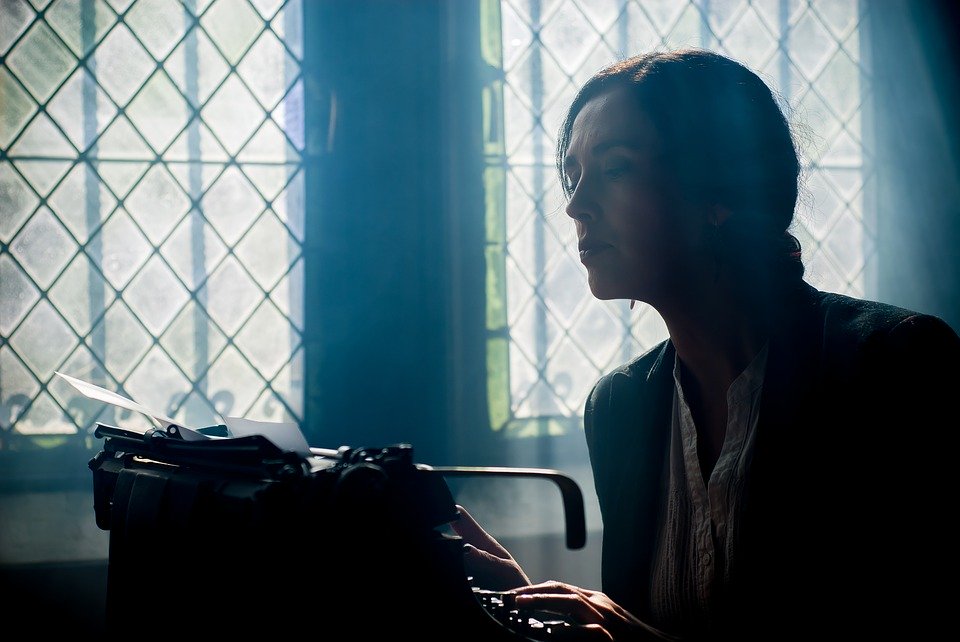
So that leads me to the acid test for me, as a writer. It’s how I know whether a draft is working or not.

Here’s the test: If I’m not tearing up, it’s not working.

Tears of joy, tears of laughter, tears of sadness–I better be feeling something as I write the ending. If I don’t, bring on the rewrite.

So yes, we can make fun of the dour, dark Snyderverse, and relentlessly depressing lit-rah-sure like THE ENGLISH PATIENT, where the scenery is beautiful and everybody’s rich and having affairs and in the end, everybody sells out to the Nazis and dies, the end, roll credits, and THROW SILVERWARE AT THE SCREEN BECAUSE THIS IS STUPID.

What do you want the audience to feel?

That’s the real question. And you have to feel it first.

MAN OF STEEL and the Invincible Hero Problem

tinseltown tuesday meme morpheous

As a non-fan of the Superman, I can honestly say this: MAN OF STEEL is far, far better than expected.

It’s like Zack Snyder took the only good parts of PROMETHEUS (cool spaceships and outfits!), stuffed it into a blender with INDEPENDENCE DAY (aliens are coming to blow up the planet!) and added with a dash of Wolverine (hairy shirtless tough guy wanders planet, doing random good deeds).

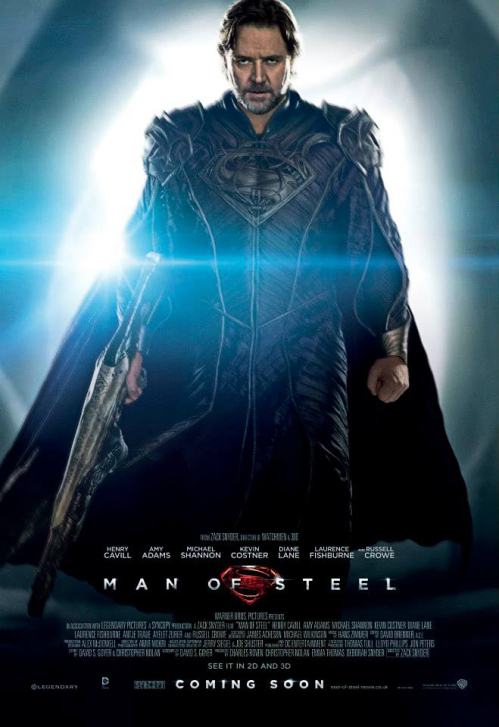
Russell Crowe is surprisingly awesome in MAN OF STEEL. Who knew?

I mean all that in a good way.

HOWEVER: The world doesn’t need another review of Soupman’s latest reboot. What the world needs is a real discussion of a real problem that Superman and other heroes can’t seem to shake.

They’re invincible. And that, friends, is crazy boring.

Iconic heroes made of flesh and blood already have a serious problem, since everybody sitting in the seats, munching on $9 popcorn, knows they’re icons. We know the producers of James Bond movies would never wake up one day and say, “I know — let’s kill off Bond and start some other kind of film, maybe with a 200-year-old sparkling vampire who’s into whiny teeangers.”

Hollywood wants franchises, and you don’t kill off the foundation of billion-dollar juggernauts. Ironman will never die. Batman, Sherlock Holmes, Spock, Kirk (new young Kirk, not Shatner, who they did kill off), Wonder Woman — hey, they’re all safe.

But they’re not invincible. They can and do suffer. They can bleed and die. We know that.

Superman is never really in trouble. Stuff happens to him on screen and you shrug, because hey, that’s Superman.

It’s not the same with Batman, who’s been stabbed, knocked out, set on fire and generally abused. One of the great things about the Dark Knight trilogy is how much Batman really does suffer, sacrifice and grow.

MAN OF STEEL does a good job, and it’s a fun movie. The problem is the character of Superman, who’s a lot like Neo after the end of THE MATRIX, when Keanu Reeves can do anything.

Where do you go from there? Turns out you wander around and get lost for two movies that got progressively worse until something perfect turned into something meh. Which is sad. THE MATRIX was brilliant … right up until Neo went all Superman on us.

Here’s an ironclad rule of storytelling that I’m inventing right now: The villain has to be more powerful than the hero. Always.

Not equally powerful. Not less powerful. The villain has to be superior.

Otherwise, we’re sitting in a dark room watching Chuck Norris swivel around on his cowboy boots as he kicks 59 random henchmen in the face. Does it look pretty? Sure. Is it dramatic and exciting and good story? No. We know Chuck — or Jason Statham, or whoever — is better, and that our hero is gonna win.

When your hero is invincible, like Superman and Neo, the villain can’t be more powerful. It’s impossible.

Think about every Boring Action Movie you’ve ever seen: the villain is less powerful and scary than the hero, which is why he needs an army of thugs to protect him from the big bad scary hero, who starts out the story as an amazing tough guy and ends the story … as an amazing tough guy. Most of the bad Bond movies are like this.

Same thing with every Failed Comic Book Movie, like the lame Hulk films. The Angry Green Thing is basically invincible. Bullets bounce off him. Tank rounds go clang off his green skin. How can you worry about the guy getting in trouble, or having a tough time with a bad guy? This is why comic book movies tend to have hordes of villains. That’s compensating for the weakness of each villain, and it doesn’t work.

Two little movies we all remember reverse this beautifully. The villains in ROCKY and THE KARATE KID seem invincible to us, don’t they? Apollo Creed is the heavyweight champion of the world. He’s crazy strong, insanely fast, in incredible shape and everybody with a functioning brain cell in their noggin would bet the farm on him, not the slow, plodding loser they lined up for a publicity stunt of a fight. Johnny also seems like a teenage nightmare, a giant bully who pummels Daniel-san relentlessly.

Rocky and Daniel-san start out as serious underdogs, and they get their butts kicked in all sorts of ways throughout the movie. It’s only at the very end that they eke out a little moral victory. But we don’t care. That little moral victory is more important to us, the audience, than all the beat-downs administered by the tough guy in your average action movie.

Bigger isn’t better. It’s the distance traveled from the beginning to the end. And when you start out cranking it up all the way to 11, and end at 11, you’re not really taking us anywhere.