JESSICA JONES repeats the same storytelling mistake as GAME OF THRONES

So the last season of GAME OF THRONES went sideways, according to All the Fans–and as somebody who’s now watched all three seasons of JESSICA JONES, the writers and showrunners make the same storytelling mistake with the ending.

And listen, the ending is everything.

How can a gritty, superhero series screw up in the same way as an epic with swords and dragons? 

Here’s how. (Warning: this whole post is Spoily McSpoilerface.)

Reason No. 1: Always save the Big Bad Guy for the finale

For five-point-seven billion years, GAME OF THRONES built up the icy blue Avatar-looking guy, the Night King, as the Big Bad of the series.

At the same time, the show served up the Mother of Dragons and her cousin/boyfriend Jon Snow as heroes, as far as what passes for heroes go in a story where everybody is a murderous nutbag.

But there’s no real protagonist in this giant cast, and Ayra is the one who offs the Night King long before the final episode.

https://www.youtube.com/watch?v=3F-HMyNRYAA

Same thing with the last season of JESSICA JONES.

For all of Season 3, the Big Bad was this serial killer known as Salinger.

But instead of saving a confrontation with the villain for the finale, we get meh from both series.

The Night King’s death should have been saved for the last episode, with the Mother of Dragons or Jon Snow being the fan favorites to sit on the Iron Throne.

Instead, the Night King got killed and the show became a hot mess. Nobody was aching to see Emilia lose it and have her dragon fry the city, or see Kit stab his former lover, or have Bron-whatever take the throne for some random reason after Tyrion goes all Jar-Jar in the Galactic Senate on us. No. Just no.

JESSICA JONES repeats the same mistake. Salinger gets offed before the final episode.

https://www.youtube.com/watch?v=tre8ww6NgWA

Reason No. 2: Once the Big Bad is dead, your momentum goes buh-bye.

Let’s talk about other movies we’ve all seen for a second and play this out.

RETURN OF THE JEDI — Instead of Vader tossing Emperor Wrinkly Face down the bottomless pit and the Death Star getting blown up, all that happens in Act 2, with the entirely of Act 3 all about how Luke has to hunt down and fight Han Solo after he went nuts and helped the Ewoks slaughter and barbeque 15,000 Imperial stormtrooper prisoners.

Terrible, right? This is much better.

https://www.youtube.com/watch?v=UhDtFnpNOfE

You have to save the Big Bad for the final act, the final episode, the last thing. Anything else makes the story out of order and flat.

Reason No. 3: If you’re going for tragedy, you have to fully commit

A mixed ending can be amazing. Some of the best movies and books have mixed endings.

CASABLANCA has the hero giving up the girl for a greater cause–beating Hitler and winning World War II.

But a mixed ending is also tough to pull off. 

When you get audience rooting for a character, and seeing them as a hero, it’s tough to see those character take a heel turn at the last minute.

In fact, audiences reject it. 

This is why tragedies fully commit.

They show the full fall from grace, from beginning to end, with the protagonist serving as both hero and villain. And the protagonist falls due to their own hand, via hubris.

BREAKING BAD did this perfectly. Sure, you saw things from Walter White’s point-of-view, and rooted for him a lot of time, but his ending felt absolutely right. He’d definitely sinned, and his downfall was deserved.

If you’re going with a tragedy, do it from the beginning with the protagonist. Not a side character like Trish.

It can work for the main character hero to sacrifice themselves for the sake of a secondary character. That’s not a tragic ending; it’s noble and heroic. See PRIVATE RYAN and ARMAGEDDON and five zillion other movies.


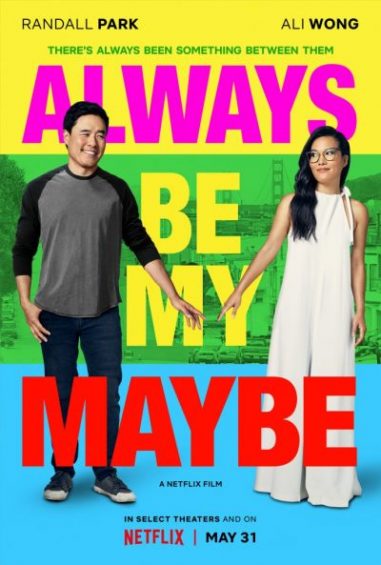
Random Review: ALWAYS BE MY MAYBE will make you snort coffee through your nose

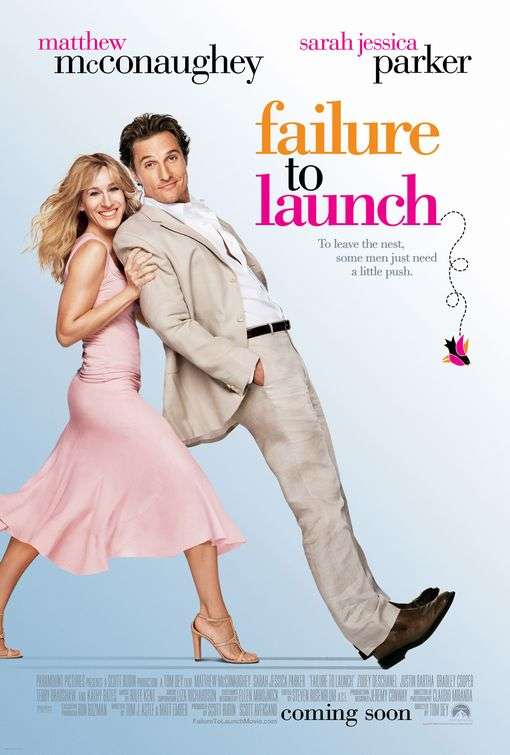
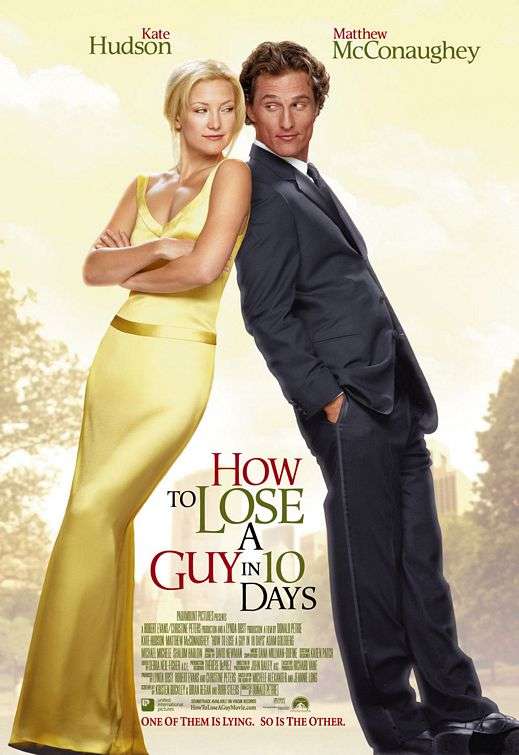
For far too long, romantic comedies were in a rut. They found leading men like Hugh Grant or Matthew McConaughey and ran those actors into the ground, with movie after movie after movie, and Matthew always leaning against his blonde co-star.

Hollywood Law requires that Matthew McConaughey leans on his female co-star, in this case, that woman from SEX IN THE CITY who I do not enjoy watching in anything.
Hollywood Law requires that Matthew McConaughey leans on his female co-star, in this case, Kate Hudson.

So now we have a Netflix original, ALWAYS BE MY MAYBE, that remembers the hardest thing in a romantic comedy isn’t the acting or kissing. It’s the comedy.

Because comedy is incredibly, impossibly hard.

This movie will make you laugh–and cry–because the writing is great and the leads are true comedians. Ali Wong is perfect as the female lead, and you might remember Randall Park for small, memorable roles in giant hits like ANT MAN AND THE WASP and AQUAMAN, and possibly other superhero movies that start with A. 

Check out the trailer, then we’ll chat.

OK, so from that, you expect a little cameo from superstar Keanu Reeves, right?

No. One of the biggest surprises was how much he was in this film, and how committed he was to playing himself as an entitled villain. Seriously. Check out the dinner scene, and a later fight scene at Keanu’s insanely huge hotel room:

https://www.youtube.com/watch?v=-9gsHHFVVHI

What’s great about this movie is there are constant surprises like those two scenes, bringing you on a tour of all the important human emotions.

VERDICT

This is one of the rare movies where I won’t spoil it by digging into the story structure and how it works. 

Because you should fire up Netflix and see it. 

Random review: THE SPACE BETWEEN US is on Netflix–should you fire it up?

If you get on Netflix, Amazon Prime or whatever and wander around, there are 5.8 gazillion movies that pop up that you never knew existed, like THE SPACE BETWEEN US.

Check out the trailer, then we’ll chat.


Will you rage-quit after five minutes?

No. The opening is solid and keeps your interest.

How’s the acting?

Alright, so you’ve got Commissioner Gorden with an English accent (yes, Gary Oldman is actually British, so this may actually be the one time he doesn’t have to transform his body and voice for a role).

The cast is pretty small and I didn’t recognize the actors except for Oldman and B.D. Wong, but they’re all pretty good. I believe, deep in my soul, that the biggest problem with movies like this with a lot of relatively unknown actors is keeping the performances even, and making sure great actors don’t completely overshadows newcomers. They keep it even here. 

I don’t know the names and am not going to cheat by looking them all up on google: you have what kinda looks like Young Anne Hathaway as his astronaut mom, who does a great job in the first part of the film, then Sarah Connor as his astronaut stepmom on Mars and later Earth.

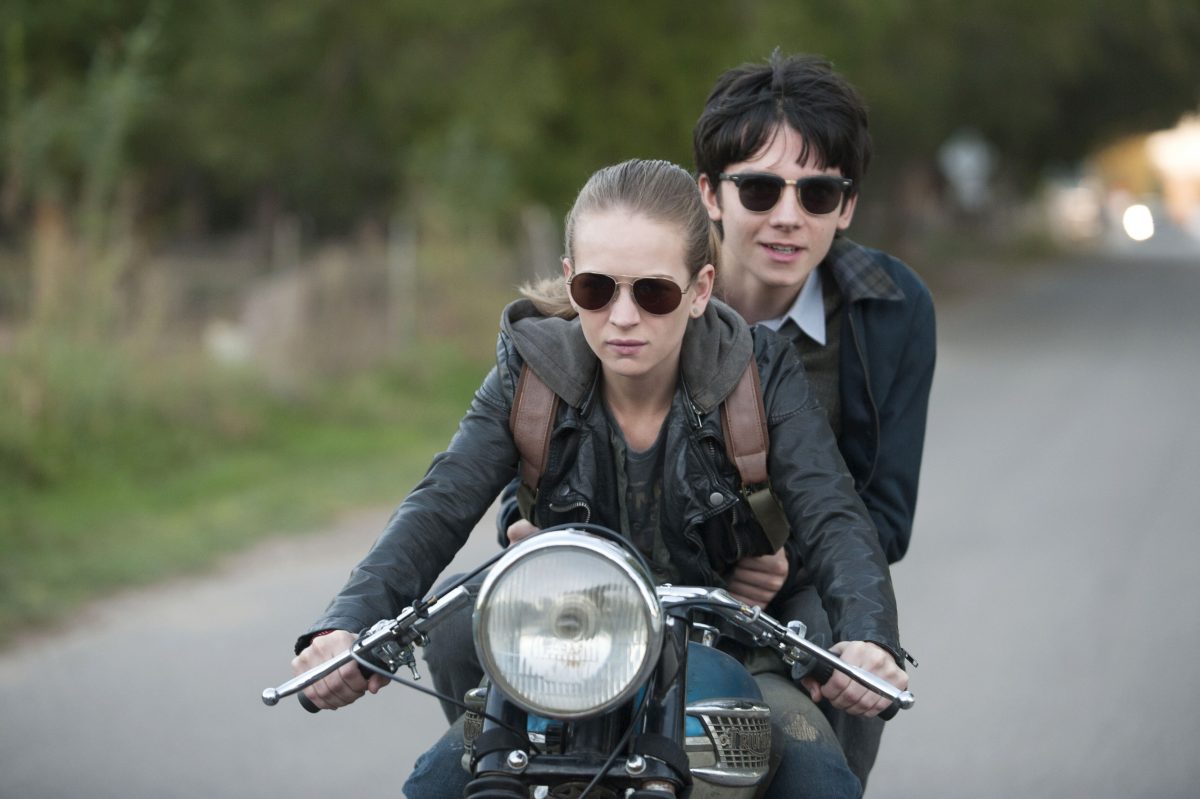
Two young actors playing the lead, the First Boy Born on Mars and his pen pal and love interest, the Young Blonde Misfit Who Steals Cars and Doesn’t Believe in Motorcycle Helmets.

What about the story?

They pack a lot of plots and subplots into this. The most fun part of the film is toward the middle, with the two teenagers on the run. They’re clever and you can watch the relationships grow in a way that makes a lot more sense than big-budget movies featuring ageless and powerful Vampires Who Sparkle falling in love with dumb teenagers.

There is a story mistake toward the end of the movie that almost did make us quit the film, and I won’t give away what happens, only to say THE SPACE BETWEEN US already seemed a little too much like THE FAULT IN OUR STARS based on title and premise. But if you stick through the moment when you’re tempted to hit HOME on the remote and find out the latest happenings with the Great British Bakeoff, the ending redeems this movie.

VERDICT

Sure, go ahead and fire this up on Netflix with your favorite person on the couch next to you. it’s worth your time.

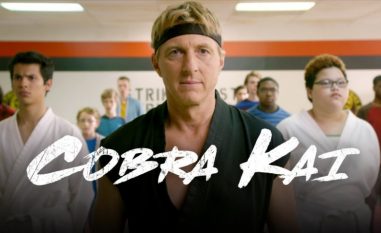
The careful genius of COBRA KAI’s season 2

The last season of GAME OF THRONES went out in a fiery train wreck packed with dragons and stupidity–but here we have the opposite, a low-budget show on Netflix about dueling karate dojos.

Roughly 28 gazillion people are watching COBRA KAI, and they’re loving it. Shockingly, the critics are all over it, too.

Because unlike the Season that Must Not Be Named that Did the Night King and Mother of Dragons Wrong Wrong Wrong, the writing and plotting of COBRA KAI is carefully and horrifically good. (Warning: spoilers spoilers spoilers.)

Building on Season 1

In the first season, it’s really the story of Johnny’s redemption. He rises from the depths and finds a purpose again, and truly tries to reform Cobra Kai to give kids like Miguel some help. Not that Johnny becomes a complete goodie-goodie. 

By comparison, Daniel struggles, and its a bit of a rich jerk. But he’s not a complete villain, either.

I kid you not, the series feels a bit like BREAKING BAD in that most major characters aren’t heroes or villains. They’re beautiful shades of gray.

Season 2 doesn’t try to continue the character arcs in the same direction, which would have been the easy narrative choice.

The showrunners and writers went bigger. They raised the stakes and added twists, reversals and revelations throughout the season that changed everything around again.

This season, Daniel is the underdog and Cobra Kai is the big, dominant dojo, the winners of the All-Valley Tournament.

Except it gets more interesting than that.

Setups, payoffs and echoes

Though the show is funny, it’s not a comedy. 

Comedies poke fun at an institution–sitcoms go after marriage and family and suburban life, MASH took on the military, THE OFFICE hit corporate bureaucracy–and in a comedy, heroes can’t succeed except by accident.

COBRA KAI is a drama, with things happening for a reason. You could argue the last season of GOT was a melodrama, with things just kinda happening and fans immediately asking each other on Twitter and Reddit why why WHY?

For every payoff, there’s a setup. And the biggest scenes feature echoes of previous scenes.

A genius ending that sets up Season 3

There’s a lot packed into the final few episodes, and what the showrunners and writers did here is fun to take apart.

The beginning of the final episode has a sweet call-back to the original movie, playing Cruel Summer on the first day of school, then you get a slowed-down, sad version of the song at the end of the episode. Beautiful. How many rock songs can rock the xylophones? NOT MANY.

There are a lot of reasons for our characters to be moping around:

A giant brawl in school happens after Miguel’s new bad-girl girlfriend, Tory, hijacks the school PA system to say she knows what Sam (Daniel’s daughter) did–kissed Miguel at a party–and is coming for her.

Everybody fights everybody, tying up a lot of relationships. Hawks gets surprisingly beaten by his old friend Demetri, Tory cheats while fighting Sam, sending her to the hospital for cuts, while Robby fights Miguel, who gets kicked over a stairwell and is in the hospital with spinal injuries.

All of that leads to the apparent end of the romance between Johnny and Carmen (Miguel’s mother) and a “no more karate” edict from Daniel’s wife as they’re in the hospital room with their daughter.

It gets worse for Johnny, who loses control of his dojo to Kreese, after (a) giving Kreese a second-chance and (b) kicking him out of the dojo.

In a great scene that echoes imagery early in the season, he chucks his cell phone and the keys to the muscle car he repainted into a black-and-yellow Cobra theme. Giving up on his old life, right? Then the camera cuts to the cell phone in the sand, showing that his old flame (and Daniel’s former girlfriend) responded to his friend request. 

Guesses on Season 3

I don’t believe the writers will truly let Johnny and Daniel give up on karate forever. But I doubt they make a return to it in the first episode or two.

Five bucks says Kreese’s new, purely evil Cobra Kai will force them to come back to teaching–and though I’m not counting on it, I could see the end of Season 3 featuring a real truce, if not a partnership, between Johnny and Daniel to team up and beat Kreese for the sake of their kids and the community. 

Then again, they’ve surprised us episode after episode.

VERDICT

If you haven’t watched Season 2 yet, binge watch that sucker. 

If you haven’t watched Season 1, watch that first.

POLAR has promise, then the weird piles up

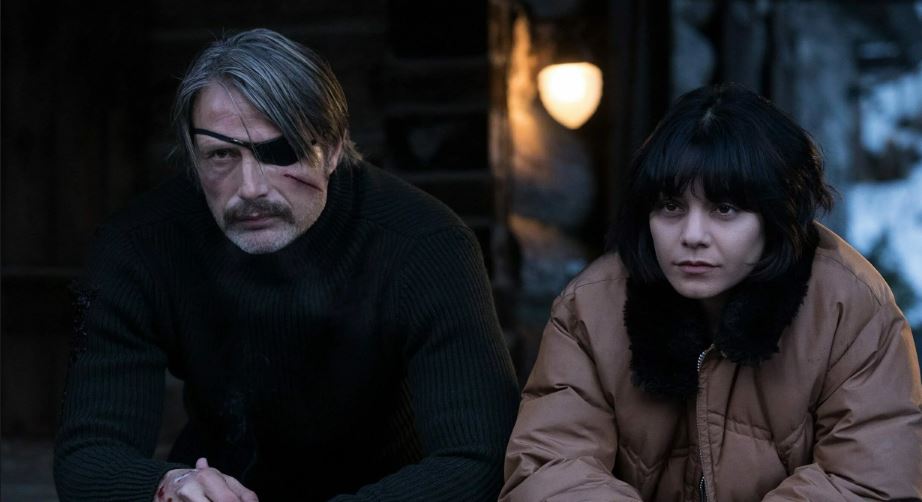
Good trailer, right? And there’s a good movie buried in here. Mads Mikkelsen is a great actor. His whole performance is perfect. It just feels like Mads is in a different movie than everybody else.

POLAR is best described like this: picture a bunch of screenwriters or studio execs watching JOHN WICK and saying, “What if we did that, but had Quentin Tarantino direct the thing, like KILL BILL?”

Except they couldn’t book Tarantino and decided to turn up the cray-cray up to 11.

I’m a huge fan of action movies, so sure, it was fun. There was just a disconnect between the gritty performance of Mads and the villains chewing up the scenery.

Since this silly blog is all about taking things apart and seeing how they work, or could be fixed, here’s what went wrong and how to fix it.

Three easy fixes, one small and early, one middling and the final fix big and late:

1) Lose the dog

Early on, Mads retires and buys a puppy, which was way too on-the-nose for me with the movie already super close to the plot of JOHN WICK. 

Soon after, Mads has a nightmare and accidentally shoots the puppy. No. Don’t even go there. 

In fact, action movies need to spike any scene where the bad guys kill the retired killer’s dog, cat or favorite horse, because JOHN WICK slayed that forever.


2) Keep the same tone

Scenes with Mads and the girl he later protects feel like part of the same gritty movie.

All the scenes with the villain and his minions feel like they were written, shot and directed by somebody else–a younger director who spent every night binge-watching Miami Vice and hanging out in strip clubs as he wrote these scenes.

Pick a style and stick with it. As in, pick the style that fits your lead actor, not your side characters.

3) Give us a villain as strong as Mads

Mads is a great character and we get to see him in action multiple times. A fast, powerful killer. The main villain, the boss of a pack of bad guys, is far less scary. In fact, his minions are stronger and better than he is.

This turns the villain into a joke, and he really only shows up for comic relief.

In the climax, when Mads enters the villain’s lair for the final confrontation, it’s a boring mismatch the director chooses to not even show. We just see the villain’s head fly through a window after Mads chops it off.

That’s a huge disappointment. An action movie’s climax needs to be, I don’t know, climactic. There were tons of other set pieces earlier in the film that were far more interesting and exciting, so it left a bad taste at the end.

VERDICT

There are good ingredients here, especially the performance of Mads.

It’s just overcooked and feels like two different movies.

Where ROBIN HOOD went wrong

Listen: I love cheesy action films and B movies of all types, as long as they don’t take themselves too seriously. Feed me summer popcorn flicks, meant to entertain, instead of pretentious nonsense.

ROBIN HOOD is meant to entertain.

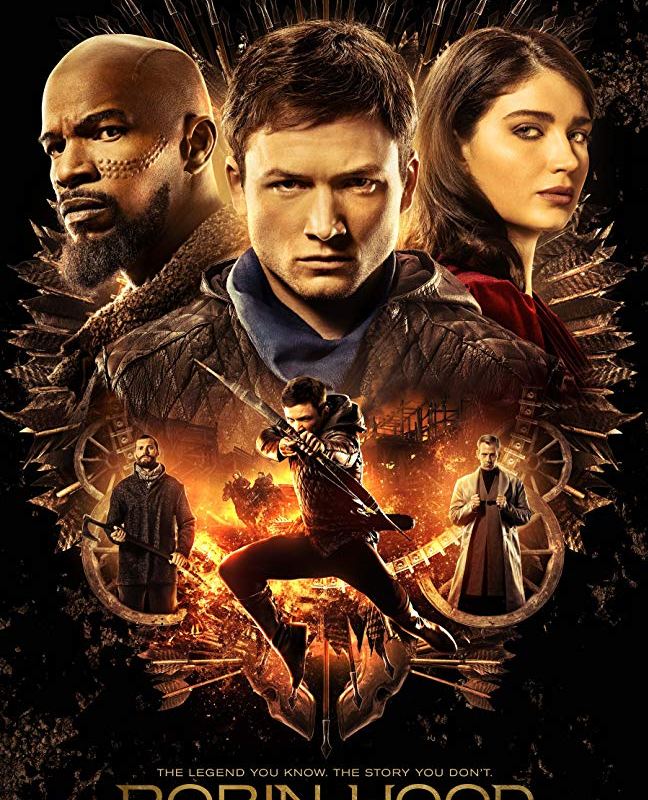
It’s got a good lead actor (Taron Egerton, famous for THE KINGSMEN films), a solid sidekick (Jamie Foxx) and a great villain (Ben Mendelsohn from THE DARK KNIGHT RISES and ROGUE ONE)–plus a big budget ($100 million).

Add to that a built-in audience who loves the story and character of Robin Hood. 

This is like chocolate chip cookies, right? Hard to go wrong with those ingredients. Everybody will like it.

Except this movie bombed at the box office. A dumpster fire.

Why did this film go so wrong, so fast?

Act 1 is a good start

There’s a lot to like in the first act. see Robin’s ordinary life and get a good introduction to Marian when she tries to steal Robin’s horse…and he lets her.

His life gets upended when he goes to war during the Crusades and comes back to find his estate confiscated by the Sheriff of Nottingham, who’s taxing everybody to death.

It’s an effective start, and the training sequences with John and Robin are great.

So how does the movie go sideways? I mean, this film makes Kevin Costner’s terrible British accent look like a minor problem in an epic masterpiece.

Why the middle turns meh

Act 2 gets confused. The scenes with the Sheriff of Nottingham are decent, letting him chew up some scenery. 

Yet the middle gives us a Robin Hood movie that seems to switch time periods, as if the director wants to mash up medieval Crusades action with huddled masses working in Victorian  factories and mines along with 21st century antifa protests.

There’s a big dinner where all the wealthy people show up, with women dressed in furs and high heels (I kid you not), and a giant CGI action sequence set up with horses and carriages that feels more Ben Hur than Robin Hood.

You CAN mix things up like this–A KNIGHT’S TALE with Heath Ledger threw in modern rock songs and other craziness, and it worked. The degree of difficulty is simply really, really high.

Basically, Act 2 is a hot mess.

How the climax isn’t climactic

And then we get to Act 3, where things truly go south.

The first rule of storytelling: save your best scenes for last. 

There were great scenes in Act 1–the battles from the Crusades, the training montages with John–that simply eclipse anything offered in Act 3.

The Sheriff of Nottingham meets his end, and not at the hands of Robin, but John.

Taking his place as Sheriff is the romantic rival, the lover Marian took while Robin was believed to be dead. And hovering over everything as the Biggest Bad Guy of Them All is the cardinal, or the pope–I forget. Plus there’s a bad guy soldier, the same man who clashed with Robin during the Crusades, brought in as a mercenary to catch the Hood.

Confused? Yeah. Let’s count the bad guys: (1) O.G. Sheriff, (2) Hired Mercenary, (3) Corrupt Cardinal/Pope and (4) New Sheriff.

Here’s the deal. That’s four separate villains, and I can’t remember their actual names. 

Fixing this movie

Hey, you don’t need Michael Bay explosions to have a tense, exciting movie. The ending of Michael Clayton is one of the best Act 3 climaxes in history, and there isn’t a gun, knife or explosion in sight. Just two people talking. No amount of CGI could improve this scene. 

https://www.youtube.com/watch?v=6E2z-1Mi6Zo

HOWEVER: If you’re making an action movie, you need action in the climax, and what we get in Act 3 is a let-down from what showed up on the screen in Act 1.

A bow and arrow is a great tool for Robin Hood, and fun when he uses it for heists and hijinks. Yet it’s a terrible weapon, as a storytelling device, for confronting the villain. Which should be singular. Give us one main villain.

Which leads me to the two simplest fixes for this movie: (1) combine the four villains into one capable, scary, tough Sheriff of Nottingham and (2) end with Robin fighting the Sheriff of Nottingham, one-on-one. 

There’s a reason why the best movie fights tend to be bare-handed brawls or swordfights. 

Swordfights are just great cinema, and that’s what I expected for the climax of ROBIN HOOD.

Think about THE PRINCESS BRIDE and every STAR WARS movie ever made: the duels with swords or lightsabers are beautiful and essential to the stories. Edit those out and they’d really hurt. 

So I’ll leave you with the kind of thing ROBIN HOOD should have put into Act 3: a long, evenly matched duel. 


The fatal flaw with zombie apocalypse movies

There are great zombie movies, and horrifically beautiful apocalyptic films.

NIGHT OF THE LIVING DEAD, MAD MAX: FURY ROAD, DAWN OF THE DEAD, WATERWORLD (hey, I’m kidding)–you get the idea.

https://www.youtube.com/watch?v=ANDZj2Uf0pI

So why do zombie apocalypse movies smash into the brick wall of failure?

Zombie comedy? Sure. SEAN OF THE DEAD. Zombie romance? Yeah, they’ve tried that. Zombie drama? Yep.

You’d think this would be like peanut butter and chocolate, two great things that taste even greater when mashed together. But I can’t think of a single zombie apocalypse movie that truly works.

The biggest such film–WORLD WAR Z–went splat, despite the star power of Brad Pitt and a big budget. Why? 

I’ve pondered this, downed a pot of coffee and consulted the oracle.

Here’s the deal.

In a horror movie, everybody dies

Not because the screenwriter and director are sadistic. The whole point of a horror movie is society getting punished for its sins by the monster, who’s actually the hero.

That’s why Freddy, Jason and all the other horror monsters never truly get killed off.

Slasher movies show teenagers breaking the rules–shoplifting, getting drunk, having premarital sex, lying to their parents about it all–and getting punished by the boogeyman for their sins.

Another big branch of horror movies is about man playing God–inventing super-smart sharks with lasers, creating hybrid genetic experiments that go wrong, or sewing together body parts from the grave and using lightning to reanimate the thing. Then those creations rise up to punish the scientists for their arrogance.

This is why horror movies can fail. If the teenagers or scientists actually win in the end, the movie confuses the message. You might start out rooting for the teeny boppers or mad scientists, but in the end, you’re supposed to see the monsters as agents of rough justice.

Same thing with a zombie movie.

NIGHT OF THE LIVING DEAD is actually about racism.

DAWN OF THE DEAD is about consumerism, which is why it’s set in a mall.

Monster in the House is a great story and a dangerous one for zombies

There’s a primal story that screenwriter Blake Snyder identifies as Monster in the House, where there’s a monster in an enclosed space and either it’s gonna kill you or you’re gonna kill it.

JAWS, ALIEN and FATAL ATTRACTION are all Monster in the House stories.

There’s a big difference between these stories and a true horror movie. The ending is completely opposite. 

The shark dies in the end of JAWS, as does the alien and the obsessed, discarded mistress played by Glenn Close. 

NIGHT OF THE LIVING DEAD and DAWN OF THE DEAD feature the same enclosed space problem, because it’s good storytelling to put characters in a cage with your monster. But they stay true to the message and let the monsters win, punishing society for our sins.

In an apocalyptic movie, tons of people die–but the story ends with hope

The storytelling bones of a good apocalyptic movie are completely different than a horror story.

Civilization goes buh-bye, and the fun of an apocalyptic movie is seeing how that happens and what replaces the status quo.

Also, you get to loot the hardware store and the mall. Who doesn’t like to see that on film? Always a good time.

The message of an apocalypse film, though, is that lots of people die because they make bad, selfish choices, while the few heroes who survive make good, unselfish choices.

It just doesn’t work to mix a true zombie movie, where everybody dies as punishment for society’s sins, with an apocalyptic film, with its message of survival if you make the right choices.

So: back to the movie, WORLD WAR Z, which is a confused beast.

If you read the novel–which you should–it’s not a horror story, where everybody gets nom-nommed by the living dead. It’s a true zombie apocalypse story that can work, with the end showing the undead almost destroying the world. They’re only beaten when society makes painful, fundamental changes to work together and win the war.

Hope and survival. That’s the right way to thread the needle and tell a zombie apocalypse story that works. Give us that, Hollywood–Brad Pitt is optional.

Storytelling insights from 3 minutes of glorious film with subtitles

tinseltown tuesday meme morpheous

Yes, I watch movies with subtitles, even if they’re in black-and-white, with people smoking French cigarettes while speaking French and watching things happen to other people in some scrappy, destitute part of Paris or, for variety, a tiny farming village in Normandy. 

We are talking about a different sort of foreign film with subtitles.

  • Bonus No. 1: This film is 3 minutes long instead of three hours.
  • Bonus No. 2: There is hardly any talking, or any need to read the subtitles at all.
  • Bonus No. 3: Most importantly, this little film can teach us all great big lessons about storytelling and structure.

Also, unless you have no soul, it will make drops of water drip from your eyes and scurry down your cheeks.

Here. Watch the clip in high definition. Or low def, it that’s your thing. Whatever floats your boat.

Okay. All done?

Let’s take it apart and see what makes it tick.

Strong bones

This little film has strong bones. The structure is a roller coaster: things are bad (son is running away), things get even worse (son nearly dies, is paralyzed), then in the climax, things get resolved and the world is forever changed, at least for this family.

The father is not sympathetic at first, right? My first thought was bad casting. No. Good storytelling. The main narrative question is, “Will they get together?” This is a love story, which doesn’t have to be a rom-com with a high-powered professional woman who eventually gets together with a chubby, unemployed virgin who owns the Largest Comic Book Collection Known to Man, because for some reason, that’s what half the rom-coms are these days.

The other half of rom-coms star Matthew McConaughey.

Back to this little film: if they’re getting together in the end, they must be split apart in the beginning.

Another narrative question is, “How do these people suffer, change and grow?”

The father moves from stern, humorless taskmaster to loving and dedicated. He’s the hero of this little film, because it’s his actions that matter most. The normal thing would be for him to let the doctors do their work, right? But it’s his turn to rebel. He carries his son out of the hospital, out of the wheelchair and back into the world. Rehab isn’t going to be nurses and machines and doctors. It’s going to be father and son, learning to walk again.

And all that suffering and sacrifice pays off. The son also transforms. In the beginning, he’s rebellious and aloof. In the end, he’s loyal and connected to his family.

The mother is a flat character. She suffers, but she doesn’t change. That’s OK. Having two characters go through all this in three minutes is plenty.

Real stories beat Michael Bay explosions

This tiny film, which is a flipping COMMERCIAL, moved me far more than bazillion-dollar CGI blockbusters involving dinosaurs, vampires or robots that transform themselves into Chevies.

You can take those $294 million budgets full of special effects and a scripts credited to five different writers. (Pro-tip: the more screenwriters you throw in the kitchen, the crazier the thing that comes out of the oven.)

Give me a story with strong bones and a tiny budget.

Give me people I actually care about, because I don’t give a hoot about Shia LaBeuf and Megan Fox fighting robots or whether the awkward teenage girl gets together with the Sparkly British Vampire vs some kid who used to be a Power Ranger.

Give me a story. A story like this.

Will the new DARK PHOENIX fill us with wonder or be a Mountain of Meh?

dark phoenix

The X-Men movies are a lot like Star Trek films, and not just due to Sir Patrick Stewart–both series tend to have great films followed by good followed by epic fails. Then the cycle repeats. Will it be so with DARK PHOENIX?

This isn’t a function of genre, since Marvel can take silly superheroes like Ant Man or Chris Pratt plus a talking tree and his pet raccoon and turn both concepts into billions of dollars. They can take anything and make it work.

Meanwhile, DC can have the best superhero of all time, Batman, and still find ways to screw it up.

It’s the same thing with Star Trek and Star Wars, both franchises so enduring that I bet you my house they’ll be making and remaking Spock tales and lightsaber battles when our son has grandsons and those grandsons have grandsons.

The first X-Men movie was brilliant, just like the first rebooted Trek movie (remember: Chris Pine as Kirk, that one). The second one was good, just like the second Star Trek with Sherlock/Dr. Strange playing Khan.

Then the third versions of both movies stank.

Every movie ticket is a gamble

We got redemption in the mutant world with young Magneto and Xavier with Hair, then a stinker with APOCALYPSE but another good one with DAYS OF FUTURE PAST.

The exception to this rule with the mutant movies is Wolverine, with the first movie a horrible mess, the second one not much better and only LOGAN kicking butt the way Wolverine should.

So it’s a gamble, every time, when we’re talking X-Men, and they’re looking to impress the new bosses with Marvel finally bringing them into the fold from Sony or Fox or whoever. OK, it was Fox.

Take a look the trailer, then we’ll chat about whether this promises to be terribly good or a hot mess.

Looking for clues in the trailer

I won’t dissect every second of this trailer to figure out all the things you can find people obsessing about elsewhere, like whether this is set in 1983 or 1984 based on the license plate of a car glimpsed in frame 324 or whatever.

The big picture is what matters. Will this movie fill us with wonder or be a Mountain of Meh?

Arguing on behalf of Mountain of Meh: the fact the biggest stinker so far, the third original X-Men movie, featured this same storyline: Jean Grey losing it to become Dark Phoenix, killing Professor Xavier in a shocking twist they shockingly retconned into oblivion the next movie. Then she laid waste to half of San Fran, looking completely unstoppable until Hugh Jackman popped his claws.

Are we looking at repeat? I don’t think so.

The case for Filling Us with Wonder is pretty good.

Many bad comic book movies have bad, frenetic trailers. They’re in a hurry to show how fast and fun the movie will be. Explosions! Fights! All kinds of office buildings and cars in a CGI Gotham (or Manhattan) get destroyed!

This trailer is a slow burn.

Also a good sign: the director isn’t some noob. We’re talking about Simon Kinberg.

More positive signs: the gang is back together, including Michael Fassbender as young Magneto (yes!) and James McAvoy as Professor Xavier.

Finally: The entire mood of the trailer is gritty and dark, but not in a forced, DC way.

I’m far more impressed than I expected and actually want to see this in the theater. 

Here’s why movies and shows are so good today vs years past

Sure, there are stinkers–bad movies and terrible shows on the Glowing Tube–but overall, we are living in a golden age for entertainment on Whatever Type of Screen You Prefer.

Why is that?

A few theories:

1) Looking good is half the battle

In the old days, most movies and shows (a) were cheaply made and (b) looked cheaply made. The real exception to this are sitcoms filmed in a studio, which look about the same. Everything else? Massive differences in production values. 

So when a film truly looked good–typically because it had a great director and a big budget–it blew everything else out of the water.

The difference was even more stark on television. A great example: back in the day, BBC seemed to take pride in the worst possible production values on the planet. 

Lighting, costumes, camera angles–all that matters. You notice bad production values the most when it comes to terrible monster costumes and special effects.

These days, everybody has upped their game. Even bad movies and shows LOOK good.

And CGI has gotten cheap enough that average TV shows can afford to do special effects you used to only see in blockbuster movies.

2) Massive competition

When there were only a few big studios, and three major TV networks, competition wasn’t nearly as tough.

Today, you have movie studios around the world cranking out more films than ever, plus 3.53 bazillion cable channels making content along with Netflix and Amazon making shows AND movies.

There’s never been more choices.

This has two counter-intuitive effects: (1) it’s easier to get things made, since far more sources might bankroll it, and (2) killing a flawed project or series is easier, too, since there are plenty of other projects that deserve a shot.

The fact that most movies and series don’t become amazing successes isn’t the real point. You can’t predict which ones break out and make mountains of money. 

Can’t win if you don’t play. 

So everybody plays, and takes risks, because being safe and conservative isn’t the way to hit a home-run.

That creative, competitive environment helps give birth to today’s great shows and movies.

3) CGI takes planning, and great planning makes for great stories

With production values good across the board, and special effects cheaper than ever, what makes a movie or show stand out and break out?

A few years ago, when cheesy CGI spread across the land, I hated it. Terrible CGI was easy to spot and immediately killed your suspension of disbelief.

Today, CGI is incredibly advanced.

Here’s the unintended side-effect, though: great CGI is more affordable than ever, but it still takes a lot of time, money and most of all, planning. 

You can’t rush it. 

And good planning makes for good storytelling.

There’s a reason Pixar is famous for great stories. They know exactly how long it takes to do an animated movie. 

If they screw up Act 3, the director doesn’t call back the actors and do reshoots for a few weeks. Redoing all that footage in an animated movie takes a lot more work.

That’s why Pixar goes crazy with storyboarding and planning the structure of each film. You have to nail that story before you commit. This is why Pixar spends so much time emphasizing storytelling, and perfected their 22 Rules, which are worth checking out. Roll film: 

With live actors, you can shoot hundreds of hours of footage and a great editor can take all that footage and do the structure and storytelling.

Can’t do that with animation–or CGI-heavy movies, which is just about everything today.

The more action and CGI you use, the more important planning and storyboarding becomes.

I think this is a key reason why Marvel has been on a hot streak. Every one of their superhero movies takes a ton of green screen and CGI work. They know it. And they have to plan not just for each movie, but how all the different movies tie together, with setups and payoffs stretching all the way back to the first Iron Man movie.