Why every man must read a romance – and every woman a thriller

In college, wise men with Einstein hair stood in front of lecture halls to tell you literature isn’t really about verbs, adverbs and dangling modifiers. No. Beneath the surface, lit-rah-sure asks a fundamental question that some believe is just as important as religion or science.

That question is this: “What’s worth living for, and what’s worth dying for?”

Nine words.

But I’m not banging on the keyboard late at night, powered by industrial amounts of coffee, to channel those old men wearing corduroy jackets with patches on the elbows. My closet contains no corduroy whatsoever.

I’m here to talk about those nine words, and why it leads me to one inescapable conclusion: that I do, in fact, know how to spell “inescapable.” Bit surprising. Thought I’d muff that one.

Note: I know there are men who not only read romance novels, but write them. Same thing with thrillers: plenty of women read them and author great thrillers. I’ve had the pleasure of interviewing some of those authors. In this post, I’m trying to make the case that people shouldn’t stubbornly stick to their favorite genre. Venture forth. Surprise the good people at Barnes and Noble with the breadth of your bookish selections.
Why every man must read a romance

Not to pick up girls–and not, if you’re married, to improve your odds of staying out of the dog house.

Every man should read a romance for an entirely different reason. It’s the first part of the question, the bit about, “What’s worth living for?”

You could walk into (1) a cubicle farm, (2) factory break room or (3) sports bar and show ten random single men a photo from the Sports Illustrated swimsuit edition, and ask them, drunk or not, whether they would marry this swimsuit model. I’m only half kidding when I say some of those men would shrug and say, “Sure.” Because we men can be stupid that way.

HOWEVER: We need to get over it, and start thinking about these sorts of things. And yes, a fine first step would be reading a romance novel. Watching a rom-com starring Matthew McConaughey, who’s last name is impossible to spell, does not count. Neither does firing up Netflix for SEX AND THE CITY 3: SARA JESSICA PARKER SHOPS FOR PURSES IN PARIS.

You must read an actual romance novel, with words and sentences, though I’ll leave it up to you whether it involves Men in Kilts.

On the surface, sure, romances are about relationships. How two people meet, how they fall in love, all that.

Beneath that, romances are often about a massively important choice: Who should you commit to and love?

And that, my friends, is the biggest decision you make in life.

Nothing else comes close. Not where you go to college, what career you chose, where you pick to live. No other decision comes close.

Classics like PRIDE AND PREJUDICE feature a lot of talking, thinking and scheming about who should get matched up with who. At first I thought this was a lot of gossipy gossip nonsense. But it’s not. These choices are hard, and they mirrored real life. Back then, who a woman married meant everything. It wasn’t like folks had a lot of career choices and birth control options. Could this man be a good provider not just for one or two children, like people might have today. Back then, it could be eight or ten kids. If I were a woman in those days, listen, I’d be insanely careful about this choice. So yeah, there’s a good reason stories back then often featured the archetype of a handsome prince. Tell me that story. Let me live that dream, not the one where I die in squalor giving birth to child No. 9.

High stakes back then. High stakes now, and a big deal for everyone involved.

Who should you marry and have kids with? Can’t think of a bigger decision, and it’s definitely worth thinking about, if not agonizing over.

A lot of men tend to avoid talking about love and relationships. It makes them uncomfortable.

I feel lucky. Also, my beautiful and brilliant wife devours novels like candy, including not just lit-rah-sure but romances of all shapes and sizes, and our house is full of books. So I know enough to be dangerous: that there are romances which really dive into the struggle to choose between two different partners and that it’s cheating to make one a villain and one a hero. That there are romances where the choice is binary: is this relationship going to happen at all, which is the A story in ALWAYS BE MY MAYBE.

All of these choices must have merits and demerits. BRIDGET JONES’ DIARY makes you think twice about the handsome bad boy and take a second look at Colin the Firth and his ugly Christmas sweater.

There’s a long list of stories diving into that decision. They’re worth reading, and watching, and talking about.

Because in the end, a lot of people figure out “What’s worth living for?” isn’t about money, fame or spending more time at the office.

Life’s about picking somebody you love and maybe starting a family with them.

Pick wisely, men. Get all the help you can get, and not from your buddies, because they’ll say things like “Dude, the choice is obvious: Kelly the waitress with the sweet Mustang, unless you want to cruise around town in Sarah the lawyer and her hand-me-down minivan.”

Why every woman MUST read a thriller

Thrillers answer the second half of the question: “What’s worth dying for?”

These days, men and women serve in the military, as firefighters and police officers. Which is as it should be. And if you answer the call to serve — as a firefighter or homicide detective, a Marine or a smokejumper, a coal miner or logger — there’s a chance you’ll die on the job.

The question is, how often do you roll the dice? When do you decide something is worth dying for?

Thrillers answer that question in a visceral way, with the stakes raised as high as they go.

  • Should you answer the call of your country and fight a war, taking the lives of other young men with families of their own, and possibly coming home in a body bag yourself — even if you suspect the war is wrong?
  • If a serial killer kidnaps your daughter, do you put your faith in the cops — or turn your CIA training loose and go after the whackjob yourself, despite the risk? Liam Neeson votes for hunting down whackjob kidnappers, which only happens to him every other month.
  • Should your family suffer under the oppressive fist of a planet-destroying dictatorship, or will you risk your freedom and life by joining the rebellion, which probably has the same chance of victory as the Seattle Mariner’s have of winning the World Series?
  • When the only hope to save the world is to get on an armored space shuttle with Bruce Willis, fly to an asteroid, drill deep inside and set off a nuclear explosion, will you go on that suicide mission, knowing that you probably won’t come back, or will you stay behind to enjoy one last week of picnics and bottles of Riesling with Liv Tyler before the world goes kaboom?

Just as betrayal is a common theme in romances, it’s also a huge element to thrillers. Because there’s nothing worse than doing dangerous, deadly work for a boss who is secretly an evil jerk. Not only did you get duped, but you did dangerous things, maybe violent and murderous things, for the wrong cause.

Even though it’s a cliche, there’s truth to the typical action movie nonsense about a lone wolf detective, Green Beret or assassin who’s weary and retired from the game. It takes a lot to convince him (or her) to return to work, having lost faith that all the suffering and sacrifice is worth it. Too many good people have died already. Often, the story proves this to be right. The weary warrior is a cog in the machine, a machine that sees everyone as disposable. And is that worth dying for? No.

Action movies and thrillers are about the need to make that choice decisively and wisely. There’s no “I’ll go halfway with you on this assault the Death Star thing.” You only die once, except in Bond movies, though I’m not exactly sure why Bond gets to die twice. I do know this: Bond has terrible taste in women. Are they beautiful? Sure. But after they sleep with him, they all turn up dead. EVERY TIME.

Not your usual sitcom nonsense

All this is why romances and thrillers can be epic. The stakes are high and the emotions are visceral. It’s not the usual nonsense you see in a sitcom every night, where Bart Simpson shoplifts for the first time and in 30 minutes learns the important life lesson that stealing is wrong, wrong, wrong. Roll credits.

Harry Potter is really one big long thriller about whether Harry will get Voldemort — a serial killer who happens to be a wizard — before Voldemort gets him.

STAR WARS takes an unexpected twist, with a father sacrificing his life to save his son and free a galaxy from oppression. I expected the new Death Star to simply get blown up in an even fancier explosion than the first time. I did not expect Darth the Vader to toss Emperor Wrinkly Face of the Lightning Fingers down an endless shaft. A father’s love turned out to be the biggest deal in the end. Interesting, though having Darth Vader be a sad old man with a wussy voice was a let-down. J.J. Abrams, I have faith that you’ll do better.

There’s a reason why many thrillers start out with a family being slaughtered and the lone survivor setting out to avenge them. You’re taking away what’s worth living for, and that leads the hero to answer the question of what’s worth dying for. Your family and kids mattered. You can’t let that slide, and you won’t.

Thrillers aren’t as compelling when the hero is aloof and the mission has nothing to do with his emotions, family or country, when it’s just a job where the hero is busy looking cool while wearing sunglasses and shooting guns. There’s nothing behind it. It’s flat and empty. And yes, though I love the Bond movies, they suffer from this. Bond rarely suffers or grows as a person, unless it’s Daniel Craig, who turned out to be a great Bond because he plays up the damage the job does to a person.

Everybody wants something worth living for, to dedicate themselves wholly and completely to something, because otherwise, what’s the point of waking up, fighting traffic and slaving away in a cubicle for thirty years until you die, right? People get that. It’s why people become obsessive fans of the Green Bay Packers or STAR TREK, why people dedicate themselves to politics, religion or a cause. Some folks divert this urge into collecting every Beanie Baby every made. Don’t.

Great stories, whether movies or books, speak to this need to matter, to belong, to put a stamp on life, to give your all, even if it’s bonkers.

And truly great stories take us deeper.

Harry the Hedonist will argue that lovers leave you, husbands divorce you, kids randomly get leukemia, and in the end, we all die, so pass the wine and live it up.

Isaac the Idealist says you should dedicate yourself to great ideas and institutions, which are the only things that last.

Ned the Nihilist trumps that with, “Nothing truly lasts. Institutions don’t care about you and even a killer asteroid, nuclear war or homicidal robots from the future fail to destroy us, the sun will eventually turn into a red giant, doing a burnt-toast number on earth before ruining THE ENTIRE NEIGHBORHOOD by going supernova.”

Do I have video? Yes I do.

But if nothing truly lasts, there’s no point in sacrificing friends and family for an institution or an idea. Be good to others. Do the right thing. Love with all your heart. Or use two cows on a silly blog to explain all of politics and philosophy. (The world explained by TWO COWS)

These questions are tough, interesting and complicated. And every tough, complicated problem has an easy, simple-to-understand wrong answer.

You can get into these kinds of questions with romances and thrillers in a way that Philosophy 402 classes simply can’t touch. Because if you put human faces and names behind the ideas, and real emotions, the neat logic about the deontological notion of equal treatment versus the greatest good for the greatest number turns to dust.

Also, take it from Plato and every dictatorship on the planet: literature and stories are the most powerful, and dangerous, way to talk about ideas. That’s why evil governments burn books and censor movies.

So if you haven’t read a romance, pick something that won an award, or one with Fabio on the cover. But grab one.

And if you haven’t read a thriller, grab one of those.  My personal favorite is the Reacher series by Lee Child, who should be sending me kickbacks by now.

Then start a literary knife fight in the comment section about Men in Kilts versus Haunted Homicide Detectives Who Are Allergic to Razors.
Random Review: ALWAYS BE MY MAYBE will make you snort coffee through your nose

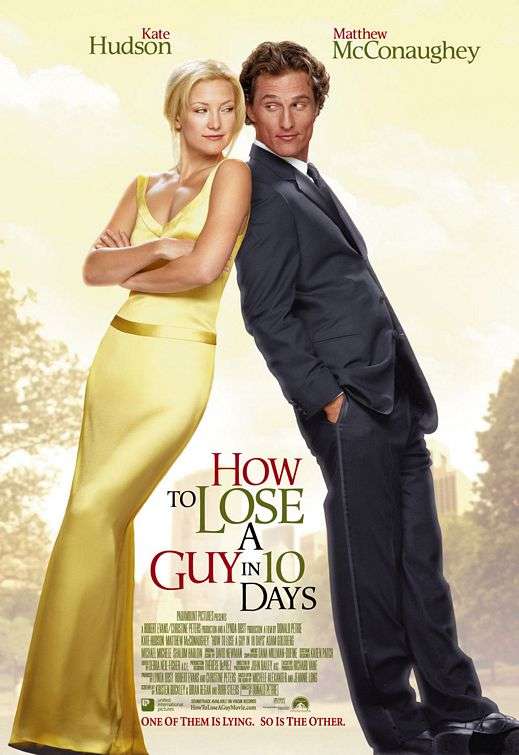
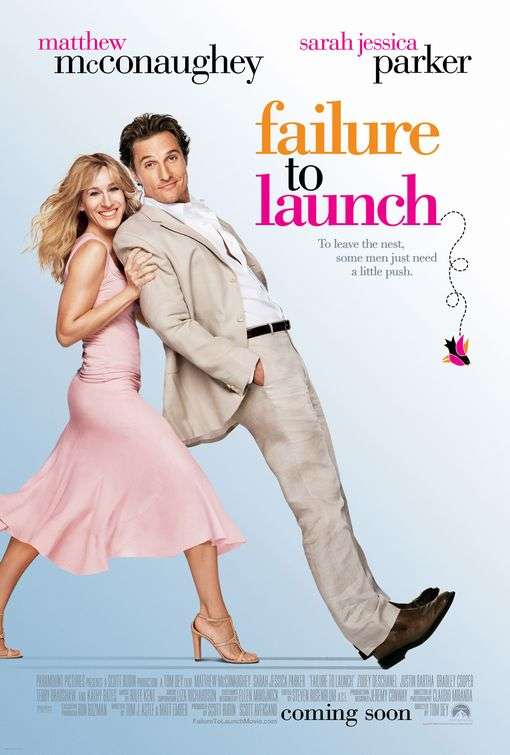
For far too long, romantic comedies were in a rut. They found leading men like Hugh Grant or Matthew McConaughey and ran those actors into the ground, with movie after movie after movie, and Matthew always leaning against his blonde co-star.

Hollywood Law requires that Matthew McConaughey leans on his female co-star, in this case, that woman from SEX IN THE CITY who I do not enjoy watching in anything.
Hollywood Law requires that Matthew McConaughey leans on his female co-star, in this case, Kate Hudson.

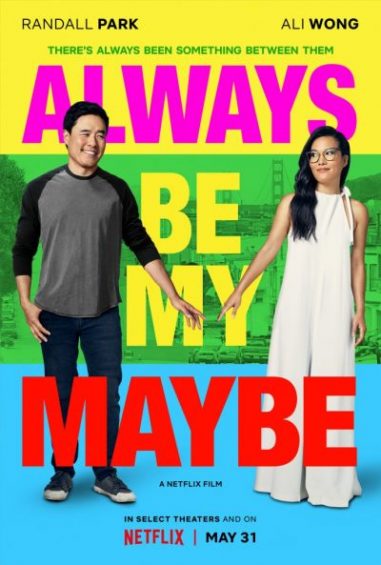
So now we have a Netflix original, ALWAYS BE MY MAYBE, that remembers the hardest thing in a romantic comedy isn’t the acting or kissing. It’s the comedy.

Because comedy is incredibly, impossibly hard.

This movie will make you laugh–and cry–because the writing is great and the leads are true comedians. Ali Wong is perfect as the female lead, and you might remember Randall Park for small, memorable roles in giant hits like ANT MAN AND THE WASP and AQUAMAN, and possibly other superhero movies that start with A. 

Check out the trailer, then we’ll chat.

OK, so from that, you expect a little cameo from superstar Keanu Reeves, right?

No. One of the biggest surprises was how much he was in this film, and how committed he was to playing himself as an entitled villain. Seriously. Check out the dinner scene, and a later fight scene at Keanu’s insanely huge hotel room:

What’s great about this movie is there are constant surprises like those two scenes, bringing you on a tour of all the important human emotions.

VERDICT

This is one of the rare movies where I won’t spoil it by digging into the story structure and how it works. 

Because you should fire up Netflix and see it. 

WALK IT TALK IT by The Migos pays glorious tribute to the ’70s

I’d this heard the song on the radio, but this was the first time seeing the video, and yes, I love it. This video pays homage to old TV shows like SOLID GOLD.

Or this montage of ’70s dancing, in all its funky bell-bottom goodness:

Burn, baby, burn.

Three days alone in the woods, no food, no shelter, no water

This is an good take on surviving in the wilderness. 

Kusk focused on the right things. He set up a good shelter with fire, then set traps to catch his dinner and made sure to store his food in a safe place far from camp.

All of that may seem like common sense, but it’s uncommon. You see story after story of people lost in the woods who travel way too far from where they started, searching for food or civilization.

Then they panic once the sun goes down, faced with two bad choices: keep traveling in the dark–not smart–or hunkering down for the night wherever they can. Which usually means substandard shelter and no fire.

Thank you, Kusk Bushcraft, for doing this video and showing why the basics matter so much. 

Ten ways to remove your shirt–and what they say about you

Funny, right? Let’s unpack why this works so well.

There are NOT ten different ways

That’s the heart of this joke. Yeah, there are probably three legit ways to remove a T-shirt–maybe four.

What’s funny is the creativity involved.

This man had to think hard to smash through that upper limit of truly different ways a normal human can take off a shirt.

The descriptions are spot on

Every different method gets a perfect description, matching the style of shirt removal and/or the type of person who uses it.

That’s tough to do with just a few words and a couple of seconds of video each time.

My favorites: one-arm lifehack method, psychopath and toddler.

Proper structure

I’m being silly here, right? Talking about structure for a little snippet of viral video like t his.

Nope. Completely serious.

Reverse the order of the ten ways to remove shirts. Go ahead and do that in your head and this thing doesn’t fly at all.

Because it would go from hilarious to funny to normal.

This works as comedy because it creates the biggest possible contrast between the beginning and the end. The first couple of methods are totally normal and the last ones are insane.


Random review: THE SPACE BETWEEN US is on Netflix–should you fire it up?

If you get on Netflix, Amazon Prime or whatever and wander around, there are 5.8 gazillion movies that pop up that you never knew existed, like THE SPACE BETWEEN US.

Check out the trailer, then we’ll chat.


Will you rage-quit after five minutes?

No. The opening is solid and keeps your interest.

How’s the acting?

Alright, so you’ve got Commissioner Gorden with an English accent (yes, Gary Oldman is actually British, so this may actually be the one time he doesn’t have to transform his body and voice for a role).

The cast is pretty small and I didn’t recognize the actors except for Oldman and B.D. Wong, but they’re all pretty good. I believe, deep in my soul, that the biggest problem with movies like this with a lot of relatively unknown actors is keeping the performances even, and making sure great actors don’t completely overshadows newcomers. They keep it even here. 

I don’t know the names and am not going to cheat by looking them all up on google: you have what kinda looks like Young Anne Hathaway as his astronaut mom, who does a great job in the first part of the film, then Sarah Connor as his astronaut stepmom on Mars and later Earth.

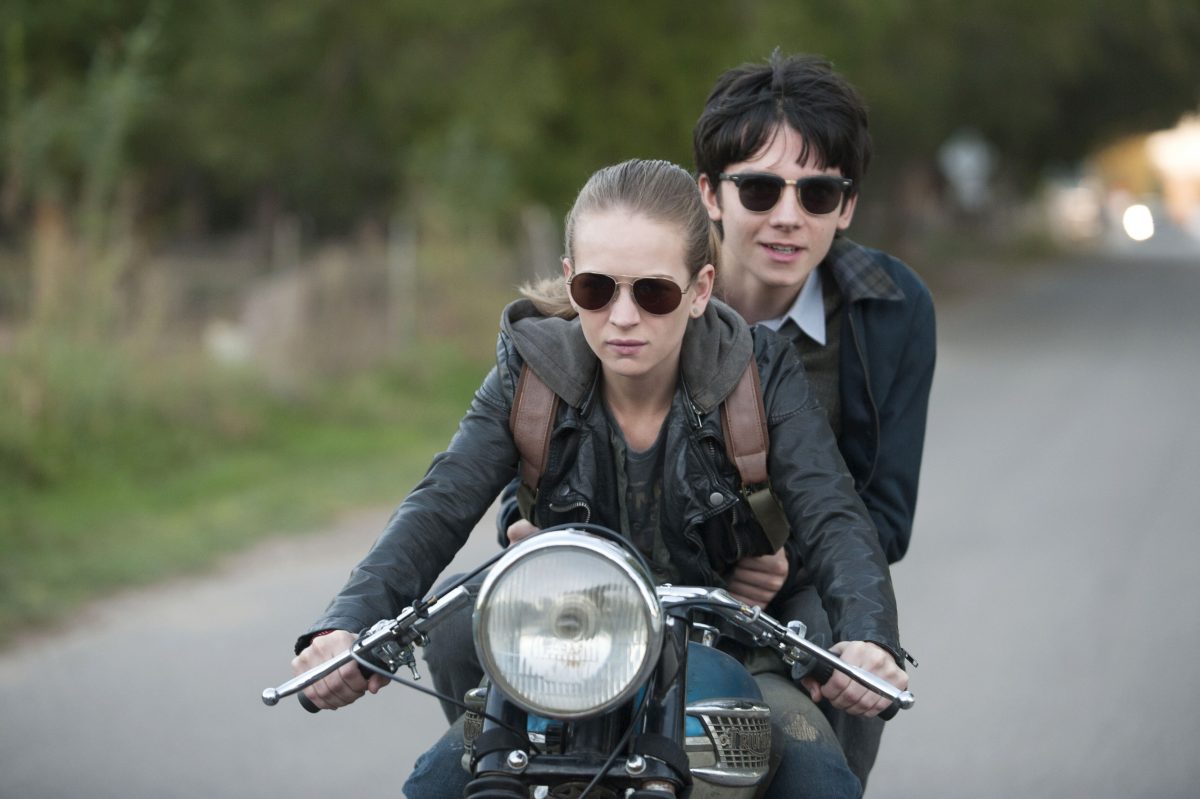
Two young actors playing the lead, the First Boy Born on Mars and his pen pal and love interest, the Young Blonde Misfit Who Steals Cars and Doesn’t Believe in Motorcycle Helmets.

What about the story?

They pack a lot of plots and subplots into this. The most fun part of the film is toward the middle, with the two teenagers on the run. They’re clever and you can watch the relationships grow in a way that makes a lot more sense than big-budget movies featuring ageless and powerful Vampires Who Sparkle falling in love with dumb teenagers.

There is a story mistake toward the end of the movie that almost did make us quit the film, and I won’t give away what happens, only to say THE SPACE BETWEEN US already seemed a little too much like THE FAULT IN OUR STARS based on title and premise. But if you stick through the moment when you’re tempted to hit HOME on the remote and find out the latest happenings with the Great British Bakeoff, the ending redeems this movie.

VERDICT

Sure, go ahead and fire this up on Netflix with your favorite person on the couch next to you. it’s worth your time.

Two great music videos that cost zero dollars

These days, you need to put up music videos on the Series of Tubes to make a living as a musician, which is great, except it costs the gross domestic product of Paraguay to do proper music video. Which makes it tough for scrappy bands trying to make it.

So it’s refreshing to see bands do good videos shot on their friend’s iPhone and edited in MS Paint or whatever, all for a total budget of $593.93, most of that budget going for pizza.

What’s even more impressive than a cheap music video?

One that cost absolutely zero dollars.

Here are two short little snippets of music on video that warmed my heart in two completely different ways.

First up is a man playing the Careless Whispers saxophone bit for cows. 

Why do I love this? Because it’s pure joy, on his part and from the cows. He’s just learning the sax and isn’t world class yet. The man won’t be going on tour. But my God, these cows are into it, which gives him, and anyone watching the video, a pure sense of joy and wonder. 

Next up: one minute of pure talent.

She’s using a couch cushion, a baby toy and I don’t know what else for drum equipment and it just doesn’t matter. 

I would pay cash money to watch her live. Right? Moar moar moar.

Also: I wonder what the cows would think of drumming like this. Are they into all music, or just horns?


How to build a survival shelter in the woods

If you live near the woods, like me, it’s pretty easy to picture making a shelter. 

Exactly HOW to do it is the tricky part.

Survival Lilly from Austria shows us how to build a great one, start to finish. All you need is a cutting tool, some rope and brains.

I really like how she uses heavy logs as a hammer to pound other logs into the ground–brilliant.


The obscure art that rules the world

Sure, you’ve heard of opinion polls. Yet that’s not what really determines things as little as who you’ll hire next in the office or what movie you’ll see on Friday night—and as big as who runs the corporate giants and entire countries.

There’s a common factor that matters more than talent, and it determines which actors, authors and rock stars get famous and which ones work their craft without ever breaking through.

Do you know their name?

Seriously. It all starts with which names you know.

Because if you never know a person exists, there’s no way you’ll hire them, buy their book/album/movie ticket or check a box next to their name on a ballot.

And yes, it’s an art, though there’s a bit of science to it.

The best time to watch the power of being known in action is during a wide-open presidential race with a lot of candidates running.

Not three or four, because everybody would know the names pretty quickly.

If you wanted to really dig into this topic, about two dozen would be perfect.

You know, enough so you need to have two separate nights of debates during the primary.

Fame versus infamy

Fame means well known, and it has a positive meaning. Oprah Winfrey, Brad Pitt, Rihanna, George Clooney, Lebron James.

Becoming famous means your name ID goes up from zero along with your positives, meaning more people feel favorable about you than unfavorable.

Infamous means sure, people know your name, but for only because you did something so stupidly horrific or horrifically stupid that it went viral. Jeffrey Dahmer, Ted Bundy, the Cash Me Outside Girl–you get the idea.

Becoming infamous for terrible crimes or feats of viral stupidity is far, far easier than becoming famous, which usually requires doing something (a) quite impressive, using (b) loads of hard work and talent while (c) somehow making sure bazillions of people know about it.

Infamy is easier in large part because our caveman/woman brains are hard-wired to latch onto negative information, especially about people who seem powerful or important to our human tribe. You might find it amusing to hear stories about your neighbor drinking fermented wildberry juice all day and falling down when he’s supposed to be helping hunt those wooly mammoths, but it won’t keep you up at night.

If your best friend says the leader of your clan is drunk all day and falling down, that’ll stick to your brain and make you stare at the cave ceiling, because that leader is the one who’s supposed to keep everybody alive through the winter when the wooly mammoths head south or whatever.

Trump and the dangers of infamy

If you’re a struggling rock star, actor, author or artist, you can boost your name recognition on the low road, by becoming infamous, rather than climbing the hard-to-impossible mountain to fame.

This works for entertainers because if 90 percent of the population knows your name while 89 percent of them have an unfavorable impression, even 1 percent of hundreds of millions of people is enough people to buy concert tickets or books.

This school of thought says no press is bad press. As long as they spell your name right, who cares if the story is negative? Your name recognition is going up.

Some pundits think Donald Trump believes in this theory. I disagree.

Trump benefitted from infamy when he was a young real estate developer trying to come out from his wealthy father’s shadow.

Yet as president of the United States of America, the most powerful nation on earth right now, no person on the planet gets more press coverage. 

Automatically. Relentlessly. There are stacks and stacks of clippings every day.

If he were actually playing 3D chess, and being smart, Trump wouldn’t pull stunts designed to boost his name recognition via becoming more infamous with reality TV chaos, fights, name-calling and vulgar behavior. Because yes, your name ID goes up with infamy, but so do your negatives.

For the leader of any country, constant national press coverage is guaranteed. This is why most rational leaders try incredibly hard not to do embarrassing, meanspirited or vulgar things that will make people lose respect for them.

I believe Trump has a bottomless appetite for attention. It doesn’t matter that he’s getting more press than any other human alive.

Too much is never enough. No matter how hard the firehose of media sprays, he craves more, and seeks to create more attention by tweeting all day, rage-calling into live FOX News shows or via risky PR stunts.

No matter what nation you lead, driving up negatives by seeking infamy at all costs isn’t smart. To get big things done, you need build bridges with world leaders and lawmakers while creating public support for what you’re proposing.

The razor’s edge

This ties directly back to the twenty-something people running in the 2020 primary.

Except for Joe Biden and Bernie Sanders, who are quite well-known, the other candidates are all trying to break out from the pack and raise their name recognition. Except they need to do that without raising their negatives and going underwater, which just means their unfavorable are higher than their favorables.

This is why candidates in crowded fields like this have such trouble moving up. You want to boost your name recognition by good things: bold plans, speeches that make people cry, acts of kindness or amazing performances at one of the debates.

The candidates polling around 1 percent know they can break through the noise by punching upwards, by fighting above their weight. Though this is tough to do without driving up your own negatives. It’s walking a razor’s edge.

Punching down, on the other hand, is a guaranteed way to look like a bully and drive up your negatives. It’s why world leaders have traditionally never attacked individuals people or companies by name. And this is why frontrunners rarely mention, much less attack, candidates far below them in the polls.

Tracking the same people, before and after

There’s a great experiment going on at fivethirtyeight.com with the 2020 primary. Check it out.

They’re working with a polling firm, Morning Consult, that interviewed the same people three times: before the debates, after the first debate and after the third debate.

This is tremendously interesting and useful, because you can track all sorts of interesting things, including:

  • name recognition
  • favorables and unfavorables (along with no opinion)
  • exactly where support moved and from who

What’s truly fascinating isn’t whether somebody is above water or underwater. Check out the ratio of favorable to unfavorable, then the proportion of “no opinion” they have left. That’s their room to grow.

The absolute best thing about the polling and work here is the chart that shows exactly how support changed and which candidates people switched to and from over the course of the week.

Elizabeth Warren crushed the first of the two nights of debate, but did so against lesser-known candidates. You can track her support getting a big boost after the first debate (growing from 12.6 percent to 18 percent), yet after the second night of debate, she dropped to 14.4 percent, with a good share of those supporters switching to Harris.

And it’s quite remarkable what Kamala Harris did during the debates. She took on Biden, a front runner who’s well-known and liked, on a tough topic. And she did it without really driving up her own negatives. Her favorables jumped from 56.2 percent to 66.9 percent, while her negatives only went up a smidge to 12.8 percent. Harris also doubled her support in terms of who people would vote for today, going from 7.9 percent before the debates to 16.6 percent after.

Compare that to Cory Booker, who got a good boost in his favorables while keeping his unfavorables down, yet he actually lost first-choice support. Those who said they vote for him went from 3 percent before the debate to 2.8 percent after, despite a debate performance that got great reviews.

Same thing with Pete Buttigieg, who had a similar jump in favorables along with pundits saying he was one of the winners coming out of the debate. So why did he drop from 6.7 percent support down to 4.8 percent after the debates?

If you’re really want to see how name recognition, fame and infamy works, skip over the news about front-runners and focus on the candidates at the bottom. What are they trying to do to get attention from the press and public? When a candidate polling toward the bottom makes a big move up, can we pinpoint why?

I hope fivethirtyeight.com and Morning Consult keep tracking these same people over the next year. It would be amazing to see the numbers change over time, and to shine more of the light of science on what’s most often seen as an obscure and inscrutable art.

Friendly Friday–Author, editor and literary badass Linda Rodriguez

If you have the Series of Tubes (which you do because you’re reading this), and you enjoy these things I like to call “books,” go check out Linda Rodriguez.

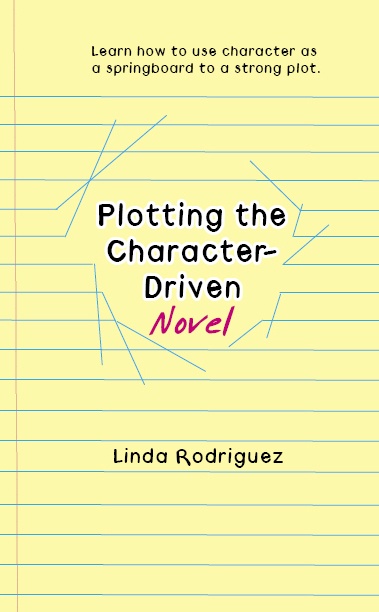
As a huge geek for storytelling structure, I love the fact that she wrote PLOTTING THE CHARACTER-DRIVEN NOVEL after teaching courses all about the topic.

This book is a public service, since novelists are typically thrown into the deep end of the literary pool, filled with tiger sharks and clones of Nicholas Sparks, and told to figure it out. Which happens about as often as you think.

Her first novel, EVERY LAST SECRET, was a mystery that won the Malice Domestic Competition and was published by St. Martin’s Press, but she’s also published award-winning books on poetry and is now working on something with a historical twist.

You can find her blog here: http://lindarodriguezwrites.blogspot.com/

And she’s active on Twitter @rodriguez_linda, so follow her, but not in a creepy way. DO IT NOW.