A peek inside the brain of puppers and doggos

friendly friday friendly dog meme

If you’ve owned dogs and served cats, as I have, watching them closely can give you a peek inside their noggins.

There’s a great book by Jared Diamond—GUNS, GERMS AND STEEL—that drops serious knowledge about the kittehs and doggos, and yes, that book is all about the rise and fall of civilizations around the world, so why would he bother with house pets?

Here’s why:

(1) Diamond says you can figure out which civilizations struggled and which turned into mighty empires with a simple trick: count how many plants and animals they could domesticate.

(2) That’s because you can’t have permanent villages and cities, much less an empire, if you’re stuck roaming around as hunter-gatherer. Tough life, carrying everything that you own, especially without a horse to haul it around. You have to be able to grow wheat and herds of goats and such to settle down and have villages, then cities, then science and tiny supercomputers that allow a single human to send Candy Crush spam to all of their Facebook friends.

(3) The only animals that can truly be domesticated are ones that naturally travel in packs or herds, because only those animals understand how to be social. In other words, animals with some natural manners. Other animals might be sort of tamed, but never truly domesticated.

(4) Doggos live in packs and are totes social.

(5) Cats are solitary hunters and brutal killers. Seriously. Yes, even the ones that look like this:

The kitteh is surprised
Surprise Kitteh is surprised.

Back when The Discovery channel did science instead of reality shows about pawn shops and such, there was a Top 10 Predators episode. You had the great white shark, polar bears, lions, tigers, Kevin Spacey, you know, the usual suspects.

Number 1? House cats. Even if well fed, they’ll run around killing scads of birds, mice and whatever else they can, just for fun. They are furry little Sith Lords.

So why are puppers and doggos so different?

I’ve watched our Hound of the Baskervilles from when he was about one year old and have gotten a good look inside his head.

Mystery Number 1: Why do dogs HATE the mailman?

This seems to be such a cliché, an urban legend. The kind of thing that could get traced back to an off-hand line on I LOVE LUCY that just took off in pop culture and never died off.

Except there are good reasons for dogs to hate mail carriers and delivery folks.

Since we live on a dead-end road with few neighbors, there are two distinct types of people driving by: folks who live here and visitors.

The Hound doesn’t bark once when he hears the cars of people who live here. Doesn’t even look up—he knows the sound of each engine, though he’ll head for the door to greet family members when he hears their car start up the hill.

Random visitors might get barked at, but to him, they heed that warning and keep on driving past to their destination. They don’t stop at our house or show back up again tomorrow.

Delivery folks do.

To the dog, the FedEx folks show up all the time and the post office people come by every flipping day, ignoring all his barked warnings.

Even worse: the mailman is the only person to stop at the corner of our property for a long time. I believe, deep in my soul, the Hound thinks the mailman is peeing on our mailbox. Because that’s what a dog would do: mark territory.

It doesn’t matter who’s wearing the uniform and driving the delivery truck. To doggos, those are the colors of an invading army, and each person wearing them and stopping at the mailbox is sending a clear message: “Your home is now my territory, and so are the homes of all your neighbors and friends. Your warning barks don’t frighten me. I’ll be back tomorrow to pee on the mailbox and claim your home as mine. Do something about it, tough guy.”

Mystery Number 2:  What do dogs think of cats?

Back when we had three cats, the Hound couldn’t figure them out.

He understood the rules: don’t go upstairs, don’t go in the dining room and stay off the couches. We trained him to do things and when he did them, he got rewarded with treats or affection. That’s the system.

Cats don’t listen. They don’t care about your stupid rules or wishes.

To help train the doggo, we have him sit in another room when food goes in his bowl. And it might be a few minutes before we tell him OK, go eat. He sits at attention, no problem. It’s like he’s in the army. He enjoys clear rules and learning new tricks.

There’s no way any of our cats would ever sit and wait for food, not even if you offered them treats and love.

Quite the opposite. Whenever they were hungry, they made sure you knew it. Joy the White (kinda like Gandalf the Grey but after fighting that demon thing) would go further. If she was pissed off, she’d make it literal by stalking into the room to glare at you while she peed in a corner, just to show she was upset about her food bowl being empty or some such thing.

To the Hound, the cats were unpredictable and immature little furballs with no brains or social skills.

If he saw one of them breaking the rules, like walking into the dining room, he’d police them, gently nosing them back into the kitchen. Trying to get them in line. It wasn’t aggressive, like he was the boss. It was incredulous. “Are you crazy? Don’t offend the Tall Wizards Who Control Light and Dark, because we have a good thing going here: warm house, soft beds, fresh food and their protection. Why are you trying to screw that up?”

This isn’t a question of brains. Cats are plenty intelligent and with a lot of effort, some people have trained them. With zero effort, you can watch them do clever things and get into all kinds of trouble. Like experimenting with gravity.

Dogs are pack animals and wired differently. Puppers simply don’t understand why the Tiny Furballs with Needle Claws have no social manners and refuse to learn things from the Tall Wizards, especially when the reward for learning things is yummies and love.

Mystery Number 3: The on-off Switch of Guard Dogginess

The Hound sees it as his job to (a) alert us when strangers or delivery people are outside, and (b) to guard the door.

This is fine normally. When we have a lot of people over, though, it can be a hassle and a mystery–because once people are in the kitchen or dining room, there might be 15 people there he doesn’t know, and he won’t bark at a single one. his tail and happily gets petted all night.

A similar thing happens the Hound hits the kennel: the kennel owners always let dogs out into a fenced area separated from the main run. Every time, the new dog goes to the fence to touch noses with all the other dogs, then they let that new dog into the main area with tiny terriers and Great Danes, with zero problems. They all play together.

Except none of that works when the dog can still see their owner. They’ll bark at the other dogs and do not get along. The Switch of Guard Dogginess going from OFF to ON. Back on duty.

I took this idea home and started putting the Hound in the library when guests push the doorbell. Mystery solved: if people are at the door, he’s on duty. Once people are past the foyer and in the kitchen or dining room, I let him out and everything’s great.

In his doggy brain, he’s thinking something like this: “Clearly, the Tall Wizards let all these people deep inside to our most sacred room, where we store all the food. So they’re friends. Friends who brought us MORE food as tribute. I have never smelled so many good things! Our pack is popular, which means our territory and power is growing. The mailman dares not challenge us now.”

###

For serious dog knowledge, here’s some pretty good stuff on dog body language.

Writing prompt: Bob the Butcher puts his thumb on the scale

Character is revealed by choices–and not regular old choices. Decisions under stress.

There’s a good bit from philosophy about looking at this, because it’s binary choices don’t describe the real world.

“Brave” and “cowardly” doesn’t cover the range and complexity of humanity.

A five-part scale does a better job: cowardly – meek – measured – brave – reckless

So here’s a little writing prompt where the goal is to have a character–a hero or villain you love–respond to conflict in their unique way, in a single line of dialogue.


The problem: You’re in line to buy steak for a big summer BBQ, and Bob the Butcher just put his heavy thumb on the scale.  

A normal person might ask Bob to try again, which is expected and somewhat boring.

A meek person would maybe raise and eyebrow and hope Bob sees the error of his ways. A coward would simply pay to avoid confrontation.

A brave person would refuse to get cheated and walk out unless Bob the Butcher did things fairly, while a reckless character would start a fist-fight with Bob in the middle of the butcher shop.

But we all know characters who’d react far differently than even those basic examples, which is what makes fiction fun. I did four quick ones just now. Have at it.


Four one-line responses

Hannibal Lecter: Bob, I’d love to have you for dinner.


Obi-wan Kenobi *waves hand*: That’s not the price you’re looking for.


Bruce Wayne / Batman: Bob, I won’t be paying for these steaks, or this basket full of other goodies I grabbed, because I just bought your store.


Darth Vader: Pray I don’t cut off your other hand.


This sort of situation is the acid test for a truly memorable character. Is their response clearly different than other characters we all know, or are they pale copies and stereotypes of what heroes and villains are supposed to be?

Three ways to fix a very rusty IRON FIST

Remember when Marvel could do no wrong?

Back in the day, they made a movie about an intergalactic gang of misfits that included a cyborg raccoon, a green alien woman and a living tree that only said, “I am Groot.” And they turned that trash into treasure.

IRON FIST is one of the first mistakes Marvel has made, which is crazy considering the number of movies and TV shows they’ve produced.

Now that THE DEFENDERS has all four of these characters teaming up, and Season 2 of IRON FIST has a new showrunner, there is hope that the show will improve.

Having watched every episode of the other three Netflix originals—DAREDEVIL, JESSICA JONES and LUKE CAGE—it’s pretty easy to see where those shows went very right and Danny Rand, the homeless billionaire, went very wrong.

Fix Number 1: A new intro

The intros for the other three shows are interesting and set the mood, while this intro simply annoys you with bad CGI and makes skipping ahead the default choice.

DAREDEVIL has an intro that reminds me an awfully lot of WESTWORLD, so much so that I wondered if the same people did it.

LUKE CAGE starts off every episode with images of Harlem and history broadcast on his unbreakable skin, and I don’t skip it despite having seen it a zillion times.

JESSICA JONES puts you in a noir mood with her intro, and though it’s not quite as good as the blind ninja’s or Luke’s, it doesn’t completely annoy you.

IRON FIST just has a bad intro. Here, watch this for ten seconds and you’ll get annoyed. Is the main character some kind of shapeshifting oil beast?

Give us an intro that’s interesting and different. WESTWORLD has such a beautiful and genius intro that I’ve rewatched again and again.

Fix Number 2: Make us want to be the Iron Fist

Regardless of your age or gender, part of the joy of reading a novel or watching a movie is living vicariously through the eyes of the great protagonist. You admire them, and wonder what it would be like to be them.

With the other three Netflix shows, it’s clear that Daredevil, Jessica Jones and Luke Cage are interesting and special people. It’d would be fun to walk in their shoes for a day, and it’s a pleasure to be there, watching, even when they go through the worst possible troubles.

All three of those characters are good in very different ways.

  • Daredevil is intelligent and driven.
  • Jessica Jones is sarcastic and tough.
  • Luke Cage is calm, strong and determined.

I don’t think anyone wants to be Danny Rand / Iron Fist, and that’s really a function of the writing, not the acting.

Fix Number 3: Stop making Danny Rand act like a fool

In episode after episode, Danny makes stupid decisions that hurt other people. And yes, that’s despite the best of intentions.

The first season is more of a tragedy than anything else, with Danny’s hubris leading to terrible things. In just about every critical situation, the great Iron Fist makes choices that any other superhero would avoid.

  • Telling everyone—from homeless men on the street to villains—his secret identity. He may as well wear a sign. Every other superhero with a brain works incredibly hard to protect this vital secret, because failing to do so always, always leads to trouble and death. Danny has no clue.
  • Being a taker instead of a helper. There’s a good reason why most superheroes default to tackling problems by themselves. They don’t want to get civilians involved and hurt, and it’s safer when friends and loved ones don’t know their secret identity. Danny constantly, constantly asks for help, often from strangers or villains. He’s not self-reliant at all, which is one of the primary traits of heroes.
  • Creepy stalker behavior. Early in the series, he breaks into Joy’s house and refuses to go away when Colleen Wing clearly and repeatedly tells him to scoot. And this is a pattern. While other heroes break into places to collect clues and skedaddle, Danny does it like he’s dropping by to visit and is shocked when people treat him like a burglar.
  • No discipline. There’s an episode where Danny says he’s spent a lifetime learning to control his emotions, which made me guffaw, because every episode, he shows zero control over his emotions.
  • Can’t plan for the future. Danny simply bumbles through problems. He never has a plan aside from, “Let’s break into a place and either ask for help or beat people up.” Then he’s confused and angry when that non-plan goes south.
  • Falling into every trap. Danny Rand believes every word that anyone says to him, whether it’s from the mouths of a random stranger or a villain who just tried to kill him ten minutes ago. Even when a villain invites him to an obvious trap, he goes straight into it.

All of this makes Danny seem more like a goofy, tragic side character than a hero. You could see him as a troubled sidekick for a smart hero who figures out ways to control and harness the human wrecking ball.

This problem is made exponentially worse when actual side characters like Colleen, Claire, Harold, Joy and even Ward—Ward!—make clever decisions that seem more heroic and interesting.

At one point, Danny says, “I’m sorry” and Ward replies, “Danny, you’re a cancer.” And I cheered, because it was the truth.

In every tough situation, audiences instinctively think, “What would an average person like me do?” They compare the choice the hero makes to what other heroes or villains would do. The best stories surprise us with choices we haven’t even considered.

Every time Danny faces a tough situation, I groan and compare his choice (always bad) to what Batman, Daredevil, James Bond and a hundred other heroes would do. We all have that repository of stories and characters. Even the villains we know and love, like Hannibal Lecter and Darth Vader, would make different and more interesting choices than Danny Rand.

Because what Danny chooses is never a surprise. As a character, he’s an overgrown child, which people keep telling him. Which is a shame. The actors are fine, the cinematography works and the tie-ins to the other shoes are nice.

For the audience, there’s no surprise. We know what Danny will do, and we know the outcome will be bad. The only question is, “What side character or villain will save Danny from the mess he creates this time?”

Here’s to hoping Season 2 fixes these three flaws and gives the world an IRON FIST who doesn’t keep bumbling his way through New York City and, instead, starts acting like a hero instead of a cross between Homer Simpson and The Greatest American Hero.

RICO SUAVE by Gerardo shows the power of silly fun

A classic one-hit wonder, RICO SUAVE shows off the massive music-video firepower of being completely fun.

We’re not talking lyrics as literature here, and this music video isn’t amazing in any single area. Gerardo isn’t exactly Bruno Mars in terms of world-class singing, acting and dancing talent.

However: None of that matters, because the whole video is flat-out fun. He’s plenty good at dancing and truly talented when it comes to transmitting the emotion that, “I’m having a good time, and so should you.”

That’s a valuable skill when most rock, pop and rap stars are busy trying to look brooding, emo and/or tough.

Fun works. That’s what people want.

So here’s to you, Gerardo, who I see became and A & R exec at a record company. I still remember this video because it’s a classic four minutes and fifteen seconds of unfiltered joy.

Chapter 10—Prepping for Day 1 of Any Sort of ‘Pocalypse

Fitness Tips for the Apocalypse

The worst day of any flavor of apocalypse—killer robots, zombies or The Spanish Flu of 1918 on Steroids—will be Day 1, when civilization as we know it goes buh-bye faster than an airline steward can wave you off a Boeing Dreamliner.

What’s the best way to get ready for the chaos of that first day?

Step Number 1: Where Will You Be?

Unless you’re retired or on vacation, you’re typically (a) at work or school, (b) in your happy home, (c) traveling between those two places or (d) running errands and such.

Where you are makes all the difference in the world when the world goes sideways, because most people will have all their useful possessions and loved ones back home, not in their cubicle at work or the trunk of their car.

It also matters because you probably work or study in a city and live somewhere less populated. And when things go south, the last place you want to be is in a city, because that’s where the most trouble will be. Trouble is defined as hordes of zombies, armies of killer robots or scavengers willing to pull a gun so they can loot the mall before you can.

This means you’ll need different plans and contingencies depending on your location when WATERWORLD starts being non-fiction or Donald Trump starts mashing buttons on the nuclear suitcase.

Step Number 2: Where Do You Want to Go?

Conventional wisdom would say “home,” which is wrong. Without power, heat and running water, homes will become magnets for scavengers searching for gear and supplies.

The real trouble will be food, which will run out quickly, seeing how semi’s won’t be delivering Doritos to Safeway anymore and farmers won’t be planting and harvesting Doritos anymore in the first place.

Of the essentials of food, shelter and clothing, food will be the toughest problem. Farming isn’t a good answer, since even if you already had a working farm and 10 years of experience as a farmer, the starving masses will show up and devour all your hard work.

So what did smart people do before farming was a thing? Well, the ones who survived were hunters and gatherers. Nimble nomads who followed food sources along with the seasons.

That’s the best strategy, since it keeps you out in the wilderness, close to food and far away from (a) zombies,  aliens or killer robots and (b) populated areas where scavengers will be killing each other as they battle over quickly dwindling resources.

This makes it critical to pick a good area with a source of fresh water and a variety of food sources.

That rendezvous point, ideally, would be halfway between home and work/school, so no matter where you are, it’s easy to reach.

Step Number 3: Who Do You Want to Rendezvous With?

“Friends and family” is the obvious answer and the wrong one, since there’s a fifty-fifty chance zombies will show up right in the middle of a staff meeting about TPS reports.

Making it through chaos and craziness all the way to the rendezvous point will be tough. Having a stalwart band of coworkers along for the trip, now, would truly boost your survival chances.

Asking people to meet you at the rendezvous point AFTER things get crazy, well, that won’t work at all. You have to figure this stuff out ahead of time.

Step Number 4: What Do You Need?

Out in the prepper community, you’ll see a crazy number of acronyms. Some of them apply here:

  • BOB is short for “Bug Out Bag,” pre-packed so you can simply grab it and go.
  • GHB means “Get Home Back,” with gear meant to, I don’t know, get you home.
  • INCH stands for “I’m Not Coming Home,” so it’s a more complete set of supplies, food and tools.

This series of posts hates complicated things, including acronyms. Hates them worse than black licorice and fruitcake. We’re all about simple and sturdy, cheap and sustainable.

Forget having four different sets of bags for different reasons. Keep it simple and have One Backpack of the Apocalypse, a single bag to rule them all.

This backpack will be with you whether you’re at home, at work, at school or stuck in traffic while radio shock jocks pretend to be outraged about something to fill three hours of airtime. How will it faithfully and magically stay by your side with you at work, home and while you commute and do errands? Here’s the trick: you’ll give that One Backpack and a Pair of Hiking Boots a comfy home in the trunk of your automobile.

The question of what goes into a One Backpack of the Apocalypse is deep, with a lot of options for specific teams. It’s worth a few posts to drill down on that.

Here’s the TL;DR version of what you’ll put in there: ways to make fire, filter water, catch food, stay warm, catch food, fix boo-boos, navigate, create shelter and defend yourself. Check out Survival Lilly, who’s from Austria and is completely practical.

P.S. Every loved one, neighbor, cousin you still talk to and coworker you take along can be of whatever shape, size, age, gender or background. Go wild. The lone condition for making them part of your Nimble Band of Nomads is they need to have their own One Backpack of the Apocalypse, because none of this will work if there are 15 people wandering around trying to share a single set of gear. That’s how you all win a Darwin Award.

Step Number 5: Prep Your Rendezvous Point

To get fully prepared, make your rendezvous point a welcoming safe haven.

Bury food and supplies in waterproof containers, like five-gallon paint buckets. Create a rough shelter, whether it’s a lean-to made of logs or a big tent you stash nearby.

While this is a good topic for a post, here’s one smart, easy way to make a shelter with no tools.

Bring your friends out there, wearing their hiking boots and backpacks, and stay one night. Make a campfire, filter water from the nearby stream or lake and figure out what you’re missing now, not after the aliens land and it’s too late.

Step 6: Be a Nimble Nomad with Food In Your Tummy

The last step is to figure out how you’ll migrate and follow food sources along with the seasons.

Migrating doesn’t mean traveling thousands of miles like the birds that fly from South America to Alaska and such. That’s crazy talk. You can accomplish what they do by simply heading into the mountains during the spring and summer, then back down to the valleys and the coast during winters.

The easiest way to do this is to follow rivers, either in a small boat or on foot. Rivers are born as streams on the tops of mountains after Zeus sends a stork and all that. This make navigation easy.

Finally, practice a bit of hunting and gathering. Spend a night or two at this rendezvous point with backup rations that you don’t touch. Practice trapping squirrels and rabbits, picking non-poisonous berries and catching these things I like to call “fish.”

P.S. Hunting big game like deer is a whole different topic. I live in deer country, and know all sorts of friends who also hunt bears and cougars. But this is not my expertise. Cute little deer hang out on my property, knowing that I only shoot photos of them, while the cougars hide in trees and the bears munch all my blackberries. I leave them be. If you want to practice this sort of thing, get a hunting license and buddy up with an expert. Big game is nothing to play around with and even a successful hunt means a lot of hard work to preserve the meat and make use of the fur and hide.

Previous posts:


Robin Boyes: ‘The heart must be moved’

Robin was brilliant. That’s the first thing to know and remember.

The second thing to know is this isn’t an obituary, where you list facts like the dates a person was born, where they lived and when they died. I’ve written plenty of obituaries for newspapers. This is different. It’s about what Robin meant to me, to his coworkers and the lawmakers he helped.

And we all agree on this: he was brilliant.

I’d bet my house there are fewer than five people on the planet with as much knowledge about speech coaching, speechwriting and Greek rhetoric.

Four, now that he’s gone.

He translated ancient and obscure texts from Greek into English on his website, which we kid around he wrote in machine code. (Visit classicpersuasion.org to see his work.)

Except we’re not really kidding. Robin did things like that.

Because he could.

Because he felt like it.

And for almost twenty years, he taught me everything I know about speechwriting and rhetoric as we worked together in the House of Representatives.

This place was his home, and we were his family. That’s how he treated staff and lawmakers alike: like brothers and sisters in arms, working for a noble cause.

And in Robin, you could see the nobility of it.

He didn’t work here for so many years because of the money. State workers don’t get rich, and Robin could have made a lot more if he’d remained in the private sector, flying across the nation to do speechwriting and coaching.

He stayed here to make a difference. This wasn’t something he said out loud. It was something you saw, every day, when he popped in your office to talk over a speech he was sweating over.

And he sweated them. He’d bug a lot of us about the latest oped or speech. Day after day. I used to make him swear at me by writing a bad first draft of an oped in ten minutes, just to show him the merits of turning his giant brain off and getting some words on paper without driving himself mad. Didn’t matter if they were perfect. Just get some clay to work with.

Robin wasn’t like that. He wanted perfection on the first draft. Maybe it took him a full week, but by God, that first draft was beautiful.

We wrote a booklet together on rhetoric and speeches, a guide for lawmakers and staff. There’s a line from Robin that still resonates in me every day, when I walk into my office, which was Robin’s before he retired: “Before statistics can prove, the heart must be moved.”

Robin swore by that. Despite his addiction to data and numbers, he never forgot that if you didn’t make your audience care, the finest statistics and facts would have zero impact.

The heart must be moved.

He was stubborn and prickly, generous to a fault and always, always thinking of how to fix the latest problem. If he didn’t pop into your office to talk about his latest speech or oped, he’d stand in the doorway and sigh until you stopped banging on the keyboard to turn your chair.

Then he’d ask, as if we were already in the middle of a conversation, “What are we going to DO?”

And of course you had to ask what he was talking about, which was always a problem facing the state or the nation.

That was his instinct. No matter how many years he’d worked in politics, he’d never gotten the memo about becoming cynical or selfish.

“What are we going to do?”

He wanted to fix things. Every day.

There are special quirks unique to him: when lawmakers weren’t in town and we didn’t have to wear suits, Robin always, always wore a Beatles baseball cap. We joked that when suits and ties were required and hats verboten, Robin got a haircut once a year, whether he needed it or not.

Despite his prowess with programming in Java and working with computers, he still called making copies “photostats.”

If he said something particularly witty, which happened often, he’d slap his hand against his mouth to make a loud pop. His version of an exclamation point, or dunking the rhetorical basketball.

Nobody in the office has figured out how to replicate that Robin pop. We’ve tried. Dan Frizzell comes close, but he’s not quite there.

I miss that noise.

I miss Robin’s intensity. It was his weak spot and the source of his strength. He focused on things. Obsessed about them, really. And it’s hard to be truly great at something you don’t care about and don’t spend time working on.

Robin took the time. He put in the work, and it showed. When he was a college debate coach, his team won the national championship.

When he taught me rhetoric, I soaked up more from him in a day than any of my years doing speech and debate. The man’s brain was sharper than a Ginsu.

He was easy to tease because he cared. Robin may have weighed 100 pounds after getting caught in a rainstorm, but that small frame packed a giant brain and an even bigger heart.

Another thing to know about Robin was his loyalty. Earning it wasn’t easy. He didn’t get impressed by many people. If you were his friend, or one of the lawmakers he wrote for that he truly clicked with, that relationship was for life.

Now he’s gone, and if this were an obituary, there’d be a lot of nonsense about funeral arrangements and donating to Mothers Against Drunk Driving or the American Cancer Society—but this isn’t an obituary, so I don’t have to pack it with all that dry nonsense.

Here’s the thing: Robin was larger than life and now he’s gone. That sucks.

The heart is moved, and this one hurts.

I wish we’d been a little tougher in trying to get him to socialize after he retired. I wish we could have more time together, to bullshit and learn and tease each other.

I wish.

And I know wishes along with $4.50 will buy you a latte.

The only way to honor the man is to remember him.

So here’s to you, Robin.

Chapter 9—Getting Real about Long Range Weapons

Fitness Tips for the Apocalypse

If the zombies rise up, the aliens come down or Mad Max turns into non-fiction, what could truly keep you safe at long range?

Clearly, guns are far more advanced than crossbows, bows, slingshots and other weapons.

HOWEVER: Just as clearly, once a real apocalypse hits, ammunition will go buh-bye, because factories will stop making bullets right when everybody in the world is using them all up in a desperate battle against the undead, the Borg or whatever fashion of apocalypse you favor.

Right off, you have to see firearms as a transitional weapon and a last resort, with precious bullets saved for critical situations while you use sustainable options—bows and arrows, crossbows and slingshots.

So what makes sense?

Option Number 1: A trusty handgun

Hollywood loves pistols, and I’m not against them. Have one myself. Yet there are good reasons why, in a long term SHTF scenario, you wouldn’t pick a pistol as your long-range weapon.

First off, it’s not long range. At all. Handguns are only accurate and effective at close range.

Secondly, you might think the power and capacity of modern handguns balances out the short range. Except shotguns have as much capacity as revolvers are are much more powerful, while many rifles have 30-round magazines with far greater range, accuracy and power.

Arguing for handguns is (a) the fact there are bazillions of them, making it more likely you’ll find one and the ammo for them, (b) the great reliability of modern pistols and revolvers and (c) the intimidation factor, with even an unloaded gun giving you stand-off power against a group armed with melee weapons and (d) the fact that handguns are small and light.

Verdict: A pistol a decent backup weapon, but it shouldn’t be anyone’s primary choice.

Option Number 2: AR-15s and AK-47s

Both have their pluses and minuses, along with passionate defenders. The bottom line is AK’s are brutal, simple beasts and more durable. They’re designed to get muddy and dirty but still fire, and the round they use (7.62 mm) is a lot bigger than the 5.56 mm shot by AR’s, which are more advanced and accurate, but more delicate.

You’d think these would be the king of guns, and they’re great, modern weapons … if you have easy access to more ammo. That’s the trouble. AR’s and AK’s make it easy to crank through magazine after magazine of ammunition, and they won’t be making them anymore.

From the sound of this man shooting an AR and an AK on the same course, you’d think these guns were fully auto. Nope. Same semi-autos that you and I can buy in ‘Murica, so yeah, conserving ammo is not something these weapons like to do.

Verdict: If you’re going to pick an assault rifle for a long-term apocalypse, you can’t use modern tactics like covering fire, because your ammo would be gone within the first couple of battles. Get one with a scope, keep it on semi-auto and treat the ammunition like precious gold.

Option Number 3: Submachine guns

Uzis, Mac-10s, Tommy Guns—the idea for all of these weapons is to use pistol ammo in a machine gun.

And yes, Chuck Norris looked cool with two Uzis.

But true submachine guns aren’t really available to folks without a special license to own automatic weapons. You can buy semi-automatic versions, but those are really just handguns with more capacity than normal.

Verdict: For a gangster in the ’20s smuggling moonshine, submachine guns are great. For our purposes, even if you can find a fully automatic submachine gun, they’re terrible, a handgun on steroids that wastes ammo by design.

Option Number 4: Sniper and hunting rifles

Now we’re talking. Most sniper and hunting rifles are bolt action, which is a lot simpler and easier to maintain than the complicated mechanics of a semi-automatic. Bolt-action is more accurate and makes you conserve ammo.

These guns also have the best scopes.

Armies use a variety of sniper rifles, from modified hunting guns to giant .50 caliber monsters. Those are crazy big and heavy, and those massive bullets are actually meant to be used against vehicles and such, not deer, zombies or aliens.

Verdict: Deer rifles are common and proven. You can’t go wrong with a bolt-action deer rifle.

Option Number 5: A slingshot

This seems like a silly pick, a child’s toy.

But think about it: you need meat on the campfire every night. There’s no way you’ll be lucky enough to bag a deer whenever you get hungry. The most common sources of meat every day will be things like birds and squirrels, which would disappear in a puff of fur if you shot them.

Slingshots are easy to buy, scavenge or craft. You’ll never run out of ammunition as long as the earth keeps making rocks. And this long-range weapon will probably keep your stomach full for years. They also silent, and a good ambush weapon.

Verdict: Everybody in your party should pack a slingshot.

Option Number 5: A crossbow

This is the best of both worlds and the worst of both worlds.

A crossbow is more powerful than a bow (see Option Number 7, below) but far less powerful than a rifle. On the plus sign, they’re silent, unlike guns, yet heavier than a bow.

Crossbows shoot bolts, which you can technically re-use, repair or replace. Yet bolts aren’t easy to craft out in the bush, while arrows are, and good luck repairing a broken crossbow.

Verdict: This one is tough. It sounds like a good choice at first, but the more you think about it, the more it seems meh. A deer rifle or bow seems smarter.

Option Number 6: Mall ninja nonsense

Yes, there are throwing knives, ninja shuriken, boomerangs and bolas. These things exist.

If you want to see what’s out there, go inside your local gas station. For some reason, most gas stations also double as ninja superstores, I kid you not.

Even the higher-quality versions are short-range weapons of dubious value, all of which require a lot of skill and practice to make them remotely effective.

Can you hunt with these things? Not really.

Do they make up for that defect by being amazing combat weapons? No.

Verdict: Come on. Honestly.

Option Number 7: Robin Hood FTW

In the movies, heroes like Robin Hood can lay waste to dozens of soldiers with their trusty bow.

Bows don’t have the range and power of modern guns. Hunters need a lot more skill and patience when they’re using bows instead of rifles, and you wouldn’t want to go after dangerous game like bears, mountain lions or zombies with just a bow. The margin of error is too tight.

Once again, Kevin Costner stinks it up in a big-budget movie yet somehow points us toward the truth. Bows and arrows are a beautiful option for the apocalypse. They’re easy to make and use, silent and versatile.

Bows and arrows are an especially good pick if you’re being smart, conserving ammo and traveling as a Nimble Nomad with Friends, since one of you can try taking down prey with the bow while the other three in your party are ready with hunting rifles or spears. If that arrow misses the mark and the beast charges, your friends are ready.

Arrows are also completely sustainable, while you can make bows out of scavenged material or out in the middle of the forest.

Verdict: Get a bow and learn to make arrows. DO IT NOW.

Previous posts:

Next week: Chapter 10—Prepping for Day 1 of Any Sort of ‘Pocalypse

Chapter 5: Resisting Oppression

This is the last of five chapters from TRUTH AND LIBERTY: 33 WAYS TO FIGHT LIES, PROPAGANDA AND OPPRESSION.

Oppressive regimes react predictably to protests and opposition movements: they instinctively crack down on any dissent.

The methods used are brutal, but aren’t that surprising or creative. Non-violent resistance and smart messaging can make this instinct backfire on authoritarian rulers.

Step 28. Know their playbook

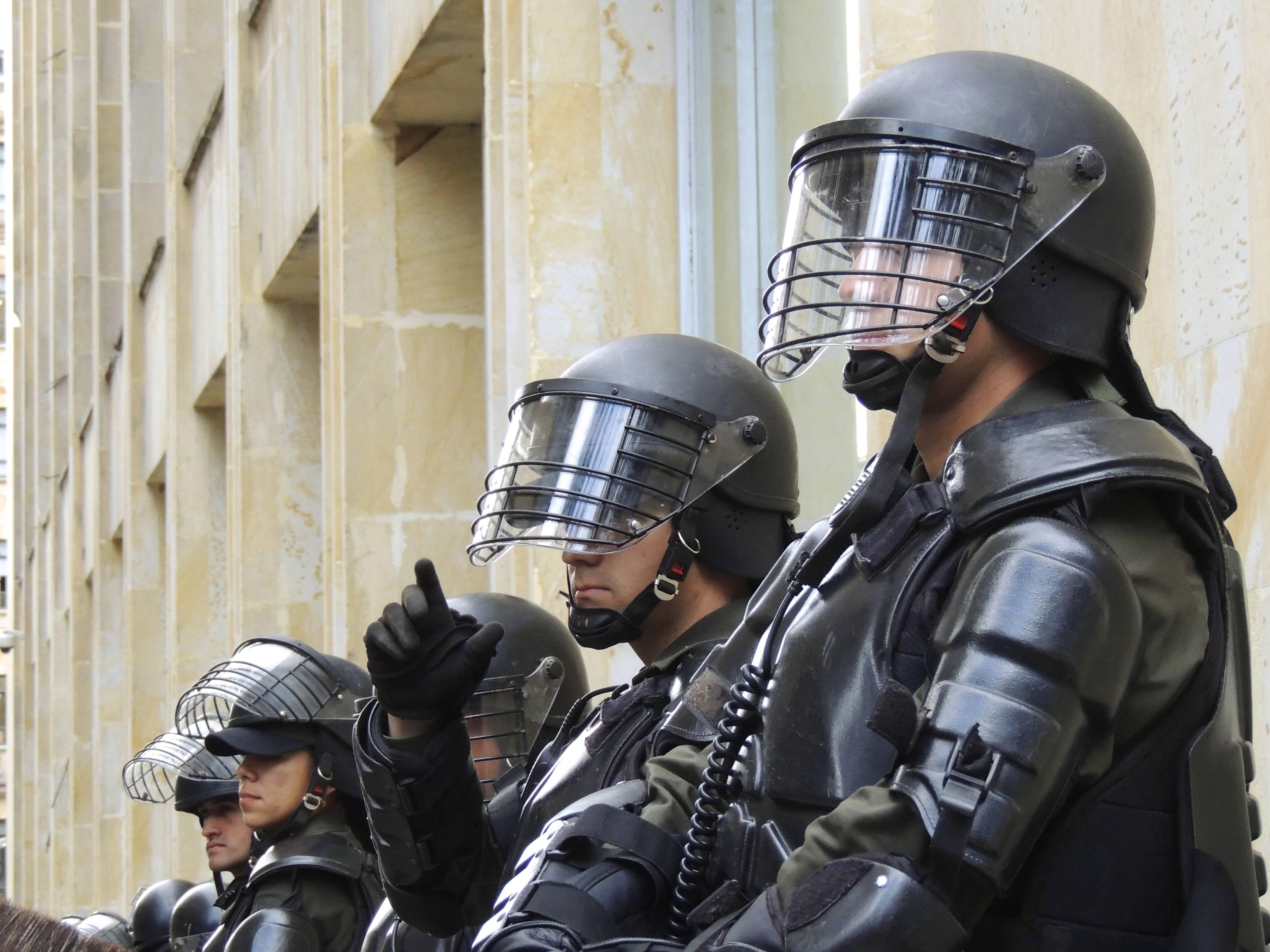
Protestors will be painted as paid thugs and traitors, with riot police blocking their movement. If protests continue, a regime may use tear gas, fire hoses and mass arrests—or simply outlaw mass protests altogether.

Judges and lawmakers who don’t go along with oppression will get marginalized, replaced or charged with bogus crimes.

Whistleblowers who leak documents to the press or opposition will be tracked down, if possible, and arrested and jailed.

Journalists who reveal the truth about the regime will be threatened, attacked or arrested.

Opposition figures who try to run against the ruler may be disqualified from the ballot or charged with bogus crimes.

If there are local and state police operating with local control, the regime will try to nationalize all police and law enforcement under their direct control.

To combat the manufactured threats generated by constant lies and a sustained propaganda campaign, the regime will seek greater powers, possibly via martial law or states of emergency, to combat these fake threats.

The true reason for this is to remove any checks and balances in the system, whether it’s the courts or lawmakers.

Law enforcement that used to go after criminals and spy agencies that focused on foreign threats will be redirected against lawmakers, judges, journalists and opposition leaders.

Insulting the ruler may become grounds to be sued for defamation or charged with a crime.

Censorship of the media, radio, television and internet will be justified as necessary to safeguard the nation against terrorism and foreign threats.


The recipe for populism is universal. Find a wound common to many, find someone to blame for it, and make up a good story to tell. Mix it all together.

Tell the wounded you know how they feel. That you found the bad guys. Label them: the minorities, the politicians, the businessmen.

Caricature them. As vermin, evil masterminds, haters and losers, you name it. Then paint yourself as the savior.

Capture the people’s imagination. Forget about policies and plans, just enrapture them with a tale. One that starts with anger and ends in vengeance. A vengeance they can participate in.

Populism can survive only amid polarization.

It works through the unending vilification of a cartoonish enemy.

—Andrés Miguel Rondón


Step 29. No singular leader or movement

If the opposition is united under a single banner with a singular leader, that makes it easy for the regime to focus all its firepower on that one opposition group and leader.

A single leader can be smeared, compromised, arrested or imprisoned. A united, national opposition group can be infiltrated, attacked with police raids and depleted by lawsuits.

Let the opposition grow organically and be leaderless, so there’s no one person or group as the regime’s target. Making the opposition leaderless also allows for the most flexibility and local control.

Everyone can feel like they can make a difference rather than being a cog in a machine.

Step 30. Protect whistleblowers, journalists and protest leaders

Peaceful protestors aren’t doing anything unethical or wrong. That won’t stop the regime from trying to use censorship and oppression.

Protect whistleblowers and journalists: Decades ago, authoritarian regimes kept tight control of copying machines because they knew a single copier could be used to spread the truth.

Today, it’s much, much harder to prevent average citizens—or patriotic government officials—from leaking documents revealing how the regime is corrupt and undemocratic.

Anyone with access to such information should carefully leak it to the free press and make sure, once the story breaks, that other copies are safely out of the hands of the regime.

Don’t trust encryption.  Assume the regime can trace anything you do using a smart phone or computer. Instead, use couriers and dead drops.

Use go-betweens. Whistleblowers with access to information should not be one who leak that information directly to the press or opposition. Use a series of go-betweens to protect whistleblowers.

Make copy after copy. Regimes will try to censor or confiscate leaked material and anything embarrassing.  Make multiple copies of important documents in different formats—digital, paper—and keep them safe in different locations.

Dead drops are a time-tested way to safely get documents and information to others.

Never have a face-to-face meeting to transfer sensitive information.

Put the document or thumb drive in an innocent, waterproof container and hide it in a public place, such as taped beneath a parking garage stairwell or beneath a shelf in a public library. Don’t tell anyone where the dead drop is until after the item is already there and the person who placed it is long gone.

Step 31. Use old-fashioned tools

Regimes will put opposition leaders, journalists and whistleblowers under surveillance.

These are some simple precautions to protect against this and to make the regime waste time and resources.

Don’t make it easy. If you suspect you’re being watched, don’t keep a regular schedule that lets a small team keep watch.

Keeping one person under surveillance takes a team. Doing work at odds hours of the evening means the regime has to add a night shift.

Meet with friends at restaurants or bars after midnight and they’ll need another team to work the graveyard shift.

No one-on-one meetings: Don’t meet one-on-one with important whistleblowers, journalists or opposition leaders. Talk with them, briefly, as part of a large group or event: a dinner party, a concert, a wedding or a soccer game.

Mix your real message in a sea of fakes. If something is truly important, send a flood of fake messages in different formats with different dates and details along with the one real message.  Even if all these messages are in simple code, or no code at all, there’s no way for the regime to know the fake from the real.

Watch for infiltrators and instigators. Regimes will send undercover agents to known meetings of the opposition, to gather intelligence and to instigate possible violence to discredit the opposition.

Switch channels. To communicate securely with journalists or other opposition leaders, don’t use the same channel every time. Switch whenever possible.

Book codes. Digital encryption can be broken. If you need to send encrypted messages, book codes are unbreakable, no matter how many supercomputers are thrown at the problem.

Instead of codes referring to letters, a book code refers to the specific page, line and word of widely-available books.

To make it even more secure, continually switch the book used as the key to the code.

Adapt faster than the regime. Above all, continually adapt and change. Use the vast size and strength of a nation-state against the regime, which can’t innovate and adapt as fast as a loose collection of opposition groups.

Step 32. Find safe harbors

Some regimes have massive operations to block media sources from overseas and censor the internet, while others use jamming signals to block radio and television broadcasts from outside their borders.

Modern technology change has made form of censorship this much, much harder.  But it’s not impossible. Some regimes employ a great number of people to censor the internet in their country, with various degrees of success.

What remains impossible for any regime, no matter how rich and powerful, is censoring censor newspapers and opposition leaders based entirely in other countries.

Journalists, whistleblowers and opposition leaders should therefore find and establish places which they can use as a safe places in other countries.

Use safe harbors to:

  • Talk to the media in countries where the regime has no leverage against the free press
  • Keep vital information and secrets safe
  • Spread leaks to the foreign press where the regime can’t apply pressure
  • Cultivate non-profits, friendly political leaders and ex-pats who can speak for the opposition

Step 33. Turn every target into a hero and symbol

Successful non-violent oppositions can turn each act of brutality and oppression into a chance to create a new hero.

Rosa Parks became an American icon for the simple act of refusing to give up her seat to a white man on the bus in the segregated South.

Srjdja Popovic’s brilliant book, Blueprint for Revolution, describes how in Serbia during the protests against Slobodan Milosevic, getting arrested turned people into famous symbols.

Protestors sang songs outside jails and chanted the names of those arrested. When protestors got released, they got rock-star receptions. Only those who got arrested 10 times earned a black Optor! opposition T-shirt, which became a token of respect and status.

Whoever the regime targets for threats, beatings or arrests, turn that person into a symbol of courage and resistance.

Share their stories, and tie it back to tales of people like Cesar Chavez, Malala Yousafazia, Mahatma Gandhi, Guo Feixiong and Nelson Mandela.


Power is not a means, it is an end.

One does not establish a dictatorship in order to safeguard a revolution; one makes the revolution in order to establish the dictatorship.

—George Orwell

Chapter 8: Blades, Bludgeons and Bad Ideas

Fitness Tips for the Apocalypse

If (a) zombies come knocking on your back door, (b) aliens land in Manhattan to enslave us or (c) an Angry Space Rock obliterates civilization because Bruce Willis was otherwise occupied, you’ll need to fend for yourself.

That means some kind of makeshift armor along with weapons to hunt for food and defend yourself.

So what’s makes sense?

This series is about being brutally practical, which means the ideal melee weapons would be:

  • Lightweight
  • Simple to use, even for people with no training
  • Cheap or free
  • Easy to find or replace

Blade Choice Number 1: A Knife for All Occasions

There’s nothing more basic than a knife, which is both a weapon and an essential tool.

So what kind of knife?

Folding knives are nice, small and full of serious flaws. Any sort of mechanism, springs or no springs, can wear out. And no matter how expensive and well-made a folder might be, it won’t be as strong as a full-tang knife.

The other flaw is the lack of a crossguard, which is essential protection in a fight or doing serious work. Without one, any blade will slip and cut your hand to ribbons.

So: you want a non-folder, also known as a “knife.” There are all kinds of varieties. You can’t go wrong with time-tested hunting knives or military K-bars.

The only pitfall here is going too Crododile Dundee / Rambo here and picking the Biggest Knife Known to Man. Make sure the knife you pick is something you can comfortably wear while hiking through rough terrain. Any sort of blade is useless if you have to dig through your pack to grab it.

Also, one of the uses of a knife is speed. You can grab it and use it faster than almost anything else, including a gun. Because the old saying, “Never bring a gun to a knife fight” might not actually be true.

Verdict: Yes, you need a knife, as an essential tool and weapon.

Blade Choice Number 2: Romancing the Sword

If a knife is essential, a sword is even better, right?

Bigger. Longer. More able to chop and slash.

Movies and books have brainwashed us into thinking swords are amazing, if not magical. And yes, a lightsaber would be the ultimate weapon, if they existed.

However, lightsabers aren’t an option. Also arguing against picking a sword: history and logic.

  • Knights and samurai actually relied on bows and spears as their primary weapons. Swords were a last-ditch option, not a primary choice.
  • Since factories will stop making ammunition and everyone will be shooting up the place, guns will quickly become useless. Everybody will be using more primitive weapons, which means smart people will wear armor to guard against blades and bludgeons while people who resist this armor fashion trend will earn fancy Darwin Awards.
  • Swords work best against unarmored opponents. Armored knights didn’t actually fight each other with swords, because even the sharpest steel bounced off thick armor. They used maces, flails and war hammers to bash in that armor.
  • Picking a sword as your weapon therefore hurts if you actually come up against armored opponents, and let’s face it, unprotected folks aren’t going to last long in a real apocalypse.
  • Expensive, high-quality swords won’t be lying around. It will be hard to repair or replace a truly nice sword, and any long-term apocalypse means you need to be able to repair and replace stuff—or have extras to gear up new friends.

That being said, people are going to pick swords. It’s like our romance with handguns, which are nothing compared to the power of shotguns and range of rifles. People don’t care. Swords and handguns are catnip to a lot of people. So: if you’re going to pick a sword no matter what, what makes sense?

Though this series of posts is all about cheap and sustainable apocalyptic goodness, going too cheap with a sword is an Achy Breaky Big Mistakey, because most swords out there are meant to look pretty while hung on the wall, not used for combat year after year. The cheaper a sword, the more likely it will break or fly off the hilt.

Not kidding about the “fly off the hilt” bit. Take a look.

At the other extreme, the best possible swords do not make sense, since they’re crazy expensive.

Therefore: check out the wisdom of a Paul Southren, a man who lives and breathes moderately priced swords at sword-buyers-guide.com. Paul field tests and abuses his swords, and his whole schtick is about buying the best quality for a moderate amount of money: $100 to $300, though he does test and review swords that cost a bit more and has a section dedicated to the rare sword under $100 that’s actually decent.

Verdict: Here’s the TL;DR version of Paul’s research: get what Paul calls a heavy duty beater, a mono-tempered sword made from modern steel that’s tempered right and designed to take all kinds of abuse. Check out this page for reviews of katanas and head over to this page for medieval swords

Blade Choice Number 3: Battle Axe Badness

You see insanely huge, double-bladed battle axes in movies.

That’s because in real life, such things would be heavier than a Volkswagen Bug.

You wouldn’t want to use a modern two-handed axe, the kind designed to cut trees or split wood, because those things are still too heavy to carry around as you march through the wastelands all day, much less use in a real battle. Same thing with pickaxes. All of these monsters are too slow. Anybody could see it coming and dodge the blow.

If you look at actual warfare over the centuries, soldiers did use single-handed axes, which are a lot faster than today’s two-handed axes meant for trees. Check out this discussion of the pros and cons of one-handed axes. This man is both an expert and British, so you have to listen to him.

Verdict: During any sort of apocalypse, you’d want some way of cutting wood for shelter, fuel and tools. So this is a lot like the conversation about a knife: a one-handed axe is both a weapon and an essential tool. Get one.

Blade Choice Number 4: Machete Madness

Economists have a concept called “opportunity cost,” which is a fancy way of saying blowing 2,000 on a high-end katana makes no sense when, for the same money, you could buy 50 top-quality machetes for $40 apiece and equip an army of your closest friends and family.

One sword or a horde? Come on, that’s not even a question.

Machetes also hit our sweet spot: cheap, common and durable.

In my decade-long fight against scotch broom, I’ve bought and used all varieties and brands of machetes. Here’s the deal:

  • Garden-variety machetes in the Garden section of Home Depot: The long, thin machetes you can buy at any hardware store are OK for cutting blackberry bushes and Scotch broom but a bad idea for the wasteland.
  • Military grade: Armies have as used machetes for decades, especially for jungle warfare. They’ve researched and perfected tough blades that stand up to abuse in the worst conditions. Army surplus all the way.
  • Sword-like goodness: You can get thicker, longer machetes that are really tough little swords for a fraction of the price. Cold Steel makes a crazy assortment of these machetes. I can vouch for the magnum kukri, which is tough enough to use as an axe. I’ve cut down trees with this thing.

Verdict: Machetes are a great choice, especially the thicker, higher quality ones that can do the job of a sword and an axe.

Blade Choice Number 3: Sharp Things on Long Poles

Here’s why spears and poleaxes rock and are the King of Apocalyptic Blades:

  • Reach rules: The evolution of combat has always been a question of greater and greater reach, with the winning side typically being able to throw rocks, shoot arrows or fling missiles from beyond the range of the enemy. The same thing applies to melee combat. Whoever has the greater reach will usually win. Spears and polearms give you better reach than knifes, swords, machetes or any other sort of blade.
  • You won’t be fighting one-on-one: The default way of thinking of melee combat is you vs. a solitary opponent, which is completely wrong. Any organized group of average people has the advantage against a Lone Wolf, and this series assumes that (a) you’ll be smart which means (b) you’ll travel with a group of friends. If there are four people with spears against four people with knife, swords, machetes or baseball bats, I’m betting the spears win every time, simple because nobody on the other side can get close enough to do damage before holes get poked into vital bits. Four people with spears and shields would be a tough, tough combination to overcome.
  • Easy to make: Trying to make a real knife or sword would be tough. You’d need the right scrap metal, a hot enough forge, an anvil plus the knowledge to do it all right. There’s a science to quenching and tempering. Spears, now, are easy to make. You can do a simple spear by sharpening a straight stick. Done. Want a fancier spear? Last a sharp bit of scrap metal or a knife on the end of a pole.

Verdict: Buy or make a Sharp Thing on a Long Pole, the most practical of the blade options.

Bludgeon Option Number 1: Brass Knuckles

Any sort of bludgeon is better than fighting barehanded. And sure, brass knuckles would be fine if you live in a terrible neighborhood where people get into fistfights all the time and you want an edge.

In any real apocalypse, the zombies, alien invaders, killer robots or scavengers won’t be getting into fistfights with you. Plus, brass knuckles are typically illegal in most places, which makes them hard to find. And it’s not the sort of thing you can just craft from some old Campbell soup cans and a hammer.

Verdict: Ixnay on the brass knuckles.

Bludgeon Option Number 2: Lucille

Baseball bats don’t take any training to use and are absolutely deadly.

They work equally well against unarmored and armored opponents, are cheap and easy to find.

A few caveats:

Aluminum baseball bats seem like the ultimate choice here. They seem better than wood, right? However: aluminum bats are hollow and designed to hit baseballs or softballs. If you smack them against other, bigger, tougher things, they’ll bend.

Wooden bats are the way to go here.

Verdict: A good option if you want to bash your way through problems.

Bludgeon Option Number 3: Thor’s hammer

Yes, I know it has a name, but (a) nobody except total comic book geeks can pronounce it and (b) even when somebody pronounces it right, it sounds like the sound a Swedish cat would make.

I’m talking about hammers of all sorts, from carpenter’s hammers to sledgehammers. They’re great for using against armored opponents, since armor is typically meant to guard against blades.

Sledgehammers seem deadly, but they suffer from the same problem as two-handed axes designed for cutting down trees or splitting wood: too heavy to be nimble enough in combat.

A long-handled carpenter’s hammer would do the job. Cheap, easy to find if you need more and versatile, since it’s useful for scavenging or crafting.

Verdict: Pack a hammer.

Bludgeon Option Number 4: A mace

Not pepper spray. A medieval mace is even better than a baseball bat or a hammer for dealing with armored opponents.

A real mace is an amazing choice here.

The trouble is finding one. Unless you buy a bunch, now, you won’t randomly find them in the rubble of the wasteland and won’t be able to craft one out of scrap metal.

Verdict: A beautiful option that’s simply too rare to be practical.

Those are the basic options for blades and bludgeons. As for bad ideas, there’s a treasure trove of terrible choices.

Bad Idea Number 1: Flailing away

Any movie set in the Middle Ages has knights with swords, shields and flails, which seem deadly.

Two problems with flails: First, they’d be pretty slow. Maybe you successfully whack somebody upside their helmet. It would take a while to recover and swing your flail at a second enemy, and an effective blow has to be completely accurate. Compare that to a sword, where the entire length is sharp and any sort of contact will draw blood.

Second, flails weren’t really a thing. At all.

Bad Idea Number 2: Chainsaws

They’re big, roaring, imposing monsters and yes, nobody wants to get cut by a chainsaw.

Trouble is, chainsaws and require fuel, which rules this out as an option.

Another nail in the coffin: even if you had a magic chainsaw that never rain out of fuel, actually using one in combat against armored opponents would be clumsy. You’d have to get awfully close and they’d need to sit still while you chewed away.

Bad Idea Number 3: Nunchucks

If you’re Bruce Lee, sure, nunchucks look amazing and deadly.

For everybody else, these aren’t an option. It’s super easy to hit yourself instead of your opponent. They don’t have much range and would bounce off most armor. Plus, instead of looking like Bruce Lee, you’ll probably look like this dude.

Bad Idea Number 4: Flamethrower

Nobody wants to come up against a flamethrower. You run away to avoid becoming barbeque, right?

Actual flamethrowers are incredibly hard to find. They also require fuel, which is stored in a crazy heavy tank on your back.

If you actually had a sustainable source of flammable liquid—say, grease from the cooking fire—it’d be smarter to bottle that up and make a supply of Molotov cocktails.

Bottom line: You can’t predict when and where melee combat breaks out. The right options work as both a weapon and a tool, which means your best bets are a knife, a one-handed axe, a hammer and/or a spear, which gives you the most range and serves as a handy walking stick.

Though you’re going to pick a sword no matter what I say, so pick the right one.

Also: a tough, high-quality machete (not the floppy cheap kind at the hardware store) can take the place of a sword and an axe, plus they’re cheap. 

Next week: Chapter 9—Getting Real about Long Range Weapons

Previous posts:

Chapter 4: Winning the War on Truth

This is the fourth of five chapters from TRUTH AND LIBERTY: 33 WAYS TO FIGHT LIES, PROPAGANDA AND OPPRESSION.

Chapter 4: Winning the War on Truth

An authoritarian regime uses lies and propaganda are used not only to generate far and smear opponents, but to distract the press and public from their larger strategy: consolidating power and accumulating wealth.

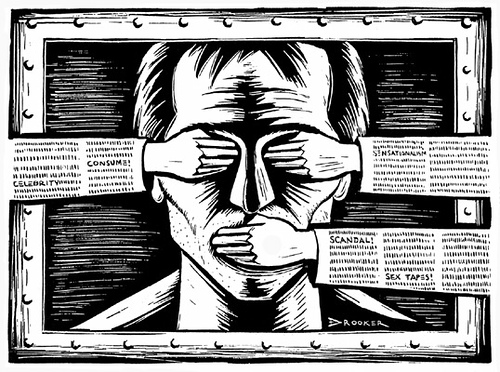
The main front of the War on Truth is an attack on independent sources of information and truth, primarily the free press, to prevent that corruption from being uncovered.

A second front is propaganda, fake news and misinformation.

Step 22. Support and protect the free press

A free, independent press is crucial to shining a light on corruption and oppression. Only the independent press has the credibility to perform this role.

If opposition lawmakers or protest groups discover corruption and try to inform the people about it, their ethos—their credibility—is weak, because they’re obviously biased.

The free press is the only real institution with the credibility to shine a light on corruption, oppression and injustice. That’s why authoritarian regimes relentlessly attack the press with smears, lawsuits and violence.

Fight back against any attempts to pass laws that crack down on freedom of the press and freedom of speech, including laws making it easier to sue the press for libel. Also watch for new laws that punish journalists for refusing to reveal sources, such as government whistleblowers.

Support independent newspapers acting as a check on the regime by subscribing to key newspapers and media outlets, advertising with them and getting friends and allies to do the same.

When individual reporters are attacked—in public, on social media or with lawsuits and arrests—rally to their defense.

Make smears backfire by treating every attacked reporter as a national hero. If  a regime tries to stage police raids on newspapers or TV stations, blockade the entrances, hold sit-ins and do what you can to make those raids painful and publicized.

Step 23. Attack the heart of propaganda outlets

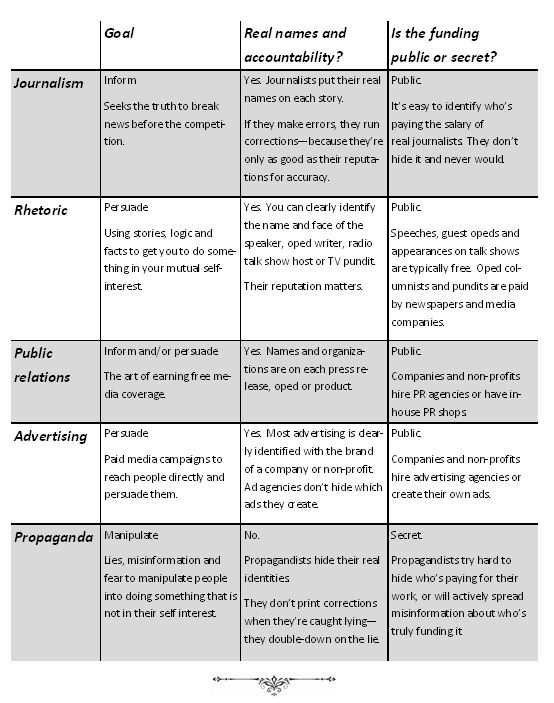
Anonymity is the beating heart of propaganda.

Unlike journalism, propaganda hides both who’s writing and producing their material and who’s paying for it all.

Attack the heart of propaganda by depriving it of that shield of anonymity.

Unmask the writers and creators of propaganda. Shame is a powerful tool, and the last thing the people who make their living writing and producing this material is for their friends and neighbors to know what they really do for a living.

More importantly, find the funding sources. If the regime itself is entirely funding a propaganda operation, use that to discredit all that they say.

When propaganda is coming from a media outlet with any sort of advertising funding, start a #grabyourwallet campaign to boycott businesses that advertise on propaganda outlets until they remove their support.


The rulers of backsliding democracies resent an independent press, but cannot extinguish it. They may curb the media’s appetite for critical stories by intimidating unfriendly journalists, as President Jacob Zuma and members of his party have done in South Africa.

Mostly, however, modern strongmen seek merely to discredit journalism as an institution, by denying that such a thing as independent judgment can exist. All reporting serves an agenda.

There is no truth, only competing attempts to grab power.

By filling the media space with bizarre inventions and brazen denials, purveyors of fake news hope to mobilize potential supporters with righteous wrath—and to demoralize potential opponents by nurturing the idea that everybody lies and nothing matters.

― David Frum


Step 24. Ignore fake news and faceless trolls

Kings, emperors and dictators used rumors and whisper campaigns against journalists, judges and the political opposition.

Modern technology has simply shifted those techniques to the digital realm.

Nation-states have the resources to design and deploy elaborate misinformation campaigns:

  • Fake news stories and websites
  • Doctored documents and photos
  • Armies of faceless trolls on the internet
  • Manipulated video and audio

Debunking this flood of fake news and smear attacks is a waste of time.

You can’t refute lies and smears without repeating them in some fashion, spreading them wider.

The only real strategy to deal with trolls is to starve them of the attention they seek. Never engage, no matter how hard they try to provoke you.

Step 25. Turn propaganda against itself

Instead of words, propaganda relies on images, photos, audio, posters film and music.

Propaganda tends to crop up during wartime, even in free democracies, then disappear in peacetime.

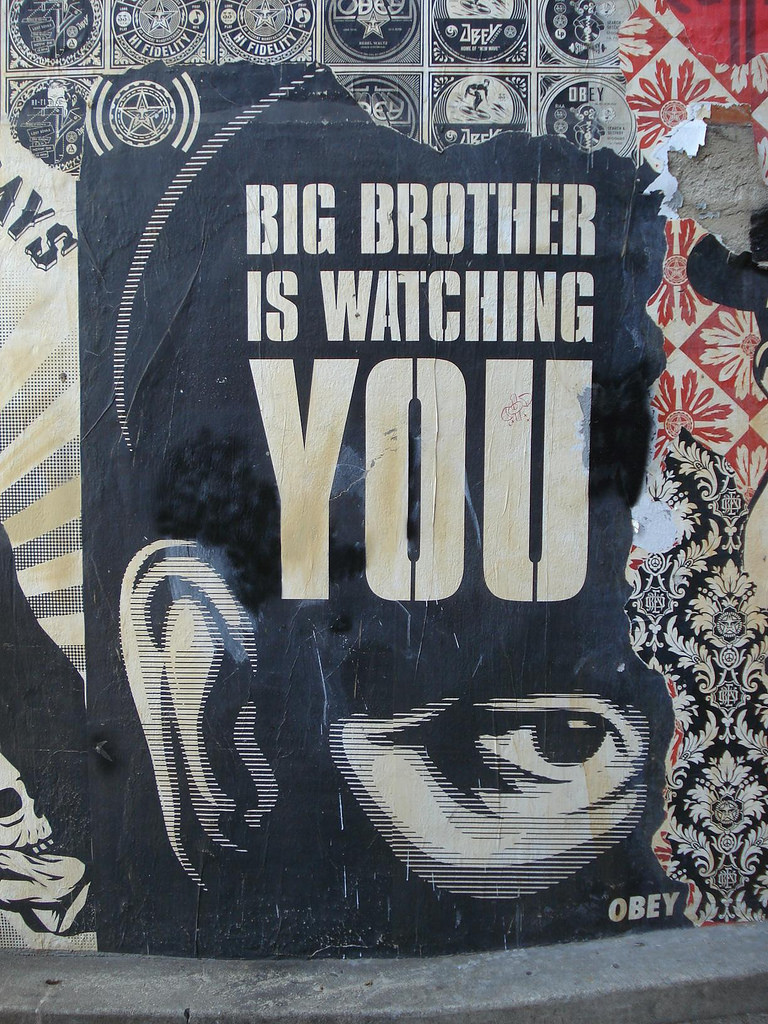
What authoritarians do is maintain a permanent campaign of propaganda during war or peace. If you glance at war propaganda posters, this becomes immediately clear: the enemy is depicted not as human beings, but as rats and monsters.

Propaganda is also used to boost the ruler’s perceived strength. It’s no accident authoritarian regimes puts portraits of the ruler everywhere you look, making them seem omnipresent.

A final role of propaganda is to rally the population behind the ruler while portraying any sort of opposition or protest as treasonous.

Don’t give in to the notion that fighting back means using the same techniques as the regime. Spreading your own lies, propaganda and misinformation isn’t smart because it undermines the credibility of the opposition. You’d sacrifice the moral high ground.

And you can’t win by mirroring the regime’s tactics, because this will never be a fair fight.

No opposition can ever match the money and resources of an entire nation-state. It’s like a heavyweight boxer taking on random civilians on the street, including young children and grandmothers. While cheating.

Any battle against propaganda has to be fought with asymmetrical guerilla tactics. Turn the overwhelming presence of propaganda against itself. Take all the time, money and effort the regime spends on posters, slogans and messages and subvert them in creative ways.

Portraits of the ruler posted everywhere are targets for rebellion and mockery. All it takes is a marker and some creativity.

Videos and songs meant to rally the people behind manufactured enemies, and behind the ruler, are easy to satirize by anyone with a laptop and time. Even if the regime tries to censor such videos and songs on the internet, they can’t stop marchers from singing the same words.

Finally, don’t focus satire the subverts the regime’s propaganda on the foibles of ruler, because rulers don’t last forever, while their ideology and methods will continue unless they’re stopped.

Aim mockery at the actual policies of the regime.

Step 26. Send the right messengers

Talking, marching and organizing with people who already agree with you may feel good, and can help the opposition get organized. Staying in that bubble can’t win the day.

Any successful fight against the War on Truth has to focus its persuasive efforts on reaching and persuading supporters of the regime.

Authoritarians gain and sustain power through extreme populism. They appeal to the working class while painting educated professionals as the enemy. By contrast, the natural base of any opposition movement is typically educated and urban.

The working class base of support for an authoritarian regime is typically afraid because they’re struggling economically and desperately want change. They don’t trust the educated elite to give them the change they want.

Listen to supporters of the regime first, and understand their fears, before trying to persuade them with the right message and local messengers.

A powerful message—The opposition’s narrative has to be just as simple and emotional as the regime’s story of a nation united against dangerous enemies.

A real political message is more than a slogan.  It’s a narrative that explains what causes problems in society, how you solve those problems and what an ideal society would look like.

Facts won’t defeat the regime’s powerful, fear-based message.

You need a counter-narrative that explains what causes problems in society (corruption, lies and oppression), how problems are solved (clean, honest government, freedom of speech and fair elections) and what an ideal society looks (a safe, open society where people can be free and prosperous).

Local messengers—Whoever shares the opposition narrative should be from the same demographics and region as the audience you’re trying to reach.

Don’t send anyone who looks or sounds like a member of the educated elite to working class neighborhoods, because they’ll be seen a politician who can’t understand their daily life.

Cultivate fresh voices who get their hands dirty doing the same jobs, every day, as the people you’re trying to reach.

Those new voices, no matter how effective, shouldn’t parachute in and out of places.

Opposition voices and leaders should be found and supported locally, in the very places where the regime’s support is the strongest.

Step 27. Weave stories into everything

Plato feared stories more than anything else.

More than logic. More than facts.

Stories are how we naturally process information. It’s the most powerful form of communication.

Narratives come in many forms, and there’s an art to doing them on a high level. But you’re not trying to write novels or screenplays for a living.

You can, and should, structure whatever you do in terms of a simple, strong narrative.

The biggest difference between narrative stories and the stories you see in newspapers is structure.

Journalism typically uses the inverted pyramid, which is a fancy way of saying “put the exciting bit in the headline and first paragraph, then make it more boring until it peters out at the end.”

There are good reasons for newspapers to use this structure, because it gives people the most important information first and lets editors cut the end of a story if they ran out of room on a page.

This journalistic style of writing is pretty typical for public relations, especially press releases.

Yet it’s terrible for the purposes of persuasive writing and communication, which is what you’re doing as an opposition movement.

Instead, use a narrative structure for everything you do. Everything: speeches, letters to the editor, videos, protest songs and even posters.

The basics of narrative are simple.

Villains, heroes and stakes: Every story is a conflict between villains and heroes. The villains are the most important part of a story. What if the villain wins? Show what’s at stake for the people in the story and for the greater public.

Curiosity and surprise—Narratives are strong because they’re the opposite of the inverted pyramid. They make you curious, build up that tension and only reveal the answers at the absolute end of the piece.

Maximum emotional distance—The best stories, speeches, books and movies maximize the emotional distance the audience travels.

If the ending is up (happy, excited), the beginning should be down. If the ending is down (sad, upset), the beginning should be up.

Never write flat. If the story you tell is down the entire time, or up the entire time, there’s no velocity to what you’re doing. The audience is lost.

Think of a roller coaster. That’s the kind of structure you want, with emotional velocity.

Concrete imagery—Don’t tell people something is wrong or unjust. Talk about real people, about what they saw, touched and heard. Make it real.

End with stories of action—Subtext is more powerful than text. It’s never persuasive to beat people over the head with your message. That’s a lecture.

Instead of telling people to act, find ways to end every speech and message with an example of a person who stood up, spoke up and took action. Inspire them to action.


Next week—Chapter 5: Resisting Oppression

The full guide is also here below as a PDF.